
What if the most expensive part of your 2,000-mile relocation isn’t the moving truck, but the single box of high-value items that wasn’t packed for a cross-country haul? A move of this scale is a complex logistics operation that requires more than just tape and boxes. It’s easy to feel overwhelmed by the fear of damaged heirlooms or the sting of unexpected fees added to your final bill; that’s why a professional cross country moving checklist is your most valuable tool for staying organized while you manage your career.
You probably already realize that moving across state lines is one of life’s most demanding transitions, particularly when you’re navigating federal regulations like the 110% rule or rising fuel costs. We’re here to help you master every detail of your relocation with a comprehensive timeline and an expert logistics framework that ensures your move stays on track. This 2026 guide provides a manageable schedule to achieve zero damage to your valuables and maintain predictable moving costs from start to finish.
Key Takeaways
- Learn why an 8-week lead time is the industry gold standard for organizing a successful interstate relocation.
- Use this cross country moving checklist to identify hidden costs and secure a binding estimate that protects your budget.
- Master specialized packing strategies that guard against long-haul vibrations and the specific risks of South Florida humidity.
- Simplify complex interstate logistics by understanding your Bill of Lading and managing state-to-state administrative requirements.
- Ensure a smooth delivery with a professional final walkthrough and effective communication strategies for your moving crew.
The 8-Week Master Timeline for Cross Country Moving
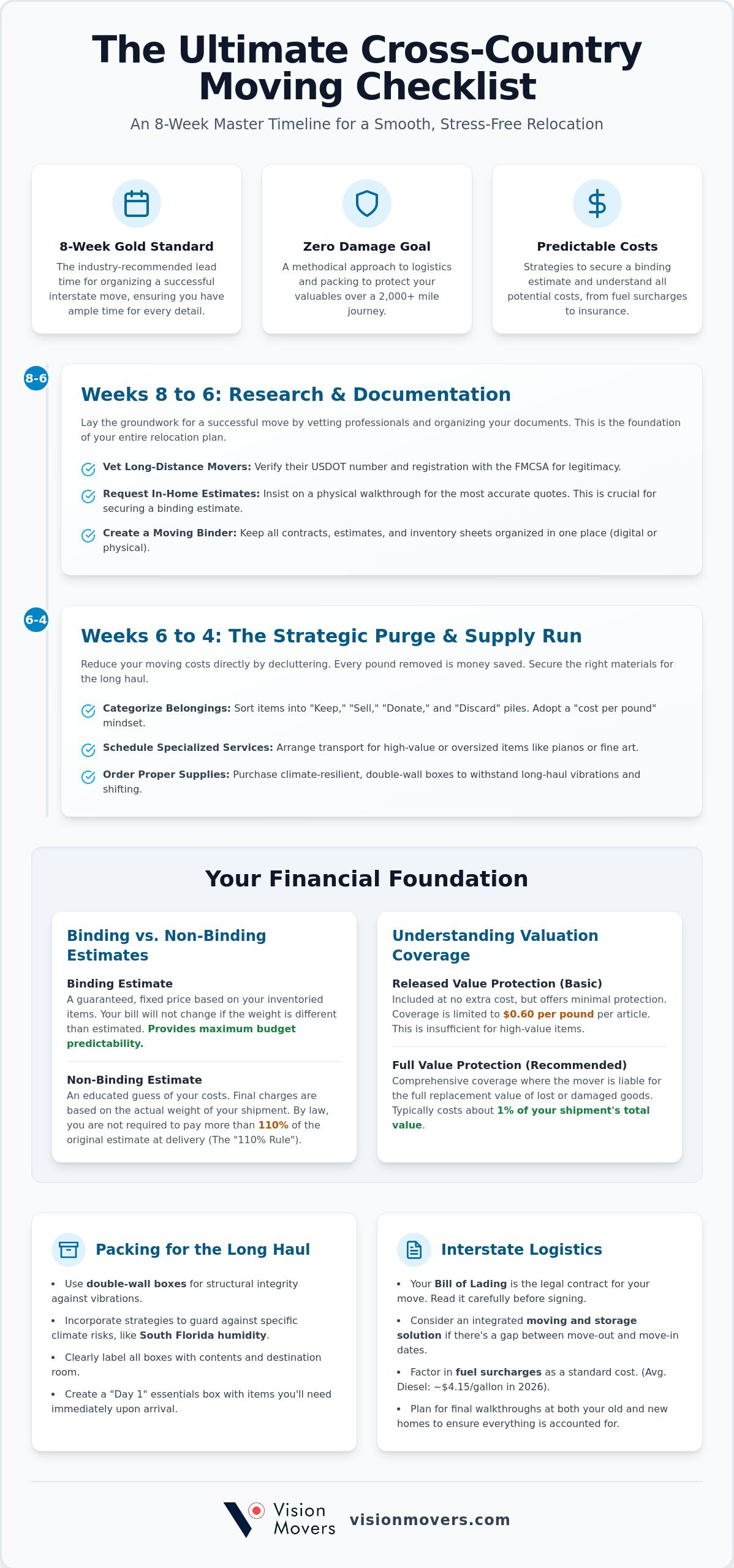
Moving across the country is more than a change of address; it’s a significant life transition that requires a methodical approach. According to The Holmes and Rahe Stress Scale, relocation is one of the most taxing events a person can experience. To keep your peace of mind intact, an eight-week lead time is the gold standard for interstate logistics. This timeframe gives you the space to manage your daily career responsibilities while checking off every essential task on your cross country moving checklist.
Deciding between a DIY move and a full-service white-glove relocation is your first major strategic choice. While renting a truck might seem like a way to save money, the physical exhaustion and the high risk of damage during a multi-day haul often outweigh the initial savings. Professional interstate moving provides the calm competence of a seasoned team, ensuring your belongings are handled with specialized care; you can check out Anspach Removals & Storage to see an example of how professional furniture and household movers maintain these high standards during a long-distance transition.
Your 2026 moving budget must reflect current economic realities. Diesel prices have stabilized around $4.15 per gallon, which means fuel surcharges are a standard and predictable part of interstate contracts. You should also factor in valuation coverage. While basic liability is legally required at $0.60 per pound, full value protection typically costs about 1% of your shipment’s value. This investment is vital for securing high-value items against the unpredictable nature of long-haul transit.
Weeks 8 to 6: Research and Documentation
Start by vetting potential long-distance moving companies to ensure they are legitimate and secure. Every reputable mover must have a valid USDOT number and be registered with the FMCSA. We suggest creating a dedicated moving binder, either digital or physical, to store your interstate contracts and inventory sheets. It is best to request in-home estimates rather than over-the-phone quotes. This practice ensures quote accuracy and helps you avoid surprises related to the “110% rule” on delivery day.
Weeks 6 to 4: The Strategic Purge
Once you’ve secured your mover, begin categorizing your items into keep, sell, donate, or specialized transport groups. If you own sensitive or heavy equipment, now is the time for scheduling specialized services for piano moving. Standard cardboard boxes often fail during long hauls, so we recommend ordering climate-resilient, double-wall boxes. These supplies provide the structural integrity needed to withstand the constant vibrations and shifting that occur on a cross-country route.
Budgeting and Inventory: The Financial Foundation
A successful relocation depends on financial transparency and a meticulous record of your belongings. When you’re reviewing quotes, the distinction between binding and non-binding estimates is the most critical factor for your budget. A binding estimate guarantees the total cost of your move based on the items listed, providing the ultimate predictability. In contrast, a non-binding estimate is an educated guess based on projected weight. While federal law prevents movers from charging more than 110% of a non-binding estimate at the time of delivery, a binding quote is the only way to ensure your final bill matches your initial expectations.
Managing a long-distance haul often involves complex timing, especially if your new home isn’t ready the moment the truck arrives. This is where professional moving and storage companies offer superior value compared to piecemeal solutions. Using a single provider for both transit and climate-controlled storage eliminates the risk of multiple handling stages. It also streamlines your cross country moving checklist by consolidating your contracts and points of contact. If you’re feeling overwhelmed by the logistics, you can request a detailed consultation to see how an integrated plan fits your specific needs.
The 2026 standards for moving insurance also require careful consideration. Every interstate mover provides “Released Value Protection” at no extra cost, but this only covers $0.60 per pound. For a cross-country journey, “Full Value Protection” is the smarter choice. This comprehensive coverage typically costs about 1% of your total shipment value and ensures the mover is responsible for the replacement value of any lost or damaged items. It turns a potential catastrophe into a manageable insurance claim.
The Digital Inventory Method
Modern inventory management has moved beyond simple paper lists. We recommend taking high-resolution photos of all electronics, furniture, and high-value assets before they’re packed. This visual evidence is vital for “White Glove” verification and insurance purposes. Many families now use QR code labeling systems on their boxes. By scanning a code with your phone, you can instantly see a digital list of the contents without opening the tape, making the unpacking process in your new home significantly more efficient.
Hidden Costs to Anticipate
Your budget must account for expenses that occur outside of the moving contract. Fuel price fluctuations can lead to long-haul surcharges, as diesel prices in 2026 average around $4.15 per gallon. You should also prepare for accessorial charges at your destination. These fees cover specific labor challenges such as navigating multiple flights of stairs, long carries from the truck to the front door, or elevator wait times in high-rise buildings. Factoring in these costs early prevents financial stress during the final stages of your transition.
Packing for the Long Haul: Climate and Chaos Protection
A cross-country relocation subjects your belongings to physical stresses that local moves simply don’t match. The “Vibration Factor” is the most overlooked risk in long-distance transit. Over thousands of miles, the constant micro-vibrations of a moving truck can cause items inside boxes to rub together, leading to friction damage or structural failure of the containers. To counter this, your cross country moving checklist should prioritize double-wall corrugated boxes for all fragile items. These heavy-duty containers provide the rigid support necessary to withstand the stacking pressure and movement of a multi-day journey.
While sturdy boxes are a start, professional packing services offer the most reliable defense against the rigors of the road. Expert packers use specific techniques, such as “cell-packing” for glassware and custom-fit padding for electronics, to eliminate internal movement. This methodical approach ensures that even if the truck encounters rough terrain or sudden stops, your high-value assets remain stationary and secure. For delicate heirlooms, mirrors, or large-scale artwork, specialized timber crating is often the only way to guarantee a damage-free arrival.
Climate-Aware Packing Strategies
South Florida’s intense heat and humidity present unique challenges for long-distance hauls. High moisture levels can cause mold growth or warp sensitive materials during the days spent in transit. We recommend placing silica gel packs inside boxes containing electronics or leather goods to absorb excess humidity. It’s also vital to avoid wrapping wood furniture directly in plastic stretch film. In high-heat environments, plastic can trap moisture against the wood or even melt into the finish, causing permanent damage. Instead, use breathable moving blankets secured with tape that never touches the furniture surface.
As you pack, remember to set aside a “First Night Box.” This container should travel with you in your personal vehicle rather than on the truck. Include essential toiletries, basic tools, chargers, and a change of clothes so you can rest comfortably the moment you arrive at your new home without searching through dozens of sealed boxes.
Handling Heavy and Specialized Items
The logistics of safe moving and transporting heavy equipment like pool tables or home gyms require professional-grade weight distribution. These items can’t simply be pushed into a corner; they must be secured to the truck’s structural ribs to prevent shifting. White-glove handling is non-negotiable for luxury furniture and heavy assets because it includes floor protection at both locations and the use of specialized ramps or lifts. This level of care ensures that your heavy items reach their destination without causing damage to themselves or your new home’s flooring.
Interstate Logistics: Regulations and Final Preparations
The paperwork involved in an interstate move is just as critical as the physical labor. Your primary document is the Bill of Lading. This isn’t just a receipt; it’s the official contract between you and the mover. It outlines the terms, the agreed-upon price, and the delivery dates. Never let the truck leave without a signed copy in your hands. Additionally, if you have items worth more than $100 per pound, you must complete a High-Value Inventory form. This legal document ensures your most precious assets are fully protected under your valuation coverage. Failing to declare these items in writing can limit the mover’s liability, making this a vital step on your cross country moving checklist.
Managing the gap between two homes 1,000 miles apart requires precise utility coordination. You don’t want to arrive at a dark house, nor do you want to pay for electricity in an empty Florida condo for weeks. Schedule your South Florida utilities to shut off the day after you leave and your new home’s services to activate two days before your arrival. This overlap provides a safety net if your travel plans change. You should also research the vehicle registration and driver’s license transfer requirements for your new state. Many states require you to update these documents within 30 days of establishing residency, so plan your DMV appointment shortly after your arrival.
Legal and Administrative Checklist
Updating your address involves more than just a trip to the post office. You must notify the USPS, but don’t forget to update the “Home” address in your digital wallets and streaming services. This prevents delivery errors for future online orders. If you have children or ongoing medical needs, transfer school and medical records at least three weeks before departure to avoid administrative delays. Finally, understand your “Delivery Window.” Unlike local moves, interstate deliveries often have a range of dates rather than a specific hour. This window depends on the distance and the size of your shipment, so keep your schedule flexible during this period.
Final Home Prep in Florida
Leaving a South Florida home requires specific climate considerations. Set your AC to “Auto” at approximately 78 degrees to prevent mold growth while the home is vacant. It’s also wise to schedule a final pest control treatment to ensure the property remains in top condition for the new occupants. If you’re relocating a home office, following professional commercial moving protocols will help protect your equipment and business continuity. Lastly, confirm your HOA move-out window. Many complexes in Miami and Boca Raton have strict rules regarding elevator use and truck parking. Missing your slot can result in heavy fines or logistical delays. If you need help navigating these local requirements, consult with our interstate moving experts today.
Moving Day and The White-Glove Arrival
The day the truck pulls into your driveway marks the final lap of your journey. While the physical labor is handled by professionals, your role as the site supervisor ensures that nothing is left behind in a forgotten attic or crawlspace. Following your cross country moving checklist on this day means focusing on verification and communication. You should supervise the loading process to ensure maximum space efficiency; however, your most important task is verifying the Inventory Tag list. Every item loaded onto the truck receives a numbered sticker. Don’t let the driver depart until you have a signed copy of this list, as it’s your only proof of what was loaded for the long haul.
Establishing a professional rapport with your driver is equally vital. They are the person responsible for your belongings across several state lines. Take a moment to discuss the route, confirm your contact information, and set expectations for check-in calls. This clear communication provides peace of mind while your life’s work is in transit. Additionally, transitions for older adults require a higher level of patience and organization. We’ve found that senior moving often requires extra care during the unpacking phase to recreate a sense of familiarity quickly and reduce the emotional toll of the relocation.
Managing the Move-Out Day
Before the truck pulls away, perform a final walkthrough of your South Florida residence. Check every closet, the space behind the water heater, and all kitchen cabinets. It’s easy to overlook small items in the rush of the morning. Once the house is empty, conduct a final security check by ensuring all windows are locked and the AC is set to a humidity-controlled “Auto” setting. This disciplined approach ensures you leave the property in excellent condition for the next occupants while preventing any last-minute stress.
Settling into Your New State
When the truck arrives at your destination, the process of verification begins again. Use your inventory list to check off each box as it enters the home. This is the time to inspect high-value items against the pre-move photo inventory you created earlier. If you notice any discrepancy, document it immediately on the driver’s copy of the inventory sheet. To make the first 24 hours manageable, follow an “Unpacking Priority” list. Focus on the bedrooms and kitchen first so your family can eat and sleep comfortably. Vision Movers helps streamline this transition by offering professional unpacking services, allowing you to focus on settling into your new community rather than wrestling with tape and cardboard.
Start Your Next Chapter with Confidence
Mastering a long-distance relocation is entirely possible when you follow a structured cross country moving checklist. By prioritizing an eight-week lead time and utilizing climate-aware packing strategies, you eliminate the common pitfalls of interstate travel. You’ve learned how to secure your budget with binding estimates and protect your most valuable assets through meticulous digital inventory and professional crating. These steps transform a daunting logistics operation into a manageable, organized transition.
At Vision Movers, we take pride in being A+ Rated Long Distance Movers who specialize in the details that matter most. Whether you need specialized safe and piano moving experts or comprehensive white-glove service from South Florida to anywhere in the US, our team provides the quiet strength you need for a successful transition. We focus on the logistics so you can focus on your new home and career.
Ready to turn your moving plans into a reality? Get Your Personalized Cross Country Moving Quote from Vision Movers today. We’re here to guide you every step of the way toward a stress-free arrival and a fresh start in your new state.
Frequently Asked Questions
How much does a cross-country move cost in 2026?
A standard cross-country move for a 2-3 bedroom home typically ranges from $4,600 to over $10,000 in 2026. For larger residences with 4-5 bedrooms, costs often fall between $7,900 and $15,000. These figures depend on the total weight of your shipment and the distance traveled. Factors like fuel surcharges and specialized handling for heavy items also influence the final quote provided by your moving company.
What is the difference between an interstate move and a long-distance move?
An interstate move specifically involves crossing state lines and is regulated by the Federal Motor Carrier Safety Administration (FMCSA). A long-distance move is a broader term usually referring to any relocation over 100 to 400 miles, even if it stays within the same state. Understanding this distinction is helpful when reviewing your cross country moving checklist, as interstate hauls require specific USDOT documentation and insurance requirements.
How do I protect my furniture from humidity during a cross-country move from Florida?
Protecting furniture from South Florida’s humidity requires breathable materials and moisture control. Avoid wrapping wood furniture directly in plastic stretch film, as this traps moisture and can ruin the finish in high heat. Instead, use professional moving blankets and consider placing silica gel packs inside boxes containing electronics or leather goods. These simple steps prevent mold growth and warping during the multi-day transit across different climate zones.
Should I hire full-service packers for a cross-country relocation?
Hiring professional packing services is highly recommended for cross-country relocations to minimize the risk of friction damage. Expert packers use specialized techniques and double-wall boxes designed to withstand the constant vibrations of a long-haul journey. This investment not only saves you significant time while you manage your career but also provides the peace of mind that your high-value items are structurally secure for thousands of miles.
What items are moving companies not allowed to transport across state lines?
Federal law prohibits moving companies from transporting hazardous materials such as gasoline, propane tanks, and aerosol cans. Most movers also decline to transport perishable food items or live plants on interstate routes due to the length of transit and varying state agricultural regulations. It’s best to dispose of these items or transport small, non-hazardous essentials in your personal vehicle to ensure a smooth loading process on moving day.
How far in advance should I book cross-country movers?
You should aim to book your cross-country movers at least eight to twelve weeks before your desired move date. This lead time is especially critical if you’re moving during the peak season between May and September, when demand is highest and prices can increase by 20% to 50%. Early booking ensures you secure a reputable company with a valid USDOT number and allows ample time for an accurate in-home estimate.
What is Full Value Protection and do I need it for my move?
Full Value Protection is a comprehensive coverage option where the mover is liable for the replacement value of lost or damaged items. While basic “Released Value Protection” is free, it only covers $0.60 per pound, which is often insufficient for modern electronics or furniture. In 2026, the cost for Full Value Protection is typically around 1% of your belongings’ total value, making it a vital safeguard for any long-distance relocation.
How do I track my belongings while they are in transit across the country?
You can track your belongings by maintaining direct communication with your driver and using a digital inventory system. Many modern moving companies provide GPS tracking updates or scheduled check-in calls to inform you of the truck’s progress along the cross-country route. Using a QR code labeling system as part of your cross country moving checklist also allows you to verify the location of specific boxes the moment they’re unloaded at your new home.
Leave a Reply