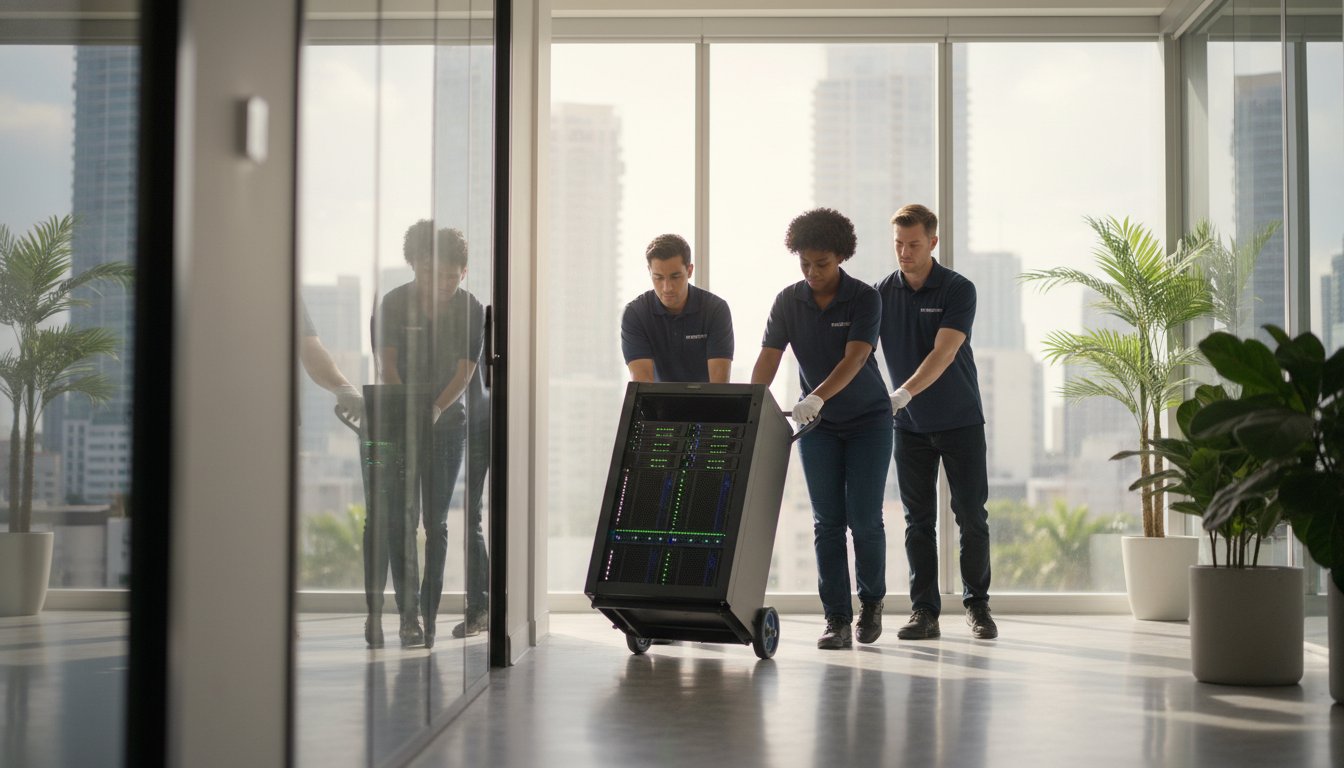
What if your next office relocation wasn’t a logistical chore, but a strategic operation that actually protected your bottom line? Most business owners view commercial moving with a sense of dread, fearing the lost revenue that comes with unexpected downtime. You’re likely worried about sensitive IT servers being damaged or the frustration of coordinating logistics between different building managers. It’s a valid concern in a year where a single day of lost productivity can impact your yearly goals.
This article will teach you how to execute a strategic business relocation that minimizes downtime and protects your company’s most valuable assets. We’ll show you how to achieve a seamless weekend transition that results in zero Monday morning interruptions. You’ll learn the best practices for safe technology transport and how to maintain transparent, predictable costs during the process. We also look at how 2026 trends, like the 24 percent national office vacancy rate and the shift toward smaller, more complex workspaces, are changing the way successful companies approach their transitions.
Key Takeaways
- Shift your perspective from simple transportation to business continuity. This mindset ensures your company remains profitable throughout the entire transition.
- Identify the specialized “White-Glove” handling requirements necessary for protecting high-value corporate equipment and industry-specific assets.
- Learn how to calculate the true ROI of professional commercial moving by comparing service fees against the potential costs of operational downtime.
- Navigate South Florida’s unique logistical hurdles. This includes protecting sensitive electronics from extreme humidity and managing complex high-rise building regulations.
- Implement a structured five-step methodology. By using professional packing and furniture protection, you can create a predictable, organized, and stress-free experience.
What is Commercial Moving and Why is it a Strategic Operation?
At its most basic level, a moving company defines this service as the relocation of business assets, employees, and operations from one facility to another. However, in a professional context, commercial moving is far more than just hauling boxes. It’s a strategic operation where the primary goal isn’t just transport; it’s business continuity. If your operations stop, your revenue stops. That reality makes the logistics of a corporate move a high-stakes project that requires meticulous planning and a focus on protecting your bottom line.
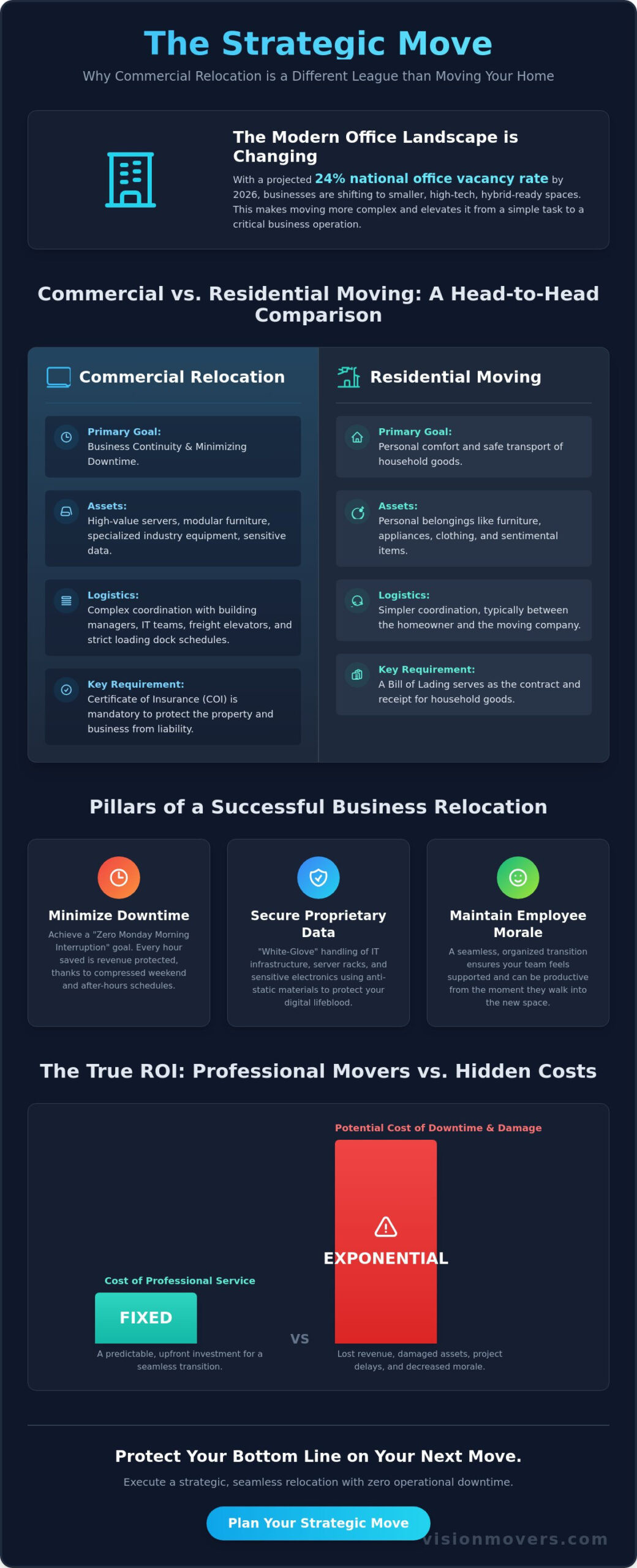
The landscape of work has shifted significantly. With the national office vacancy rate projected to reach 24% in early 2026 and nearly 23% of the U.S. workforce operating remotely, businesses are moving into smaller, more efficient footprints. These moves are often more complex than traditional relocations. They involve decommissioning large, legacy spaces while simultaneously setting up high-tech, hybrid-ready environments. A dedicated Moving Coordinator acts as the essential link in this process. They bridge the gap between your executive management’s goals and the physical logistics on the ground, ensuring every detail aligns with your company’s uptime requirements.
The Core Objectives of a Successful Business Relocation
A successful move is measured by what doesn’t happen. You want to avoid the “Monday morning crisis” where employees can’t log in or find their essential equipment. We focus on three main pillars to ensure a smooth transition:
- Minimizing Operational Downtime: Every hour your team isn’t working is an hour of lost revenue. We focus on compressed schedules and logical phasing to protect your weekly earnings.
- Securing Proprietary Data: Moving server racks and IT infrastructure isn’t just about heavy lifting. It’s about protecting the digital lifeblood and sensitive data of your firm.
- Maintaining Employee Morale: Change is stressful for any staff. A seamless transition ensures your team feels supported and ready to work in their new space immediately.
Commercial vs. Residential Moving: Key Differences
Residential moves focus on personal comfort, but commercial projects focus on technical specifications and rigid timelines. The scale of assets is vastly different. You aren’t just moving a couch; you’re relocating specialized ergonomic furniture, heavy-duty safes, or delicate server arrays. Logistics also become more layered. You’re often coordinating with multiple building managers, freight elevator schedules, and strict loading dock windows.
This complexity is why a Certificate of Insurance (COI) is mandatory for these projects. A COI is a formal document issued by an insurance company that verifies the mover has the necessary liability and workers’ compensation coverage to protect the property owner from financial loss during the move.
Specialized Commercial Moving: Industry-Specific Requirements
Every industry has a unique fingerprint. This means a one-size-fits-all approach to commercial moving simply doesn’t work. A tech startup in a high-rise has different needs than a medical clinic or a high-end retail storefront. This is where “White-Glove” service becomes essential. It’s a commitment to handling high-value assets with specialized care and precision. By focusing on the specific needs of your equipment, we protect the tools that allow your business to function.
Specialized equipment significantly impacts your move’s timeline and budget. For instance, moving a modern tech hub requires customized crates and anti-static packing materials to prevent electrostatic discharge from damaging sensitive circuit boards. Planning these details early, as suggested in the Small Business Administration business guide, ensures that your specialized assets arrive in perfect working order without stretching your relocation window. If you’re coordinating a move with high-value items, our commercial moving team can provide the tailored strategy you need.
Office and Corporate Headquarters Relocation
Corporate moves often involve complex modular furniture that requires professional disassembly and reassembly. It’s a technical task that ensures ergonomic workstations are put back together correctly so your staff can return to work comfortably. IT relocation is another critical layer. We handle everything from server rooms to workstation cable management, ensuring your digital infrastructure stays secure. We also prioritize the safe handling of sensitive physical records, maintaining strict organization throughout the transition to prevent any loss of proprietary data.
Retail, Medical, and Specialized Equipment Moving
Retailers face the challenge of managing inventory alongside delicate display fixtures and integrated POS systems. Every hour spent setting up a storefront is an hour of lost sales. For medical facilities, the stakes are even higher. Moving diagnostic equipment and lab tools requires extreme stability and climate considerations. Even restaurants need specialized care for heavy-duty appliances and custom kitchen setups. These items are heavy, awkward, and often very expensive. Working with experienced restaurant equipment movers ensures that whether it’s a commercial oven or a delicate refrigeration unit, every piece is secured with a precision-engineered plan for a damage-free transition. Using professional packing services ensures that whether it’s a medical laser or a commercial oven, it’s secured for a safe journey.
Calculating the ROI: Professional Movers vs. General Labor
The decision to hire a specialized team for commercial moving often comes down to the bottom line. It’s tempting to look at a lower bid from a general labor provider or consider a DIY approach to save on upfront costs. However, the cheapest invoice rarely results in the most cost-effective move. A poorly executed relocation carries hidden expenses that can quickly eclipse any initial savings. When you partner with experts, you aren’t just paying for labor; you’re investing in the speed and safety required to keep your business profitable.
Efficiency is the primary driver of ROI in a corporate transition. Professional crews operate with a level of coordination that general labor simply cannot match. A seasoned team can often complete in eight hours what might take an untrained internal staff 48 hours to accomplish. This difference in speed directly impacts your ability to resume operations. While your employees are experts at their jobs, they aren’t trained in logistics or heavy lifting. Every hour they spend packing boxes is an hour they aren’t generating revenue for your company.
The True Cost of Business Downtime
Downtime is the most significant “hidden cost” in any relocation. If your business is offline for even one extra day, the loss in productivity and billable hours often exceeds the entire cost of professional moving fees. Consider the math of your daily operations. If fifty employees are unable to work because their workstations aren’t yet assembled, the financial impact is immediate. Beyond internal costs, customer friction is a real threat. Being unreachable during a botched transition can damage client trust and lead to long-term revenue loss. Protecting your uptime is the most effective way to ensure a high return on your moving investment.
Risk Mitigation and Corporate Liability
Liability is a massive corporate risk during a move. Asking employees to move heavy furniture or sensitive equipment opens the door to Worker’s Compensation claims that can cost your business for years. Professional movers carry the necessary insurance to protect both their workers and your assets. This protection extends to the physical property of your new lease as well. Scuffed floors or damaged elevators in a high-rise can lead to expensive repair bills from building management. At Vision Movers, we utilize a methodical approach to furniture protection and asset security. We use high-grade materials and specialized techniques to ensure that your inventory and infrastructure arrive in the same condition they left, eliminating the need for costly replacements or repairs.
Planning for South Florida Logistics: Traffic, Weather, and Buildings
South Florida presents a unique set of logistical challenges that generic moving guides often overlook. Whether you’re moving within downtown Miami or relocating to the corporate corridors of Boca Raton, local expertise is the difference between a smooth transition and a week of headaches. Successful commercial moving in this region requires a deep understanding of local traffic patterns, strict building regulations, and the unpredictable tropical environment. We don’t just move your boxes; we navigate the specific variables that define the South Florida business landscape.
Timing is everything in Broward County and the surrounding areas. We meticulously schedule arrivals to avoid peak traffic hours on I-95 and the Florida Turnpike. This ensures our trucks aren’t sitting idle while your relocation clock is ticking. We also account for the “Afternoon Storm” factor. Tropical rain can appear without warning, potentially exposing sensitive assets to moisture during the loading process. Our teams use specialized weather-protection protocols to keep your equipment dry and secure, even during a summer downpour. For more tips on navigating these local variables, see The Ultimate Guide to Choosing a Local Moving Service in 2026.
Navigating Miami and Broward County Building Requirements
High-rise moves in Miami and Fort Lauderdale require precise coordination with building management. Most commercial hubs have strict rules regarding loading dock schedules and freight elevator reservations. You’ll need to secure these windows well in advance to avoid delays. Building managers also enforce rigorous Certificate of Insurance (COI) standards. For instance, movers in Miami-Dade must provide a minimum insurance coverage of 60 cents per pound per article. In Broward County, movers must be registered with the county and pay a $400 registration fee. We handle the communication with building security and management to ensure all permits and insurance documents meet local requirements before the first truck arrives.
Climate-Controlled Transport and Asset Protection
In 2026, climate control is a non-negotiable requirement for business relocations in the South. South Florida’s extreme heat and humidity are the primary enemies of sensitive electronic equipment and high-end wood finishes. Humidity can cause condensation inside server arrays or warp expensive modular furniture. We utilize climate-controlled transport to maintain a stable environment for your assets during transit. This protection is especially critical if your move involves short-term storage or occurs during the height of the humid summer months. If you need a partner who understands the local climate, contact us for a tailored corporate relocation services South Florida strategy that protects your most valuable technology.
The Vision Movers Commercial Process: Your Transition Partner
Choosing a partner for your relocation is about finding a team that understands your business goals. At Vision Movers, we treat commercial moving as a disciplined, transparent process designed to provide peace of mind. Our 5-step methodology, covering strategy, inventory, protection, execution, and post-move support, serves as the backbone of every project. It’s a structured transition that respects your time, your budget, and your assets. We rely on a team of professional packing and furniture protection specialists who take pride in their work. This ensures that every item is handled with the calm competence our brand is known for. Our white-glove service has become the preferred choice for South Florida businesses because we prioritize your company’s uptime above all else.
Phase 1: Pre-Move Strategy and Inventory Assessment
Success starts long before the trucks arrive. We begin with a detailed walk-through of your current facility to identify high-priority assets and sensitive infrastructure. This isn’t a generic estimate; it’s a strategic plan. We develop a precise floor plan for your new location to ensure every desk and server rack has a designated spot. This foresight speeds up the unloading process significantly. We also work with you to create a custom timeline. By aligning the move with your company’s low-traffic periods, we minimize the friction typically associated with large-scale relocations. This careful preparation ensures that every member of your team knows exactly what to expect on moving day.
Phase 2: Execution, IT Setup, and Post-Move Support
On moving day, our team executes a systematic packing and labeling plan. Every department is organized so that nothing is misplaced during the transition. We use specialized commercial-grade equipment and climate-controlled transport to secure your assets. Our team coordinates the careful placement of your IT infrastructure, ensuring workstations are ready for your technical staff. Once we arrive at the new facility, our support doesn’t stop at the loading dock. We provide comprehensive unpacking and debris removal services. This allows your team to walk into a clean, organized office and get back to work immediately. We handle the logistical heavy lifting so your staff can focus on their primary roles. Our goal is a seamless transition that feels like a natural step forward for your business. You’ll receive a customized, transparent quote that outlines every step of the process, ensuring there are no surprises on moving day.
Request your custom commercial moving quote from Vision Movers today
Secure Your Future Business Continuity
A successful transition in 2026 requires more than just heavy lifting. It demands a strategic approach that prioritizes uptime and protects your specialized assets from the unique humidity and logistical hurdles of South Florida. By focusing on ROI and professional coordination, you ensure that your team remains productive and your data stays secure throughout the entire process. You’ve worked hard to build your company’s reputation, and your relocation should reflect that same level of professionalism.
Vision Movers has focused on South Florida excellence since 2016. Our IT relocation experts and furniture protection specialists provide the white-glove care your high-value equipment deserves. We manage the complex COI requirements for major Miami and Broward office buildings to prevent building management delays. Choosing a professional partner for commercial moving is the most effective way to safeguard your company’s momentum. You deserve a transition that is disciplined, transparent, and completely under control.
Scale your business with a seamless move—get a Vision Movers quote today. We look forward to helping you step into your new space with confidence and ease.
Frequently Asked Questions
How far in advance should I book a commercial moving company in South Florida?
You should aim to schedule your relocation at least four to eight weeks before your desired move date. This timeframe allows for proper logistical planning and ensures you can secure your preferred window during busy seasons. In high-demand areas like Miami or Fort Lauderdale, booking early helps us coordinate with your building management more effectively. It also gives your team enough time to organize internal files and notify your clients of the change.
Do commercial movers handle IT equipment and server disconnection?
We specialize in the secure transport of servers and workstations, but we typically recommend that your internal IT team or a specialized vendor handles the actual disconnection and data backup. Our role is to provide the “white-glove” packing and climate-controlled transit needed to protect these delicate components. We work alongside your technical staff to ensure every piece of hardware is labeled and moved according to your strategic floor plan.
What is a COI and why does my building manager require one?
A Certificate of Insurance (COI) is a document that proves your mover has the necessary liability and workers’ compensation coverage to operate on the property. Most commercial building managers in South Florida require this to protect the facility from financial risk during the move. We provide comprehensive COI coverage for all major office buildings in the region. This document ensures that any accidental damage to the elevators or common areas is properly insured.
Can commercial moves be performed after business hours or on weekends?
Many companies choose to schedule their commercial moving projects during the weekend to ensure zero downtime on Monday morning. You should verify the specific availability of your building’s freight elevator and loading dock for after-hours access. It’s also important to coordinate with building security to confirm they can accommodate a team outside of standard business hours. Checking these requirements early prevents scheduling conflicts on the day of the transition.
How do I ensure my business data remains secure during a move?
You can protect your business data by ensuring all servers are backed up and encrypted before the physical move begins. We utilize systematic labeling and secure, locked transport to maintain a strict chain of custody for your hardware. By working closely with your IT department, we ensure that sensitive equipment is the last thing loaded and the first thing set up in your new location. This methodical approach keeps your digital assets safe.
What happens if an expensive piece of office equipment is damaged during the move?
If a piece of equipment is damaged, the first step is to document the issue on the Bill of Lading at the time of delivery. We maintain detailed inventory logs to track the condition of your assets from start to finish. In the rare event of damage, our team will guide you through the claims process based on the insurance coverage selected for your project. This structured approach ensures a fair and transparent resolution for your business.
Do you provide packing supplies for employees, or do you handle all packing?
We offer full commercial moving services that include professional packing of all office common areas and workstations. If you prefer your employees to pack their own personal items, we can provide the necessary commercial-grade boxes and supplies to ensure consistency. Our professional packing specialists use high-quality materials to protect everything from ergonomic chairs to delicate filing systems, allowing your team to focus on their work during the transition.
What is the difference between a local and a long-distance commercial move?
A local move typically occurs within the same metropolitan area, such as a relocation between Miami and West Palm Beach. These are often billed at an hourly rate and completed within a single day. A long-distance or interstate move involves crossing state lines or traveling several hundred miles. These relocations require different regulatory filings and more complex logistics to ensure your assets arrive safely across a larger geographic area. We handle both types of transitions with equal care. Between 2020 and 2025, more than 74 companies relocated their headquarters to Florida, driving unprecedented demand for corporate relocation services in South Florida that can execute high-stakes moves without losing a single day of productivity. If you are coordinating a move for an older family member or executive at the same time, our senior moving services in 2026 provide the compassionate, specialized support needed to manage a lifetime of belongings with care.
Leave a Reply