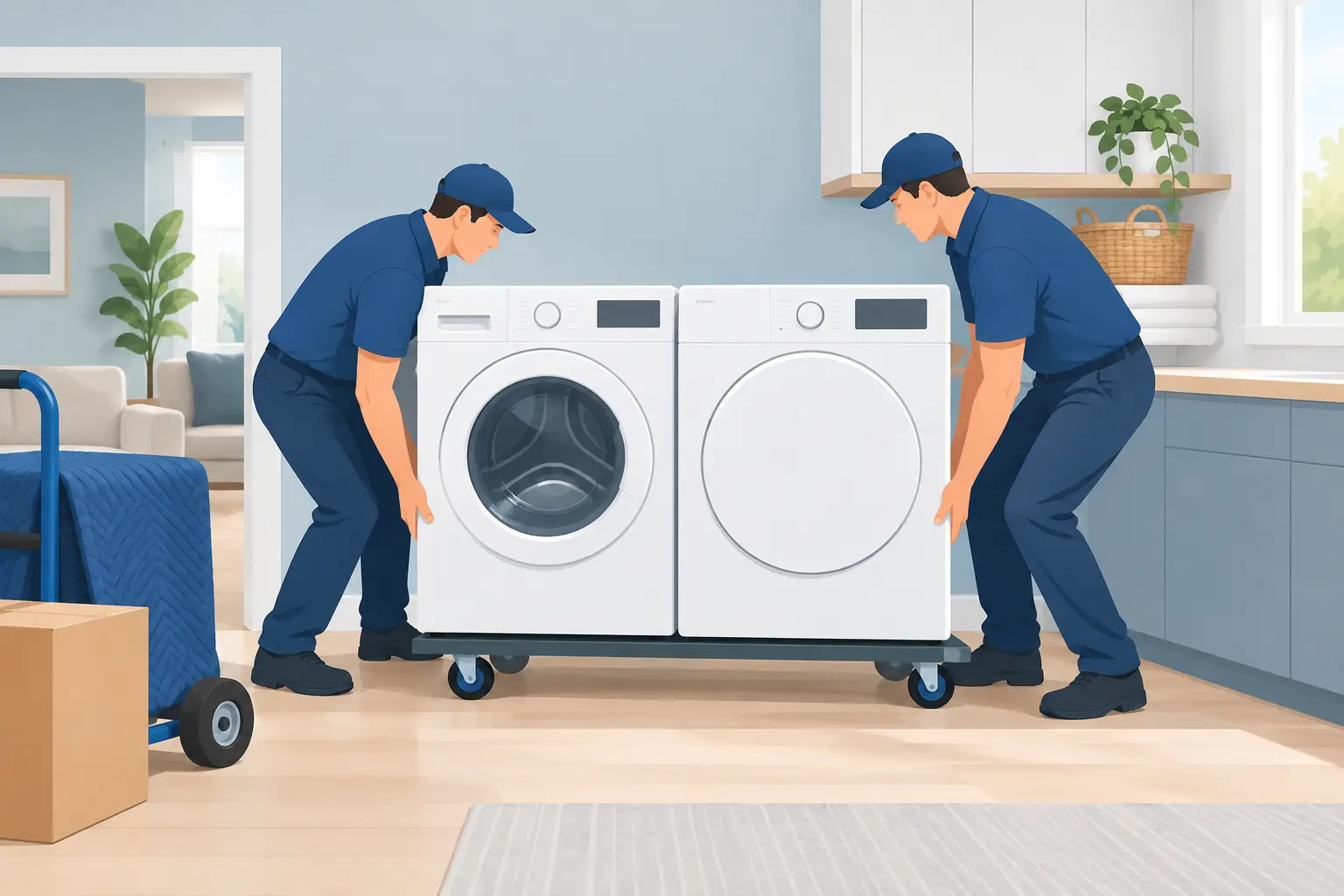
A washer dryer relocation can look like a simple appliance move until water lines, venting, stairs, elevator rules, and tight laundry closets enter the picture. These machines are heavy, awkward, and connected to systems that can cause expensive damage if handled carelessly. A little planning protects your floors, walls, appliances, and new home from day one.
For South Florida households, timing matters too. Condo loading windows, hurricane-season rain, high-rise elevators, and same-day move schedules can all affect how a laundry appliance move should be organized. The goal is not just getting the washer and dryer from Point A to Point B. It is getting them there safely, keeping the move on schedule, and making sure they are ready for proper installation.
Start the Washer Dryer Relocation With a Site Check
Before anyone disconnects an appliance, measure both locations. Measure the washer and dryer themselves, including hoses, door swing, pedestal bases, and any side clearances required by the manufacturer. Then measure the path out of the current home and into the new one: laundry-room doors, hallways, turns, elevators, stairwells, garage entries, and exterior gates.
This step prevents a common moving-day surprise: an appliance that fits its laundry closet but will not clear a narrow doorway or make a tight turn. In apartments and condos, confirm whether the building requires a certificate of insurance, elevator reservation, loading-dock appointment, or protective padding. Many South Florida properties have strict move hours, and missing a reserved elevator can quickly delay the entire job.
Check the destination as carefully as the pickup location. Make sure the new laundry area has the right utility connections, enough ventilation, a level floor, and adequate clearance. A full-size machine may not fit where a previous compact unit sat. If you are switching from an electric dryer to a gas dryer, or moving from a traditional setup to a stacked unit, professional installation requirements may change.
Disconnect Utilities the Right Way
A moving crew can safely transport appliances once they are prepared, but utility disconnection and reconnection may require a qualified plumber, electrician, or gas technician. This is especially true for gas dryers, hardwired units, and homes with older plumbing or electrical connections.
For a washer, turn off both hot and cold water supply valves before removing hoses. Unplug the unit, then run a short drain or spin cycle if possible to remove as much water as possible. Even after draining, water is usually left in hoses, the pump, and internal lines. Keep towels and a shallow pan nearby, and drain the hoses slowly to avoid flooding the laundry room.
For an electric dryer, unplug the power cord only after the appliance is off. Do not drag the dryer forward while the cord is still connected. For a gas dryer, close the gas shutoff valve and have a qualified professional disconnect and cap the gas line. Gas work is not a shortcut project. A leak can create a serious safety risk and should always be checked by the appropriate technician before the dryer is used again.
Dryer venting deserves the same attention. Remove the vent carefully, inspect it for lint buildup, and avoid using flimsy plastic or foil ducting at the new location. A damaged or poorly connected vent can restrict airflow, reduce dryer performance, and increase fire risk.
Prepare Each Appliance for Moving
Once utilities are disconnected, clean and dry both machines. Wipe down the washer drum, detergent drawer, door seal, and exterior. Leave the washer door open for a while before the move so moisture can evaporate. This helps prevent mildew smells from following you to the new home.
Front-load washers have one extra requirement: shipping bolts. These bolts secure the drum during transport and help prevent internal damage from vibration. If you still have the original bolts, reinstall them according to the manufacturer’s instructions. If you do not, order the correct replacement set before moving day. Never assume blankets alone will protect the internal drum.
Secure loose parts such as power cords, drain hoses, inlet hoses, dryer racks, and vent pieces. Tape cords and hoses to the side of the appliance using painter’s tape or another low-residue option. Do not tape directly over control panels, finished surfaces, or labels that could peel away.
A washer can weigh well over 150 pounds, and many dryers are not far behind. They should be moved upright whenever possible. Tipping a washer can shift internal components and leave water where it does not belong. If a machine must be tilted briefly to get over a threshold, the crew should control the movement, protect the flooring, and return it upright as soon as possible.
Why Equipment and Technique Matter
Washer dryer relocation is not a two-person lift-and-hope situation. Professional movers use appliance dollies, furniture pads, straps, floor protection, and the right loading methods to manage weight and awkward dimensions. Those tools help prevent crushed fingers, scratched tile, damaged baseboards, and appliance dents.
The route matters as much as the lift. A garage-level laundry room may be straightforward, while a second-floor condo with a narrow hall requires a more deliberate plan. Stair moves, elevated homes, and wet outdoor walkways need extra attention. In South Florida, sudden rain is a real concern, so appliances should be protected from moisture during loading and transport.
It also helps to think beyond the machines. Laundry-room doors may need to be removed temporarily. Pedestals may need separate handling. A stacked washer and dryer may need to be professionally separated before moving, depending on the model and manufacturer instructions. Trying to save a few minutes by forcing a machine through a tight opening can create far more costly repairs.
Reinstalling at the New Home
After delivery, allow the appliances to settle in their new location before reconnecting them. Place the washer and dryer on a solid, level surface. An unlevel washer can shake, walk across the floor, make excessive noise, and wear out faster. Adjust the leveling feet until the machine is stable, then test it again after a small load.
Use new washer supply hoses if the existing ones show cracking, corrosion, bulging, or worn seals. Reconnect hot and cold lines correctly, tighten fittings securely without overtightening, and slowly turn on the water. Check every connection for drips before pushing the washer fully into place.
For the dryer, confirm that the vent route is short, secure, and unobstructed. The exterior vent flap should open properly when the dryer runs. If the dryer is gas-powered, a qualified technician should complete the connection and test for leaks. Once everything is connected, run a quick washer cycle and a short dryer test while you are still nearby.
When Professional Help Is Worth It
Some appliance moves are simple. A ground-floor house with wide access, standard connections, and no stairs may only require careful preparation and strong equipment. Other situations call for a coordinated moving plan, especially when you are dealing with a high-rise building, a heavy front-load washer, a stacked unit, a gas dryer, or a same-day move with limited access.
Professional movers are particularly helpful when the laundry appliances are only one part of a larger household relocation. Rather than stopping the move to wrestle with an appliance, protect the floors, or solve an elevator issue, you can keep the entire process organized. Vision Movers provides trained crews and dedicated equipment for difficult items, helping homeowners and renters move heavy appliances with the same care given to furniture and fragile belongings.
Before moving day, keep the appliance manuals, shipping bolts, hoses, and any installation paperwork together in a labeled bag. That small bit of organization makes the final setup easier and gives your installer what they need. A well-planned washer dryer relocation lets you start fresh in your new home without a leaking hose, a damaged drum, or a laundry room problem waiting to happen.
Leave a Reply