Imagine you’re standing on a Miami sidewalk in the middle of July, watching your favorite wooden furniture warp in 90% humidity while an HOA manager tells you your move-in window just expired. It’s an exhausting scenario that many locals face when they aren’t prepared for the unique demands of our region. You already know that a move here involves more than just boxes. It requires a strategy to handle extreme heat, strict building regulations, and the logistical hum of a busy 2026 season. That’s why having a specialized moving checklist for South Florida residents is the only way to guarantee a transition that doesn’t leave you or your belongings fried by the sun.
We’ve designed this guide to be your professional partner during this transition, offering a clear path to a damage-free and friction-less move. We’ll walk you through the essential steps to navigate local utility setups in Miami-Dade and Broward, manage specific hurricane season risks, and satisfy even the most demanding condo associations. You’ll get a month-by-month timeline that ensures your arrival at your new home is as breezy as a coastal sunset.
Key Takeaways
- Master the 8-week countdown by identifying neighborhood-specific challenges, from the high-rises of Brickell to the canopy-lined streets of Coral Springs.
- Shield your valuables from tropical humidity using plastic bins and specialized packing methods that prevent mold growth on leather and wood.
- Coordinate with building management and local municipalities early to secure parking permits and move-in windows that align with strict HOA regulations.
- Follow a comprehensive moving checklist for South Florida residents to ensure utilities like FPL are active before you arrive, keeping your new home cool and comfortable.
- Understand the advantages of professional loading and white-glove care to protect high-end finishes and luxury items from the rigors of local transport.
Phase 1: The 8-Week Countdown and South Florida Strategic Planning
Eight weeks before your move is the ideal time to lay the groundwork for a smooth transition. This phase is about more than just finding boxes; it’s about strategic planning that accounts for the specific environment of the Sunshine State. The first step on any effective moving checklist for South Florida residents is a thorough inventory of your belongings. You need to identify items that are sensitive to extreme humidity or heat. Electronics, fine art, and vintage photographs often require climate-controlled transport to prevent permanent damage. While the process of relocating involves many standard steps, our local environment adds layers of complexity that require early attention.
Next, you should research local movers who understand the nuances of your specific neighborhood. Moving into a gated community in Weston requires different logistics than a high-rise move in Brickell. A mover familiar with your area will already know the gate access protocols or the tight street parking limitations. During this time, review your current lease or HOA bylaws. Most South Florida associations require at least a 30 or 60-day notice for move-outs. Missing these deadlines can lead to costly fees that disrupt your moving budget. When calculating your expenses, remember to account for local specifics like SunPass tolls for the moving truck and city-specific parking permits.
A critical part of this early planning involves deciding what not to take with you. For South Florida residents who need to dispose of bulky items or old furniture before the move, junkrangerremoval.com provides an efficient solution for clearing out unwanted junk, ensuring you only move what is necessary.
Timing Your Move: Hurricane Season and Tropical Heat
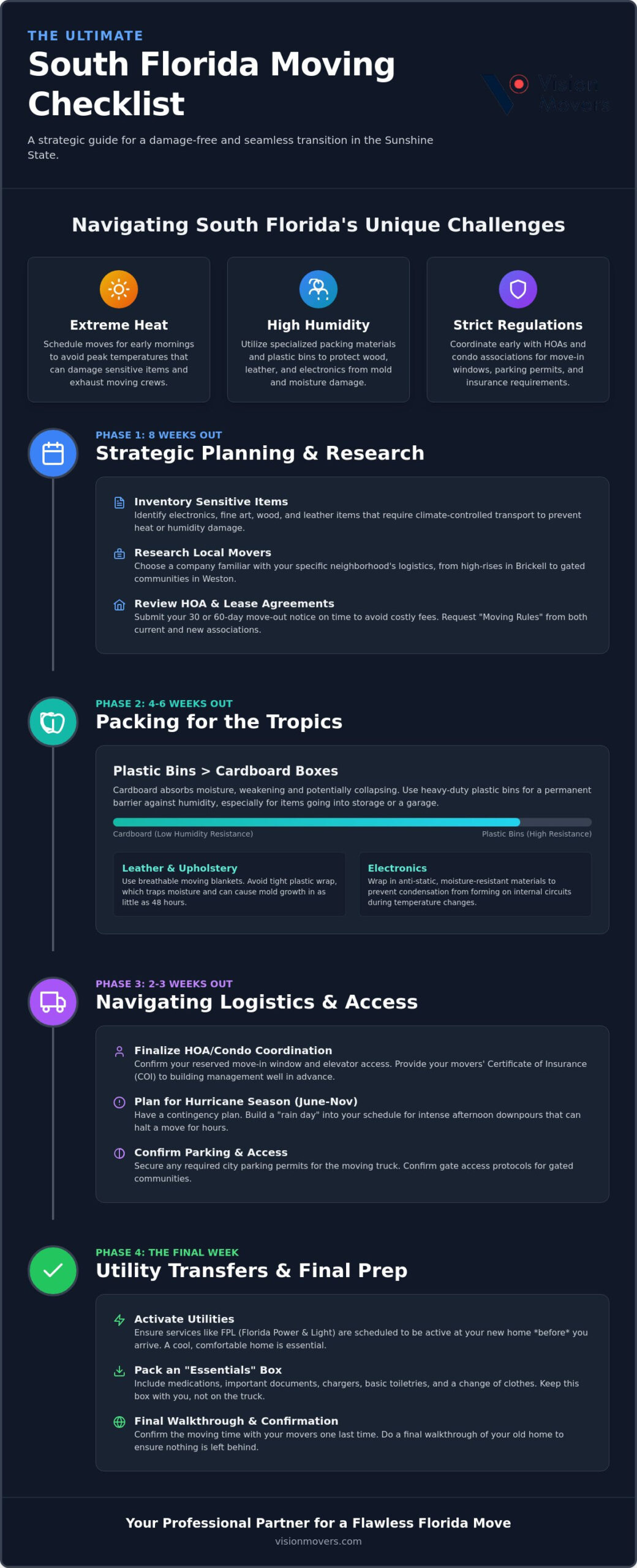
If you’re moving between June and November, you’re operating during hurricane season. This requires a flexible mindset and a solid contingency plan. We recommend building a “rain day” into your schedule. South Florida is famous for intense afternoon downpours that can halt a move for hours. To avoid the peak heat index, which often hits its dangerous high around 2:00 PM, schedule your moving window for the earliest possible slot. Starting at 7:00 AM or 8:00 AM ensures the bulk of the heavy lifting is finished before the humidity becomes overwhelming.
HOA and Condo Association Coordination
In South Florida, your building management is a key partner in your move. Request the “Moving Rules and Regulations” packet from both your current and future associations immediately. Many Broward County condos have strict weekend moving bans or specific elevator reservation windows. You’ll also need to confirm the Certificate of Insurance (COI) requirements. Most luxury buildings won’t allow a moving truck on the property without a COI that lists the association as additionally insured. Handling these details now prevents a stressful standoff at the loading dock on moving day.
Phase 2: Packing for the Tropics: Humidity and Heat Protection
Standard packing advice usually suggests sourcing sturdy cardboard boxes. In our climate, however, cardboard acts like a sponge. It wicks moisture from the air, which softens the material and can lead to crushed belongings or collapsed stacks. For any items destined for long-term storage or a Florida garage, use heavy-duty plastic bins instead. This is a vital addition to your moving checklist for South Florida residents because it creates a permanent barrier against the relentless humidity that defines our region.
Leather furniture and upholstery require a specialized approach to prevent damage. If you wrap leather tightly in non-breathable plastic, you risk trapping moisture against the surface. In the 2026 heat, this can trigger mold growth in as little as 48 hours. Instead, use high-quality moving blankets and ensure there is “breathing room” for the material to vent during the transition. For electronics, the primary threat is condensation. Moving a cold television from a chilled living room into a humid moving truck causes moisture to form on internal circuits. Wrap these sensitive items in anti-static, moisture-resistant materials to prevent short circuits when you finally plug them back in.
Some belongings require more than just standard care. Pianos, heavy safes, and delicate wine collections need specialized equipment to handle both the weight and the environmental shifts. If you’re concerned about protecting your most valuable assets, our professional packing services provide the specialized materials and expertise needed to withstand the tropical climate.
Protecting Climate-Sensitive Belongings
Fine art and sensitive legal documents can degrade quickly when exposed to high temperatures. We recommend placing silica gel packets inside boxes containing photographs or delicate fabrics to actively absorb excess moisture. When it comes to large instruments, professional piano moving is essential. Significant humidity shifts cause wood to expand and contract, which can permanently affect the tuning and structural integrity of the instrument if not handled in a climate-controlled environment.
The “First Night” Survival Kit: South Florida Edition
Moving day is physically demanding, especially when the heat index climbs. Pack a dedicated survival bag to keep in your personal vehicle. This ensures you have immediate access to essentials without digging through a moving truck. Your kit should include:
- High-SPF sunscreen and bug spray for the outdoor transition.
- Extra electrolyte drinks to stay hydrated in the 90-degree heat.
- Handheld fans or cooling towels to provide instant relief.
- Essential documents, including your new lease, HOA approval letters, and SunPass transponders.
If you’re a new Florida resident, keeping your vehicle registration and license documents in this kit will help you navigate your first week of administrative tasks with much less stress.
Phase 3: Navigating South Florida Logistics: Traffic and Access
Logistics in South Florida represent a unique puzzle. You aren’t just driving a box truck from one point to another; you’re navigating a network of weight-restricted bridges, low-hanging oak canopies, and some of the most congested highways in the country. A vital part of your moving checklist for South Florida residents is mapping your route with vehicle clearance in mind. In historic neighborhoods like Coral Springs or parts of Parkland, ancient trees often hang lower than the 13-foot standard for many large moving trucks. Striking a branch doesn’t just damage your belongings; it can lead to significant city fines and delays. Always verify that your chosen path is truck-friendly before the driver puts the key in the ignition.
Timing is everything when you’re utilizing the I-95 or the Palmetto Expressway. If your truck is caught in the 8:00 AM rush, you’re paying for idle time and risking your move-in window. We recommend having the truck on the road by 10:00 AM or planning for a mid-day transition to avoid the worst of the gridlock. For those moving into downtown areas, coordination with the city’s parking authority is mandatory. In Miami and Fort Lauderdale, you often need to “meter wrap” or reserve street space 48 to 72 hours in advance. This ensures the truck has a legal place to park and prevents the stress of a last-minute scramble for space. Incorporating these logistical details into your moving checklist for South Florida residents ensures that your arrival is as organized as your packing.
Urban Moving Challenges: Brickell and Downtown Areas
Brickell and Downtown Miami present the highest hurdles for logistical planning. High-rise living means you are at the mercy of the freight elevator. Most buildings limit these reservations to strict two or four-hour blocks. If you miss your window, you might be forced to reschedule the entire move. This is where local moving service expertise becomes invaluable. Seasoned crews understand how to navigate narrow one-way streets and coordinate directly with building security to keep the process moving within those tight constraints.
Gated Communities and Suburban Access
Suburban moves in Boca Raton, Weston, or Plantation come with their own set of administrative rules. Many gated communities have strict weight limits for vehicles to protect their private roads. They also frequently enforce “No Moving” holidays or Sunday restrictions that can catch unprepared residents off guard. Always provide the gatehouse with a printed list of authorized personnel at least 24 hours before the truck arrives. This simple step prevents your crew from being turned away at the entrance, ensuring a seamless entry into your new neighborhood.
Phase 4: The Final Week: Utility Transfers and Property Prep
The final seven days before your move are when logistical planning meets physical preparation. At the top of your moving checklist for South Florida residents should be the activation of your Florida Power & Light (FPL) account. Scheduling this service to begin at least 24 hours before your arrival is a functional necessity rather than a luxury. In our climate, an inactive air conditioning system allows humidity to spike rapidly, creating an environment where mold can begin to take hold on surfaces before you even unpack. Ensuring the A/C is running allows the home to dehumidify, protecting your furniture and electronics the moment they cross the threshold.
Administrative details require equal attention during this window. Your SunPass account needs an immediate update with your new address to avoid billing errors or missed toll payments. If you’re using a temporary rental vehicle for small trips, don’t forget to add the plate number to your account to prevent violations. You should also verify the specific utility providers for your new municipality. For instance, the City of Fort Lauderdale manages its own water and trash billing, while other areas might fall under Broward County’s jurisdiction. Confirming these details now prevents service interruptions that can derail your first week in the new home. If the logistics of this final week feel overwhelming, our residential moving experts can handle the heavy lifting while you focus on these essential administrative tasks.
South Florida Utility and Service Checklist
Reliable connectivity is vital for both remote work and home security. Contact providers like Xfinity, AT&T, or Blue Stream Fiber early to secure an installation window, as these can fill up weeks in advance during peak moving seasons. This is also the time to update your address for voter registration and your Florida Driver’s License to stay compliant with state regulations. Finally, notify your pool maintenance and pest control services of your relocation date. Maintaining a consistent treatment schedule is the only way to keep the local insect population from claiming your new property as their own.
Preparing the New Home for Arrival
Before the first truck arrives, perform a final walkthrough of the new property. Verify that all smoke detectors are functional and that the hurricane shutters are in good working order, especially if you’re moving during the summer months. It’s also wise to have the home professionally treated for pests while it’s still empty. This ensures that every corner is reached without furniture blocking the way. Set the thermostat between 72 and 75 degrees. This specific range is the most effective for stripping moisture from the air, creating a stable, dry environment that’s ready for your belongings.
Moving Day Mastery: Why Vision Movers is the Local Choice
Completing every task on your moving checklist for South Florida residents is a significant achievement, but the actual execution on moving day is where the plan meets reality. In our region, the final transition involves more than just lifting boxes. It requires a deep understanding of how to protect high-end furniture from the relentless humidity and how to secure a load for the unpredictable rhythm of local traffic. When you choose a professional partner, you aren’t just hiring labor. You’re investing in a team that knows how to navigate the specific hurdles of a 2026 South Florida relocation with calm competence.
One of the most overlooked risks during a local move is the transit itself. South Florida traffic is notorious for sudden stops and aggressive lane changes, especially on the Palmetto or I-95. If a truck is poorly loaded, your belongings can shift violently, leading to scratches or structural damage. Our crews utilize professional loading techniques that distribute weight evenly and secure every item. This methodical approach ensures that even if a driver has to brake suddenly for a tropical downpour, your valuables remain exactly where they were placed. For those with high-value items, our packing services can save you over 20 hours of grueling labor in the heat, allowing you to focus on settling into your new neighborhood instead of wrestling with tape and bubble wrap.
The Vision Movers White-Glove Difference
Luxury finishes and high-end materials require more than standard moving blankets. Our white-glove service includes specialized wraps designed to protect delicate surfaces while allowing them to breathe in the Florida climate. This level of care is essential for residents moving into premium real estate where building management expects total protection for common areas and elevators. Our teams are trained to respect strict HOA windows, arriving with the punctuality required to hit your reserved elevator slot. Once the truck is unloaded, we provide comprehensive post-move support, including unpacking and debris removal, so your new home feels like a sanctuary from day one.
Your Next Steps for a Stress-Free Move
A successful move starts with a clear understanding of the costs and logistics involved. We believe in transparency, providing accurate moving quotes that account for the specific details of your moving checklist for South Florida residents without hidden fees. If you’re relocating a business, we also offer specialized expertise in commercial moving to protect your continuity and minimize downtime. Our goal is to serve as your helpful guide through every phase of this transition, ensuring you feel supported and secure.
Ready for a seamless South Florida move? Get your free estimate from Vision Movers today and experience a transition defined by professional confidence and local expertise.
Step Into Your New South Florida Life with Confidence
Navigating a relocation in our tropical climate requires more than just physical effort; it demands a strategy that respects local regulations and environmental extremes. By following this moving checklist for South Florida residents, you’ve already taken the most important step toward protecting your belongings from humidity and ensuring your transition satisfies strict HOA requirements. Remember that timing your utility connections and mapping truck routes to avoid low-clearance canopies are the details that turn a chaotic day into a successful milestone.
At Vision Movers, we’ve been helping neighbors transition since 2016. Our deep South Florida roots mean we understand the nuances of high-rise logistics in Miami and the specific gate protocols of suburban communities. Whether you need specialized equipment for moving a piano or a safe, or you require white-glove packing to shield your furniture from the heat, we’re here to serve as your capable expert. We take pride in delivering peace of mind through every mile of your journey.
Plan Your Seamless South Florida Move with Vision Movers and let us handle the logistics while you enjoy the excitement of your new home. Your stress-free transition is within reach.
Frequently Asked Questions
When is the best time of year to move in South Florida?
The most comfortable time to move is between November and April. During these months, you avoid the peak of hurricane season and the dangerous humidity levels that characterize the summer. If your schedule requires a summer move, always aim for an early morning start to finish before the heat index reaches its daily high.
Do I need special insurance for my move in a South Florida high-rise?
Most high-rise buildings require your moving company to provide a Certificate of Insurance (COI) that names the building association as additionally insured. While Florida law requires movers to provide basic valuation coverage at $0.60 per pound, you should consider full value protection for luxury items. This ensures your high-end furniture is covered beyond the legal minimum during the transition.
How do I protect my leather furniture from mold during a Florida move?
Avoid using plastic wrap directly against leather surfaces. Instead, use breathable moving blankets to provide protection while allowing moisture to escape. As mentioned in our moving checklist for South Florida residents, keeping the A/C running in both your old and new homes is the most effective way to maintain the dry environment leather needs to stay mold-free.
What happens if there is a hurricane warning on my scheduled moving day?
Safety is the priority, so moves are typically rescheduled if a hurricane warning is issued for your area. Reputable moving companies monitor the National Hurricane Center closely and will coordinate a new date once conditions are safe. We recommend building a 48-hour buffer into your schedule during the months of June through November to account for these weather-related shifts.
Are moving companies in South Florida required to be licensed?
Yes, all intrastate movers must be registered with the Florida Department of Agriculture and Consumer Services (FDACS). Additionally, movers operating in Broward County must pay specific registration fees and display a mover permit decal on their vehicles. Always verify these credentials to ensure you are working with a legitimate professional who meets state insurance requirements.
How far in advance should I book movers for a Boca Raton or Miami move?
We recommend booking your move at least 4 to 8 weeks in advance. High-demand areas like Boca Raton and Miami see a surge in activity during the summer and at the end of every month. Securing your date early is the best way to ensure you get a morning time slot, which is essential for beating the heat and meeting strict HOA windows.
Can movers handle specialized items like pool tables or heavy safes?
Professional moving teams have the specialized equipment and training to handle heavy or delicate items like pianos, pool tables, and safes. These items require specific disassembly and loading techniques to prevent damage to the piece or your home’s flooring. Using a professional service for these high-value assets provides the security and peace of mind that DIY methods cannot match.
What utilities should I prioritize when moving to Broward County?
You must prioritize Florida Power & Light (FPL) and your specific municipal water service. Activating FPL at least 24 hours before you arrive is a critical step on any moving checklist for South Florida residents. This ensures the air conditioning is functional, which dehumidifies the home and protects your belongings from the moment they are unloaded.

Leave a Reply