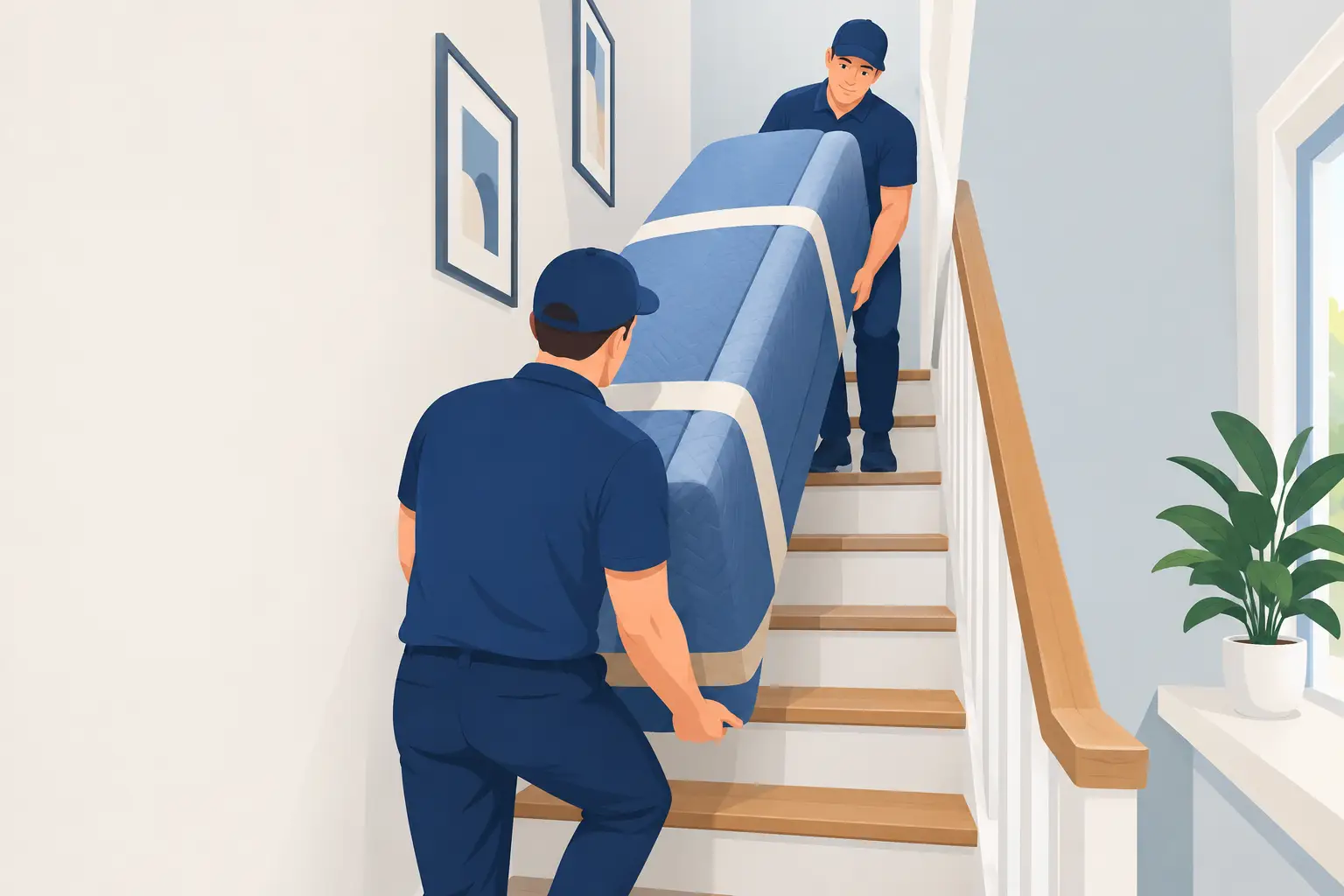
A sofa can fit through a doorway and still be impossible to move upstairs. The problem is usually not the width of the stairs alone. During narrow staircase moving, the landing depth, ceiling height, handrails, turn angle, furniture shape, and weight all determine whether the item can travel safely.
For South Florida renters, condo residents, and homeowners, this challenge comes up often in townhomes, older apartment buildings, walk-ups, and multi-level homes. Rushing the job can gouge walls, damage stair rails, strain someone’s back, or leave an expensive piece of furniture stuck halfway up the stairs. A careful plan is faster than a failed attempt.
Why narrow staircase moving needs a real plan
A narrow stairway creates less room for people to adjust their grip or change direction. Even a few inches can make a major difference when carrying a sectional, mattress, dresser, appliance, safe, or piano. The tightest point may be the lower turn, the ceiling above the top steps, or a small landing where the item must rotate.
Measurements matter, but they are only the beginning. Movers also look at the item’s dimensions, whether it can be disassembled, where its weight sits, and whether there is safe footing throughout the path. A tall dresser may clear the stair width but fail at the landing because there is not enough turning radius. A heavy washer may fit physically, but the load may be too difficult to control on stairs without the correct equipment and crew.
This is why professional movers assess the complete route from the truck to the final room. They do not treat a staircase as one obstacle. They identify every doorway, turn, rail, step, and low ceiling that could affect the move.
Measure the route before moving day
Good moving decisions start before a box is packed. Measure the furniture you are concerned about, then measure the path it will take. Record the clear width of the staircase, the dimensions of each landing, the height from stair tread to ceiling, and the width and height of doors at both ends.
Do not measure from wall to wall if a handrail cuts into the usable space. Measure the actual opening available to the furniture. Note fixed light fixtures, protruding trim, banisters, and tight corners as well.
Photos and a short video of the staircase can help a moving team prepare. Include the bottom of the stairs, every turn, the top landing, and the outside approach to the building. For an apartment or condo, let the movers know about elevator reservations, loading dock rules, parking limits, and stairwell access requirements ahead of time.
Know when an item should come apart
Disassembly can turn an impossible carry into a manageable one. Bed frames, dining tables, sectionals, desks, shelving units, and some exercise equipment can often be broken into smaller components. Removing detachable legs, shelves, mirrors, drawers, and cushions reduces bulk and helps protect fragile pieces.
Not every item should be disassembled. Particleboard furniture can weaken after repeated assembly, antique pieces may have delicate joints, and certain appliances require special preparation. Refrigerators should be emptied, cleaned, and handled upright whenever possible. Washers, dryers, pianos, safes, and pool tables need specific techniques and equipment. If you are unsure, have the item evaluated rather than forcing it apart or taking an unplanned risk.
How professional crews protect stairs and belongings
The safest narrow staircase moving jobs rely on preparation, controlled lifting, and protection at every contact point. Professional movers use moving pads, stretch wrap, rail covers, floor protection, straps, dollies, and other purpose-built equipment based on the item and the route.
Furniture padding does more than prevent scratches. It creates a protective layer if an item brushes a wall or rail during a tight turn. Wrapping drawers and doors keeps them from opening unexpectedly. Removing loose components prevents them from shifting at the worst possible moment.
A trained crew also assigns clear roles. One person does not simply pull from above while another pushes from below. The team decides who calls directions, where each mover will stand, when to stop, and how to reposition safely. Communication is especially important on stairs because the person at the lower end often carries more weight and has limited visibility.
For unusually heavy or awkward items, the answer may be a different route. Depending on the property and item, movers may use an exterior entrance, balcony access, a hoisting solution, or a different staircase. It depends on building rules, weather, clearances, and the equipment required. The best option is the one that protects people and property, not necessarily the one that appears shortest.
What not to do on a tight staircase
A narrow stairway is not the place to improvise. Avoid trying to muscle a large item through with too few people, especially if you are already struggling to keep it level. Do not stand furniture on a banister, use loose ropes, or drag heavy pieces over steps. These shortcuts can cause serious injury and expensive damage.
It is also risky to remove a handrail without confirming how it is attached and whether it is needed for safety. Some rails are structural, and many buildings require them to remain in place. If a rail or door must be removed, it should be handled carefully, stored with its hardware, and reinstalled correctly.
Keep children, pets, and bystanders away from the stairwell while the move is in progress. Clear shoes, rugs, boxes, and decorations from every step. A clear route gives movers room to focus on the load rather than avoiding hazards underfoot.
Preparing your home for moving day
You can make a difficult stair move smoother by handling a few details before the crew arrives. Confirm which furniture is going upstairs and which pieces should stay on the main floor. Empty drawers when requested, remove artwork and wall décor near the staircase, and make sure pets have a quiet, secure space away from the moving route.
If you live in a condo or apartment, reserve required elevators or loading areas early and ask management about insurance certificates, moving hours, and stairwell restrictions. Many South Florida buildings have strict move windows, and missing one can delay the entire relocation.
A practical checklist helps:
- Measure furniture and the full stair route, including turns and landings.
- Photograph tight areas and share access details before moving day.
- Identify pieces that may need disassembly or special handling.
- Clear the stairs, hallways, and entry points completely.
- Confirm building rules, parking arrangements, and approved moving times.
These steps give movers the information they need to arrive prepared instead of discovering a major obstacle after the truck is loaded.
When to bring in professional moving help
Professional help is a smart choice when the staircase is narrow, the furniture is heavy, or the item has financial or sentimental value. It is particularly worthwhile for large sectionals, solid-wood armoires, appliances, pianos, safes, commercial equipment, and oversized mattresses that need to bend around tight landings.
Vision Movers can assess difficult access routes, recommend the right level of packing or disassembly, and provide trained crews with the equipment needed for careful handling. Licensed and insured movers also bring a process to the job: protect the property, control the load, communicate clearly, and keep the move moving without unnecessary damage or delays.
There is a cost trade-off to consider. Hiring help for a challenging staircase may cost more than a basic move, particularly when extra labor, disassembly, or specialized equipment is needed. But repairing a damaged wall, stair rail, appliance, or piece of furniture can cost more, not to mention the risk of an injury that disrupts your move completely.
A tight staircase does not have to dictate what you can bring into your next home. With accurate measurements, a clear route, and the right people handling the heavy work, even difficult access can be managed with care. Give the staircase the attention it deserves before moving day, and your furniture will have a much better chance of arriving exactly where it belongs.
Leave a Reply