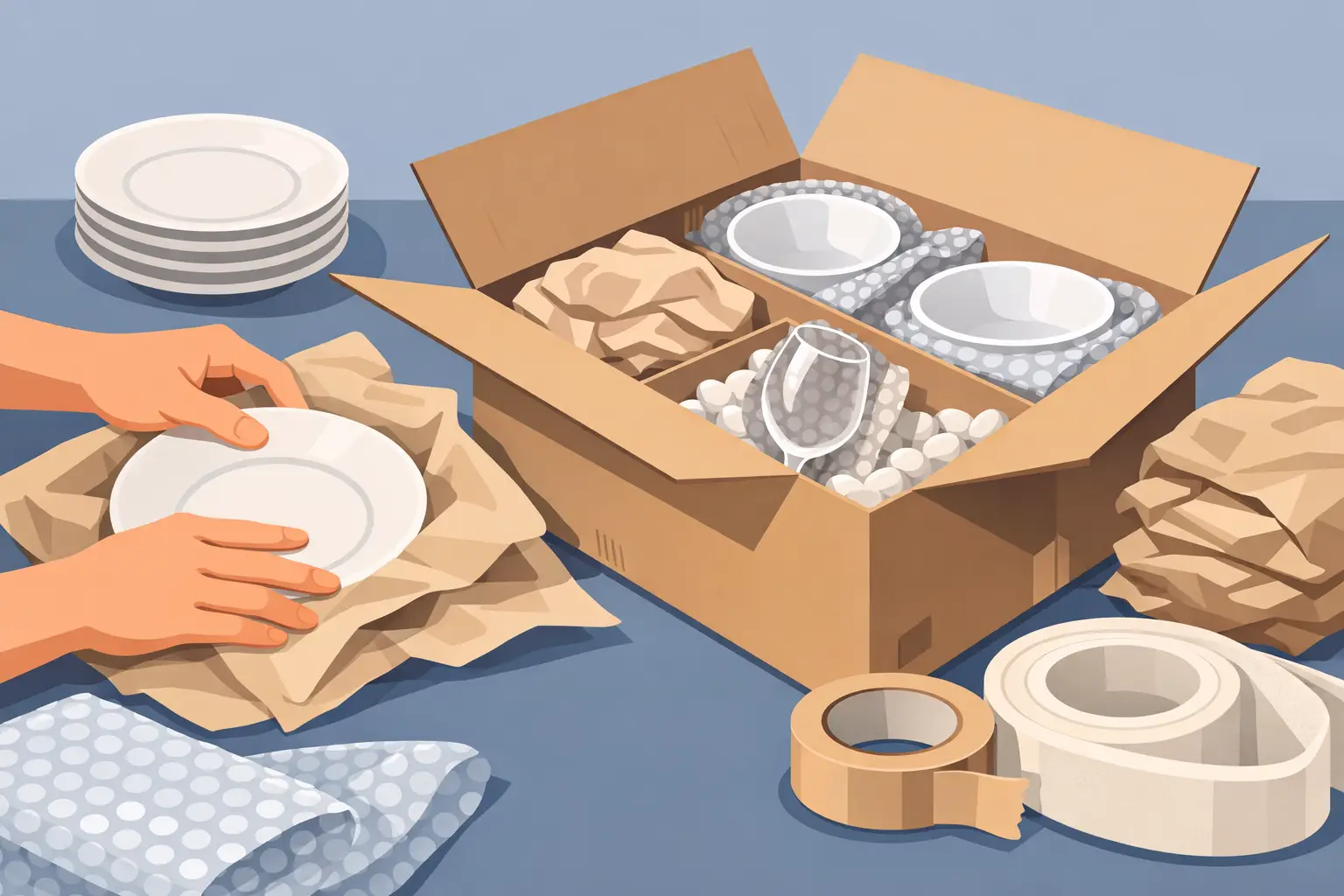
A dish box can look perfectly packed at the kitchen counter and still fail on the first turn out of the driveway. The difference is usually not how much paper you used. It is whether each piece is supported, whether the box is the right size, and whether there is any room for the contents to shift. Knowing how to pack fragile dishes correctly protects the items you use every day as well as the pieces you cannot replace.
For a Fort Lauderdale apartment, condo, or house move, dishes also need to handle elevators, narrow hallways, stairs, loading ramps, and South Florida heat. Pack them with a plan before moving day, and you will spend less time worrying about broken china at the new place.
Start With the Right Packing Materials
Thin grocery boxes and loose newspaper are not enough for a full set of dishes. Use sturdy small moving boxes or double-walled dish pack boxes. Small boxes are easier to control and less likely to become dangerously heavy. A dish pack carton costs more than a standard box, but it is usually worthwhile for china, stoneware, crystal, and collectible serving pieces.
Gather packing paper, bubble wrap, strong packing tape, a marker, box labels, and cardboard dividers if you have them. Clean towels can add padding, but they should not replace packing paper around fragile pieces. Avoid packing directly with printed newspaper when possible because ink can transfer to light-colored plates and glassware.
You will also need a clean, flat work surface. Set up near the cabinet so you are not carrying stacks of dishes across the kitchen. Keep one open box in front of you and tape the bottom with at least three strips: one along the center seam and one across each side seam.
How to Pack Fragile Dishes Step by Step
Sort before you wrap
Do not pack every plate in one rush. First, separate everyday dishes from fine china, oversized platters, stemware, and sentimental pieces. This lets you match the protection to the item. A sturdy dinner plate needs less cushioning than a hand-painted bowl, while a heavy casserole dish needs a box that will not buckle under its weight.
Pack similar sizes together whenever possible. Stacking a small plate on a large plate creates uneven pressure and leaves empty spaces around the edges. If you are donating or discarding chipped items, do it before packing. There is no reason to pay to move dishes you no longer want.
Build a padded base in every box
Before adding any dishes, cushion the bottom of the box with several crumpled sheets of packing paper. The goal is a springy base, not a flat sheet of paper. Add a layer of cardboard over the paper if the box bottom feels flexible.
A useful rule is to protect the bottom, sides, top, and every gap inside the carton. Dishes often break because a box is only padded on the bottom. During loading and unloading, cartons can tilt or rest on their sides, so side protection matters just as much.
Wrap plates, bowls, and saucers one at a time
Place a plate in the center of a stack of packing paper. Pull one corner over the plate, then fold the next corners around it until the entire plate is covered. Add a second sheet for fine china or unusually thin dishes. For everyday plates, you can wrap two plates together only if both are the same size and each is separated by paper.
Stack wrapped plates vertically on their edges, like records in a crate, rather than laying them flat in a tall pile. Plates are generally stronger along their edges and are less likely to crack under the weight of the pieces above them. Fill open space around the stack with crumpled paper so it cannot lean or slide.
Wrap bowls individually, paying extra attention to rims and handles. Nesting bowls can save space, but place paper between each bowl and wrap the complete nested set before it goes into the box. Never force bowls together. A tight fit can cause damage before the move even begins.
Protect cups, mugs, and stemware from pressure
Stuff each cup or mug with crumpled packing paper first. This supports the inside and reduces the chance of cracks when the box shifts. Wrap the handle separately, then wrap the entire mug in paper. Place mugs upright in the box whenever possible, with paper cushioning between them.
Stemware needs more protection than standard drinking glasses. Stuff the bowl with paper, wrap the stem with a narrow strip of paper or bubble wrap, then wrap the full glass. Use cardboard dividers for wine glasses, champagne flutes, and crystal when available. Dividers keep glasses from touching, but each piece still needs to be wrapped.
For a small number of valuable glasses, consider placing each wrapped piece in a separate small box before placing those boxes inside a larger padded carton. It takes more space, but that trade-off makes sense for irreplaceable pieces.
Pack the box tightly, but do not overload it
Add dishes in layers, placing crumpled paper between each layer. Keep the heaviest items at the bottom and lighter items at the top. Do not mix a heavy Dutch oven with delicate wine glasses in the same carton unless the items are completely separated and the box remains manageable.
Stop packing when the box is comfortably liftable. A dish carton should be heavy enough to stay stable but light enough for one person to carry with control. If you have to strain to lift it, split the contents into two boxes. Overloaded cartons are hard on both the dishes and the person moving them.
Before closing the box, fill every open area with paper. Put a hand gently on top of the contents and test for movement. If anything shifts, add more cushioning. Close the top only when it is level, padded, and free of pressure points. Tape the top seam and reinforce it with two cross strips.
Handle Large and High-Value Kitchen Pieces Separately
Serving platters, glass baking dishes, ceramic pitchers, and framed cabinet glass need their own approach. Wrap large flat platters in several layers of paper, place cardboard on both sides, and pack them vertically in a small box. For a heavy glass casserole dish, wrap the lid separately from the base. Packing them together can chip the rim or crack the lid.
China sets with sentimental or financial value deserve extra care. Photograph the set before packing, use double-walled cartons, and avoid putting unrelated heavy items in the same box. If an item is especially delicate, such as an antique tureen or crystal decanter, professional packing may be the safer choice.
Label for Safe Carrying and Easier Unpacking
Write more than “fragile” on the box. Mark the room, a simple description of the contents, and the correct upright direction. For example: “Kitchen – Everyday Plates – Heavy – This Side Up.” This tells movers and helpers what they are handling without requiring them to open the carton.
Keep boxes of dishes together during the move, preferably upright and secured so they cannot slide. Do not place them beneath furniture, appliances, or other heavy boxes. In a moving truck, fragile kitchen cartons belong on a stable, level surface with straps or other secure support around them.
When unloading, bring dish boxes inside early rather than leaving them in a hot garage, on a damp porch, or near a busy entryway. Open one carton at a time and inspect delicate items as you unpack. Save clean packing paper for the next move, for storage, or for wrapping seasonal dishes.
When Professional Packing Is Worth It
Packing your own dishes is practical when you have time, quality supplies, and a manageable kitchen. It may be better to bring in trained packers when you are facing a last-minute move, managing a large household, moving high-value china, or coordinating an apartment or condo relocation with strict elevator times.
Vision Movers can handle full or partial packing for customers who want careful materials, organized labeling, and an experienced crew handling the breakable work. You can pack everyday items yourself and leave china, stemware, and specialty kitchen pieces to the professionals. That flexible approach can control costs while protecting the belongings that matter most.
A few extra minutes of wrapping and filling gaps can save a favorite plate, a family heirloom, or the hassle of replacing an entire dish set. Pack each box as if it will be carried up stairs and set down on its side, because during a real move, it may be.
Leave a Reply