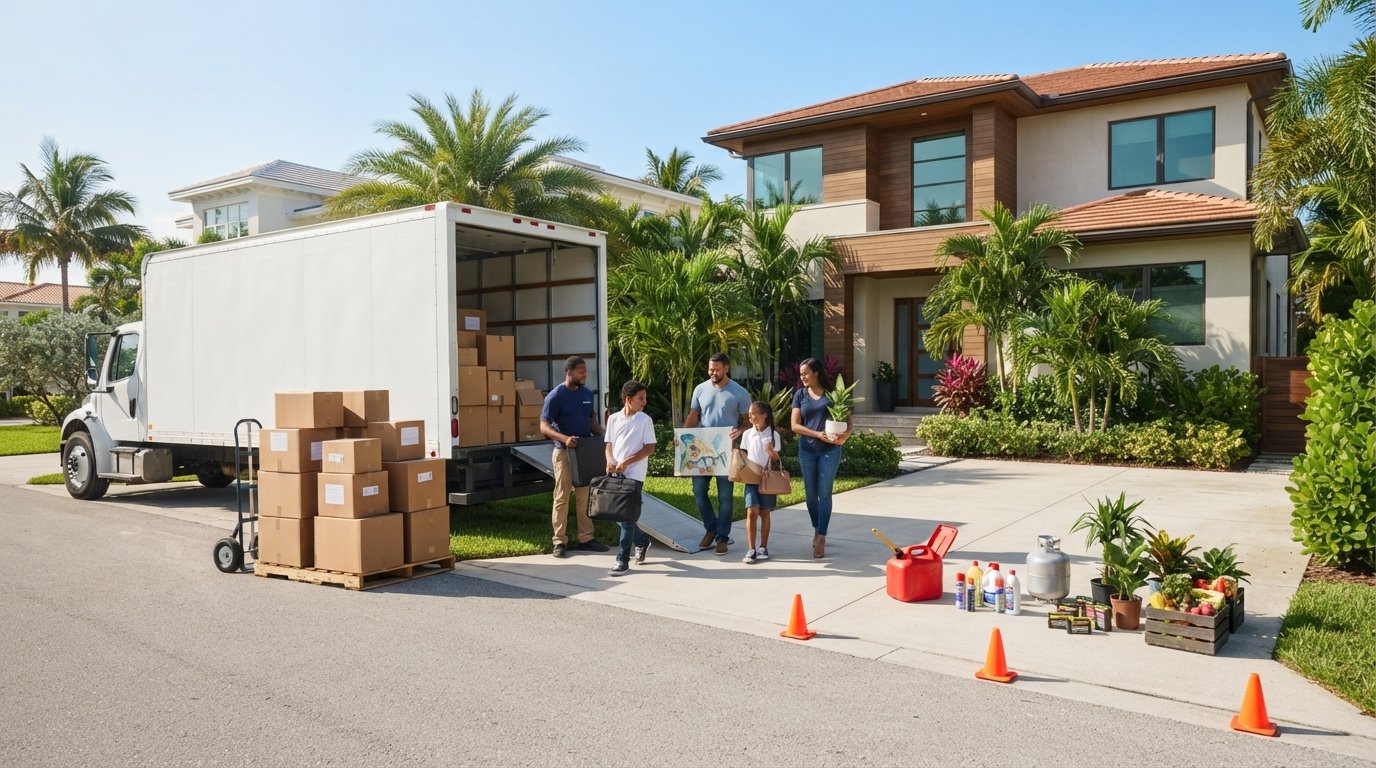
Imagine it’s 8:00 AM on moving day in the sweltering Florida heat. You’re ready to start your new chapter, but the foreman stops at a box of pool supplies and a half-full gas can, shaking his head. This scenario happens more often than you’d think, leaving families scrambled and stressed when they should be celebrating. Learning exactly what not to pack on a moving truck is the best way to avoid these last-minute delays and ensure your belongings arrive in perfect condition.
We know you’ve put an immense amount of work into this transition, and the last thing you want is a chemical leak ruining your designer sofa or a safety violation stopping the truck mid-route. This 2026 safety checklist provides total clarity on “non-allowable” items, from common household cleaners to high-capacity lithium batteries that exceed current DOT limits. We’ll walk through the federal regulations that protect your shipment, explain how to transport essentials safely, and help you understand the liability risks involved with prohibited goods. By the end of this guide, you’ll have a foolproof plan to keep your move legal, safe, and entirely on schedule.
Key Takeaways
- Identify the specific legal categories of “non-allowables” to ensure your shipment complies with federal safety standards and avoids moving-day delays.
- Protect your belongings from fire and chemical damage by mastering the definitive list of what not to pack on a moving truck, including common household cleaners and flammable liquids.
- Learn how to handle perishables and plants using the 24-hour transit rule to prevent pest infestations and unpleasant odors in the cargo hold.
- Determine which high-value assets and irreplaceable personal documents should stay in your possession to maintain security and peace of mind throughout the relocation.
- Streamline your transition by using a simple “Toss, Give Away, and Carry” sorting strategy to organize prohibited items long before the professional crew arrives.
Understanding Moving Company Non-Allowables
“Non-allowables” refers to a specific category of items that professional movers cannot legally or contractually transport. While it might seem like extra red tape, these rules exist to protect the moving crew, the specialized equipment, and your own household goods. The primary document governing your move is the Bill of Lading. This contract outlines the terms of service and explicitly excludes items that pose a safety risk. It’s your roadmap for a successful relocation, and ignoring it can lead to significant delays.
There is a clear distinction between items prohibited by federal law and those restricted by specific company policies. For instance, the Department of Transportation sets strict standards for dangerous goods classifications, which include explosives and radioactive materials. A moving company might go a step further and refuse to transport certain high-value collectibles or house plants to prevent damage or state border delays. Understanding what not to pack on a moving truck helps you avoid the frustration of having boxes rejected on loading day.
The Legal and Liability Risks of Packing Prohibited Items
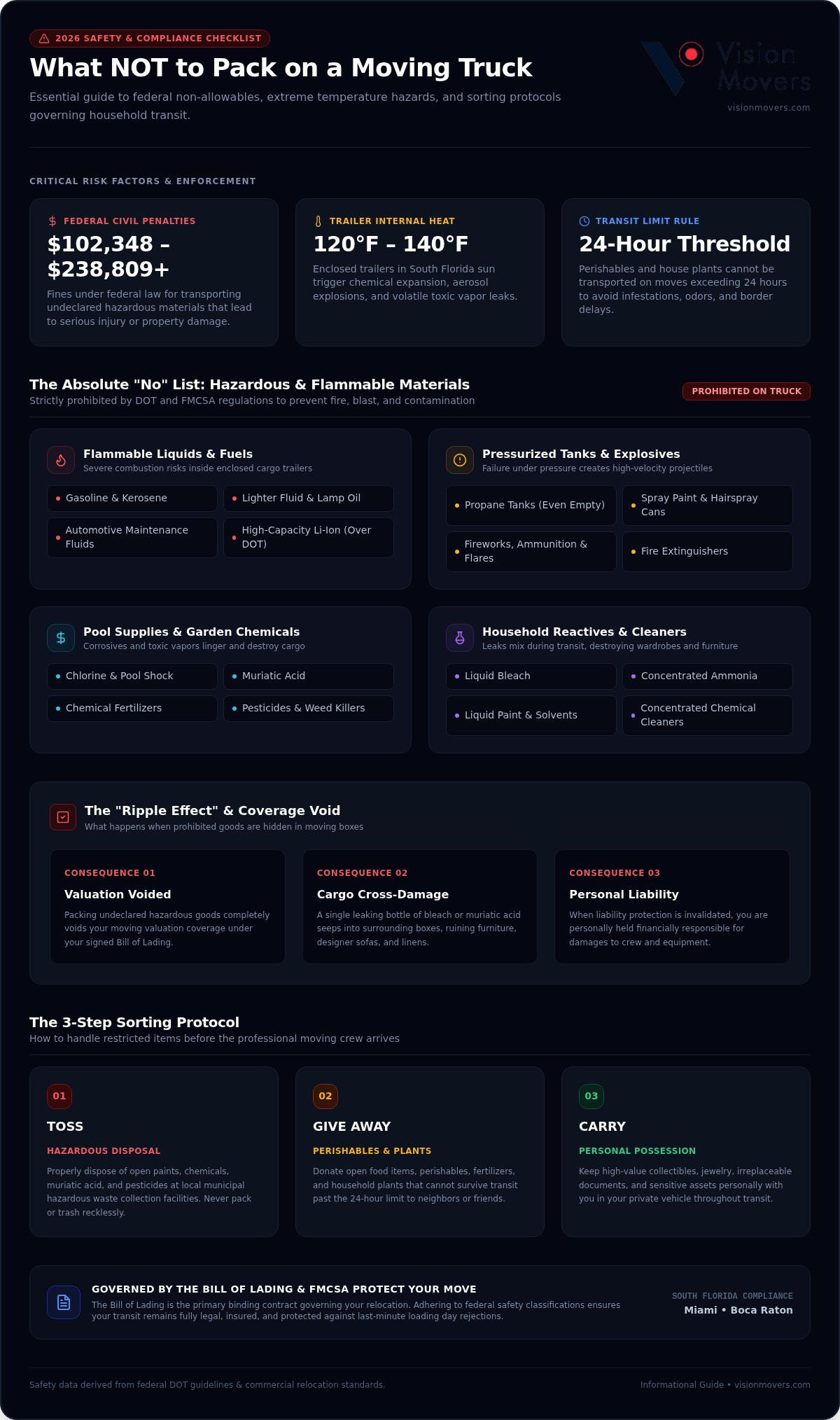
Packing prohibited items carries heavy consequences. If you tuck a container of pool shock or a gallon of paint into a box without declaring it, you risk voiding your moving valuation coverage. Under federal law, transporting undeclared hazardous materials can lead to civil penalties ranging from $102,348 to over $238,809 if the violation causes serious injury or property damage. Beyond the legal fees, there is the “ripple effect.” A single leaking bottle of bleach can seep through multiple boxes, destroying your wardrobe, linens, and furniture in a single afternoon. When liability is voided, you are personally responsible for these losses.
The South Florida Factor: Heat and Humidity
In Miami and Boca Raton, the local climate adds an extra layer of risk. An enclosed moving trailer sitting in the Florida sun can quickly reach internal temperatures between 120°F and 140°F. This extreme heat acts as a catalyst for chemical reactions. Pressurized aerosol cans, such as hairspray or spray paint, can expand and burst under these conditions. Volatile household chemicals may release toxic vapors that saturate your other belongings. While Vision Movers provides professional packing services to secure your allowables, some items simply cannot handle the intense humidity and heat of a South Florida transit. Keeping these items out of the truck is the only way to ensure they don’t become a hazard.
Hazardous and Flammable Materials: The Absolute “No” List
Safety is the top priority for any relocation, especially when navigating the busy highways of South Florida. When you’re identifying what not to pack on a moving truck, hazardous materials sit at the very top of the list. These aren’t just industrial toxins; they’re everyday items found under your kitchen sink or in your garage. Common household chemicals like bleach, ammonia, and concentrated cleaners can react violently if they leak and mix during transit. Similarly, flammable liquids such as gasoline, kerosene, lighter fluid, and lamp oil pose a severe fire risk in the enclosed cargo area.
Pressurized containers and explosives require even stricter handling. Items like hairspray, spray paint, and even fire extinguishers can become dangerous projectiles if they fail under pressure. Ammunition, fireworks, and flares are universally prohibited due to their explosive nature. According to the FMCSA Protect Your Move guidelines, carriers are legally restricted from hauling items that pose a risk to the public, the crew, or the environment. Keeping these items off the truck protects your entire shipment from accidental combustion or chemical saturation.
Pool Chemicals and Garden Supplies
South Florida homes often feature beautiful pools and lush landscapes, but the supplies used to maintain them are strictly “non-allowable.” Chlorine and muriatic acid are highly reactive and can cause significant damage to furniture and electronics if a spill occurs. Garden supplies like pesticides, fertilizers, and weed killers are also excluded because they emit toxic fumes that can linger in the truck long after delivery. Propane tanks are another major concern; even if you believe a tank is empty, residual vapors remain pressurized and are often restricted by safety protocols to prevent explosions. If you’re unsure how to handle these specialized items, our team can provide expert guidance through our professional packing services to ensure your remaining goods are prepared safely.
Automotive and Maintenance Fluids
Your garage likely holds several fluids that movers cannot transport. Motor oil, antifreeze, and brake fluid are notorious for leaking, creating slippery hazards and permanent stains on your belongings. Car batteries are equally dangerous because they contain lead and sulfuric acid, which can cause severe corrosion and chemical burns. The Department of Transportation excludes these materials from standard transport to prevent environmental contamination and life-threatening fires during transit. Before moving day, plan to dispose of these fluids at a local Miami-Dade or Broward County recycling center to keep your relocation moving forward without a hitch.
Perishables, Plants, and Living Things
Relocating involves more than just boxes and furniture; it’s about managing living things and perishable items that don’t thrive in a cargo hold. When deciding what not to pack on a moving truck, food and plants require special attention. Most national carriers refuse perishable items unless the journey is under 150 miles and completed within 24 hours. In the South Florida climate, this rule is vital. Even shelf-stable canned goods can become a liability when trailer temperatures climb toward 140°F, potentially causing seals to fail or contents to spoil. Open food containers are also a hard “no” because they attract pests and create lingering odors that can ruin upholstery.
Pets are never permitted in the cargo area of a moving truck. The lack of climate control and airflow makes it a life-threatening environment for any animal. Your pets must always travel in your personal vehicle where you can monitor their comfort and safety. This ensures they arrive at your new home healthy and ready to settle in. It also allows you to keep their stress levels lower during the transition.
Why Plants are Often Prohibited
Transporting greenery across state lines is complicated by strict agricultural regulations. States like Florida have major checkpoints to prevent the spread of invasive pests like citrus greening or the spotted lanternfly. Beyond legalities, the physical toll on plants is immense. Most species cannot survive three days in a dark, sweltering truck without water or light. Additionally, moisture from recently watered soil can leak out of pots. This leads to mold growth or water damage on nearby wooden furniture and mattresses. If you’re moving locally, it’s best to transport your favorite ferns and palms in your own car.
Managing Your Pantry Before Moving Day
Start an “Eat-Down” challenge at least two weeks before your move to minimize waste. Focus on clearing out your freezer and refrigerator first, then move to open dry goods. If you find unopened non-perishables you can’t use, consider donating them to local South Florida food banks. While food waste is one concern, many pantry-adjacent items like old cleaning supplies or pest sprays fall under EPA household hazardous waste regulations and must be disposed of properly rather than packed. For any dry goods you choose to move yourself, use airtight plastic bins to prevent spills and keep pests away.
Irreplaceable Items and High-Value Valuables
While safety regulations cover hazardous materials, your personal peace of mind depends on how you handle your most precious belongings. Certain items are simply impossible to replace if lost or damaged; these should never be placed in a standard shipment. When you’re determining what not to pack on a moving truck, prioritize your vital documents. Birth certificates, passports, and social security cards are difficult to replicate and essential for establishing your new life. Financial assets like cash, checkbooks, and stock certificates also belong in your personal possession rather than in the back of a van.
Sentimental items deserve the same level of care. Family heirlooms, fine jewelry, and irreplaceable photos should stay with you throughout the journey. Similarly, medical essentials must be kept accessible. Prescription medications and original medical records are critical for your health and shouldn’t be buried in a stack of boxes. By keeping these high-value items in your sight, you eliminate the stress of wondering where your most important assets are located during the transition.
Digital Security and Small Electronics
Laptops, tablets, and external hard drives are sensitive to the extreme conditions found in transit. As we discussed earlier, the interior of a truck in South Florida can exceed 120 degrees; this level of heat is the sworn enemy of digital data and battery health. Beyond the temperature risks, small electronics are highly portable and carry a higher risk of theft if left unattended in a large shipment. It’s always safer to carry your personal devices in your own vehicle. For larger high-value items that require specialized equipment, such as heavy instruments, you should seek professional piano moving and safe handling expertise to ensure they are secured correctly.
The “Personal Box” Strategy
A common moving day mistake is packing the keys to the new house or the television remote controls inside a random carton. To avoid this, create a “Go-Bag” for every family member that contains their daily essentials. You should also establish a designated “Do Not Load” zone in your home, clearly marked with tape or signage. This ensures your local moving service understands exactly which containers must remain with you. If you need help organizing your inventory to separate these valuables, you can contact our team for expert packing assistance.
Proactive Planning: What to Do with Prohibited Items
Success begins with a clear inventory strategy long before the truck arrives at your curb. Once you’ve identified what not to pack on a moving truck, you need a methodical way to handle the items that can’t make the trip. We recommend reviewing your moving contract at least three weeks in advance. This gives you ample time to sort your belongings into three distinct categories: items to toss, items to give away, and items to carry with you. Early communication is vital; if you have “gray area” items like specialized hobby equipment or large quantities of batteries, discuss them with your moving coordinator to avoid surprises on loading day.
Sorting your items isn’t just about clearing space; it’s about making your relocation safer and more efficient. For items that fall into the “Give Away” category, consider neighbors who might need half-full bottles of glass cleaner or unopened bags of potting soil. If you have bulky items, broken furniture, or general clutter that needs to go, check out Copper State Junk Removal & Hauling as a great example of how professional cleanout services handle rapid hauling. For everything else, a proactive disposal plan prevents you from being stuck with hazardous materials on the morning of your move. A well-organized transition allows our crew to focus on the heavy lifting while you maintain total control over your most sensitive or restricted goods.
Disposal and Donation Resources in South Florida
South Florida residents have several excellent resources for handling “non-allowable” goods. In Miami-Dade County, you can utilize the Home Chemical Collection Centers in Pompano or Miami for paints, pesticides, and pool chemicals. Broward County also operates several permanent drop-off sites that accept household hazardous waste. It’s important to remember that while we handle the heavy lifting, Vision Movers does not provide hazardous material disposal services. Donating unopened non-perishables to local food banks or sharing cleaning supplies with community groups is a great way to reduce waste while adhering to safety protocols.
Packing Your “Day One” Essentials Box
Distinguishing between what belongs in the truck and what belongs in your personal trunk is a hallmark of an organized move. Your “Day One” box should stay with you at all times. This container should include toiletries, phone chargers, basic tools, and a change of clothes for every family member. While we are among the top moving and storage companies for managing your household inventory, your immediate comfort depends on having these essentials within arm’s reach. By keeping your first-night supplies and your “Carry with Me” valuables in your own vehicle, you ensure that even the most complex relocation feels like a managed, stress-free experience from start to finish.
Secure Your Stress-Free South Florida Move
Mastering the list of what not to pack on a moving truck is the first step toward a successful and safe transition. By separating hazardous chemicals and flammable liquids from your shipment, you protect your belongings from the extreme heat risks inherent to Florida transit. Keeping your irreplaceable documents, medical records, and family heirlooms in your personal possession ensures your most valuable assets remain secure and accessible throughout every mile of the journey.
As licensed and insured South Florida movers, we take pride in offering white-glove residential moving services that prioritize your peace of mind. Our team provides expert packing and furniture protection to handle your allowables with the highest level of care and professional discipline. Don’t let moving day surprises or rejected boxes slow your momentum. Get a Free, Accurate Moving Quote from Vision Movers Today and let our capable experts guide you through a seamless relocation. You’ve done the hard work of planning; now it’s time to look forward to the excitement of your new home.
Frequently Asked Questions
Can I pack a lawnmower on a moving truck?
You can pack a lawnmower, but it must be prepared with extreme care first. You’re required to drain 100% of the fuel and oil and run the engine until the carburetor is dry at least 24 to 48 hours before loading. This eliminates flammable fumes and prevents oil leaks that could damage your furniture. If the tank isn’t bone-dry, movers will refuse to load it to comply with safety standards.
Are cleaning supplies like Windex or Clorox wipes allowed?
Clorox wipes are generally safe to transport as they are non-liquid and won’t leak. However, liquid sprays like Windex are often restricted because pressurized bottles can fail in the 120 degree heat of a South Florida moving truck. It’s best to carry open liquid cleaners in your personal vehicle or donate them to neighbors. This prevents chemical spills from ruining your mattresses or upholstered items during the transition.
What happens if I accidentally pack a prohibited item?
If you pack a prohibited item, your carrier liability is completely voided for any damage caused by that item. Under federal regulations, you could also face civil penalties starting at $102,348 if undeclared hazardous materials cause a fire or injury. To avoid these risks, we recommend using our professional packing services to ensure every box contains only safe, allowable goods before the truck departs for your new home.
Can movers transport my wine collection or liquor?
Movers can transport wine and liquor, but it requires careful planning for a move in Miami or Fort Lauderdale. Glass bottles are heavy and fragile, so they must be individually wrapped and placed in specialized cell boxes. Remember that extreme trailer temperatures can exceed 140 degrees, which may cook high-end wine or cause corks to pop. For valuable collections, consider climate-controlled transport or moving them in your own air-conditioned car.
Why won’t movers take my houseplants?
Houseplants are often restricted due to strict agricultural border checkpoints in states like Florida. These inspections aim to stop the spread of invasive pests like citrus greening. Additionally, plants rarely survive more than 24 hours in a dark, sweltering cargo hold. Soil moisture can also leak out, leading to mold growth on your other belongings. Most professionals recommend transporting your greenery in your personal vehicle to ensure its survival during the move.
Can I pack ammunition if it is in a locked safe?
No, you cannot pack ammunition on a moving truck, even if it’s stored inside a locked safe. Ammunition and other explosives are classified as non-allowable items due to the high risk of combustion in a hot trailer. While Vision Movers provides expert safe moving, the unit must be completely empty of all hazardous materials. You must transport ammunition yourself or use a specialized courier to remain compliant with federal law.
How do I transport a propane tank for my grill?
Propane tanks are universally barred from moving trucks because they are pressurized and highly explosive. This rule applies to full, partially full, and even empty tanks because residual vapors remain inside the cylinder. To transport your grill, you must disconnect the tank and dispose of it at a local hazardous waste site in Broward or Miami-Dade County. You can then purchase a fresh, safe tank once you arrive at your new residence.
Are batteries allowed on the moving truck?
Small consumer batteries inside electronics are usually allowed if they’re rated at 100 watt-hours or less. However, high-capacity lithium-ion batteries found in e-bikes, scooters, or large power tool banks are strictly prohibited. These items are prone to thermal runaway in the intense South Florida heat. Understanding what not to pack on a moving truck includes removing these large battery packs and transporting them in your own climate-controlled vehicle for safety.
Leave a Reply