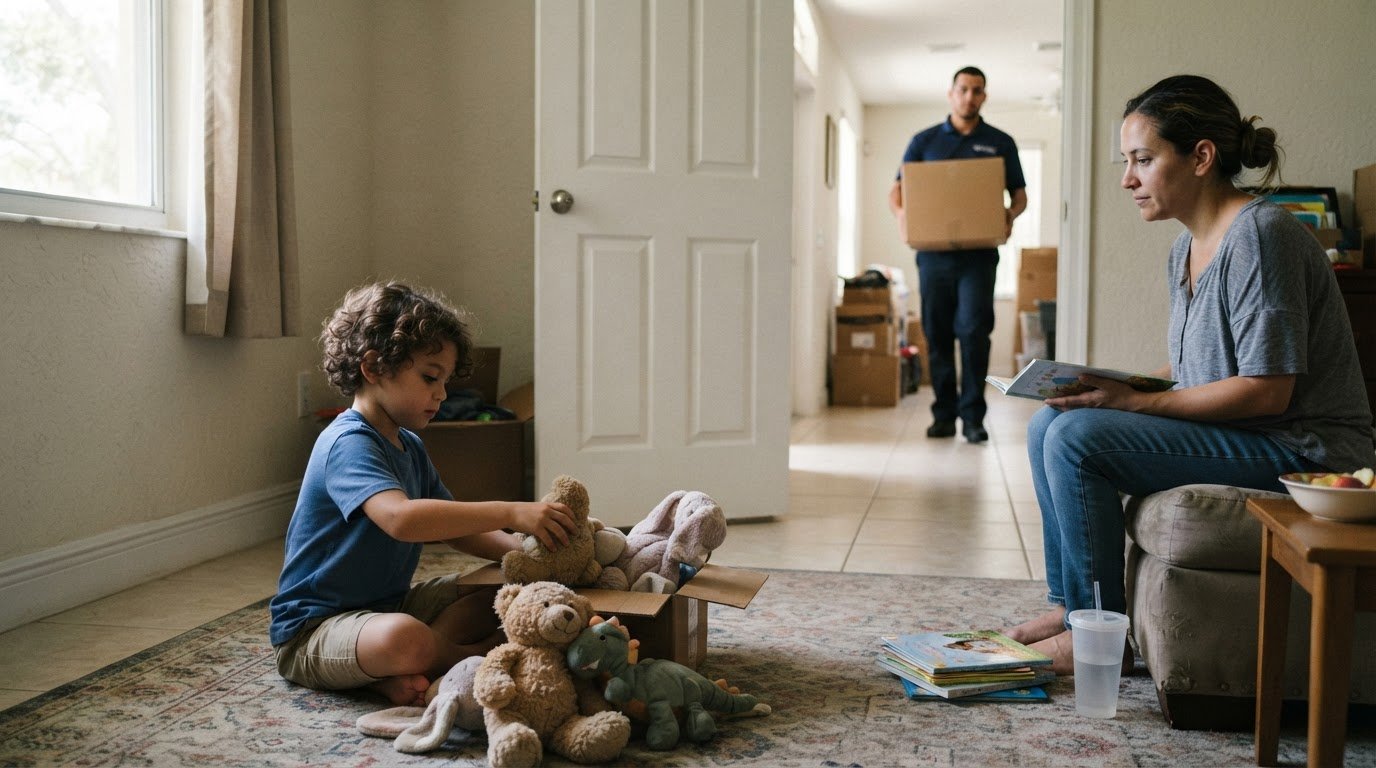
A calm moving day starts with giving children a place of their own, not just something to do. A practical way of keeping kids busy on moving day is to set up a kid-friendly zone in one or two rooms with familiar toys, books, snacks, and water, then offer simple games and safe, age-appropriate tasks. Keep children supervised as the home fills with activity.
It’s understandable to wonder whether children should help, play, or spend the day with someone they trust. The right balance depends on their age and temperament, and a little structure can make the day easier for everyone. These ideas cover low-mess games, child-friendly packing tasks, when childcare may help, and how to arrange a comfortable space they can return to. Simple preparation keeps children engaged while you focus on the move.
Key Takeaways
- Prepare a low-mess activity kit with familiar toys, snacks, water, and a few games to make downtime easier.
- Give children simple, safe packing jobs, such as sorting toys or decorating a box, and let them help make unpacking feel like play.
- Choose between involving children and arranging childcare based on their age, temperament, and need for supervision.
- Create a dedicated space in one or two rooms where kids can play safely away from the busiest moving areas.
1. Keeping children entertained with games and activities
Choose one or two rooms away from the busiest moving activity for a supervised play area. Keep the space clear of boxes, open doors, and packing supplies, then add a blanket, familiar toys, and books. A playpen can give younger children a defined place to play. Supervise children throughout moving day, and make sure they stay in the designated room rather than wandering near work areas.
Pack a moving-day kit before toys and supplies disappear into boxes. Include a favorite toy, comfort item, change of clothes, toiletries, coloring books, crayons, puzzles, and reusable sticker pads. Add easy-to-eat snacks such as crackers, fruit pouches, or granola bars, plus refillable water bottles. Keep the kit with you, not on the moving truck, so activities and essentials are close at hand during downtime.
Choose games that entertain children without adding noise or cleanup. Try a moving-day I Spy challenge using things they can spot, such as packing boxes or a moving truck. Sticker books and magnetic puzzles suit small hands, while an activity book gives older children a quiet project. Plan screen breaks, too: download a favorite movie or show ahead of time, charge the device, and encourage children to switch activities and stretch.
Turn the transition into a chance to make memories. Take photos of the old home, favorite rooms, and moving-day projects, then help children create a simple memory book, especially for a long-distance move. They can also make goodbye cards or welcome signs with paper and crayons. Keep these supplies in the activity kit, and take photos before packing the materials away. A familiar, supervised room and a few ready-to-use activities help keep children occupied while adults manage the move.
2. Keeping children occupied while packing and unpacking
Give children a clear role in packing, then let them make a few simple moving decisions. They can choose which books go in their box or decide what belongs in their first-night bag. For younger children, offer two suitable options rather than an open-ended choice. This helps them feel involved without slowing packing or bringing them near heavy lifting.
Set aside familiar items before packing the rest of a child’s room. Put a favorite toy, blanket, pajamas, a few books, and snacks in a child-focused essentials bag. Keep it accessible during the move instead of sealing it in a box. Add a change of clothes and any everyday comfort items your child relies on. At the new home, unpack this bag first so familiar belongings are ready while other rooms are still being organized.
Turn sorting into a small packing game. Ask children to gather soft toys for one box or match puzzle pieces with their game boards. An older child can decorate a box with markers or stickers so it’s easy to recognize as theirs. Keep tasks simple, and leave sharp tools, tape dispensers, and heavy boxes to adults. This gives children a useful role in the move without assigning unsafe jobs.
Save a few empty boxes for creative play after the packing work is done. Children can draw windows on a box house or make a pretend reading nook with a blanket and favorite books. Keep the play area clear of loose packing supplies, and supervise children using the boxes. At the new home, invite them to find their labeled belongings or choose where a book or toy belongs. These manageable tasks can make packing and unpacking feel more familiar and keep children occupied through each transition.
3. Choosing between involving kids and arranging childcare
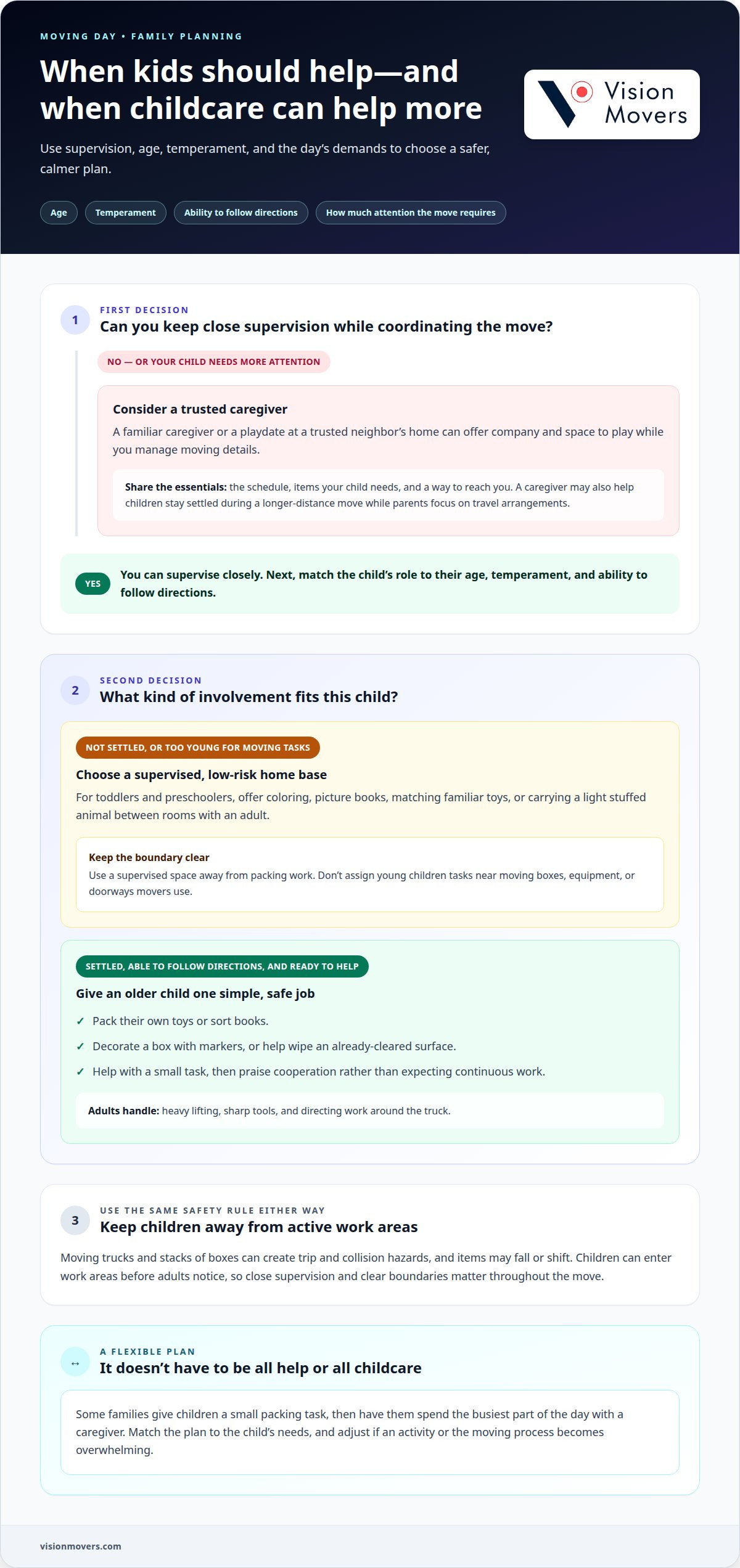
The best plan depends on each child’s age, temperament, and ability to follow directions. A child who enjoys helping may sort soft toys or hand out snacks, while one who feels unsettled may be more comfortable with a trusted caregiver. Consider the move’s distance and how much time you’ll need to manage the details. A good plan keeps children supervised and entertained, helping make the day more manageable for parents.
For toddlers and preschoolers, safe activities include coloring, looking at picture books, matching familiar toys, or carrying a light stuffed animal between rooms with an adult. Keep them in a supervised space, away from packing work. Don’t assign young children tasks near moving boxes, equipment, or doorways movers use.
Moving trucks and stacks of boxes can create hazards such as trips, collisions, and falling or shifting items. Children may also enter active work areas before adults notice, so close supervision and clear boundaries matter throughout the move.
Older children may be ready for simple jobs, but keep the tasks manageable. They can pack their own toys, sort books, decorate a box with markers, or help wipe an already-cleared surface. Adults should handle heavy lifting, sharp tools, and directing work around the truck. Give clear instructions, then praise cooperation rather than expecting children to work continuously.
If children need more attention than you can give while coordinating the move, arrange childcare with someone they know. A playdate at a trusted neighbor’s home offers familiar company and space to play, while a caregiver can help maintain the day’s routine. Share the schedule, essential items, and a way to reach you. For a longer-distance move, a caregiver may also help children stay settled while parents focus on travel arrangements.
Some families combine both approaches: children help with a small packing task, then spend the busiest part of the day with a caregiver. Match the plan to your child’s needs, and adjust if an activity or the moving process becomes overwhelming.
4. Creating a kid-friendly moving zone
Choose one or two rooms as the children’s home base for moving day. Set aside a space away from the main route between the door, moving truck, and packed rooms. Keep the layout simple: a clear place to sit, familiar belongings, and supplies they can reach without crossing busy work areas. Tell the movers which rooms are reserved for the children, and keep the boundary consistent as boxes leave the home.
Make the zone feel familiar rather than temporary. Arrange a favorite blanket, a few books, and a small selection of toys as you would on an ordinary afternoon. Put coloring supplies, stickers, and a drink within easy reach, then store extra materials out of the way. A predictable setup helps children return to the same activity space after breaks or changes in the moving-day routine.
Use a simple routine to explain what happens next. For example, tell children they can play in the zone while adults carry boxes, then join you for a snack or story break. A visual checklist with “play,” “snack,” and “goodbye” can make the sequence easier to follow. If friends or a trusted caregiver are helping, ask them to stay with the children in this space rather than moving between rooms.
Before leaving, invite children to say goodbye to their room or choose one small item to carry. Take a final photo together if that feels meaningful, then bring comfort items to the new home instead of packing them away. On arrival, recreate the familiar corner while other boxes are unloaded. Clear boundaries, supervision, and familiar routines make the space useful from the first packed box until the family leaves.
If coordinating the move is taking your attention away from the kids, get moving-day support so you can focus on their needs.
Vision Movers
Vision Movers helps families plan residential moves so parents can focus on children’s routines and supervision. Whether you’re moving locally or preparing for an interstate relocation, having a moving team handle the logistics can leave you more attention for the kid-friendly zone, activity breaks, and decisions your children need from you. Share your moving plans and family’s priorities to discuss the support that fits your move. Contact Vision Movers to talk about your upcoming relocation.
Make the Move Feel Like a Fresh Start
A move is also a change children can take part in at their own pace. Let them help shape one small part of the new beginning, such as choosing where a favorite book goes or deciding what to explore first. A flexible plan for keeping kids busy on moving day gives you room to adjust as energy, feelings, or moving plans change. Focus on what helps your family feel settled rather than trying to make every moment go perfectly.
When you’re ready for support with the move itself, Vision Movers offers Local Moving, Residential Moving, and Interstate Moving. That help can give parents more attention for the family’s transition while the move is underway. Contact Vision Movers for moving help and discuss the move that lies ahead. With a little preparation and the right support, your family can make space for a positive start in the new home.
Frequently Asked Questions
What are easy ways to keep kids busy on moving day?
Use a simple activity rotation so children know what comes next. For example, offer a quiet game, a short snack break, then a story or favorite show. Keep the choices visible on a small checklist and let your child choose between two activities. If their attention fades, switch activities rather than expecting them to stay engaged with one task all day.
What activities can keep school-age kids entertained while moving?
School-age children may enjoy turning the move into a friendly observation challenge. Ask them to spot details such as a box marked for the kitchen, a furniture blanket, or the truck’s ramp, then record their finds on a checklist. They can also help photograph the day’s progress or make a scrapbook using kid-appropriate magazines collected before the move.
How can you set up a moving-day activity box for kids?
Pack the activity box before sealing away the rest of the play supplies, and label it clearly so an adult can find it quickly. Group small materials in separate pouches, such as crayons with a coloring pad and puzzle pieces with their board. Include a few familiar choices, then let your child select what to use first. Keep tiny pieces away from toddlers.
What snacks and meals are practical for kids on moving day?
Choose food that’s easy to serve without a kitchen, such as pre-packed sandwiches, fruit, crackers, and water. Pack each child’s meal separately so it’s easy to find during a busy stretch, and include a familiar choice for picky eaters. Keep food away from packing materials, and set aside a clean place to eat before the kitchen is packed.
Should kids stay with a babysitter or family member during a move?
Childcare can be a good fit if your child needs close attention while you coordinate the move, or if the home will be especially busy. A familiar family member or trusted caregiver can follow the child’s usual routine and provide a quieter setting. Share the moving-day schedule, where you’ll be, and how to reach you if plans change.
How can kids help with age-appropriate moving tasks?
Offer a small job that doesn’t involve lifting or entering active work areas. A child might hand out packaged snacks, sort a few safe belongings, or help care for the family pet with adult supervision. Keep instructions simple and stop if the task becomes distracting. The aim is to give children a sense of participation while adults handle equipment and heavy boxes.
Leave a Reply