
If a valuable item is damaged during your move, does the mover’s protection work like an insurance policy? Not necessarily. Understanding moving valuation vs insurance starts with recognizing that valuation sets the mover’s contractual liability, while insurance is a separate policy with its own coverage and exclusions. That difference can shape how a loss is handled.
It’s reasonable to expect your belongings to be handled with care and to want clear answers if something goes wrong. The protection you select may not cover every kind of loss, and high-value items may need special attention. Reviewing the terms before moving day can help you make a more informed decision.
This guide explains what moving valuation covers, how it differs from insurance, and why rules and options may vary between local and interstate moves. You’ll also learn which details to review in your estimate, order for service, bill of lading, inventory, and existing homeowners or renters policy. Knowing what your documents say and which belongings need extra attention can help you choose protection that fits your needs and comfort with risk.
Key Takeaways
- Learn why mover valuation and an insurance policy are different forms of protection, with separate terms and claim processes.
- See how common interstate valuation options work and why their applicability may differ for local moves.
- Use a document checklist to review your selection, limits, exclusions, and deductible language before signing.
- Understanding moving valuation vs insurance can help you weigh your belongings’ value against your comfort with risk.
- Learn how professional packing, furniture protection, and an organized inventory can help reduce preventable moving risks.
Moving Valuation vs. Insurance: What Is the Difference?
The terms “valuation” and “insurance” can sound interchangeable when you’re arranging a move, especially when both come up in conversations about damaged or missing belongings. They refer to different kinds of protection. Understanding moving valuation vs insurance starts with asking who is responsible, which written terms apply, and how a claim would be handled.
Valuation and insurance are different forms of financial protection. Valuation describes the mover’s contractual level of liability for covered loss or damage under the move agreement. Insurance is a separate policy governed by its own coverage, limits, exclusions, and claims process. Careful handling can help reduce preventable damage, but it doesn’t make contractual coverage unlimited.
What does moving valuation mean?
Moving valuation sets out the mover’s liability under the agreement for your move. The specific terms depend on the option selected and the paperwork, so choosing a valuation option does not mean you’ve purchased an insurance policy. Find the selected option and its conditions in your moving documents, then make sure the written terms match your understanding before signing.
If an item is damaged, the mover’s responsibility is considered under the applicable agreement and valuation terms. It isn’t automatically settled through an insurance policy. For general background on moving companies and their services, see Moving company regulations and services.
What does moving insurance mean?
Insurance is a separate contract, typically governed by a policy issued by an insurance provider. The policy language determines which events are covered, the applicable limits and exclusions, any deductibles, and the steps required to submit a claim. Review those details in the policy rather than relying on a general description of coverage.
Your homeowners or renters policy may address some belongings during a move, but don’t assume it automatically covers items in transit or while movers are handling them. Look for relevant limits, exclusions, and claim requirements in the policy. Moving arrangements and applicable rules can differ, so clear paperwork is useful for both local and interstate moves.
In short, valuation explains the mover’s contractual liability, while insurance follows a separate policy. Knowing which document governs each type of protection gives you a practical starting point for reviewing your options and planning for belongings that need extra attention.
How Moving Valuation Options Work, and Where Their Limits Apply
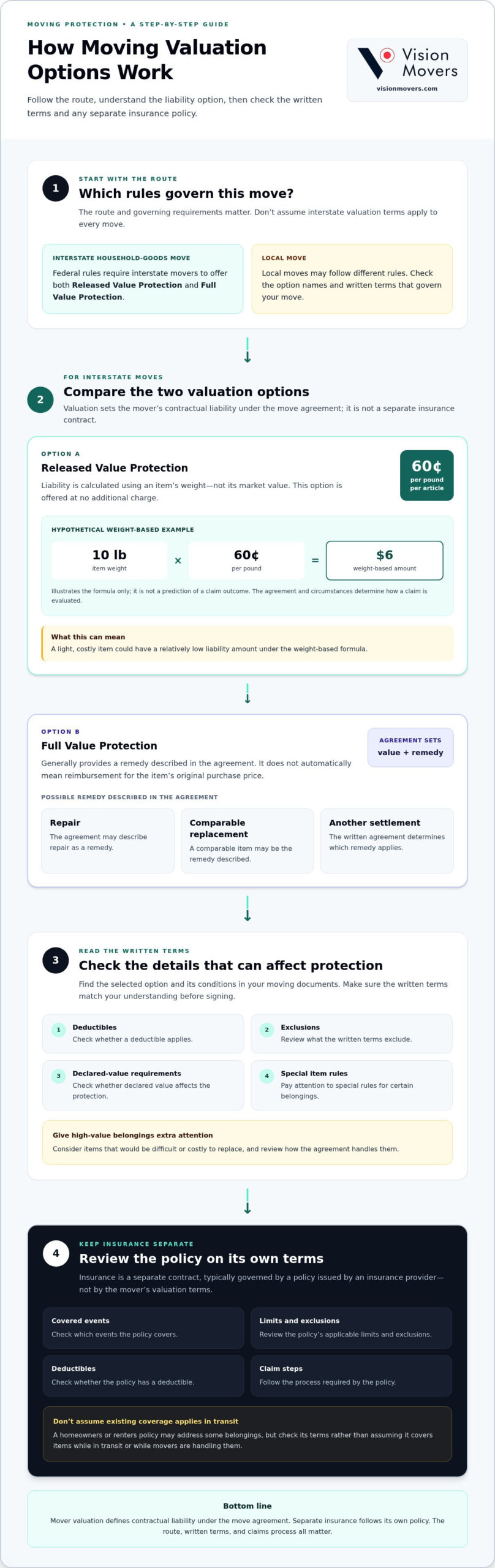
For interstate household-goods moves, two common valuation terms are Released Value Protection and Full Value Protection. Federal rules require interstate movers to offer both options. Don’t assume their terms apply to every move: local moves may follow different rules, and the route and governing requirements matter. For a federal overview, read the FMCSA guidance on moving valuation and insurance.
Valuation is liability-based protection, not a separate insurance contract. The option you select affects how a covered loss or damage claim may be handled under the move agreement. Review the applicable paperwork carefully, especially if you have high-value belongings.
Released value protection and per-item limits
For interstate moves, Released Value Protection limits a mover’s liability using an item’s weight rather than its market value. The federal standard is 60 cents per pound per article, and this option is offered at no additional charge. As a result, a light, costly item could have a relatively low liability amount under this formula.
Hypothetical example: If a 10-pound item were damaged, the weight-based calculation at 60 cents per pound would be $6. This illustrates the formula, not a prediction of a claim outcome or a statement about any particular move. The agreement and circumstances determine how a claim is evaluated.
Full value protection and its terms
Full Value Protection generally provides a remedy such as repair, replacement with a comparable item, or another settlement described in the agreement. It doesn’t automatically mean reimbursement for the item’s original purchase price. The written terms determine how value is assessed and which remedy applies.
Read the details before selecting this option. Deductibles, exclusions, declared-value requirements, and special rules for certain items can affect the protection available. Pay particular attention to belongings that would be difficult or costly to replace.
For a local move, don’t assume interstate terminology or federal requirements apply in the same way. Compare the option names and written terms in your paperwork with the rules that govern your move. Clear planning and careful packing can also help reduce preventable risks. If you’re organizing a move, professional packing and furniture protection can help prepare your belongings for transportation.
Valuation vs. Insurance: Compare the Protection Before You Choose
A side-by-side review helps clarify where mover liability ends and a separate insurance policy may begin. Documents, limits, exclusions, and claim steps can differ, so read the actual terms instead of relying on a label such as “protection.” Careful handling and professional packing can help reduce preventable damage, but they don’t make contractual coverage unlimited.
| What to compare | Mover valuation | Separate insurance |
|---|---|---|
| Who provides it | The moving company, through the liability terms in the move agreement. | An insurance provider under a separate policy. |
| Governing document | The move paperwork, including the selected valuation option. | The policy and any related endorsements or declarations. |
| Limits | Set by the selected option and applicable terms, not automatically by an item’s purchase price. | Set by the policy’s coverage limits and conditions. |
| Exclusions | Specified in the move agreement and applicable rules. | Specified in the policy, which may also include deductibles. |
| Claim route | Follow the process and deadlines stated in the moving documents. | Follow the insurer’s policy instructions for reporting and supporting a claim. |
Separate insurance may supplement mover valuation, overlap with some protections, or exclude particular situations. The policy wording determines how the arrangements work together, so don’t assume both will pay for the same loss. A practical part of understanding moving valuation vs insurance is comparing the terms and claim steps in writing before you decide.
Which belongings need closer attention?
Make an inventory and record the condition of your belongings before the move. Photograph items that are especially valuable or fragile, and identify them clearly in your records. Antiques, artwork, electronics, and collectibles may receive special treatment under a move agreement or insurance policy. Look for declared-value requirements and item-specific exclusions rather than assuming a common household item and a rare collectible are treated alike.
How do move type and location affect the comparison?
Interstate moves and Florida intrastate moves may be governed by different rules and paperwork. Don’t assume an interstate valuation option or federal requirement automatically applies to a local South Florida move. Review the documents and requirements for your specific route. Local and long-distance moves can involve different planning details. For help preparing for a local move, see this local moving service guide.
A Practical Checklist for Reviewing Moving Protection Documents
A few careful checks before moving day can make your protection choices and records easier to understand. Use this sequence to review the paperwork, document your belongings, and know where to look if something is damaged.
- 1. Gather the move documents. Set aside the estimate, order for service, bill of lading, inventory, and any separate insurance policy. Keep copies together so you can compare the terms rather than relying on memory or verbal explanations.
- 2. Check the selected valuation option. Find the option recorded in the bill of lading and compare it with what you intended to select. Read the stated limits, exclusions, declared-value instructions, and any deductible language. Don’t sign paperwork with blank sections that could affect your move or protection choice.
- 3. Review the inventory item by item. Confirm that it identifies your belongings clearly and records their existing condition accurately. Flag fragile or special-handling items, and correct omissions or errors before the inventory is finalized.
- 4. Review any separate policy. Read the policy’s transit coverage, limits, deductible, exclusions, notification deadlines, and claim instructions. Don’t assume homeowners or renters coverage applies to belongings in transit. Look for the relevant wording in the policy itself.
- 5. Create your own records. Photograph valuable or fragile belongings and keep an inventory with receipts or appraisals where available. Store these records with your move documents so you can find them quickly if needed.
This preparation puts understanding moving valuation vs insurance into practice: you can identify which document sets the mover’s liability terms and which governs a separate policy. Clear records also make it easier to describe a loss or damage claim.
What to document if something is damaged
If you discover damage, take clear photos of the item and its packaging before moving or discarding materials, when practical. Write down the item, the visible damage, and the date you noticed it. Keep the related inventory and move paperwork with your notes. Then follow the claim instructions and deadlines in the applicable documents. Requirements can differ, so use the process stated in the agreement or policy rather than assuming one procedure fits every move.
Organized paperwork works best alongside thoughtful packing and move planning. Plan your move with Vision Movers and prepare your belongings with care.
Protect Your Belongings with Clear Planning and Careful Moving
Protection starts with knowing which terms apply and preparing your belongings thoughtfully. Mover valuation sets the mover’s contractual liability under the move agreement. Insurance follows a separate policy’s terms. Understanding moving valuation vs insurance helps you review those protections clearly, while careful packing, furniture protection, and an organized inventory can help reduce preventable risks.
How professional packing supports a better-prepared move
Suitable packing materials and secure wrapping help prepare belongings for handling and transportation. Furniture protection can help shield surfaces from scrapes and bumps during the move. These steps support careful handling, but they can’t prevent every loss or replace a review of valuation terms or a separate insurance policy.
Before packing begins, identify fragile, valuable, and special-handling belongings in your inventory. Note their condition and keep relevant photographs or records together. This gives you a clearer reference as belongings are prepared and helps keep important details from getting lost in the larger move plan.
Plan residential and commercial moves with protection in mind
A clear plan connects your inventory, packing needs, and document review. For a household move, identify delicate items and confirm that their details are reflected in your records. For a business relocation, organize equipment and other important items so they can be tracked throughout the move. A structured plan helps coordinate the transition and keep key belongings accounted for.
Specialty belongings may need a more tailored handling plan. If a piano is part of your move, review professional piano moving to learn about planning for this large, delicate instrument. Matching preparation to the items being moved helps keep logistics organized without confusing careful handling with financial coverage.
Vision Movers provides professional packing and furniture protection to help prepare belongings for transportation. These services support a well-planned move. They aren’t an insurance policy or a substitute for understanding the written protection terms that apply to your move.
For a more organized relocation, plan your move with Vision Movers. Clear preparation can help you move forward with a better understanding of your belongings, your paperwork, and the steps involved.
Move Forward with a Clear Protection Plan
Understanding moving valuation vs insurance comes down to knowing which terms govern each kind of protection. Valuation sets the mover’s contractual liability, while a separate insurance policy follows its own coverage, exclusions, and claim requirements. Review your move documents before signing, and keep an accurate inventory with notes or photos of valuable and fragile belongings.
Careful planning matters too. Professional packing and furniture protection can help reduce preventable risks, but they don’t replace a review of your protection terms. Vision Movers provides residential and commercial moving for local and long-distance relocations, along with packing and furniture protection.
With clear records and a well-organized move plan, you can make decisions with greater confidence. Plan your move with Vision Movers and take the next step toward a more prepared relocation.
Frequently Asked Questions
Is moving valuation the same as moving insurance?
No. Moving valuation describes the mover’s contractual liability for covered loss or damage under the move agreement. Insurance is a separate policy with its own coverage, exclusions, limits, and claim process. Understanding moving valuation vs insurance means checking which document governs each type of protection. Don’t assume an option called “valuation” is an insurance policy or that either type of protection covers every possible loss.
What is the difference between released value protection and full value protection?
Released Value Protection generally bases a mover’s liability on an item’s weight, not its market value. For interstate moves, the federal standard is 60 cents per pound per article. Full Value Protection generally provides a remedy such as repair, replacement, or another settlement under the move agreement’s terms. Deductibles, exclusions, and declared-value conditions may affect the outcome, so neither option should be read as an unconditional promise of reimbursement for the full purchase price.
Does homeowners insurance cover belongings during a move?
It may provide some protection, but coverage during a move isn’t automatic. A homeowners or renters policy may limit or exclude coverage for belongings in transit or while movers handle them. Review the policy language for covered events, limits, exclusions, deductibles, and claim requirements. If the wording isn’t clear, seek an explanation from the insurer that issued the policy before relying on it for your move.
Can I buy separate insurance for items being moved?
Separate insurance for belongings during a move may be available through an insurance provider, but the actual protection depends on the policy you obtain. Read its transit coverage, limits, exclusions, deductible, and claim instructions. Pay special attention to high-value or fragile belongings, since a policy may set specific conditions for them. Compare its terms with your mover’s valuation paperwork to understand where coverage may overlap or differ.
How much does moving valuation cover if an item is damaged?
The amount depends on the selected valuation option and the move’s applicable terms. For an interstate move under Released Value Protection, the federal standard is 60 cents per pound per article, so a light item may have a low weight-based liability amount compared with its market value. Full Value Protection follows the agreement’s remedy and conditions. Check your paperwork for limits, exclusions, and any declared-value requirements.
What happens if a mover damages or loses one of my belongings?
Document the issue promptly and follow the claim process in the applicable move agreement or insurance policy. Photograph the item and packaging when practical, note when you discovered the damage, and keep your inventory and related paperwork. Review the documents for notification deadlines and required steps, since the process depends on which protection applies. Clear records can help you describe what happened and support your claim submission.
Do valuation rules differ for local and interstate moves in Florida?
Yes. Don’t assume interstate requirements apply to a local move. Interstate household-goods moves use federal valuation terminology and requirements, while a Florida intrastate move is subject to the rules that apply to that move and its paperwork. For local relocations in Miami, Fort Lauderdale, Boca Raton, Brickell, Weston, Plantation, Pompano Beach, Broward County, Hollywood, Dania Beach, Coral Springs, or Parkland, review the written terms for your specific route.
Leave a Reply