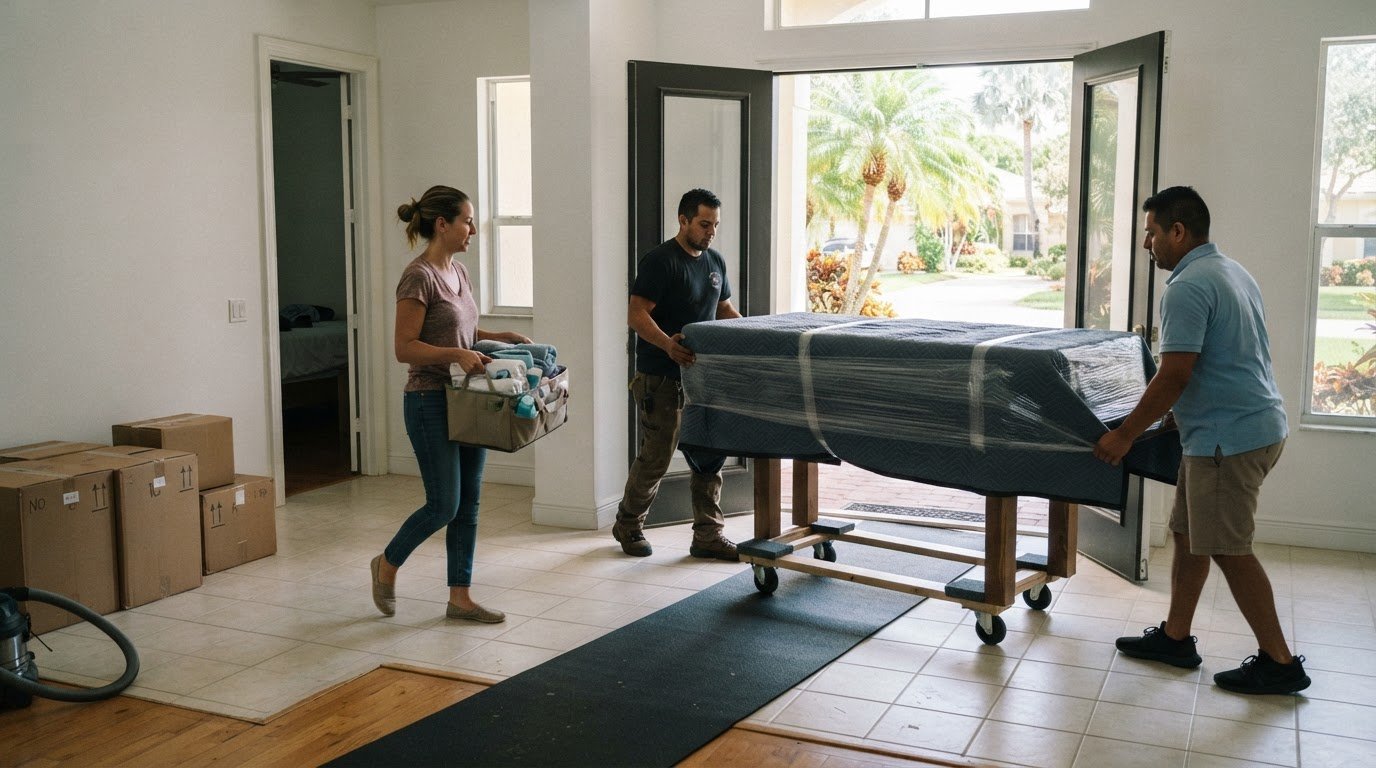
Start preparing 10-12 weeks before moving day. Use the ultimate moving checklist for 2026 to set a budget, research and compare movers, and organize your priorities early. At 8-10 weeks out, book your move, begin decluttering, and gather key documents so the larger tasks don’t pile up at the last minute.
A move comes with plenty of details to track, from packing and address changes to preparing for your first night in a new home. A clear timeline makes those tasks easier to handle one step at a time.
Use this checklist to plan what to do and when, from packing efficiently and updating records and utilities to organizing moving day and settling in. Adjust the timeline to your move, priorities, and schedule.
Key Takeaways
- Group packing supplies by task, and label boxes so you can identify their contents after stacking.
- Update your address with important contacts and arrange for medical records to reach your new providers.
- Prepare your new home before arrival, then unpack the items you’ll need first.
- Plan your travel and keep essential documents and first-night necessities accessible during the move.
Packing supplies and space-saving methods
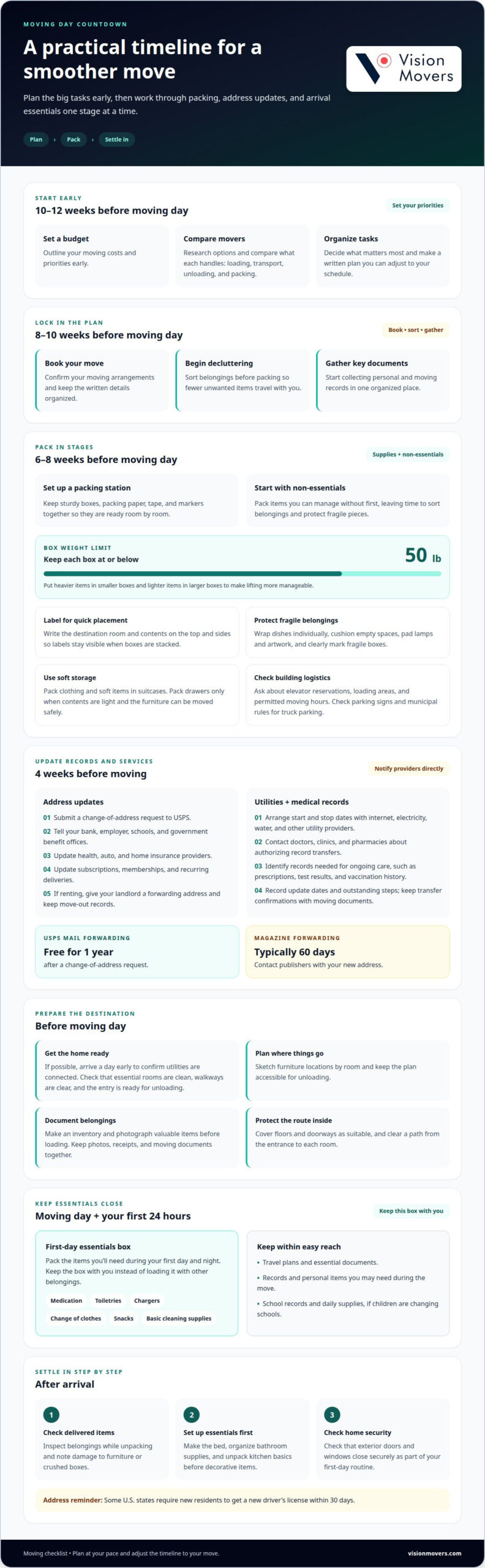
Use the ultimate moving checklist 2026 to schedule packing supplies and room-by-room tasks. Order supplies and start packing non-essentials 6-8 weeks before moving day. This gives you time to sort belongings and protect fragile items without rushing.
- Gather sturdy boxes, packing paper, tape, and markers. Keep supplies together so you can reach them as each room is packed.
- Put heavier items in smaller boxes and lighter items in larger boxes. Keep boxes at or below 50 pounds to make lifting more manageable.
- Label the top and sides of each box with its destination room and contents. Labels remain visible when boxes are stacked, helping guide placement during unloading.
- Wrap dishes individually and cushion empty spaces. Protect lamps, artwork, and specialty belongings with suitable padding, then mark fragile boxes clearly.
- Use suitcases for clothing and soft items. Pack drawers only when contents are light and the furniture can be moved safely.
How do I compare professional movers, container services, and DIY moving? Compare what each option handles, including loading, transportation, unloading, and packing. Choose based on your schedule, belongings, available help, and how much work you want to manage.
What local permits, parking rules, or building requirements could affect your move? Ask building management about elevator reservations, loading areas, and permitted moving hours. Check parking signs and municipal rules before choosing where a moving truck can stop.
What are common moving scams, and how can you verify a moving company? Be cautious of pressure to pay immediately, blank paperwork, or unexplained changes to written terms. For interstate moves, verify the company’s USDOT number and check that its legal name matches across the estimate and other documents.
Pack a first-day essentials box for the first 24 hours in your new home. Include medication, toiletries, chargers, a change of clothes, snacks, and basic cleaning supplies. Keep the box with you instead of loading it with other belongings.
Add address updates and personal documents to your moving inventory. Some U.S. states require new residents to get a new driver’s license within 30 days, according to flhsmv.gov. Keep the ultimate moving checklist 2026 handy as you mark these tasks complete.
Changing your address and transferring medical records
Start address updates four weeks before moving, then work through a written list. Submit a change-of-address request to the U.S. Postal Service and update important contacts directly. USPS forwards mail for free for one year after a change-of-address request. Magazines are typically forwarded for 60 days, so contact publishers with your new address.
How do you update your address, utilities, insurance, and subscriptions before moving? Submit your USPS change-of-address request, then notify each provider directly. Share your move dates with utility companies, arrange service at your new home, and update your insurance and subscription accounts.
- Tell your bank, employer, schools, and government benefit offices your new mailing address. Updating them directly helps prevent important notices from going to your former home.
- Change your address with health, auto, and home insurance providers. Ask each company to update policy records and send future documents to the correct address.
- Contact internet, electricity, water, and other utility providers. Arrange start and stop dates, and record confirmation details in one organized moving file.
- Update recurring deliveries, memberships, and online shopping accounts. Review saved addresses before placing orders, especially for prescriptions and essential household items.
- If you rent, give your landlord your forwarding address and keep move-out correspondence together. Record the condition of the home and retain messages about your deposit.
For medical records, contact each current doctor, clinic, and pharmacy. Ask how to authorize transfer to your new provider, and identify records needed for ongoing care, such as prescriptions, test results, and vaccination history. Keep copies of transfer confirmations with your moving documents. If you have appointments scheduled near moving day, tell the office your new contact details and ask how to access records while the transfer is underway.
Create a simple tracking sheet with provider names, update dates, and outstanding steps. Mark an account complete only after receiving confirmation or seeing the revised address in its portal. This helps you catch a missed utility, insurance policy, or medical office before mail and services become harder to manage.
Settling into a new home
Before moving day, prepare the new home so furniture and boxes have clear destinations. If possible, arrive a day early to confirm utilities are connected. Check that essential rooms are clean, walkways are clear, and the entry is ready for unloading. A simple room plan helps movers place large pieces correctly and reduces unnecessary rearranging.
- Make an inventory of belongings and photograph valuable items before loading. A dated record helps you compare each item’s condition after delivery.
- Declutter before unpacking, and donate items you no longer use. Fewer boxes make it easier to organize closets, cupboards, and shared spaces.
- Mark furniture locations on a room sketch, such as the bed against the bedroom’s longest wall. Keep the sketch accessible so placement decisions are ready during unloading.
- Protect floors and doorways with suitable coverings before carrying furniture inside. Clear a path from the entrance to each room to limit bumps and blocked access.
- Inspect delivered belongings as you unpack, noting damage to furniture or crushed boxes. Keep photos, receipts, and relevant moving documents together.
Set up essential spaces first. Make the bed, organize bathroom supplies, and unpack kitchen basics before opening decorative boxes. If children are changing schools, keep school records and daily supplies within easy reach. Once mail and utilities are in place, share your new address with friends and update the local contact lists you use regularly.
Include home security in your first-day routine. Check that exterior doors and windows close securely, and locate the smoke alarms and circuit breaker. If you rent, discuss lock changes with your landlord before arranging any work. Keep keys in a consistent place, and avoid leaving boxes visible from windows while unpacking.
Use a short arrival checklist to catch overlooked tasks:
- Test lights, water, and major appliances.
- Confirm furniture placement before removing protective wrapping.
- Unpack medication, chargers, and daily-use items first.
- Save service quotes and receipts with your household inventory.
Travel and essentials-box preparation
Six weeks before moving day, confirm building access, elevator arrangements, and loading instructions. If you rent, notify your landlord and make any required moving reservations. Keeping these details together can help prevent access conflicts on moving day.
Four weeks before the move, schedule utility shutoffs and start-ups at both homes. Arrange the internet connection date for your new address, and note when services at your current home should end. Keep confirmation details with your moving calendar so you can resolve scheduling gaps promptly.
Two weeks before moving day, pack most belongings and confirm travel plans. Arrange care for children or pets, plan your route, and keep medication and travel documents out of packed boxes. Planning your arrival separately helps you reach the new home without searching through cartons.
- For an interstate move, use a moving company licensed with a U.S. Department of Transportation (USDOT) number. Keep the company’s move details and your travel itinerary together.
- Pack an essentials box for the first 24 hours at home. Keep it accessible during travel, rather than buried among boxes loaded for delivery.
- Set aside identification, financial documents, lease or closing papers, and valuables. Carry these with you instead of placing them in the moving truck.
- During the week before moving, confirm travel arrangements and moving-day details. Save key contacts and the destination address where you can reach them offline.
- One day before departure, complete a final walk through each room. Check closets, cabinets, and charging outlets for belongings left behind.
Pack an essentials box for your first night, rather than trying to include everything you will need while unpacking. Add household-specific items such as pet food, children’s pajamas, or basic kitchen tools. Keep the box separate from packed luggage, and make sure everyone traveling knows where it is. This makes arrival easier while the rest of your supplies are still boxed.
For help coordinating the move itself, explore interstate moving support.
Vision Movers: Local Moving
Vision Movers helps with local moves when packing, protecting furniture, loading, and unloading feel like too much to manage alone. Its residential moving service supports household relocations, and its local moving service is suited to moves within the area. For moves between states, Vision Movers offers interstate moving, as well as commercial moving for businesses.
When you’re ready to move from your checklist to practical support, share your plans with Vision Movers, including the tasks you want help with, such as packing belongings or transporting furniture. A clear moving plan helps keep preparations organized from packing through delivery.
Contact Vision Movers to discuss your move and next steps.
Make your next move a clear next step
A moving plan works best when it stays useful beyond the page. Keep the ultimate moving checklist for 2026 as a working document, and adjust tasks as your move takes shape. Add decisions, confirmations, and anything that still needs attention. This gives you one place to return to instead of relying on memory during a busy transition.
When you’re ready for help with the physical move, Vision Movers offers Local Moving, Residential Moving, and Interstate Moving. Choose the support that suits your plans, so you can focus on preparing for life in your new home.
Contact Vision Movers about your move to discuss the next step. With a practical plan and the right support, you can move forward with confidence and begin settling in.
Frequently Asked Questions
How Far in Advance Should You Prepare To Move?
Begin planning 10-12 weeks before moving day, especially for a long-distance move. This gives you time to organize priorities, compare moving options, and coordinate major decisions. Around 8-10 weeks out, focus on booking, taking inventory, and gathering important documents. If your move is sooner, list fixed-date tasks first, then handle packing and updates in order of urgency.
What is the complete moving checklist and timeline for 2026?
A useful timeline starts 10-12 weeks ahead with planning, budgeting, and research. At 8-10 weeks, arrange the move, inventory belongings, and gather documents. Begin supplies and nonessential packing 6-8 weeks out; handle address and utility updates around four weeks before moving. Two to three weeks out, plan travel and pack more belongings. In the final week, confirm logistics and prepare for arrival.
How far in advance should I book movers or a rental truck?
Start comparing movers about two months before moving day to allow time to review estimates and plan logistics. If you’re handling the move yourself, arrange a rental truck during the same period. For either option, consider the route, amount of furniture, loading access, and whether you need packing help. Keep confirmed dates and arrangements with your moving documents.
What should I include in a moving budget and how much should I set aside?
Build your budget from written estimates, listing transportation, packing supplies, storage, and travel separately. Include other expected moving expenses, such as utility setup, cleaning, and rental-building requirements. Your total depends on distance, belongings, access, and which tasks you handle yourself. Compare planned expenses with available funds before committing to dates or arrangements.
What are the rules for changing my address with USPS, the DMV, and tax agencies?
Submit a USPS change-of-address request, then update important agencies and accounts directly. USPS forwards mail for one year after a change-of-address request, while magazines are typically forwarded for 60 days. Driver’s license deadlines depend on the state; some U.S. states require new residents to get a license within 30 days, according to flhsmv.gov. Notify tax agencies using their address-update process.
How should I pack fragile, valuable, hazardous, and essential items for a move?
Wrap fragile items individually, cushion empty spaces, and label boxes clearly to support careful handling. Photograph valuable belongings, and keep important documents and valuables with you rather than in the truck. Pack first-day essentials, including medication and chargers, separately. Identify items such as fuel, paint, or chemicals before packing, and follow product labels and local disposal instructions.
Leave a Reply