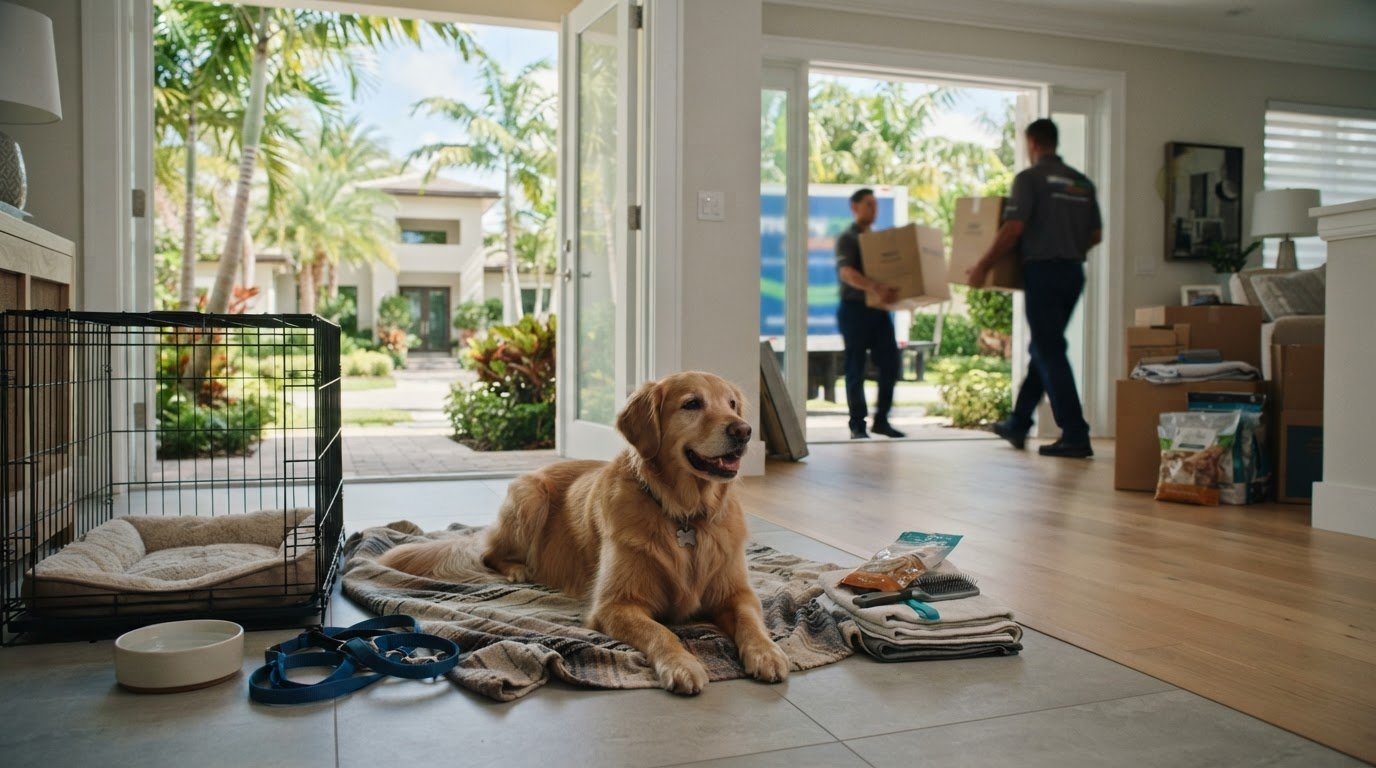
What if the biggest risk to your dog on moving day isn’t the drive, but the heat, open doors, and disruption to familiar routines? If you’re searching for tips for moving with a dog in Miami, those concerns are understandable. South Florida’s hot, humid weather and a busy move can be stressful for a dog, while unfamiliar people coming and going can create an escape risk.
A clear plan helps you keep your dog secure and comfortable while the household move stays on track. This checklist covers what to prepare before leaving, how to manage your dog’s care and transportation separately from your belongings, and how to help them settle into their new home and neighborhood. It also explains how to maintain familiar routines, plan around Miami’s climate, and prepare for local requirements. With the logistics organized, you can focus on your dog while professional movers handle household belongings.
Key Takeaways
- Use these tips for moving with a dog in Miami to plan around heat, humidity, traffic, and moving-day activity.
- Prepare in order: review the new home, arrange your dog’s care, pack essentials, and practice the trip.
- Keep your dog in a secure, quiet room or familiar crate during the move, with water and a clear do-not-enter reminder.
- At the new home, start with a familiar base and introduce rooms and outdoor spaces gradually.
- Plan your dog’s care and transportation separately from household logistics so you can focus on your pet while Vision Movers handles the move.
Moving with a Dog in Miami: What Makes This Move Different?
Boxes, unfamiliar voices, and doors opening throughout the day can unsettle even a confident dog. A move changes the places, sounds, and routines your pet relies on, so plan their needs alongside household logistics. Miami’s heat and humidity, traffic, and building procedures are practical details to manage, not reasons to panic.
The most useful tips for moving with a dog in Miami come down to three priorities: keep your dog safely separated from the moving activity, preserve familiar routines where practical, and plan a secure trip between homes. Decide who will supervise your dog and how they’ll travel before the movers arrive. Moving professionals handle household belongings; you or your designated caregiver remain responsible for your dog’s care and transportation.
Which Miami moving-day conditions should dog owners plan around?
Miami’s warm, humid climate can affect how long your dog waits outdoors during loading or spends in the car. Keep your pet in a cool, comfortable place and avoid unnecessary outdoor waits. Build flexibility into the travel plan, too. Traffic can extend the drive, so bring water and allow time for breaks without relying on an exact arrival time.
If you’re moving into a condo, review the building’s pet policies and move procedures in advance. Find out whether you need to reserve an elevator or follow designated loading instructions. These details can affect when and where you enter the building with your dog. For general background on the city’s climate and setting, see Miami, Florida.
Why can a familiar routine help a dog during a move?
Keep feeding, walks, and rest as close to your dog’s usual schedule as the move allows. Familiar bedding, toys, and food provide reassuring cues as rooms change. If possible, pack gradually by boxing a few items at a time instead of changing your dog’s whole environment at once. Keep everyday essentials accessible rather than packing them with the household goods.
Familiar routines give dogs steady cues to rely on while their surroundings change. They won’t make every part of a move predictable, but they can help limit abrupt changes. Think through the day from your pet’s perspective: where they’ll rest while boxes are carried out, who will stay with them, and how they’ll travel safely to the new home.
Assigning those responsibilities lets you manage your dog’s care while household tasks stay organized. Vision Movers handles residential moving tasks such as packing, furniture protection, loading, and unloading. Your dog’s supervision and transportation stay separate. Next, prepare your dog and checklist before moving day.
Before Moving Day in Miami: Prepare Your Dog and Your Checklist
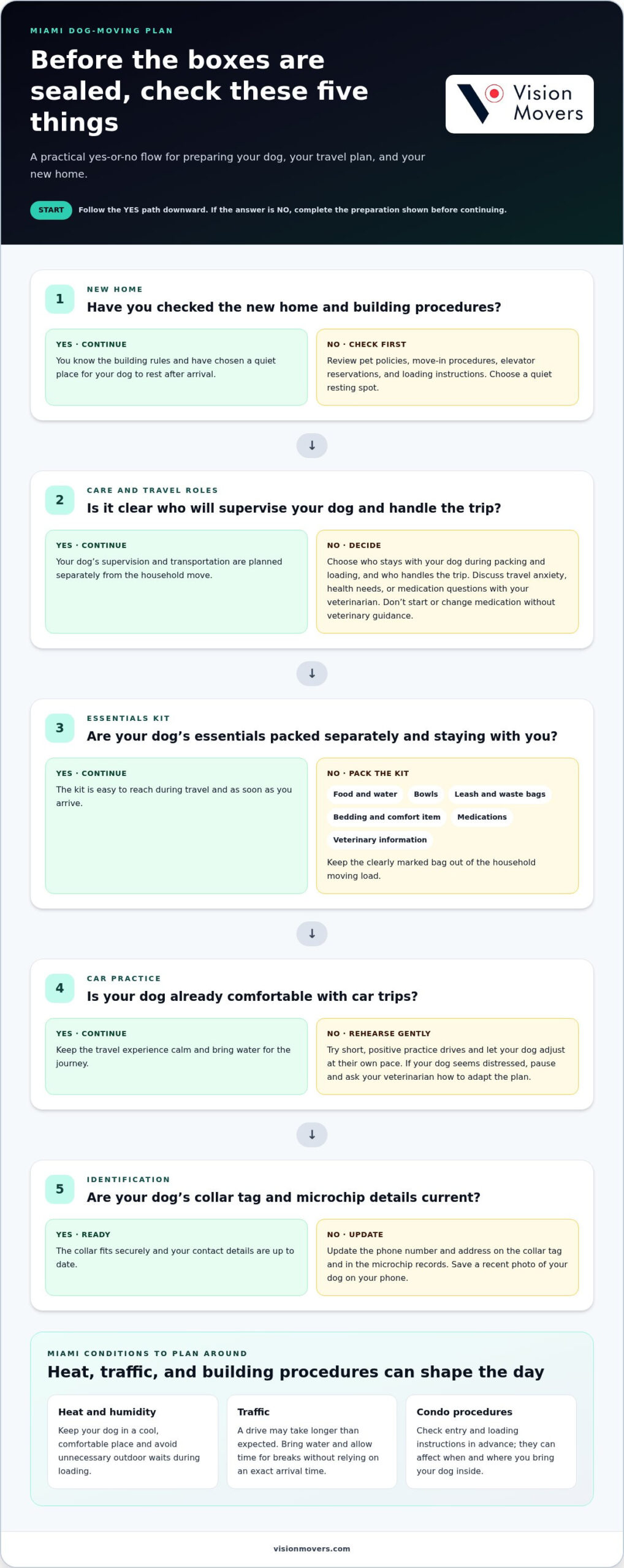
Preparation gives you more control over the parts of moving day that matter most to your dog. Before the boxes are sealed, check the new home, plan who will care for your pet, gather their essentials, and practice the trip. These tips for moving with a dog in Miami turn a busy transition into a series of manageable steps.
- Check the new home. Review the building’s pet policies and move-in procedures, including elevator reservations, loading instructions, and any rules that affect bringing your dog inside. Choose a quiet place where your pet can rest after you arrive.
- Plan pet care. Decide who will stay with your dog during packing and loading, and who will handle the trip. Discuss travel anxiety, health needs, and medication questions with your veterinarian. Don’t start or change medication without veterinary guidance.
- Prepare essentials. Pack food, water, familiar items, and care records in a bag that travels with you, not in the moving load.
- Rehearse travel. If your dog isn’t used to car trips, try short, positive practice drives before moving day. Keep the experience calm and let your dog adjust at their own pace.
Before leaving, update the phone number and address on your dog’s collar tag and in their microchip records. Outdated contact information is especially unhelpful if your dog gets separated from you during a move. Check that the collar fits securely and the microchip account details are current. Save a recent photo of your dog on your phone as another practical identification aid.
What should go in a dog’s moving-day essentials kit?
Pack familiar food for the travel day and initial arrival, along with water, bowls, a leash, waste bags, bedding, and a favorite comfort item. Include medications and veterinary information, such as relevant care notes and your clinic’s contact details. Keep the kit with you so it’s accessible during the drive and as soon as you enter the new home.
Use a clearly marked bag or container that stays separate from household boxes. A needed leash or meal won’t get buried among packed belongings. If your move crosses state lines, review the USDA APHIS pet travel information for applicable guidance, and ask your veterinarian about your dog’s specific travel needs.
How can you prepare a dog for boxes and travel?
Bring packing materials into your dog’s space gradually, and let them investigate from a comfortable distance. Reward calm curiosity, but don’t force them to interact with boxes, carriers, or other unfamiliar items. For car practice, begin with a brief trip and a positive experience. If your dog seems distressed, pause and ask your veterinarian how to adapt the plan.
Prepare the household, too. Professional packing and furniture protection help keep belongings organized while you focus on your pet’s care. Residential moving support from Vision Movers can take household tasks off your hands while you arrange and oversee your dog’s supervision and transportation.
Moving-Day Safety: Keep Your Dog Secure in Miami Heat
Even a friendly, well-behaved dog shouldn’t roam freely while a move is underway. Open doors, unfamiliar people, shifting furniture, and trips between the home and truck create opportunities for a dog to slip outside or get underfoot. Before moving activity begins, choose a secure, quiet room or a familiar crate. Set out fresh water and familiar bedding, and put a clear “do not enter” reminder on the door or gate.
Tell everyone involved where your dog will be and who is responsible for checking on them. If the home can’t provide a calm, secure space, arrange a trusted caregiver or another suitable setting in advance. Movers handle household belongings; you or your designated caregiver must supervise your dog and manage their care throughout the day.
Never leave a dog unattended in a parked vehicle in Miami heat. A car is not a safe waiting place during loading, errands, or delays.
How do you prevent escapes while movers carry belongings?
Choose a closed room away from the main entrance and the route used to carry furniture and boxes. Before work starts, let household members and movers know the dog’s space must stay closed. Put a reminder on the door, and decide who can open it and when. If your dog needs to leave the room, have the leash and identification ready first.
- Keep the room door or secure gate closed, even during brief trips.
- Ask everyone to avoid entering unless the designated caregiver is present.
- Clip on the leash before opening the door, and guide your dog away from the entrance.
These handoffs matter. A dog can dart through a doorway while someone carries a box inside. Clear instructions reduce confusion when the home is busy.
How should you plan your dog’s trip to the new home?
Transport your dog in your own vehicle, secured in an appropriate carrier or with a suitable restraint. Keep them out of the moving truck, trunk, and any area where they could ride unsecured. Plan water and comfort breaks around your dog’s needs and road conditions. Keep the leash close at each stop, and secure your dog before opening a vehicle door.
Before leaving, confirm your dog is safely with you or their caregiver, then check that the essentials are accessible. Traffic may affect the journey, so keep the plan flexible rather than rushing to make up time. If your dog becomes distressed or you’re unsure how to manage a travel concern, follow the advice you discussed with your veterinarian.
A safe moving-day plan gives your dog a clear place to stay, a named person responsible for their care, and a separate travel arrangement. Keep those responsibilities distinct from loading and unloading household goods. Your dog won’t be relying on a busy moving crew to notice an open door or manage their transportation.
Arriving in Miami: Help Your Dog Settle Into the New Home
Your dog may need time to learn that the new home is safe. Before bringing them inside, set up a quiet base away from unloading activity. Place familiar bedding, water, food, and usual belongings together in one secure area. Keep the first stretch simple: let your dog rest, offer water, and avoid a stream of visitors or introductions to every room at once.
Give your dog time to explore. Start with the base room, then introduce other indoor spaces gradually while supervising doors and gates. For the first outdoor visits, keep your dog on a leash, even if the yard or patio looks enclosed. Check unfamiliar boundaries before allowing more freedom. Returning to usual meal, walk, and rest times can also make the transition feel steadier as the household becomes functional.
What should you do in your dog’s first hours at home?
Bring your dog inside after their quiet space is ready and the immediate entry route is clear. Keep bedding, water, food, and comfort items together so the room feels recognizable. Limit extra noise and activity, and take your dog outside on leash for a calm, supervised bathroom break. Let them approach new rooms at their own pace instead of prompting a full-house tour.
How can you make the new Miami neighborhood feel familiar?
Begin with a familiar walk pattern, then add nearby routes as your dog grows comfortable. Inspect gates, balcony access, and entry points before allowing off-leash access in any enclosed area. Update collar and microchip contact details with your new information. Miami-Dade requires dogs over four months old to be registered and wear a license tag; check Miami-Dade Animal Services for current licensing and vaccination details.
For other local rules, consult official county or municipal guidance that applies to your address. Keep your dog leashed outdoors unless you’re in a designated leash-free area, and pick up after them. A veterinarian can advise on preventive care suited to your dog’s health, lifestyle, and new surroundings, including questions about local risks. Don’t assume every dog needs the same plan.
Use your dog’s behavior to set the pace. If they’re eating, resting, and exploring comfortably, gradually expand access to the home and neighborhood. If they seem unsettled, return to the familiar base and keep the next outing or introduction brief. The goal isn’t to explore everything immediately; it’s to build dependable associations with the new place one step at a time. These tips for moving with a dog in Miami help you balance settling in with safe, gradual exploration.
As you oversee your dog’s adjustment, keep household tasks moving with organized residential moving support. Plan your residential move with Vision Movers, so you can focus on helping your dog feel at home.
Coordinate Your Miami Move So You Can Focus on Your Dog
A calm move depends on clear responsibilities. Your dog needs a person focused on their supervision, comfort, and transportation, while household belongings follow a separate plan. Divide those jobs before moving day so you’re not managing a leash, answering building questions, and directing boxes at the same time. This simple separation is among the most practical tips for moving with a dog in Miami.
Which moving tasks can you organize separately from dog care?
Assign one responsible adult or caregiver to stay in charge of your dog throughout the move. That person should know where the dog will wait, when they’ll travel, and what to do if plans shift. Keep the dog’s essentials and travel supplies with the caregiver, not mixed into packed household belongings.
- Dog-care lead: Handles supervision, meals, water, leash, breaks, and transportation.
- Household lead: Coordinates access, packing priorities, and questions about belongings.
- Building details: Confirm elevator bookings, loading instructions, entry arrangements, and parking plans before moving day.
- Final handoff: Before leaving, make sure the dog is secured with their caregiver and the travel kit is in the owner’s vehicle.
Even if one person takes on both roles, keep the tasks distinct on a written checklist. Mark pet supplies “carry with us” and boxes “load with household goods.” This prevents an essential item from being packed away and makes it easier to stay focused if the schedule changes.
How can Vision Movers support the household part of your move?
Vision Movers supports residential moves across South Florida, including Miami, Fort Lauderdale, Boca Raton, Brickell, Weston, Plantation, Pompano Beach, Broward County, Hollywood, Dania Beach, Coral Springs, and Parkland. Services include local moving, professional packing, furniture protection, loading, and unloading. Organizing these household tasks with a moving team gives you a clear division of responsibilities while you focus on your dog’s care and safe transportation. Your dog remains in your care, separate from the household goods being moved.
Before moving day, prepare a clear inventory and identify items that need careful handling. Keep the dog’s room and travel supplies outside the household loading plan, and tell everyone which adult is responsible for your pet. At the new home, you can focus on helping your dog settle while the household belongings are unloaded and placed according to your plan.
With a dedicated pet-care lead and an organized household plan, you can give your dog steady attention without losing track of the move. For support with your South Florida household relocation, plan your move with Vision Movers.
Give Your Dog Time to Make Miami Home
A move doesn’t have to feel settled as soon as the last box is inside. Give your dog room to adjust at their own pace, and treat early signs of comfort, such as relaxed rest or curious exploring, as progress. Notice what helps your pet feel secure, then shape the first days around those cues. A patient start can make the new home feel familiar one experience at a time.
The best tips for moving with a dog in Miami are the ones you can put into practice while managing the move itself. When your dog’s care and transportation are planned separately, you can give them your attention while household logistics stay organized.
Vision Movers provides South Florida residential moving support, including professional packing, furniture protection, loading, and unloading. Plan your Miami move with Vision Movers and take the next step toward a smoother transition for your household. You and your dog can settle into this new chapter together.
Frequently Asked Questions
Can my dog ride in the moving truck?
No. Arrange for your dog to travel with you in your own vehicle, secured in an appropriate carrier or restraint. Moving trucks carry household goods and don’t provide a safe, climate-controlled space for a pet. Keep your dog’s leash and travel supplies within reach in your vehicle, not among the packed boxes. This also lets you manage your dog’s comfort and stops separately from the household move.
Is it safe to leave my dog in the car while I unload boxes?
No. Don’t leave your dog unattended in a parked car while unloading, even for a short task. Miami’s heat can make a vehicle unsafe, and you may not know how long unloading will take. Have a trusted adult stay with your dog in a safe, cool setting while you handle the boxes. Keep your pet’s water and leash accessible so you can respond to their needs without leaving them alone.
Should I board my dog on moving day?
Boarding can be a practical option if your dog is comfortable in that setting and the home will be busy, noisy, or difficult to secure. Arrange the plan ahead of time, and share your dog’s feeding routine, care instructions, and emergency contact details. If boarding would add stress, consider a trusted caregiver instead. Choose the arrangement based on your dog’s temperament and needs, not only on convenience.
How can I keep my dog calm while movers are in the house?
Give your dog a predictable activity, such as a familiar chew or food puzzle, if they’re comfortable using one. Keep the room away from the busiest work area, and have the designated caregiver check in without repeatedly moving your dog through the house. If your pet tends to react to strangers or loud sounds, discuss a suitable calming plan with your veterinarian before moving day. Movers should focus on household belongings, not pet supervision.
What should I update when moving to a new Miami address with a dog?
Update the phone number and address linked to your dog’s microchip, and replace or correct the information on their collar tag. If your dog has a Miami-Dade license, check with Miami-Dade Animal Services about keeping its record current and review current licensing and vaccination requirements. These details are useful if your pet gets lost before you’ve learned the new area or established familiar walking routes.
How soon should I let my dog explore the new home?
Let your dog explore once you’ve prepared a secure, quiet starting area, but keep the first introduction short and supervised. Use a leash indoors if open doors, workers, or unfamiliar exits are still present. Then offer access to another room when your dog seems comfortable. If they retreat, pace, or ignore familiar cues, pause the tour and give them time to settle before trying again.
Leave a Reply