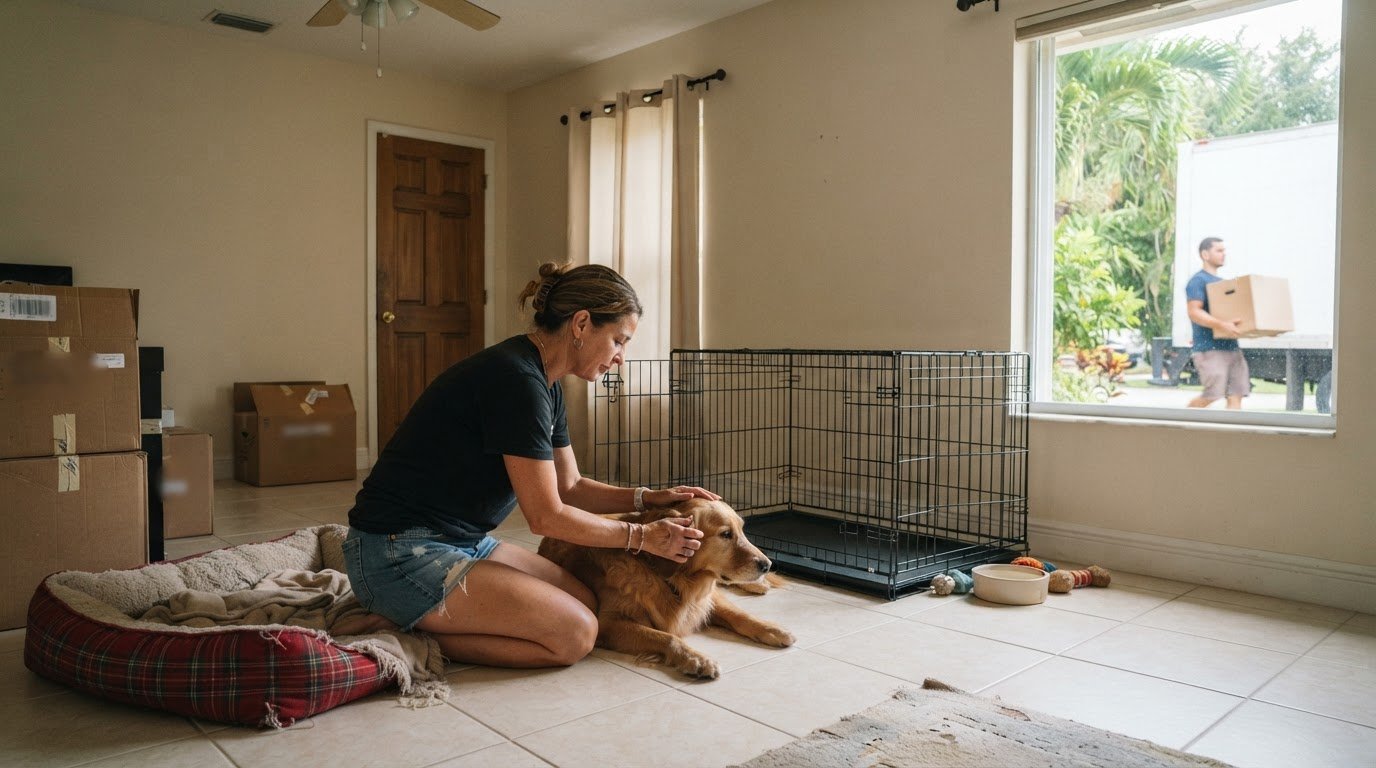
A move can unsettle a dog as familiar routines and surroundings change, so calm handling and a secure space matter. Moving with pets in Broward County is easier to plan when you account for your pet’s safety as well as your belongings. A dog’s stress may show up as restlessness, clinginess, or changes in usual behavior.
It’s understandable to worry about how your pet will cope while people move through the home and doors stay open. This guide explains how to compare moving quotes, recognize provider red flags, prepare a quiet, secure pet room, and keep your pet safe on moving day. You’ll have a clearer plan for coordinating the move while protecting your dog’s comfort and routine.
Key Takeaways
- Compare moving quotes by looking beyond the total to the services and handling details each one includes.
- Recognize warning signs that can point to unclear terms or poor communication before booking.
- Plan a secure, quiet room that keeps pets separate while movers carry belongings in and out.
- Coordinate your pet’s transport and routine around the moving-day activity to reduce stress and avoid unnecessary risks.
Booking tips, quotes, and provider red flags
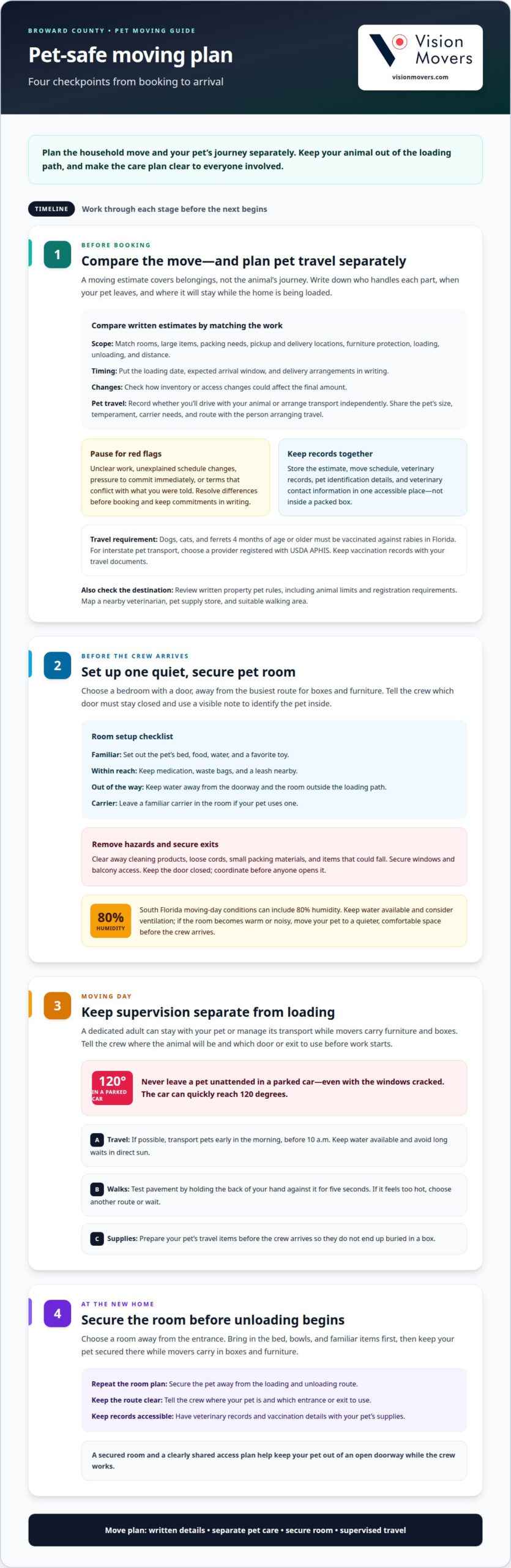
When moving with pets in Broward County, plan the household move and your pet’s transport separately. A moving estimate covers belongings, not the animal’s journey. Write down who handles each part, when your pet leaves, and where it will stay while the home is being loaded. This simple division helps prevent gaps between the moving schedule and your pet’s care.
Compare written moving estimates by matching the work included, not just the bottom line. Check whether each estimate accounts for packing, furniture protection, loading, unloading, and distance. Note the planned arrival window and how changes to the inventory or access could affect the final amount. An estimate that leaves key tasks unclear is difficult to compare fairly with one that spells them out.
- Match the scope: Compare the same rooms, large items, packing needs, and pickup and delivery locations.
- Review timing: Put the loading date, expected arrival window, and delivery arrangements in writing.
- Separate pet travel: Record whether you’ll drive with your animal or arrange pet transport independently.
- Keep records together: Store the estimate, move schedule, veterinary records, and pet contact details in one accessible place.
For your pet’s travel, give the animal’s size, temperament, carrier needs, and route to the person arranging its transport. A trip within Fort Lauderdale differs from an interstate journey, so the destination and travel method matter. If your pet will ride in a carrier, share its dimensions and whether the animal is already comfortable inside. Clear details help align the transport plan with moving day.
According to Florida Legislature, dogs, cats, and ferrets 4 months of age or older must be vaccinated against rabies. Keep vaccination records with your travel documents, especially when crossing state lines. For interstate pet transport, choose a provider registered with USDA APHIS. Include the pet’s identification details and veterinary contact information in the records you keep available.
Watch for a moving estimate that doesn’t describe the work, unexplained schedule changes, pressure to commit immediately, or terms that conflict with what you were told. For example, if a phone estimate excludes packing but the written version appears to include it, resolve the difference before booking. Keep important moving commitments in writing. Consistent details make it easier to coordinate the move, your pet’s transport, and its arrival.
Preparing a secure pet room while professional movers load and unload
Choose one room before the moving crew begins carrying boxes. A bedroom with a door works better than a hallway or open living area. Set it aside for your pet, then tell the moving team which door must stay closed. A clear sign can help prevent someone from opening it while carrying furniture. Keep the room out of the loading path so your pet is not exposed to repeated door traffic.
Prepare the room with familiar items rather than newly packed supplies. Set out your pet’s bed, water, food, and a favorite toy. Keep the water bowl away from the doorway, where it could spill as people pass. If your dog or cat uses a carrier, leave it in the room with the door secured open or closed as appropriate. A familiar carrier can offer a place to settle, especially if your pet has practiced using it beforehand.
- Secure the exit: Close the room door and tell owners and movers not to open it without coordination.
- Keep essentials nearby: Leave food, water, medication, waste bags, and a leash within easy reach.
- Reduce disturbance: Choose a room away from the busiest route for boxes and furniture.
- Label the door: Use a visible note identifying the pet inside and directing the crew to another route.
Before loading starts, check the room for hazards your pet could reach. Remove cleaning products, loose cords, small packing materials, and items that could fall. Keep windows and balcony access secured. If the room becomes warm or noisy, move the pet to a quieter, comfortable space before the crew arrives. In South Florida, moving-day conditions can include 80% humidity, so ventilation and access to water matter.
At the new home, repeat the room setup before unloading begins. Choose a room away from the entrance and bring in the bed, bowls, and familiar items first. Keep your pet secured there while movers carry in boxes and furniture. This gives the crew a clear route and helps prevent a sudden dash through an open doorway. Keep veterinary records and vaccination details with your pet’s supplies, not inside a packed box.
Share the room’s location and access plan with the crew before work begins. For a move that needs coordinated residential support, professional moving-day planning can help keep the loading and unloading process organized around your pet’s safe space.
Keeping pets safe during moving day with help from professional movers
To find pet-friendly housing and services in Broward County, review each property’s written pet rules before committing, including limits on animals and any required registration. Map a nearby veterinarian, pet supply store, and suitable walking area around your new address in Fort Lauderdale, Miami, Hollywood, or elsewhere in the county.
On moving day, give the crew a clear route and keep your pet’s supervision separate from loading duties. A dedicated adult can stay with the animal or manage its transport while movers carry furniture and boxes. Tell the crew where your pet will be and which door or exit to use before work starts. This helps prevent your pet from entering the loading path when a door opens.
South Florida heat needs careful planning. A parked car can quickly reach 120 degrees, even with its windows cracked, so never leave a pet unattended inside. If possible, transport pets early in the morning, before 10 a.m. Keep water available and avoid long waits in direct sun. For a dog’s walk, test pavement by holding the back of your hand against it for five seconds. If it feels too hot, choose another route or wait.
Prepare travel supplies before the crew arrives, so they don’t end up buried in a box. Pack a 3-to-5-day supply of your pet’s regular food and treats, along with water, a leash, waste bags, medications, and updated veterinary records. Keep the carrier secure in the vehicle and allow your pet to travel in its familiar setup. Acclimate the animal to its carrier for at least one week before moving day.
- For a long drive: Plan pet-friendly rest stops every 2 to 3 hours.
- For a short trip: Keep the route direct and avoid unnecessary stops in the heat.
- At arrival: Keep your pet with its dedicated handler until unloading traffic has cleared.
- After unloading: Let the animal adjust in a quiet, secure space before exploring.
Moving teams can protect your schedule by keeping the loading sequence organized and maintaining clear walkways. Tell the crew which items must remain accessible, such as the pet carrier and travel bag. For help coordinating the household move around your pet’s travel plan, plan your residential move with a professional team.
Vision Movers
Vision Movers handles the household move while you plan your pet’s care and travel. For a local residential or interstate relocation, the team provides packing, furniture protection, loading, and unloading. A clear plan for your pet’s carrier, supplies, and secure room fits alongside the household schedule and keeps responsibilities distinct.
Turn to Vision Movers when you’re arranging a move and want professional support with your belongings and moving schedule. Share the move’s scope and your pet-care arrangements so the household plan reflects both. Pet transport and animal care remain separate from the moving work.
Contact Vision Movers to discuss your upcoming move.
Plan the Next Step With Confidence
Moving with pets in Broward County means coordinating a household transition around an animal’s needs. Assign clear responsibility for the move and your pet’s care so neither plan is left to chance. With those roles set, you can make decisions calmly as moving day approaches.
Vision Movers supports the household side of your plan with local, residential, and interstate moving services. The right moving arrangement depends on your route and the work involved, while your pet’s transport and care remain part of your own planning. Vision Movers is fully licensed and fully insured for both local and long-distance moves. Keeping responsibilities clear helps everyone focus on a smoother transition.
Contact Vision Movers about your move to discuss the moving support you need. With a practical plan in place, you and your pet can begin settling into the next home with greater confidence.
Frequently Asked Questions
Can dogs get anxiety from moving homes?
Yes, a move can make dogs anxious because familiar sounds, spaces, and routines change. Some may pace, hide, bark more, or seek extra attention. Keep familiar cues consistent, such as feeding times and a well-known blanket, and introduce the new home gradually. If your dog’s behavior changes sharply or persists, contact your veterinarian for guidance tailored to its health and temperament.
Do I need a health certificate for interstate pet transport?
Most interstate pet transport requires a Certificate of Veterinary Inspection issued within 10 days of travel. The certificate documents a veterinary examination and your pet’s health status for the trip. Build the appointment into your travel schedule so the document is current on departure day. Keep a copy with your travel records, and retain a digital copy in case paper documents are misplaced.
Is pet transport safe in South Florida heat?
It can be safer with a heat-conscious travel plan, but South Florida conditions require care. Airline cargo travel may be restricted by major airlines when ground temperatures exceed 85°F. Ask about the planned travel method and timing, and consider whether an in-cabin option fits your pet and carrier. Avoid scheduling a journey that leaves an animal waiting outside or in a parked vehicle.
What are the requirements for moving pets into Florida from another state?
Florida requires dogs, cats, and ferrets 4 months of age or older to be vaccinated against rabies, according to Florida Legislature. For interstate travel, most pet transport requires a Certificate of Veterinary Inspection issued within 10 days of travel. Carry vaccination records and the inspection certificate together, and make sure the documents identify the same animal traveling with you.
How much do pet-friendly movers and pet transport services cost in Broward County?
Moving costs for your belongings depend on the move’s distance, volume, access, and requested packing work. Vision Movers offers transparent pricing with no hidden fees, with exact costs provided through a free personalized estimate.
What should I do to keep pets safe during a move in South Florida’s heat and storms?
Keep pets away from active loading areas, and arrange a calm place away from open doors and moving equipment. Florida’s hurricane season runs from June through November, so build flexibility into travel and arrival plans during that period. Keep a secure carrier, medication, food, and water accessible rather than packed away. In dangerous weather, including hurricanes or heavy storms, Vision Movers will work with you to choose a safer moving date. Prioritize shelter and your pet’s safe care.
Leave a Reply