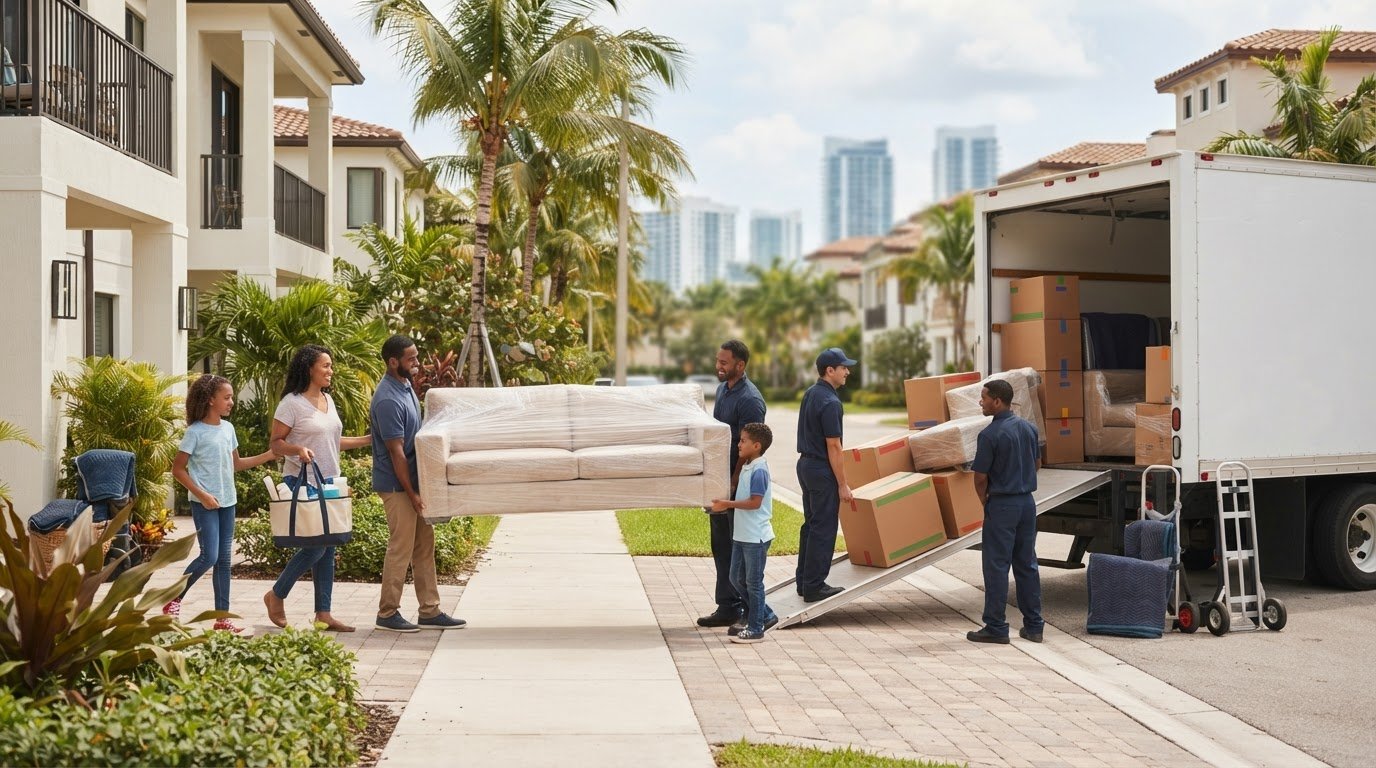
A short drive across South Florida doesn’t automatically make moving day easy. Moving locally still takes careful planning, especially when heat, humidity, building access, and tight schedules can affect how belongings are packed and moved. A little preparation can help protect your furniture and keep the day on track.
If you’re unsure what to do first or how to make sure everything is handled with care, you’re not alone. A clear timeline and a practical moving-day plan can ease the pressure, while professional packing, furniture protection, loading, transportation, and unloading provide support from pickup to delivery.
This guide walks you through a realistic preparation timeline, the steps to take before moving day, and ways to account for South Florida’s local conditions. You’ll also learn how Vision Movers tailors local residential and commercial moving support to the household and move requirements, helping make your transition more organized from start to finish.
Key Takeaways
- Map out your move in stages, from taking inventory and setting packing priorities to preparing an essentials box.
- When moving locally, plan for stairs, elevators, narrow access, and the distance between your home and the truck.
- Use room labels and furniture protection to help keep belongings organized and support careful handling.
- Prepare both homes for moving day, then use a final walkthrough to catch items or tasks that might otherwise be missed.
- Learn how Vision Movers’ packing, loading, transportation, and unloading support can simplify a South Florida move.
Moving Locally in South Florida: What Makes a Nearby Move Easier?
A move across town may involve less time on the road, but it still requires a plan for what’s being moved, how it will be protected, and how it will travel between two homes. Building access, parking or loading arrangements, and the timing of pickup and delivery can all shape the day. That’s why a nearby relocation deserves the same thoughtful coordination as any household move.
A local move is defined by its coordination needs, not mileage alone. Moving locally goes more smoothly when the details are organized before moving day, so the household knows what’s ready, what needs special care, and how belongings will reach the new space. For general background on the work involved, see this overview of a Moving company and its role in relocating goods.
In South Florida, local moves may connect homes in Miami, Fort Lauderdale, Boca Raton, or communities across Broward County. Even within the same area, the two addresses can present very different conditions. A ground-floor home and an apartment with elevator access call for different coordination, despite being only a short drive apart.
What should a local move plan cover?
Start with five connected areas: inventory, packing, access, transport, and delivery. A household inventory helps identify what’s moving and which items need careful handling. Packing decisions clarify what will be ready for loading, while access details help account for entrances, stairs, elevators, and the path between the home and the truck.
- Inventory: Identify the belongings and furniture that need to move.
- Packing: Decide what needs to be boxed or protected.
- Access: Consider entrances, stairs, elevators, and loading arrangements.
- Transport and delivery: Keep the route between pickup and the new home organized.
This overview gives everyone a shared picture of the move without requiring every task to be handled at once. It also helps households see where professional packing, furniture protection, loading, transportation, or unloading can reduce the work and uncertainty involved.
Why does South Florida context matter?
Heat and humidity can affect comfort during loading and unloading, as well as how belongings are handled while moving between buildings and the truck. Plan access and loading arrangements ahead of time, including where the moving team can work and how items will travel from the home to the vehicle. Clear paths can help limit delays and make careful handling easier.
Local conditions vary by property, not just by city. A Miami apartment, a Fort Lauderdale residence, and a Boca Raton home may each have different entry routes or building arrangements. Note those details early and include them in the move plan. For households across Broward County and the surrounding area, tailored local moving support can bring packing, furniture protection, loading, transportation, and unloading together in one coordinated process.
How to Prepare for a Local Move: A South Florida Timeline
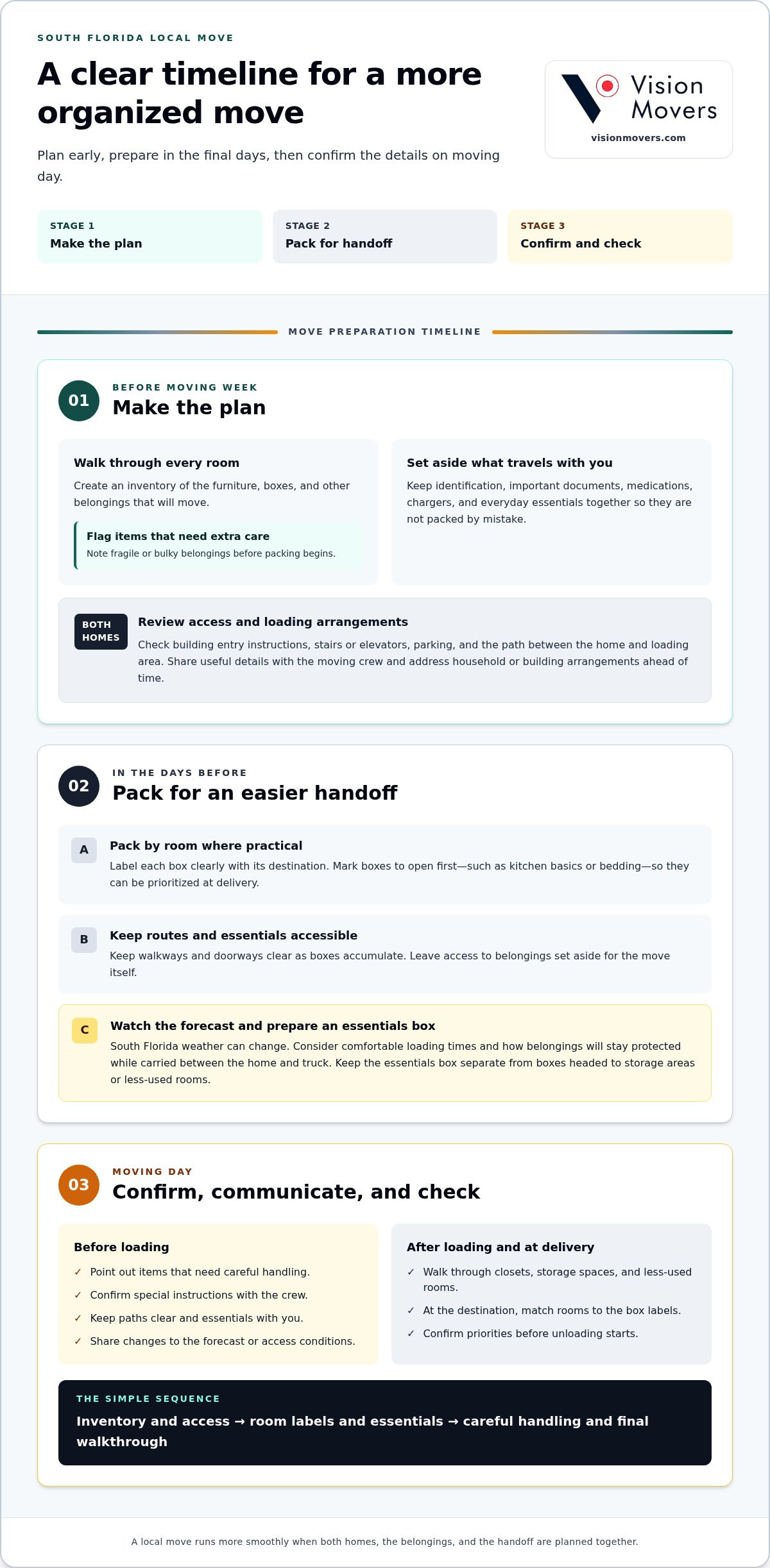
A manageable moving day starts with decisions made before boxes are stacked. Break preparation into three stages: plan early, finish key tasks in the final days, and follow a simple move-day check. This timeline helps you keep track of what’s done, what still needs attention, and which belongings should stay close at hand.
Before moving week: Make the plan
Walk through each room and create an inventory of the furniture, boxes, and other belongings that will move. Note fragile or bulky items that may need extra care, and set aside anything you’ll transport separately, such as identification, important documents, medications, chargers, and everyday essentials. Keep those items together so they don’t get packed by mistake.
Review access at both addresses. Consider building entry instructions, elevator or stair access, parking, and the path from the home to the loading area. Early planning gives you time to share useful details with your moving crew and address household or building arrangements without last-minute confusion. For other move-related tasks, the USA.gov Moving Guide covers topics such as changing your address and handling related services.
In the days before: Pack for an easier handoff
Pack belongings by room where practical, then label each box clearly with its destination. Mark boxes that should be opened first, such as kitchen basics or bedding, so they’re easier to prioritize at delivery. Keep walkways and doorways clear as boxes accumulate, and leave access to the items you’ve set aside for the move itself.
South Florida weather can change, so keep an eye on the forecast as moving day approaches. Use it to think through comfortable loading times and how to keep belongings protected while they’re being carried between the home and truck. Make a final essentials box with items you’ll want immediately after arrival, and keep it separate from boxes headed straight into storage areas or less-used rooms.
Moving day: Confirm, communicate, and check
Before loading begins, point out items that need careful handling and confirm any special instructions with the crew. Keep paths clear and make sure the essentials box and separately transported belongings remain with you. If the forecast or access conditions have changed, share the update so the day’s coordination can account for it.
Once loading is complete, walk through the home, including closets, storage spaces, and less-used rooms. At the destination, identify which rooms correspond to the box labels and confirm priorities before unloading starts. These quick checks help reduce misplaced items and make the first stage of unpacking more orderly.
Three-stage checklist: plan early, prepare in the final days, and confirm details on moving day. If packing and coordination feel like too much to manage alone, Vision Movers’ local moving support can help bring those tasks together.
Is a Local Move Really Simple? Plan for Access, Handling, and Timing
A short drive can make a move seem straightforward. But fewer miles don’t remove the work of packing, lifting, protecting furniture, navigating buildings, or coordinating pickup and delivery. A nearby move can still involve several handoffs, and each one affects how smoothly belongings reach the new home.
Careful planning matters on a nearby move because access and handling can shape the day as much as the drive itself. A sofa may need to pass through a narrow hallway, travel down stairs, cross a shared lobby, and then be positioned in a different room. If those details aren’t considered, the route between homes may be the easiest part of the job.
Which local move details can create delays?
Building access, elevator scheduling, parking, and clear paths all influence how items move from the home to the truck and into the next space. A long walk from the door to the loading area, for example, adds handling steps. Stairs or tight turns may affect how larger pieces are carried. These conditions don’t make a move unmanageable, but they do call for coordination.
Share useful access details for both addresses before moving day. Note which entrance to use, where loading can take place, whether stairs or elevators are involved, and any obstacles along the route. Avoid assuming the two homes have similar layouts. A clear picture of each location helps the moving crew organize its work without relying on last-minute discoveries.
How does professional moving support reduce the workload?
Managing a move independently means organizing packing, protecting furniture, arranging transport, and handling loading and unloading as connected tasks. Each stage depends on the one before it. When household plans and building access are also in the mix, keeping everything coordinated can take considerable attention.
Professional support brings the physical stages together. Vision Movers provides local moving services that can include packing, furniture protection, loading, transportation, and unloading, tailored to the household and its requirements. That support gives customers fewer moving tasks to manage themselves while helping keep belongings protected through handling and transport.
South Florida’s heat and humidity are also worth considering. Plan for comfortable loading conditions where possible, and think ahead about breaks for anyone helping with physical tasks. Keep belongings protected as they move between indoor spaces and the truck, especially during loading and unloading. If conditions change, clear communication can help everyone adjust their approach without assuming the day will follow a fixed schedule.
In short, don’t judge a move by distance alone. When moving locally, account for the building, the path each item must take, and the care needed at every stage. That perspective helps turn a short-distance relocation into a well-coordinated transition.
Local Moving Checklist: Protect Belongings and Keep Moving Day Organized
A practical checklist turns moving day into a sequence of manageable tasks. Work through each stage, from packing and home readiness to loading, arrival, and a final walkthrough. If you’re moving locally in South Florida, also keep the forecast in view and plan for comfortable loading conditions without leaving essentials packed out of reach.
Prepare furniture and boxes
Before packing begins, identify delicate belongings, bulky furniture, and items you’ll need soon after arrival. Group boxes by room and label each one with its destination and a brief description of what’s inside. Clear labels help the crew place boxes where they belong and make it easier to find priority items later. Professional furniture protection can help safeguard surfaces during handling and transport.
- Packing: Group boxes by destination room and label them clearly. Set aside important documents and daily essentials.
- Home readiness: Clear walkways and access routes. Keep the essentials you’ll carry separately easy to reach.
- Loading: Point out delicate or bulky items and share any handling instructions before loading.
- Arrival: Confirm room destinations and identify priority items before unloading begins.
- Final walkthrough: Check rooms, closets, and storage spaces at pickup, then look over key areas after delivery.
Furniture protection is most useful when it’s part of the handling plan, not an afterthought. Vision Movers provides professional packing and furniture protection to support careful handling as belongings are prepared, loaded, and transported. For broader guidance on planning moving support, explore this local moving service guide.
Check at pickup and delivery
Before the truck leaves, walk through the home and check closets, cabinets, storage areas, and less-used rooms. At the destination, tell the crew which rooms correspond to the labels and which items should be placed first. Keep identification, important documents, medications, chargers, and other essentials with you rather than buried in a box.
In South Florida, heat and humidity can make loading conditions less comfortable. Keep water and personal essentials accessible, and plan the work with the day’s forecast in mind. Avoid leaving heat-sensitive belongings in a hot vehicle; transport them separately when appropriate. A clear route from the home to the loading area also helps keep movement orderly.
A final check at both addresses can catch small oversights before they become unpacking problems. If you’d like help coordinating packing, furniture protection, loading, transportation, and unloading, plan your local move with Vision Movers.
How Vision Movers Supports Local Moves Across South Florida
A well-organized local move brings packing, protection, transportation, and delivery into one coordinated process. Vision Movers supports local residential moves across South Florida, including Miami, Fort Lauderdale, Boca Raton, and Broward County. The support is tailored to the household and relocation requirements, helping reduce the number of moving tasks you need to coordinate on your own while keeping careful handling in focus from pickup through delivery.
Rather than treating a move as a truck ride between two addresses, the team can support the connected stages that help belongings arrive ready for their next home. You can consider which parts you’d like help with based on your belongings, access arrangements, and priorities.
What support can a local move include?
Professional packing helps prepare belongings for transport, while furniture protection supports careful handling as items are carried and loaded. Loading, transportation, and unloading then connect pickup to delivery, so you’re not left coordinating each physical stage separately. The combination is shaped around the household and move, whether your priority is packing support, furniture care, or help managing the full sequence.
- Packing: Professional packing can prepare household belongings for the journey and reduce the amount of packing you manage yourself.
- Furniture protection: Protective handling helps safeguard furniture as it moves through doorways, loading areas, and transport.
- Loading: Organized loading brings prepared boxes and furniture from the home onto the truck.
- Transportation: The move continues between addresses as part of the coordinated service.
- Unloading: At delivery, belongings are brought into the new home, helping you move from transport to settling in.
These services work together, but the right arrangement depends on the move. A household that has packed most boxes may need a different balance of support than one that wants professional packing alongside loading and delivery. Sharing the priorities early helps shape a practical plan instead of relying on a one-size-fits-all checklist.
How to take the next step with Vision Movers
To begin planning, share the pickup and delivery locations, the belongings you expect to move, and any details that may affect access or handling. Note whether you want packing support, furniture protection, or assistance through loading and unloading. You can also explain which items matter most to have ready at the new home. These details help shape the move around your household’s needs and priorities.
Moving locally can feel more manageable when the plan reflects the real work involved, not just the distance between addresses. Vision Movers brings local moving support together with careful handling and coordination across South Florida, giving you a clear starting point for the transition. Plan a local move with Vision Movers and take the next step with a team ready to help organize the move around your needs.
Make Your Next Move Feel More Manageable
A move is also the start of settling into a new space. Give yourself room to focus on that next chapter by deciding what support would make the transition easier, whether that means help preparing belongings or having the physical move coordinated from pickup to delivery. Moving locally can feel less demanding when the plan fits your household instead of adding more tasks to your day.
Vision Movers provides local residential moving support in South Florida, with professional packing and furniture protection as part of a carefully coordinated move. Share your priorities and the details that matter to you, then take the next step toward a plan shaped around your relocation.
Plan your local move with Vision Movers and move forward with greater peace of mind. A clear start can help make your new place feel like home sooner.
Frequently Asked Questions
What counts as moving locally?
A local move is a relocation within the nearby area a moving company serves, rather than a move defined by one universal mileage limit. The route and the services needed both matter. Vision Movers serves communities including Miami, Fort Lauderdale, Boca Raton, Brickell, Weston, Plantation, Pompano Beach, Broward County, Hollywood, Dania Beach, Coral Springs, and Parkland. Moving locally between nearby communities can still involve different access and handling needs.
How far in advance should I plan a local move?
Start planning once you have a likely move date, then share the details as they become clear. Your preparation can begin before every box is packed: note the addresses, household size, larger items, and any building access considerations. If your date depends on a lease or closing, keep a working list of decisions to make as soon as timing is settled. That way, key arrangements aren’t left until the last minute.
Is hiring movers worth it for a short-distance move?
It can be worthwhile if you want help with physical work, careful handling, or coordinating transport between homes. Consider the belongings involved, the layout at each address, and how much time and help you can personally organize. A short route doesn’t remove the lifting or loading. Professional local moving support can bring those tasks together, while the right level of assistance depends on your household and priorities.
What should I pack separately when moving locally?
Keep important documents, keys, medications, phone chargers, and daily personal items with you instead of placing them in general moving boxes. You might also set aside a change of clothes, toiletries, and supplies needed for children or pets. Choose a clearly marked bag or container that stays accessible during the move. This gives you a useful first-night kit without having to search through boxes after arrival.
Can movers pack and protect furniture for a local move?
Yes. Vision Movers provides professional packing and furniture protection for local moves. Packing support can help prepare household belongings for transport, while furniture protection helps safeguard pieces during handling and transit. Before the move, identify items that need particular care, such as a delicate table or upholstered furniture, so those priorities can be part of the move plan and handled attentively from pickup through delivery.
How do I prepare my home for movers on moving day?
Make the route through your home easy to use by moving loose items, cords, and small obstacles out of walkways. Keep children and pets away from active loading areas, and have keys, access instructions, and personal essentials ready. If you live in a managed building, follow its process for coordinating access or elevator use. A clear work area helps the crew move belongings through the home with fewer interruptions.
Leave a Reply