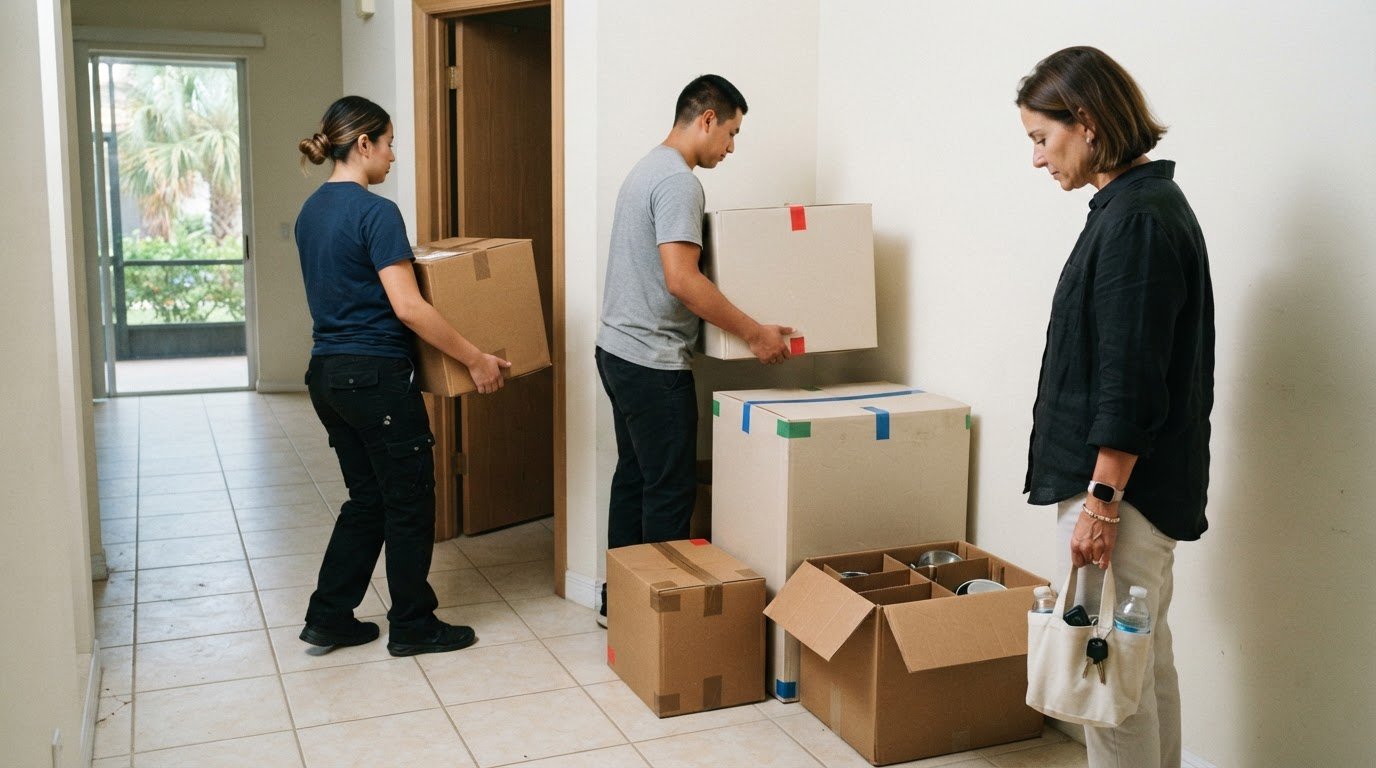
A calm moving day starts with preparation. Knowing what to expect on moving day means having labeled boxes ready, a plan for children and pets, and essentials close at hand while the crew handles the move. Tipping is optional and appreciated, but a clear plan can make the day more manageable either way.
It’s normal to feel pulled in several directions as belongings are loaded and your household moves between homes. A few practical decisions can ease the pressure: choose containers suited to your belongings, label boxes by destination room, and arrange a safe, quiet place for children or pets during the busiest activity. This guide covers how to prepare, what to keep with you, and how to stay organized as the move progresses, so you can settle in with a clearer plan.
Key Takeaways
- Match containers to the belongings they’ll protect, and keep essential personal items within reach throughout the move.
- Use clear room and opening-priority labels to help movers place boxes where they belong and make unpacking easier.
- Plan a calm, secure arrangement for children and pets so they’re away from the busiest parts of the move.
- Review the day’s plan with the moving crew, identify special-care items, and keep keys and other essentials close.
Choosing packing containers and labeling belongings with professional movers
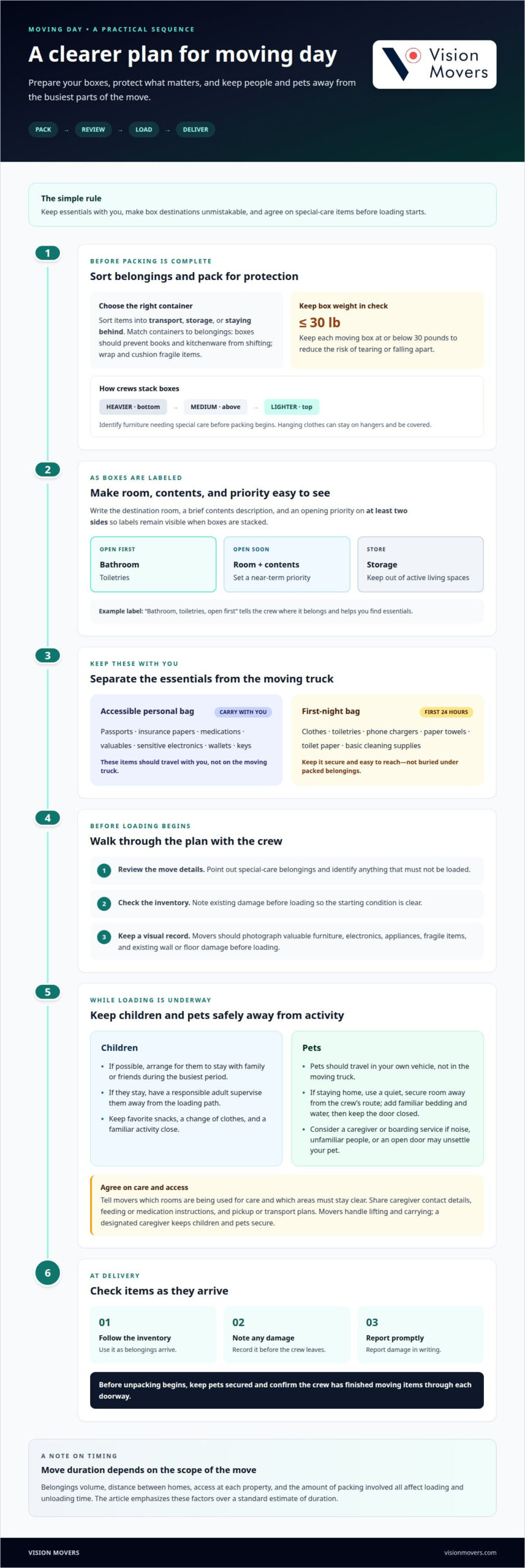
Knowing what to expect on moving day starts with how professional movers match containers to belongings. Books and kitchenware need boxes that prevent shifting, while fragile items need wrapping and cushioning. Each moving box should stay at or below 30 pounds to reduce the risk of tearing or falling apart. Crews place heavier items at the bottom, medium-weight items above them, and lighter belongings on top. They also identify furniture needing special care before packing begins.
Keep a separate, accessible bag with passports, insurance papers, medications, valuables, sensitive electronics, wallets, and keys. These important items should travel with you, not on the moving truck. Prepare a first-night bag for what you’ll need during the first 24 hours: clothes, toiletries, phone chargers, paper towels, toilet paper, and basic cleaning supplies. Keep it secure and easy to reach, not buried under packed belongings.
Professional packing starts by sorting belongings into those for transport, storage, or staying behind. Movers pack the items selected for transport and bring supplies suited to the job, wrapping and boxing belongings for the trip. Clear contents labels make boxes easier to identify later. Hanging clothes can stay on their hangers and be covered, avoiding folding and rehanging. Knowing what to expect on moving day also means clarifying which items the movers will pack and which should stay with you.
A move’s duration depends on the volume of belongings, distance between homes, access at each property, and the amount of packing involved. These factors affect loading and unloading time, so the scope of the move matters more than a standard estimate of duration.
For final packing, separate priority boxes from items headed to storage. Sort boxes into three groups: “open first,” “open soon,” and “store.” Write the destination room, a brief contents description, and the opening priority on at least two sides so the labels stay visible when boxes are stacked. This makes essentials easier to find after arrival.
Labeling boxes by room and priority with professional movers
Clear labels help the crew place boxes in the right rooms and make unpacking easier. Mark each box with its destination room, a brief contents description, and an opening priority. For example, “Bathroom, toiletries, open first” shows where it belongs and helps you find essentials. A “storage” label also distinguishes items that shouldn’t go into an active living space.
During the walkthrough, review the move details, point out belongings that need special care, and identify anything that shouldn’t be loaded. The crew records belongings on the inventory, and you can note existing damage before loading. This shared review clarifies what travels and what stays behind. At delivery, follow the inventory as items arrive and note any damage before the crew leaves. Report damage promptly in writing.
For a dorm room, label bedding, clothes, snacks, and study supplies by destination or use. Keep cleaning supplies easy to reach so you can clean the room before unpacking. To help keep the room cooler, close window coverings against direct sun and avoid blocking vents. Once floors and surfaces are clean, set up the bed and desk first to create space for organizing smaller items.
A room condition report is most useful when it distinguishes existing marks from the room’s condition after move-in. Record visible scratches, stains, or wall damage before unpacking, and take clear photos for reference. For a household move, movers should photograph valuable furniture, electronics, appliances, fragile items, and existing wall or floor damage before loading. This provides a clearer reference during delivery.
When several rooms or storage destinations are involved, consistent labels reduce confusion at unloading. A residential moving plan can help keep room placement and delivery priorities organized.
Arranging care for children and pets during a professional move
Moving day involves open doors, moving equipment, and steady foot traffic, so plan for children and pets before the crew arrives. If possible, arrange for them to stay with family or friends during the busiest period. A quieter setting can reduce disruption and keep them away from active loading areas. Share the care plan and relevant instructions with the adults involved.
Pets should travel in your own vehicle, not in the moving truck. If they’ll stay at home during loading, choose a quiet, secure room away from the crew’s route. Put familiar bedding and water there, and keep the door closed. A caregiver or boarding service may be a better option if your pet becomes unsettled by noise, unfamiliar people, or an open door.
If children can’t stay elsewhere, arrange for a responsible adult to supervise them away from the loading path. Explain that movers need clear access to doorways and rooms. Keep favorite snacks, a change of clothes, and a familiar activity close by. If the family is traveling separately, decide who will care for the children while the moving crew handles household belongings.
Before work begins, tell the movers which rooms are being used for care and which areas must stay clear. A simple checklist can include the caregiver’s contact details, feeding or medication instructions, and pickup or transport plans. Confirm that pets won’t be in rooms the crew needs to enter. This helps prevent an accidental escape through an open window or door.
Movers handle lifting and carrying while a designated caregiver keeps children and pets secure. Don’t ask the crew to supervise them; the crew needs to focus on the move and protecting belongings. Once loading is complete, reunite everyone at the agreed place. At the new home, keep pets secured before unpacking begins and confirm that the crew has finished moving items through each doorway.
Managing moving-day stress with professional movers
A clear review at the start of the day turns loose concerns into an agreed plan. Before loading, the crew reviews the move details with you, identifies items needing special care, and confirms what must not be loaded. Keep wallets, keys, documents, and medications with you. Clearly flag delicate appliances or furniture that need particular attention. Agreeing on who handles each decision prevents last-minute confusion as rooms are cleared.
A DIY move leaves your household responsible for lifting, transport, timing, and coordination. With professional movers, the crew handles physical loading and unloading while you direct priorities and answer questions about belongings. Sharing the work this way can free you to manage family needs and essential decisions instead of carrying every box yourself.
Use one written checklist for details that can otherwise compete for attention: the arrival plan, special-care items, belongings staying behind, and who is responsible for the keys. Before leaving, walk through every room. Check closets, cabinets, drawers, appliances, storage areas, windows, lights, doors, and trash. A consistent room-by-room check helps prevent forgotten items and reduces the worry of leaving something behind.
At the new home, first make the kitchen and bathrooms functional, then assemble beds. Check that doors and windows lock properly, and confirm that water, electricity, and internet work. These priorities give the household places to rest and meet basic needs before you unpack everything. Keep your checklist nearby to track progress without relying on memory.
Tipping movers is optional and appreciated; many customers give each crew member a flat amount for the day. Before the crew leaves, note any damage on the inventory and report it promptly in writing. A calm, useful takeaway: keep decisions, essentials, and the final walkthrough organized, while the crew focuses on moving belongings safely. For support with an organized move, plan your move with professional movers.
Vision Movers
Vision Movers helps organize moving day with residential, local, interstate, and commercial moving services. Professional packing, furniture protection, and loading and unloading support can reduce the tasks you need to coordinate yourself. Choose this support when you want experienced movers to handle the physical work while you focus on household priorities, children, pets, and essentials.
Before the move, share your priorities and identify belongings needing special care. Clear instructions help the crew understand what should be packed, protected, and delivered first. Whether you’re planning a move across town or between states, a coordinated plan can make the day easier to manage. Contact Vision Movers to discuss your move.
Make your next move feel more manageable
Moving is a major change, but a clear plan and support with the details that matter can make the day easier to manage. Knowing what to expect on moving day helps you focus on decisions, family needs, and settling into your new home instead of handling every task yourself.
Vision Movers handles local, residential, and interstate moves, with professional support for the work involved in getting belongings safely from one home to another. If you’re planning a move and would like help organizing the next steps, reach out to discuss your needs and moving plans.
Contact Vision Movers about your move, and take the next step toward a more organized transition. You can move forward with greater confidence, one practical decision at a time.
Frequently Asked Questions
Should I Tip the Movers?
Tipping is optional, but appreciated. Some customers choose to give each crew member a flat amount for the day; no tip is required. If you’re deciding, consider the care, communication, and professionalism you experienced. A sincere thank-you is also a considerate way to recognize good service. Keep tipping separate from payment arrangements in your moving paperwork.
What Happens if Something Gets Damaged?
If you notice damage, photograph it and record the details on the moving inventory. Report it promptly in writing, clearly describing the item and damage, and keep copies of your notes and documents. Vision Movers is fully licensed and fully insured for local and long-distance moves. All belongings are insured, and additional insurance is available if needed. A timely, organized record gives the moving company useful information about the issue.
What happens on moving day step by step?
The day typically begins with the crew reviewing the move plan and identifying belongings needing special handling. Movers load the items designated for transport, travel to the destination, and unload according to the delivery plan. Before the crew leaves, review the delivered belongings and inventory together. At the new home, check essential access points and utilities before settling in.
What should I expect to arrange before movers arrive on moving day?
Before moving day, arrange access to both homes and have utility setup confirmations ready for the new address. The day before the move, confirm the arrival window, crew size, truck size, and payment method with Vision Movers. Keep building entry details and parking instructions handy so the crew can reach the loading area without avoidable delays.
What should I keep with me instead of asking movers to load onto the truck?
Keep important documents, medications, valuables, sensitive electronics, and daily essentials with you. Place identification, prescriptions, keys, your wallet, and a phone charger in an accessible personal bag. Keeping these items close during travel means you won’t need to search packed boxes after arrival. Passports, wills, and insurance documents should also stay in your possession.
What should I expect if movers are late or belongings are damaged?
If the crew is running late, contact Vision Movers for an updated arrival estimate and adjust plans that depend on timing, such as building access or caregiver arrangements. If belongings arrive damaged, photograph the condition, note it on the inventory before the crew leaves, and report it promptly in writing. Keep your records together so you can describe the issue clearly.
Leave a Reply