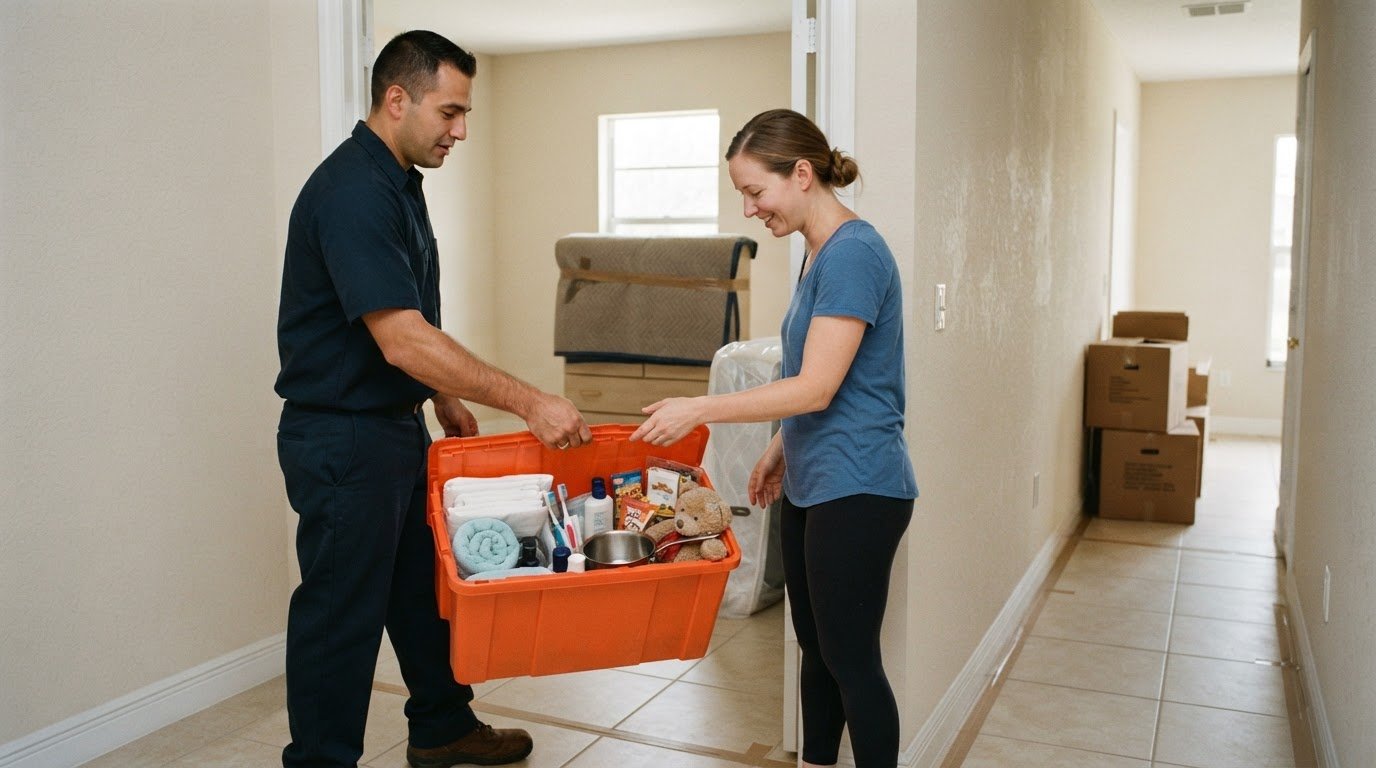
Your moving day essentials box checklist should cover the first night or two: toiletries, a change of clothes, bedding, phone chargers, basic kitchen supplies, snacks, and simple tools. Keep identification, important paperwork, medications, valuables, and essential electronics with you rather than on the moving truck. Leave hazardous or flammable products out of the box.
It’s easy to focus on packing every room and overlook what you’ll need as soon as you arrive. A clearly labeled essentials kit keeps everyday necessities within reach while the rest of your belongings are still packed.
This checklist covers what to pack for your first night, what to carry separately, and what can wait until later. You’ll also find practical ways to keep essentials visible and close at hand on moving day.
Key Takeaways
- Keep first-night supplies clearly marked and separate so they’re easy to find after unloading.
- Leave hazardous or flammable products out of the essentials box, and let lower-priority household boxes wait to be unpacked.
- Plan comfort items around the needs of each person, including familiar activities for children and necessities for pets.
- Keep essential documents, medications, valuables, and electronics with you instead of loading them onto the moving truck.
Items to leave out of the first-night box
Pack for immediate use, not every possible unpacking task. Use a moving day essentials box checklist to separate first-night needs from belongings that can wait. Limit the kit to items that help you eat, sleep, wash, and open essential cartons. Bulk household goods can stay packed until later. This makes essentials easier to find among cookware, décor, and supplies you won’t need right away.
For food and drinks, choose simple options that need little preparation, such as snacks, water, and coffee or tea supplies. Add disposable plates, cups, and utensils, along with basic kitchen items you’ll use immediately. Skip bulky cookware, pantry stock, and appliances that can stay packed until the kitchen is ready.
- Leave out hazardous or flammable products. Keep items such as propane, aerosols, and flammable liquids away from the first-night box.
- Set aside rarely used belongings. Seasonal décor, specialty kitchen tools, and extra linens can remain in labeled cartons.
- Keep valuables and important documents secure. Carry identification, moving paperwork, and small valuables with you rather than placing them in a box loaded onto the truck.
- Separate items that could leak. If toiletries or other liquids belong in your kit, seal them in plastic bags and close their caps firmly.
A practical first-night essentials bag can hold pajamas, a change of clothes, toiletries, phone chargers, and medications. Add a towel, toilet paper, and a flashlight if you’ll need them right away. Keep the bag separate from household boxes so you can reach it without opening several cartons.
Military households can also keep tax paperwork with their personal documents. The Internal Revenue Service explains in Tax Topic 455 which qualifying moving expenses active-duty military members moving under orders can still deduct. Keep related records secure and accessible rather than mixing them with kitchen supplies.
A moving day essentials box checklist also helps distinguish immediate necessities from boxes meant for storage. Label the first-night box clearly, for example, “Open First,” and keep it easy to reach. Make sure the essentials are accessible when you arrive, then unpack the rest as planned.
Bathroom and personal care supplies
Set aside bathroom items for each person before packing the remaining toiletries. Include a bath towel and washcloth for each person, plus a hand towel for the bathroom. Add soap, toothbrushes, toothpaste, shampoo, and daily skin-care items. An organized pouch makes personal-care supplies easy to reach while bathroom cartons are still closed.
Seal liquid toiletries in plastic bags and tape caps shut to reduce leaks during transport. Pack toilet paper for the bathrooms you expect to use, with at least one roll for each, and add hand soap. If children need particular bath products or supplies, keep them with their personal items rather than mixing them into a general carton.
For a quick first cleanup, bring paper towels, microfiber cloths, disinfectant wipes, an all-purpose cleaner, and trash bags. Keep these separate from toiletries so cleaning products don’t spill onto towels or clothes. A small tool kit, scissors, or a box cutter can help open cartons and handle simple setup tasks. Pack sharp tools safely and out of children’s reach.
Keep a flashlight, spare batteries, and a first-aid kit accessible for emergencies. Place them near the top of the bag or box, not beneath heavier items. If the new home needs basic setup, an extension cord can help you reach an outlet while arranging belongings.
Start gathering packing supplies four weeks before moving, including tape, markers, sturdy bags, and cartons for bathroom items. Group supplies by room, then label cartons on two sides so the labels stay visible when boxes are stacked. This simple system keeps unpacking organized and helps household members find toiletries without opening several boxes.
Label the essentials container clearly, for example, “Bathroom” and “Open First,” and write on two sides. Keep it in your own vehicle when possible. Otherwise, have it loaded last and unloaded first so it stays accessible.
For help preparing household cartons, professional packing services can support a more organized move.
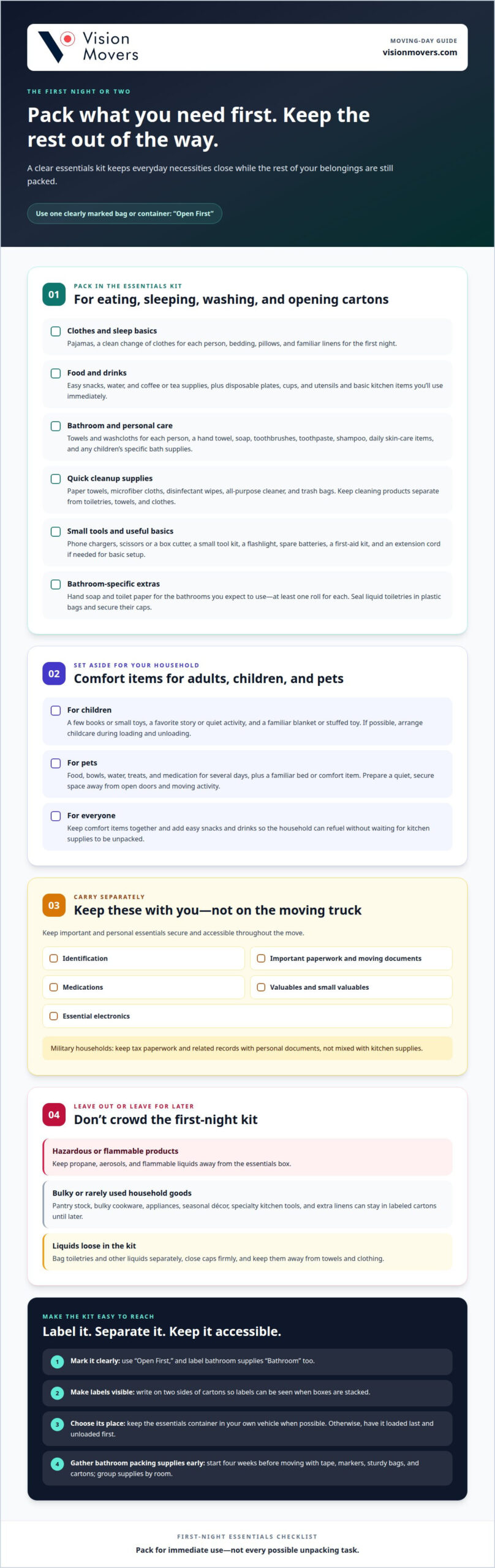
Comfort items for adults and children
Comfort items can make the first evening easier while furniture and kitchen belongings are still packed. Choose what each household member will use right away, and keep these items together instead of scattering them among room-by-room cartons.
- Pack bedding and pillows for the first night. Familiar linens help adults and children settle in before bedroom boxes are unpacked.
- Set aside pajamas and a clean change of clothes for each person. Keeping clothes accessible avoids searching through packed wardrobes after a long day.
- Add a few books or small toys for children. A favorite story or quiet activity gives kids something familiar during loading, travel, and early unpacking.
- Arrange childcare during loading and unloading, if possible. A trusted caregiver can keep children away from busy work areas while the moving company handles furniture and belongings.
- Pack pet food, bowls, water, treats, and medication for several days. Having familiar supplies ready makes feeding and care easier while the kitchen and pet items are being unpacked.
- Prepare a quiet, secure space for pets during the busiest part of the move. A closed room or a stay with someone familiar can keep pets away from open doors and moving activity.
- Include a favorite comfort item for each child or pet. A blanket, stuffed toy, or familiar bed can make an unfamiliar room feel less strange.
- Bring easy snacks and drinks for the household. Simple food helps adults and children refuel without waiting for kitchen supplies to be unpacked.
Before moving day, put comfort items in a clearly marked bag or container, separate from general cartons. Match the contents to your household’s routines: a child who naps may need a favorite blanket, while a pet may need its usual food and bowl. This helps organize the first evening, even if setting up furniture takes longer.
Moving-day essentials to keep with you
Keep essentials with you for the first night or two, covering the first 24-48 hours after arrival. That gives you immediate access to necessities if the moving truck is delayed or belongings are still being unloaded.
Use a separate bag or secure container in your vehicle, not a carton buried in the truck. Keep these items together:
- Identification and moving paperwork: Carry IDs, a lease or closing documents, insurance information, and the moving inventory. You may need these documents while movers unload or you access the home.
- Medications and medical essentials: Keep prescription and over-the-counter medicine, medical devices, and dosage notes with you. They should remain accessible if travel or unloading takes longer than planned.
- Valuables and essential electronics: Carry jewelry, small valuables, phones, laptops, and chargers in your own bag. This keeps important belongings close during transit.
- Keys and entry details: Keep house keys, garage access details, and community gate codes together. You’ll need them to enter when you arrive.
- Utility information: Store utility account numbers and setup confirmations with your move documents. They can help resolve access or service questions at the new home.
- Personal needs if plans change: Pack a change of clothes, snacks, water, and toiletries in a separate day bag. These cover immediate needs without opening packed boxes.
- Rental and appliance details: Keep rental paperwork or instructions for appliances you’re transporting with related documents. Having them accessible helps when questions come up during unloading or setup.
- Cash and a phone power source: Bring some cash and a charged power bank. These provide practical backup during a long moving day.
Before departure, place the bag in the passenger area, away from the movers’ loading path. If it must travel on the truck, identify it clearly and have it loaded last, then unloaded first. That way, you can reach documents, medication, and entry details before unpacking begins.
Plan your residential move with a clear arrangement for the belongings traveling with you and those loaded onto the truck.
Vision Movers
Vision Movers coordinates the move itself, helping your household keep first-night essentials accessible. For local, residential, interstate, or commercial relocations, organized packing and careful loading help keep everyday belongings separate from items you’ll need immediately.
Turn to Vision Movers when you’re planning a move and need support transporting your belongings. A clear plan for boxes, furniture, and essentials you’ll carry separately makes arrival and unpacking easier to manage.
Contact Vision Movers to discuss your upcoming move.
Make the First Night Part of Your Moving Plan
Include your first-night setup in the moving plan instead of leaving it until the final packing tasks. Decide which belongings need to stay close, and make sure everyone knows where to find them when you arrive. This simple handoff helps your household move from travel and unloading to settling in.
A moving day essentials box checklist is most useful when it reflects your household’s routines and the move ahead. Consider who needs access to key items, how they’ll travel, and what should stay separate from the truck load. With those decisions made, you can focus on the new space instead of searching through cartons.
Vision Movers offers Local Moving, Residential Moving, and Interstate Moving to support different kinds of relocations. If you’re ready to plan the next step, contact Vision Movers for moving help. A clear plan can help you begin your move with greater confidence.
Frequently Asked Questions
What Should I Put in My First Night Box?
Pack what your household will need before unpacking the main rooms, and choose items to suit your arrival routine. For example, include sleepwear, bedding, basic toiletries, chargers, and something simple to eat. If you expect to set up a child’s room first, place their bedtime item near the top. Label the container clearly so it doesn’t disappear among room-by-room cartons.
What is an Open First box and what goes in it?
An “Open First” box is a clearly marked container for items you’ll need soon after arriving, rather than during later unpacking. Think of it as a short-term setup kit: include a box cutter, a screwdriver, a shower curtain, and supplies to make the bathroom or sleeping area usable. Keep it accessible and separate from boxes labeled for storage.
What is the Essential Moving Box?
An essentials box is a container or bag reserved for everyday necessities that shouldn’t be buried in the moving load. It can hold personal-care items, basic kitchen supplies, bedding, and tools for opening cartons. Some households use one container, while others divide supplies by person or room. The key is to keep essentials together and easy to identify.
What items do people most frequently forget to pack during a move?
Personal documents, phone chargers, trash bags, and scissors or a box cutter are easy to overlook. To find them, check the rooms where you use them: look at the desk for documents, near outlets for chargers, and in kitchen or utility drawers for cutting tools. Put each item in its designated essentials container as soon as you find it.
What should I pack first when moving into a new apartment?
Start with belongings you won’t need before moving day, such as out-of-season clothing, decorative pieces, and rarely used kitchenware. Packing these first leaves daily-use items available and reduces last-minute work. Closets, the garage, and storage areas are useful places to begin because they often contain items that can stay boxed until after you’ve settled in.
What to pack in your essentials box when you move house?
Build the box around the first tasks you’ll handle in your new home. Include supplies for washing up, preparing a simple meal, making a bed, and opening other cartons. Add a flashlight and batteries if you’ll arrive after dark. If household members have different immediate needs, use separate labeled bags inside the box so each person can find their items quickly.
Leave a Reply