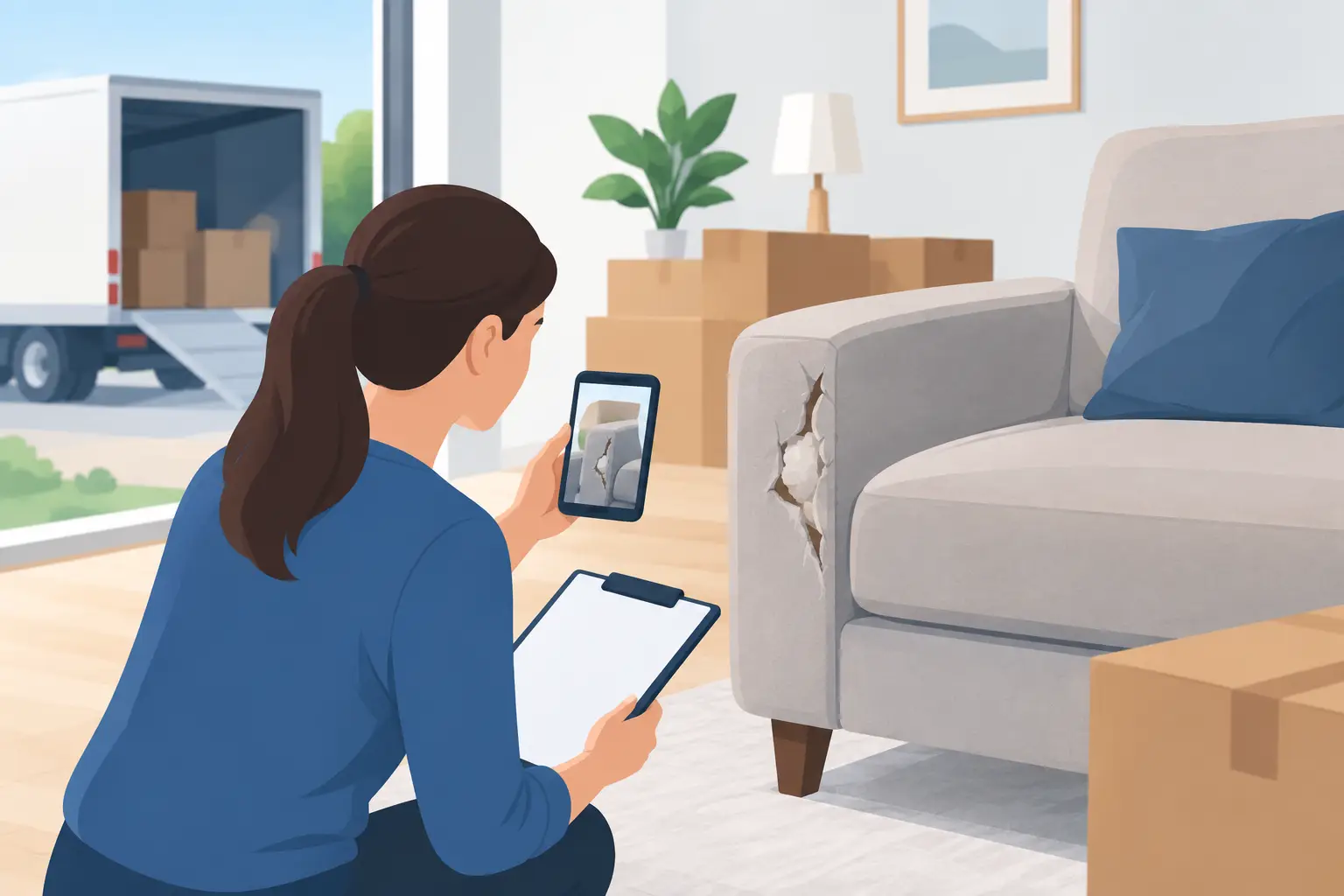
A scratched dining table or cracked TV screen can turn move-in day into a frustrating surprise. Moving damage claims are easier to handle when you act quickly, keep clear records, and understand what coverage you selected before the truck arrived. The goal is not to argue at the doorway. It is to protect the evidence, notify the right people, and give the claim process a fair chance to work.
Start Documenting Damage Before You Unpack
The best time to identify possible moving damage is during delivery, while the crew is still present and boxes are still organized by room. Inspect large furniture, appliances, electronics, mirrors, artwork, and any items that were packed or wrapped by the moving company. For apartment and condo moves, also look for damage to common areas, elevators, hallways, door frames, and your new unit.
Take photos and short videos from several angles. Capture the full item as well as close-ups of dents, cracks, torn upholstery, broken legs, or missing pieces. If possible, include the moving box, inventory tag, or label in the photo. This helps connect the damage to a specific item and shows its condition when it arrived.
Do not throw away damaged cartons, packing materials, or broken pieces right away. A mover or claims representative may need to inspect them. If a box is crushed, wet, punctured, or visibly mishandled, photograph it before opening it. Hidden damage is common, especially with dishware, electronics, and items packed tightly in cartons.
Note Concerns on Delivery Paperwork
Before signing delivery documents, read them carefully. If you notice damage, missing items, or a concern that needs further inspection, write it down on the paperwork when possible. A brief note such as “scratched dresser, photo taken” or “two cartons not yet located” creates a record that the issue existed at delivery.
That does not mean you need to hold up the entire move while you inspect every fork and picture frame. Most customers need time to unpack. Still, visible damage should be noted before the crew leaves whenever practical. If the driver gives you a document marked “clear delivery” or “no exceptions,” do not sign that wording if you have already found a problem.
Be factual and specific. Avoid guessing about the cause or demanding a dollar amount at the truck. Your immediate job is to document what you can see. The actual claim can be submitted once you have reviewed your inventory, receipts, and valuation coverage.
Keep Your Records in One Place
Moving paperwork has a way of disappearing between piles of boxes. Create one folder, digital or physical, for your estimate, bill of lading, inventory sheets, delivery receipt, photographs, videos, emails, and repair estimates. Write down the date and time you discovered each issue, plus the name of anyone you spoke with.
For a missing item, describe it in enough detail to identify it: brand, color, size, serial number, room, and any inventory number. For damaged furniture, include the material and exact area affected. “Wood dresser scratched” is less useful than “six-drawer walnut dresser with a three-inch gouge on the top front edge.”
Understand Valuation Coverage Before Filing
A common source of confusion is the difference between moving valuation and insurance. Moving companies typically provide valuation options that set their level of liability if items are lost or damaged. Separate moving insurance may be available through a third party or as part of a homeowners or renters policy, depending on the situation.
The amount you can recover may depend on the coverage selected, the item’s condition, its age, whether it was packed by the mover or by you, and the rules that apply to your move. Local moves within Florida and interstate moves can also follow different requirements. Do not assume that an item’s original purchase price will automatically be reimbursed.
Review the documents you received before the move. Look for the valuation option, any deductible, exclusions, claim deadlines, and instructions for submitting a claim. If the language is unclear, ask the moving company to explain the process in plain terms. A professional mover should be able to tell you where to send the claim, what documents are needed, and what happens after submission.
How to File Moving Damage Claims Clearly
Submit the claim as soon as you have enough information to describe the loss accurately. Waiting too long can make documentation harder and may put you outside the applicable deadline. Check your moving paperwork for the specific timeframe, especially if your move crossed state lines.
A complete claim usually includes your contact information, move date, shipment or job number, a list of damaged or missing items, photographs, and the amount you are requesting. If an item can be repaired, include a written repair estimate from a qualified provider. For an item that cannot reasonably be repaired, provide proof of its value when available, such as a receipt, appraisal, model number, or comparable replacement information.
Keep the tone calm and professional. A claim should explain the facts, not turn into a long account of an already stressful day. State what was damaged, attach the evidence, and ask for written confirmation that the claim was received. Save copies of everything you send.
If you packed a box yourself, be transparent about it. Some valuation options may have limitations for customer-packed cartons because the mover could not verify the condition or packing method of the contents. That does not mean you should skip the claim. It simply means the outcome may depend more heavily on your selected coverage and documentation.
Give the Inspection Process Time, but Follow Up
A moving company may need to inspect the item, review its inventory records, speak with the crew, or request additional information. Do not repair, dispose of, or replace the item until you have taken thorough photos and confirmed whether an inspection is needed. If safety requires immediate action, such as a broken appliance cord or shattered glass, document the condition first and keep the damaged parts if possible.
Ask for a claim reference number and the name of your point of contact. If you do not receive an acknowledgment within a reasonable period, follow up by email or phone and keep your message brief. Include your job number, the date the claim was sent, and the documents you already provided.
There is a balance here. You deserve timely communication, but some claims require review before a decision can be made. Organized records and respectful follow-up usually move the process forward more effectively than repeated calls without new information.
Prevent Damage Before Your Next Move
The easiest moving damage claim is the one you never need to file. Before booking, ask how the company protects furniture, handles fragile items, and manages difficult pieces such as pianos, safes, large appliances, pool tables, and glass tabletops. For a high-rise move, ask about elevator reservations, parking access, loading dock rules, and protection for hallways and door frames.
Walk through your home with the crew before loading if you have items with existing scratches, loose parts, or special handling needs. Point out sentimental pieces, antiques, and furniture that must be disassembled. Take pre-move photos of valuable belongings and confirm that the estimate and valuation coverage match the services you are receiving.
At Vision Movers, trained crews use the right equipment and protection for the job because careful planning is part of careful handling. Clear access, honest inventory details, and the right moving plan help protect your belongings from the first box to final placement.
A move involves many hands, tight spaces, and heavy items, so no company can promise that every situation will be simple. What you can control is preparation: document valuables before moving day, understand your coverage, inspect deliveries promptly, and speak up early if something is wrong. That preparation gives you a stronger position if you ever need to make a claim – and more confidence when you open the door to your new place.
Leave a Reply