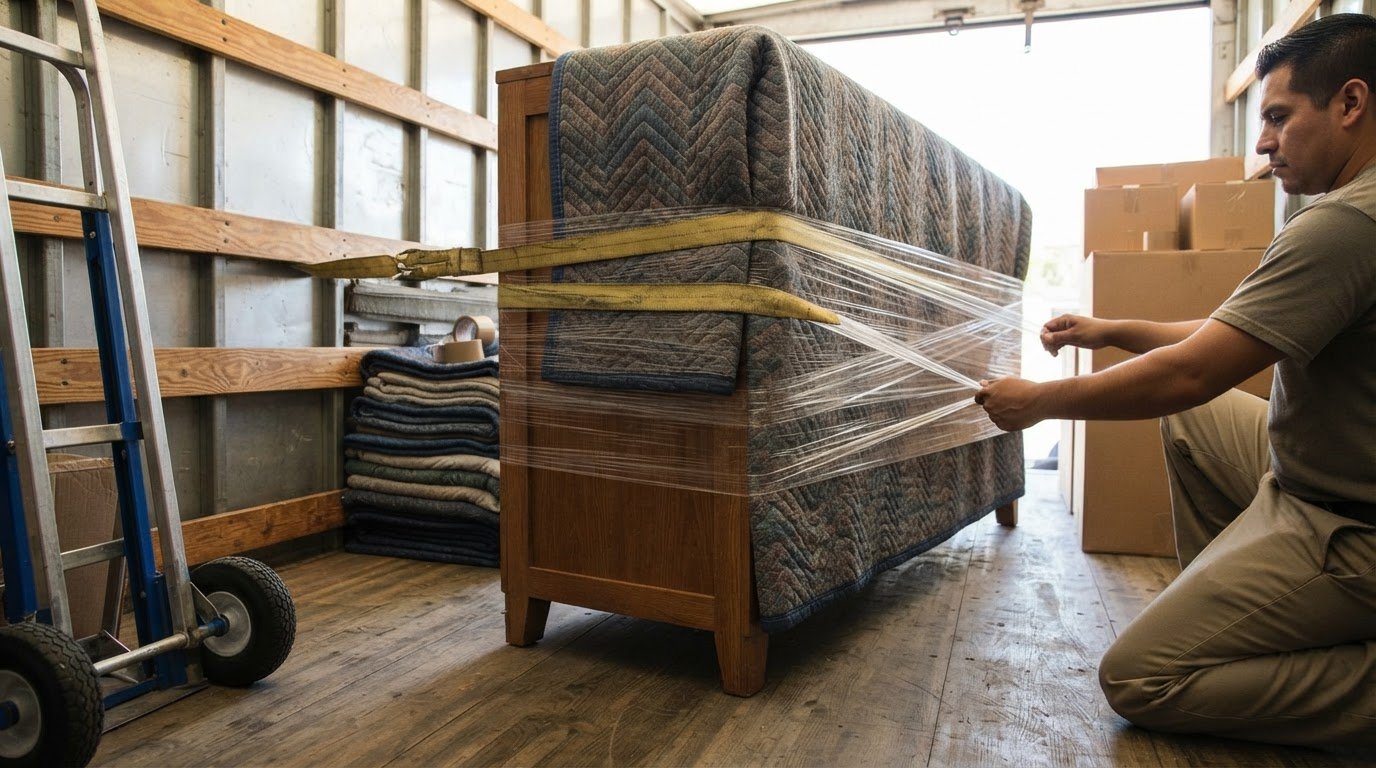
The right moving and packing supplies protect furniture by cushioning surfaces, securing loose parts, and preventing packed items from shifting. Use moving blankets for broad coverage, stretch wrap to hold coverings in place, and packing tape to seal boxes. Pack cartons snugly and fill empty spaces to keep contents stable.
It’s easy to focus on boxes and overlook how furniture needs protection during handling and transport. Start estimating supplies with an inventory of what you’re moving: note each furniture piece’s size and shape, exposed or fragile surfaces, and the boxes needed for its contents. This gives you a practical list of materials to gather instead of guessing item by item.
This guide explains how to use tape, stretch wrap, and moving blankets, pack boxes securely, and estimate supplies for your move. You’ll also learn when professional packing support can help protect furniture and make preparation more manageable.
Key Takeaways
- Match tape and wrap to the job: seal carton seams securely, and use wrap to keep protective layers and loose parts in place.
- Cover furniture with blankets before handling, giving exposed surfaces and edges an added buffer from bumps and scrapes.
- Choose box sizes around the weight and shape of their contents, then fill gaps so items are less likely to shift in transit.
- Estimate supplies by listing furniture, fragile items, and box needs room by room; packing support can help when preparation feels like too much to manage.
Packing tape and stretch wrap
Use packing tape to close box seams, not to attach coverings directly to finished furniture. Press it firmly along the center seam, then secure the edges so the carton stays closed during handling. For furniture, use stretch wrap to hold a blanket or foam layer in place. Keep protective material between the film and the finish to reduce the risk of marks or sticky residue.
Apply coverings in controlled layers. Start at one edge of a blanket or foam sheet and roll it around the furniture, overlapping each pass of stretch wrap enough to hold the cover. Keep the film taut, but don’t pull so tightly that it presses into cushions or delicate surfaces. Mover’s wrap is another common name for stretch film. Use it to bundle loose cushions or keep removable parts together, not as a substitute for cushioning.
Bubble wrap and foam add a buffer around vulnerable surfaces. Place foam between a tabletop and its cover, or cushion corners before wrapping a framed picture. For glass or artwork, use a fitted protective cover or cardboard around the cushioned item, then keep it separate from heavy objects. A listed Duck Brand bubble cushioning wrap package contains 30 feet, giving you a concrete reference when estimating coverage. Measure the item and plan overlapping layers before cutting.
For electronics, use the original packaging when available. Otherwise, cushion the device with foam or bubble wrap and place it in a snug box. Cover artwork with a protective layer before adding cushioning, and use a clean furniture cover or moving blanket for a mattress. Keep tape and stretch film off screens, painted surfaces, and mattress fabric.
Hazardous household items need special care during a move. The U.S. Consumer Product Safety Commission says regulations require special packaging for many harmful household products. For a damaged or defective lithium battery, the U.S. Environmental Protection Agency says to place only one battery per inner package.
Before sealing a package, check that the item is cushioned, its cover stays in place, and the tape closes the carton securely. This final check helps prevent exposed edges, loose wrapping, and shifting contents.
Moving blankets and furniture protection
Choose a cover based on each furniture piece’s size, shape, and exposed surfaces. A snug blanket protects broad areas, while padding helps shield corners and delicate details.
Furniture Pads and Moving Blankets
Moving blankets create a soft layer between furniture and nearby surfaces during handling. Select a size that covers the piece without leaving key edges exposed. For reference, a FRANKLIN extra-large double-sided moving blanket measures 80 by 144 inches, while another FRANKLIN blanket measures 40 by 50 inches. A 72-by-78-inch FRANKLIN blanket has grommets, which can help secure its position. Before lifting, cover the top and sides, then tuck excess fabric away from handles and moving paths. Add padding at corners, where contact can leave marks.
Protective Furniture Wraps
Protective wraps hold blankets or pads in place around furniture. Apply the cover first, then wrap over it without pressing film directly against delicate finishes. Keep the layers smooth and avoid trapping loose straps or hardware underneath. For a chair, cover the back and arms before securing the blanket around the seat. For a table, protect the edges and legs separately so the covering sits evenly. A well-fitted wrap holds the padding in place; it does not replace it.
Match protection to the item’s construction. Upholstered furniture needs a clean cover to shield the fabric, while finished wood benefits from a soft layer beneath any outer wrap. For a glass cabinet, protect exposed edges and keep the doors from swinging during movement. Remove detachable shelves or hardware when practical, and keep those parts together in a clearly labeled package.
Before transport, check that blankets cover exposed surfaces and stay secure when the item is gently shifted. Reposition loose folds, and keep protective layers from dragging on the floor. For help preparing furniture for a move, consider professional packing support.
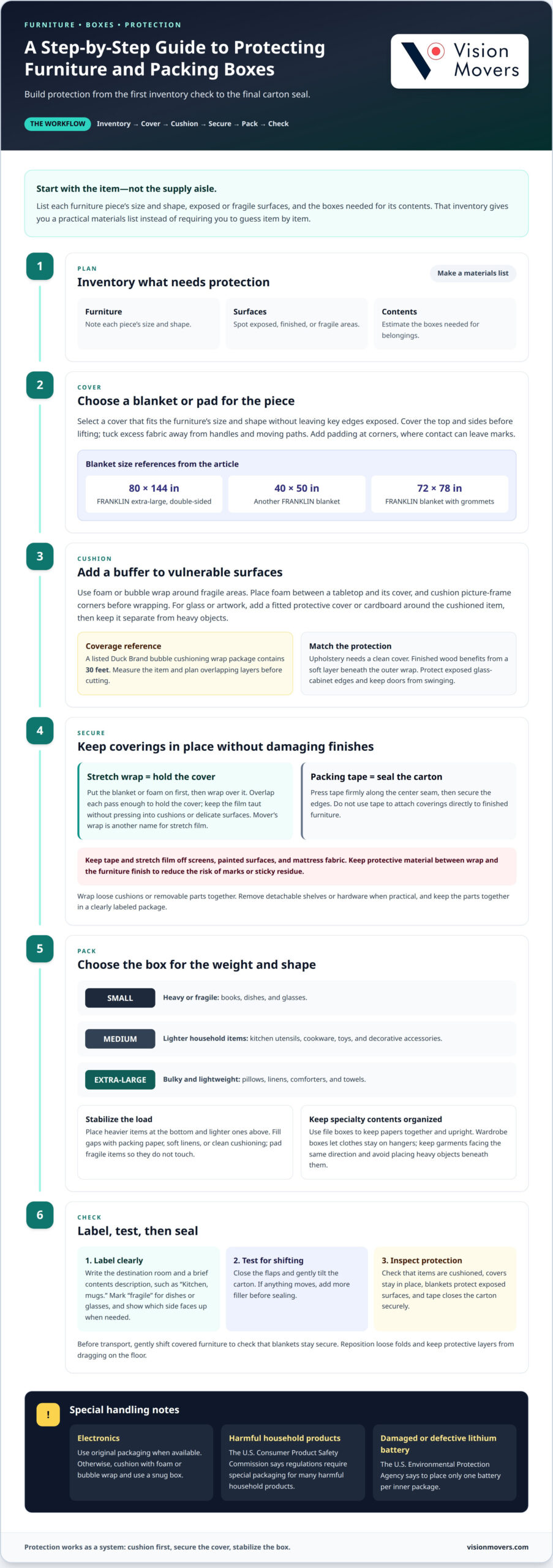
Packing boxes tightly to prevent movement
Choose boxes to suit the weight and shape of their contents, then stabilize each load. A snugly packed box shifts less and is easier to organize during storage and unloading.
Filling Empty Box Space
Place heavier items at the bottom and lighter ones above. Fill gaps with packing paper, soft linens, or clean cushioning to keep contents from sliding when the box moves. Separate fragile items with padding so they don’t touch. Close the flaps and gently tilt the carton. If anything shifts, add more filler before sealing.
Small boxes suit heavy or fragile belongings such as books, dishes, and glasses. Medium boxes work well for lighter kitchen utensils, cookware, toys, and decorative accessories. Extra-large boxes are better for bulky, lightweight items like pillows, linens, comforters, and towels. A moving box kit groups common sizes and supplies, while individual boxes let you choose sizes for specific items.
Boxes for Papers and Clothing
Use file boxes to keep important papers together and upright. Group documents by room or purpose, place them in labeled folders, and keep the box away from items that could crush it. Wardrobe boxes let clothes stay on hangers during packing and moving. Keep garments facing the same direction, and don’t place heavy objects beneath hanging clothes.
For clear labeling, write the destination room and a brief contents description on each box. Mark “fragile” for dishes or glasses, and indicate which side should face up when needed. For example, label a carton “Kitchen, mugs” rather than just “Kitchen.” Clear labels help identify boxes during unloading and organize the unpacking order.
Reusable boxes suit repeated moves because they’re designed for multiple uses. Cardboard boxes are easy to label and can be recycled after use. To find free boxes, ask friends or family for clean, sturdy cartons they’ve already used. Buy individual boxes when you need a particular size or a wardrobe box.
After unpacking, reuse sturdy cartons for storage or pass them on for another move. Flatten clean cardboard before recycling it through your local program, and separate reusable materials such as packing paper. Returnable box programs depend on the supplier’s terms, so follow the instructions provided with the boxes.
Moving supply calculator
Build a useful estimate from an inventory, not a guessed box count. Count furniture, fragile items, and cartons by room, then match supplies to each task.
Estimating Moving Supply Needs
Make a simple inventory with one line per room and separate columns for boxes, cushioning, tape, and furniture covers. Add items that need distinct protection, such as a glass cabinet or framed artwork. Note which blankets or cartons you can reuse. This list shows what you already have and which supplies you still need to gather.
Estimate quantities based on coverage, not household size alone. Measure large furniture and note exposed surfaces, then estimate the wrap or blanket area required. Group belongings by type and choose cartons suited to their weight and shape. Include packing paper or cushioning for fragile contents. Revisit the list after packing each room, since actual box use helps refine the remaining estimate.
Moving and Packing Supply Costs
In the United States, supply totals depend on the types and quantities of materials needed. To estimate spending, multiply the required quantity of each item by its current unit price, then add the totals. Track cartons, tape, cushioning, and furniture protection separately so changing one category doesn’t affect the others.
A move with several delicate surfaces, for example, may need more protective material than one with mostly soft goods. Reusing supplies you already have can reduce how much you need to buy. Compare planned quantities with your room inventory before purchasing, and revise the estimate if the packing plan changes.
Use a short review before finalizing your list:
- Match each fragile item with suitable cushioning.
- Count cartons by room and contents, not by guesswork.
- Include furniture covers for exposed surfaces.
- Subtract clean supplies you can reuse.
Keep the inventory with your moving notes, and mark each supply as gathered or still needed. If you’d like help planning packing needs, get help estimating your moving supplies.
Vision Movers: Packing Services
Vision Movers provides Packing Services to protect furniture and belongings before moving day. This can help when fragile items, bulky furniture, or a full household make packing difficult to manage alone. The team also offers Residential Moving, Local Moving, and Interstate Moving, connecting preparation with the move itself.
Tell Vision Movers which items need careful packing and where you’re moving. This helps shape a practical plan for boxes, cushioning, and furniture protection. Packing support can be especially useful when time is limited or you want an organized handoff between packing and transport.
For a move that needs hands-on packing assistance, contact Vision Movers to discuss your plans.
Set Your Move Up for a Steady Start
A well-planned move starts with a clear picture of what needs attention. Use your supply estimate as a starting point, then decide which preparation tasks you’ll handle and where professional support could make the process easier. The right moving and packing supplies help protect your belongings, while a coordinated plan connects packing with the move ahead.
Vision Movers offers Local Moving, Residential Moving, and Interstate Moving, with options suited to different relocation needs. If you’d like support shaping the next steps around your move, contact Vision Movers to discuss your plans.
With a practical plan in place, you can move forward with greater clarity and focus on settling into your next home.
Frequently Asked Questions
What moving and packing supplies do I need for a move?
Most moves need boxes, packing tape, cushioning, furniture covers, and labels. Add specialty containers when belongings need a different setup, such as a wardrobe box for hanging clothes or a file box for documents. Inventory each room and note fragile items, then mark the supplies you already have. This makes it easier to gather what the move actually requires.
How many moving boxes do I need based on home size?
Home size alone can’t provide an accurate box count because belongings vary. A home with books, kitchenware, and decor may need more cartons than a similarly sized home with fewer stored items. Count belongings room by room, group them by type, and note what can be packed together. Keep a running total as you pack, then adjust it for closets and storage areas still to be done.
What are the best box sizes and types for different household items?
Use small boxes for dense belongings such as books, dishes, and glasses; medium cartons suit lighter kitchen items, toys, and decor. Extra-large boxes work for bulky, lightweight items like bedding and towels. Wardrobe boxes keep hanging garments together, while file boxes organize paperwork. Match each container to its contents so heavy loads stay manageable and lighter items don’t get crushed.
Which packing materials protect fragile items best?
Layered cushioning helps protect fragile belongings from contact and movement. Wrap pieces individually, separate them with soft packing material, and cushion the top and sides of the carton. For example, place glasses upright with padding between them so they don’t touch. Keep delicate pieces away from heavier objects, and clearly label the box so it receives careful handling.
How do I estimate how much packing tape, bubble wrap, and paper I need?
Estimate each material according to the items it must cover or secure. Count cartons and note how many need sealed seams, then list fragile pieces that need individual cushioning. Measure larger objects before estimating wrap coverage, and allow extra paper for filling gaps. Track supplies used in each room as you pack; that running tally helps refine the remaining estimate.
Are reusable moving boxes cheaper or more convenient than cardboard boxes?
Reusable boxes suit repeated moves because they’re designed for multiple uses. Cardboard boxes are easy to label and can be recycled after use; the article gives no cost comparison.
Leave a Reply