
A calmer move starts before moving day. Knowing how to make moving day less stressful comes down to a few practical choices: clear out what you don’t need, plan ahead, and decide whether to move yourself or hire help. A simple plan gives every task a place and helps prevent last-minute decisions from piling up.
Even with a checklist, moving can feel like a lot to manage. You’re sorting belongings, packing rooms, coordinating people, and preparing for a new home, often all at once. This guide puts those tasks in order, from deciding what to keep to asking friends and family for specific help.
You’ll also learn how to prepare a moving-day plan and weigh a DIY move against professional movers. Clear priorities and the right support can make the day more manageable and help you focus on settling in.
Key Takeaways
- Sort belongings before packing so you can focus time and box space on what you plan to keep.
- Use a moving checklist to organize packing, address changes, and utility arrangements ahead of the move.
- Make it easier for friends and family to help by assigning clear tasks that suit their time and abilities.
- Choose between a DIY move and professional movers by weighing the work involved and the support you need.
1. Decluttering before packing
Sort each room before packing. Make three groups: keep, donate, and discard. In a bedroom closet, separate clothes you wear from items you no longer need. Removing unwanted belongings means fewer boxes to pack and transport, and makes it easier to see what belongs in your new home. Keep important documents together in a clearly marked folder, not in a general household box.
Pack one room at a time, beginning with spaces and items you use less often. Seasonal decorations, spare linens, and books can be boxed before daily essentials. Use smaller boxes for heavy belongings such as books, and larger boxes for lighter items such as bedding and pillows. Finish each room before starting another, so packed items stay grouped by destination. Start packing at least two weeks before moving day. For anyone asking how to make moving day less stressful, spreading the work across those weeks helps avoid a last-minute rush.
Gather supplies before packing a room: sturdy boxes, packing tape, cushioning material, and a marker. Choose boxes that hold their shape, and cushion breakable items such as dishes to limit movement during transport. Keep the tape and marker within reach so you can close and label each box right away. A supply station in one corner saves repeated searches and helps the work flow.
Label every box with its destination room, contents, and whether it contains fragile items. Write the details on more than one side so labels remain visible when boxes are stacked. For example, mark a kitchen box “plates, fragile” and identify its destination. Pack toiletries, medications, chargers, and a change of clothes separately for easy access after arrival. A clear labeling system helps you arrange boxes and find essentials first.
2. Planning ahead and using a moving checklist
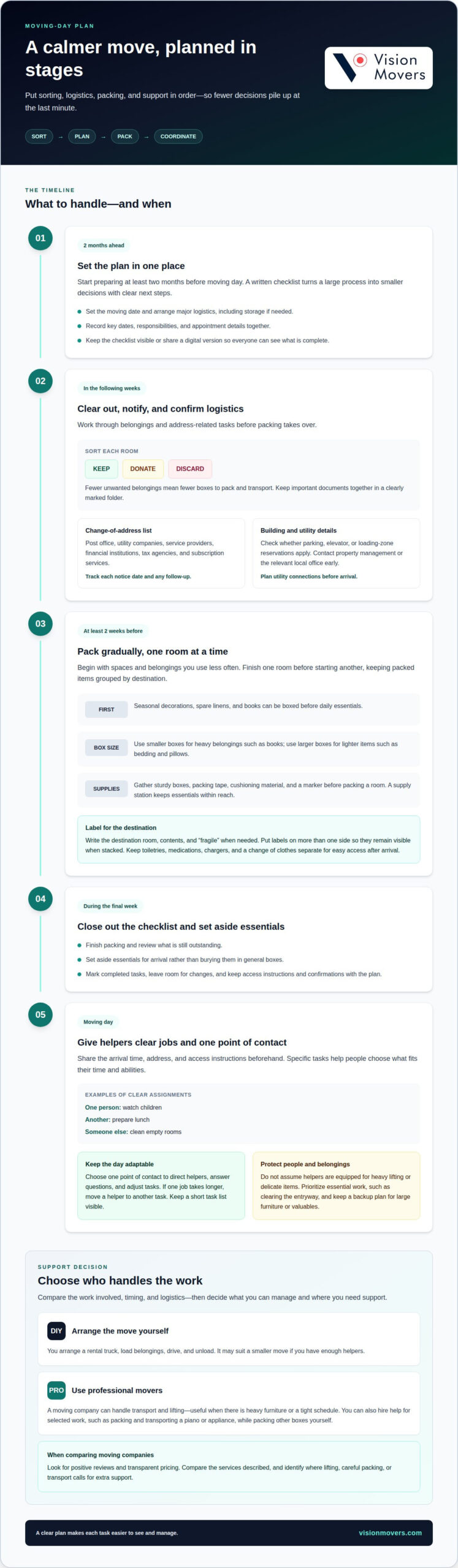
Start preparing at least two months before moving day. A written checklist turns an overwhelming process into smaller decisions, each with a clear next step. Put key dates, responsibilities, and appointment details in one place. Keep the list visible or use a shared digital version so everyone involved can see what’s complete and what still needs attention.
Use a week-by-week plan. Two months ahead, set the moving date and arrange major logistics, including storage if needed. In the following weeks, sort belongings, confirm access details, and begin notifying organizations of your new address. Start packing at least two weeks before moving day, beginning with items you rarely use. During the final week, finish packing, review the checklist, and set aside essentials for arrival.
Your change-of-address checklist should include the post office, utility companies, service providers, financial institutions, tax agencies, and subscription services. Record each organization, the date you notified it, and any follow-up step. Arrange to have utilities at your new home turned on before you arrive. Plan when to disconnect services at your current home and connect them at the new address.
Parking, elevator, and loading-zone reservations depend on your building and local rules. Contact property management or the relevant local office early to learn which steps apply. Add deadlines, access instructions, and confirmation details to your checklist, especially if you’re moving from or into an apartment or a building with a shared loading area.
Keep the plan practical and positive. Leave space for changes, and mark completed tasks so progress is easy to see. If your move crosses the country, include travel arrangements and arrival timing. For local logistics, professional local moving support can be a useful part of your plan.
3. Asking friends and family for help
Ask friends and family for specific help instead of making a general request. One person might watch children, another could prepare lunch, and someone else could clean empty rooms. Clear tasks help people choose what suits their time and abilities. Share the arrival time, address, and access instructions beforehand so helpers know where to go and what to expect.
Match each task to the person and the belongings involved. A friend who enjoys organizing can sort kitchen items, while someone comfortable assembling furniture can handle straightforward pieces. Don’t casually assign heavy lifting or delicate items unless helpers feel equipped to manage them. If a task requires specialized handling, include it in your moving arrangements instead of putting pressure on a friend.
Choose one point of contact for moving day. That person can direct helpers to the right room, answer questions, and adjust assignments as rooms empty. If unpacking takes longer than expected, for example, a helper can switch from arranging shelves to collecting empty boxes. Keep a short task list visible, and tell people when plans change rather than assuming they know.
Flexibility matters when someone runs late or a task takes longer than expected. Identify a priority, such as clearing the entryway, and leave optional jobs for later. Have a backup plan for essential work, including moving large furniture or transporting valuables. Keep moving arrangements and responsibilities clear rather than relying on favors for work that requires professional handling. A sincere thank-you, a shared meal, or a thoughtful message afterward can recognize the time and effort your helpers contributed.
4. Hiring professional movers or planning a DIY move
Choose between a DIY move and professional movers by considering the work, timing, and logistics. A DIY move means arranging a rental truck, loading belongings, driving, and unloading. It may suit a smaller move if you have enough helpers. A moving company can handle transport and lifting, which can be useful when you have heavy furniture or a tight schedule.
Professional movers can also handle selected parts of a move. For example, you might hire help to pack and transport a piano or appliance while packing other boxes yourself. This approach lets you manage some tasks while assigning more demanding work to trained movers. List what you can handle, then identify where lifting, careful packing, or transport calls for extra support.
When comparing moving companies, look for positive reviews and transparent pricing. Compare the services described and check whether the estimate clearly explains what the move includes. Be cautious about unclear charges or pressure to decide quickly. Keep the company’s name and agreed details with your moving checklist.
Children and pets need a calm, supervised space away from loading paths and open doors. Arrange for a trusted adult to stay with children, or set up a quiet room with familiar books and toys. Keep pets in a secure room with water, food, and familiar bedding, and tell helpers to keep the door closed. This helps reduce interruptions while furniture is being carried.
Professional support can make sense when the move involves valuable or bulky belongings, long-distance transport, or more lifting than your helpers can manage. For help organizing the transport and handling of your household move, explore professional moving support.
Vision Movers
Vision Movers helps make a move more manageable by coordinating the practical work involved in getting belongings to a new home or workplace. If your plans include packing support, furniture protection, or expert loading and unloading, professional help can reduce the number of moving-day tasks you need to handle yourself. Vision Movers supports local, residential, interstate, and commercial moves, so you can turn to the team when you need help organizing a relocation that fits your situation. A clear plan still matters: share your priorities, the move’s scope, and any special handling needs so the work can be organized around them. For a calmer next step, contact Vision Movers to discuss your move.
Take the Next Step Toward a Smoother Move
A move is more than the day your belongings leave one address. It’s the start of a new routine, and a few choices in your new space can make the transition feel more personal. Before moving day, consider what would make arriving feel like progress: a familiar lamp in place, a favorite chair ready to use, or a quiet moment to take in your new surroundings.
That picture can guide decisions when plans shift. Making moving day less stressful means focusing on what matters most to you, rather than expecting every detail to unfold perfectly. Keep your priorities visible, and let them shape the support you choose for the move.
Vision Movers can help you plan the practical side of your relocation, so you can give attention to settling in. Contact Vision Movers for moving help and discuss the support that fits your move. A thoughtful start can make your new place feel like home sooner.
Frequently Asked Questions
How far in advance should you start planning a move?
Start planning at least two months before moving day. Use that time to settle the move date, coordinate work or school schedules, and plan the transition between homes. If you’re moving from a building with limited access, include its move-in procedures in your timeline. A written schedule also helps you spot tasks that depend on one another, such as arranging access before delivery.
How can you declutter and pack efficiently before moving day?
Make decisions by item and destination: keep what you’ll use, then identify where each item belongs in your next home. For things you’re giving away, arrange a pickup or drop-off instead of leaving donations until moving day. Keep a simple record of boxes containing items for multiple rooms. That way, you can direct each box efficiently without opening it to identify everything inside.
What packing supplies do you need, and how much do they cost?
Useful supplies include sturdy boxes in several sizes, packing tape, a marker, and cushioning for breakable belongings. How many supplies you need depends on the number and size of your boxes and the amount of protective material required. Reusing clean, sturdy boxes can reduce how many you need to buy. Gather supplies before packing so you can finish each batch without stopping to look for materials.
What should you pack in a moving-day essentials box?
Pack a separate tote with items you’ll want before the main boxes are unpacked. Include towels, bed linens, toilet paper, a few basic dishes, a mug, scissors, and a small trash bag. Keep the tote accessible rather than burying it in the moving load. Setting it aside with your personal belongings, for example, makes it easier to prepare the bathroom and beds when you arrive.
What should you do to protect valuables and prevent damage or injury?
Photograph valuable items before packing, and keep a simple record of their condition and identifying details. Carry small valuables and important papers with you instead of putting them in a general box. Keep hallways and doorways clear during loading, and avoid lifts that feel unsafe. Vision Movers states that all belongings are insured, with additional insurance available if needed, and is fully licensed and fully insured for local and long-distance moves.
How should you handle utilities, address changes, and move-in logistics?
Track each address update and utility arrangement in one place, including the date submitted and any confirmation details. Schedule essential services at your new home before arrival, and note when current services should end. For moves around Miami, Fort Lauderdale, Boca Raton, Brickell, Weston, Plantation, Pompano Beach, Broward County, Hollywood, Dania Beach, Coral Springs, or Parkland, include building access instructions and key handoff details in your arrival plan.
Leave a Reply