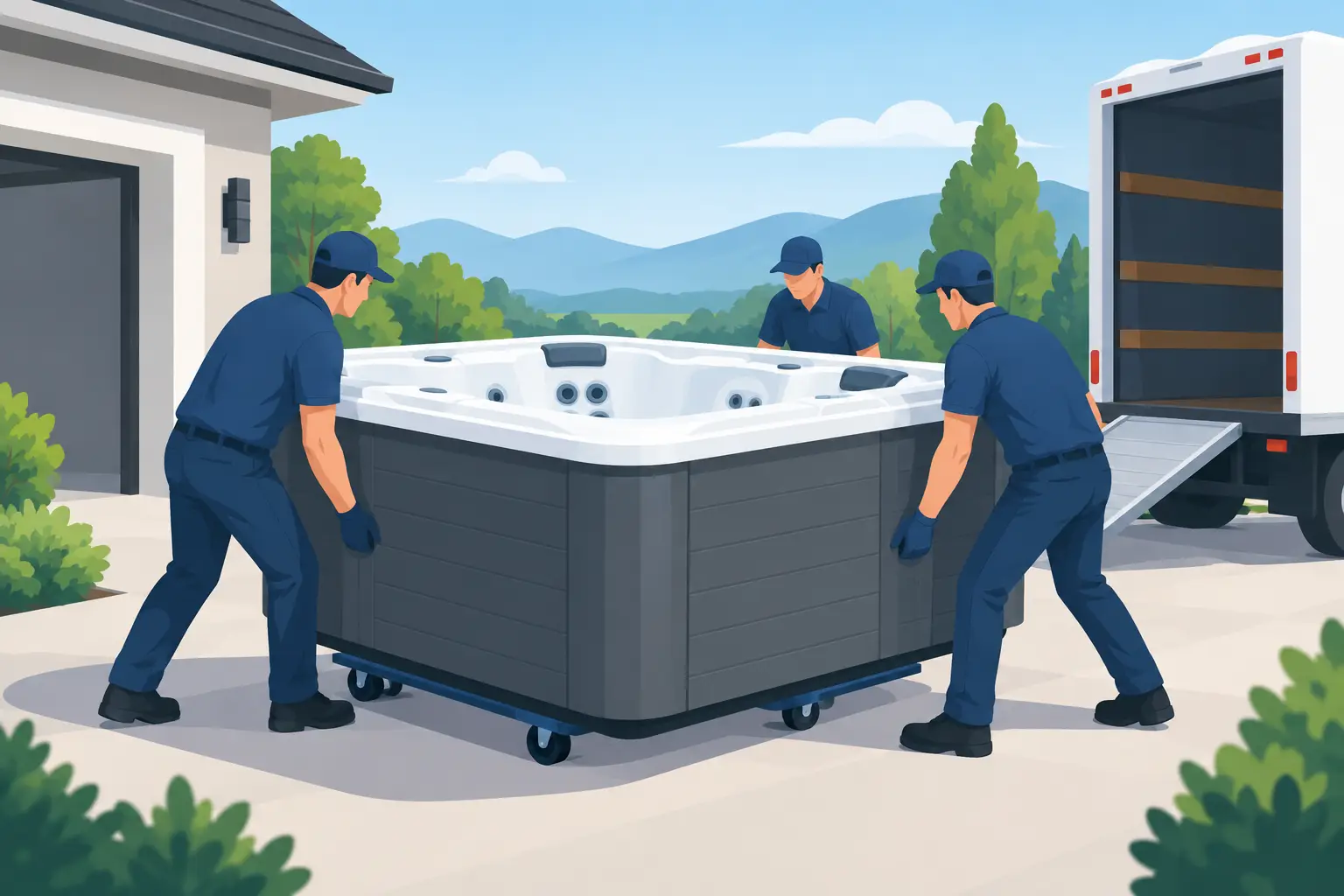
A hot tub is one of the few household items that can turn a simple move into a serious logistics job. It is heavy, awkward, expensive, and often positioned behind fences, through side yards, or on patios with limited access. A professional hot tub moving service gives you a practical plan for getting it out, transporting it safely, and placing it where it belongs without taking unnecessary risks with your spa or your property.
For South Florida homeowners, timing matters too. Heat, rain, tight neighborhood layouts, condo rules, and busy schedules can all affect the job. The right crew handles the heavy work while keeping the move organized from the first walkthrough to final placement.
Why Hot Tub Moving Is Different
Many hot tubs weigh 500 to 1,000 pounds empty, and larger models can weigh more. Their weight is only part of the challenge. A spa’s cabinet, shell, plumbing, electrical components, and cover can be damaged when it is tipped incorrectly, dragged across pavers, or lifted without the right support.
Access is usually the deciding factor. A hot tub on an open patio is very different from one tucked behind a house, surrounded by landscaping, or installed inside a screened enclosure. Gates, stairs, pool equipment, uneven ground, low rooflines, and narrow side yards all change the equipment and crew size needed for the job.
Trying to handle that with a few friends, a pickup truck, and moving straps can create a costly problem. Someone can get hurt, the spa can crack, or a fence, deck, driveway, and lawn can be damaged. Professional movers assess the route first so the plan fits the actual property, not a best-case scenario.
What a Hot Tub Moving Service Should Include
A qualified hot tub moving service starts with clear questions. What are the spa’s approximate dimensions and model? Is it moving across town, to another Florida city, into storage, or simply to a new location on the same property? Are there steps, gates, elevators, balconies, or HOA scheduling requirements?
After assessing those details, the movers should determine how to protect the spa and how to navigate the path. Depending on the situation, the crew may use furniture dollies, heavy-duty moving straps, padding, lifting equipment, ramps, and a properly sized moving truck. For especially difficult access, additional planning or specialized equipment may be necessary.
The work should also include careful loading, secure transportation, unloading, and placement at the destination. If the move is part of a larger household relocation, coordinating the hot tub with the rest of the move prevents last-minute delays. One organized schedule is easier than trying to manage separate crews, trucks, and arrival windows.
At Vision Movers, trained crews handle specialty items with the same careful attention given to pianos, safes, appliances, and pool tables. The goal is straightforward: protect the item, protect the property, and keep the moving day moving.
Before Movers Arrive: Prepare the Spa Properly
Movers can handle the lifting and transportation, but the hot tub needs basic preparation before it can be moved. Start early rather than waiting until moving morning. Water removal and drying take longer than many owners expect, especially after a recent rain.
First, turn off electrical power at the breaker. A spa should be disconnected safely before anyone begins moving it. If you are unsure how the unit is wired or connected, arrange for a qualified technician or electrician to handle that portion. Movers should not transport a hot tub that is still connected to power.
Next, drain the tub completely according to the manufacturer’s instructions. Remove as much water as possible, then allow the interior, plumbing area, and cover to dry. Leftover water adds weight and can leak during transport. If you are moving during a rainy South Florida week, cover the spa after draining it so it stays dry before pickup.
Remove loose accessories such as steps, pillows, filters, cover lifters, and detachable handrails. Pack these separately and label them. If the cover is in good condition, it should be protected as a separate item rather than folded, forced, or strapped in a way that may damage the foam inserts.
Before the crew arrives, make sure the route is clear. Move patio furniture, planters, garden hoses, toys, and other obstacles. Unlock gates, reserve elevators if needed, and notify your property manager or HOA when required. These small steps save time and help prevent avoidable damage.
Access Conditions That Affect the Plan and Price
Transparent pricing begins with an honest look at the job. A mover cannot accurately estimate a hot tub relocation based on weight alone. Distance, access, crew requirements, equipment, and destination conditions all matter.
A ground-level move with wide gate access may be relatively direct. A spa that must pass through a narrow corridor, over multiple steps, or around a pool enclosure requires more labor and more careful maneuvering. A move involving a crane or other third-party specialty service will also have a different scope than a standard truck-and-crew move.
Photos and measurements are useful during the estimate process. Provide the length, width, and height of the spa if available, plus photos of the pickup and drop-off routes. Include gate widths, stairs, turns, slopes, and any overhead obstacles. Clear information helps the moving company send the right team and prevents surprises on moving day.
For condos and communities, ask about loading zones, insurance certificates, service elevator hours, and approved moving windows. Many South Florida properties have rules that affect when and where a truck can work. Planning those details in advance keeps the relocation on schedule.
Can a Hot Tub Be Moved on Its Side?
Sometimes, but it depends on the specific unit and the route. Movers may need to stand a hot tub on its side to pass through a gate or travel safely on a dolly. That does not mean every side is acceptable or that the spa can be tipped casually.
The manufacturer may provide guidance on orientation, support points, and handling. The shell and frame need proper protection, and the unit must be secured during transport so it cannot shift. A trained crew evaluates the spa’s construction and access path before deciding how to position it.
This is one reason a hot tub should never be dragged across a driveway or rolled across the lawn without planning. Improper pressure on the cabinet or shell can cause damage that may not be obvious until the spa is reconnected.
Placement at the New Home Matters Too
Getting the hot tub to the destination is not the last detail. Its new location needs a stable, level base that can support the full weight of the spa when filled. A hot tub can weigh several thousand pounds once water and occupants are added, so a weak deck, uneven pavers, or soft ground can lead to serious problems.
Confirm the pad, slab, or deck area is ready before scheduling delivery. Leave enough space for service access, cover operation, drainage, and safe entry. If you are placing the spa near a wall, screen enclosure, or pool equipment, make sure there is room for future maintenance.
After placement, a qualified technician can reconnect electrical service and inspect the setup before the tub is filled. Movers transport and position the unit; electrical hookup and water testing should be handled by the appropriate professional.
Choosing a Moving Company for a Spa Relocation
Look for a licensed and insured moving company that is willing to ask detailed questions before giving you a plan. Specialty moving requires more than general labor. You want trained crews, appropriate equipment, clear pricing, and a company that takes access challenges seriously.
Be cautious of vague quotes that do not address stairs, gates, distance, or the condition of the pickup and delivery locations. A dependable mover explains what is included, identifies potential complications early, and gives you realistic scheduling expectations. If your move is last-minute, ask whether the company can accommodate the timing without cutting corners on safety.
A hot tub is meant to be a place to relax. Let the moving process be handled with the same care. With proper preparation, an experienced crew, and a clear route from old patio to new home, you can focus on enjoying the first soak instead of worrying about how the spa got there.
Leave a Reply