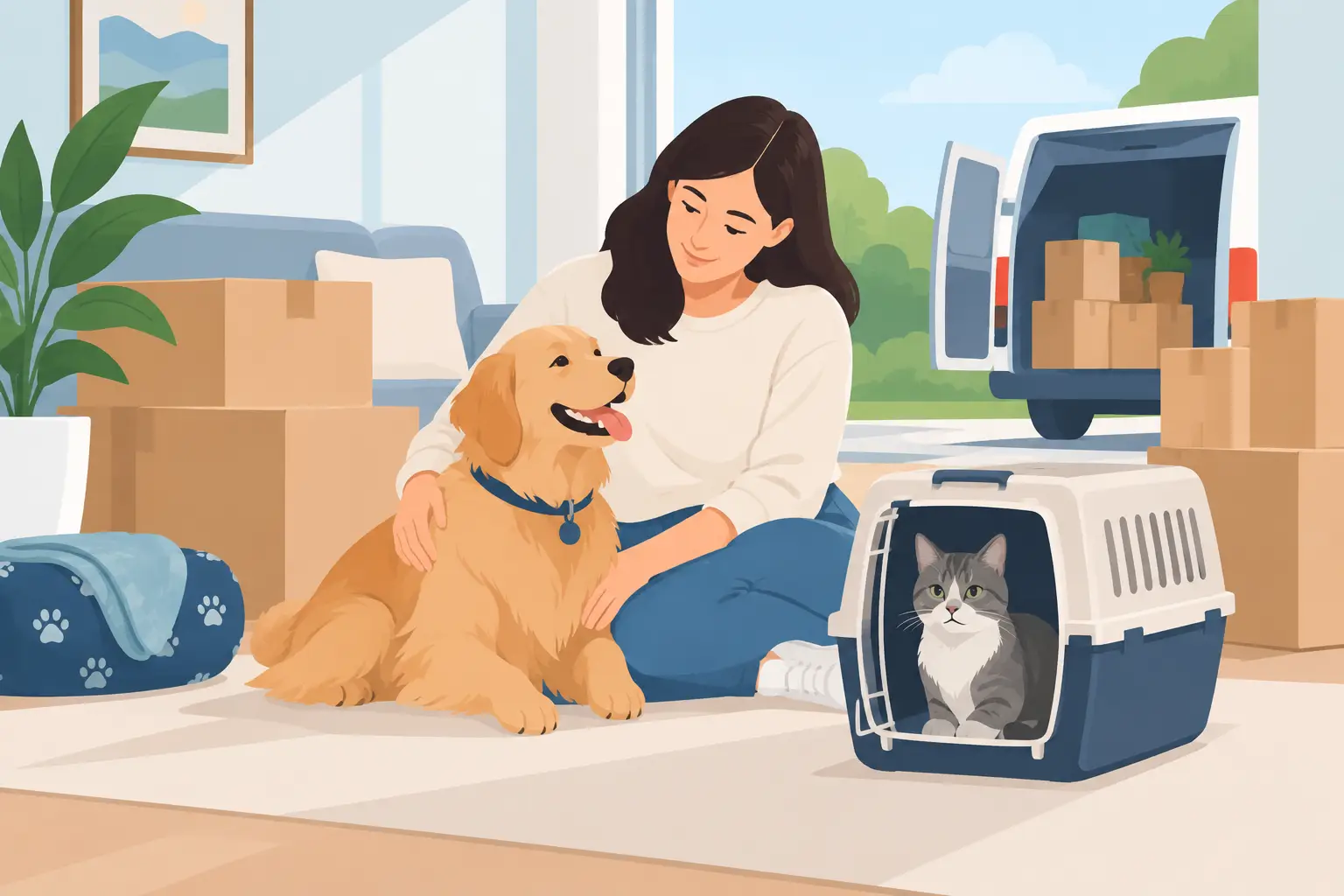
The moving truck is not what unsettles most pets. It is the sudden disappearance of familiar furniture, the open boxes, the strangers at the door, and the changed routine. This guide to moving with pets helps you plan around those stress points so your dog, cat, bird, or small animal stays safe and as comfortable as possible from packing day through settling in.
Start Preparing Your Pet Before Moving Week
Pets pick up on household changes quickly. Begin preparing two to four weeks before the move when possible, especially if you have a nervous pet, a senior animal, or a pet with medical needs. Keep feeding, walks, playtime, and bedtime on their normal schedule. That consistency gives them something predictable while the rest of the home changes.
Bring out the carrier, crate, or travel harness early rather than waiting until moving day. Put a familiar blanket and a few treats inside so your pet can investigate it without pressure. For cats, leave the carrier open in a quiet room. For dogs, take short practice rides if they are not used to the car.
If you are moving from Fort Lauderdale to another part of South Florida, your pet may only need a short car ride. A long-distance Florida move or cross-country relocation requires more preparation. Ask your veterinarian about travel anxiety, motion sickness, medication timing, microchip information, and any health certificates required by your destination or airline. Do not try a new sedative for the first time on moving day.
Update your pet’s ID tag and microchip registration before the move. An address change can be handled online for most microchip providers, but it is easy to forget amid packing. Include a phone number that will remain active during the transition.
Confirm Rules at Your New Home
Apartment, condo, and HOA rules can affect your move more than expected. Confirm pet limits, breed or weight restrictions, vaccination requirements, leash policies, elevator rules, and designated relief areas before signing off on the move. Some high-rise buildings require a move reservation and may limit which entrances or elevators can be used.
For renters, have copies of vaccination records and any required pet approval documents available. If your pet is an assistance animal, keep applicable documentation organized as well. Getting these details settled ahead of time prevents an uncomfortable surprise when you arrive with a tired pet and a loaded vehicle.
Build a Pet Moving Kit You Can Reach Fast
Your pet’s supplies should travel with you, not on the moving truck. Delayed delivery, traffic, or a long unloading day should never leave you searching through boxes for food, medication, or a leash.
Pack a clearly labeled pet bag or tote with these essentials:
- Food for several days, treats, bowls, and bottled water
- Medications, veterinary records, and contact information for your current vet
- A leash, harness, waste bags, carrier, crate, or seat restraint
- A familiar bed, blanket, toy, and grooming supplies
- Cat litter, a small litter box, or bedding for small animals
Bring more food than you think you will need. A sudden diet change can create digestive issues at exactly the wrong time. For pets on prescription diets, plan for at least a week of extra food in case a local store does not carry the same formula.
In South Florida, heat is another practical concern. Never leave a pet in a parked car while you handle paperwork, wait for an elevator, or direct movers. The interior temperature rises quickly, even on a day that does not feel extreme. Keep water accessible and schedule walking breaks during cooler morning or evening hours when possible.
Make Moving Day Safer and Quieter
The safest place for most pets on moving day is away from the action. Doors will be propped open, furniture will be carried out, and people may be entering and leaving repeatedly. Even a pet that normally stays close can panic and bolt in an unfamiliar, noisy situation.
Set up one quiet room before packing begins. Place your pet inside with water, bedding, a toy, and a clear note on the door asking that it remain closed. For cats, include a litter box. Play soft music or run a fan to help mask the sound of moving equipment and conversation.
If the move will last all day, consider having a trusted friend, family member, veterinarian, or boarding facility care for your pet until the home is unloaded. This can be the better choice for highly anxious animals, multiple pets, or households with young children already managing a busy transition.
Professional movers can handle the boxes, furniture, appliances, and heavy lifting, but pet supervision should stay with a household member. Let the crew know that an animal is secured in a specific room so that space is not opened by accident. When working with Vision Movers, share building access instructions, parking details, and timing needs in advance so the moving plan has fewer last-minute changes.
Travel by Car With Safety in Mind
Dogs should be secured with a crash-tested harness or ride in a properly sized crate. Cats should stay in a secure carrier for the entire trip, even if they protest. Opening a carrier in a car, parking lot, or rest stop creates a real risk of escape.
Plan breaks based on the animal, not just your route. Dogs may need time to walk and drink water, while cats often prefer to remain in their carrier until they reach the new home. Keep car temperatures comfortable and avoid feeding a large meal immediately before travel if your pet gets carsick.
For a move involving air travel, check airline requirements well ahead of time. Carrier dimensions, breed restrictions, seasonal heat limits, and health documentation vary. Whenever practical, keep your pet with you in the cabin rather than arranging cargo transport, but follow the rules that apply to your animal and itinerary.
Help Your Pet Settle Into the New Home
Do not give your pet immediate access to every room. Start with one calm, pet-safe space that includes familiar items from the old home. Their bed, blanket, food bowls, and toys carry comforting scents that make a new environment feel less foreign.
For cats, this approach is especially useful. Keep them in a quiet room with food, water, a litter box, and a hiding spot for a day or two, then gradually introduce additional rooms. A cat that is released too quickly into a large unfamiliar home may hide, stop eating, or try to escape.
Dogs often benefit from a walk around the neighborhood soon after arrival, once the essential unloading is complete. Use a leash even in a fenced yard until you have checked gates, gaps, pool areas, toxic plants, and local wildlife concerns. Keep their routine as close to normal as possible, including meals and walks at familiar times.
Small animals need extra attention to temperature, drafts, and cage placement. Keep birds, reptiles, rabbits, and other sensitive pets away from direct air conditioning vents, active unpacking areas, and open windows. Set up their enclosure before unpacking nonessential household items.
Watch for Stress Signals After the Move
A little adjustment is normal. Your pet may be clingy, quiet, restless, or less interested in food for a day or two. Cats may hide, and dogs may have a temporary accident indoors. Respond with patience rather than punishment.
Call a veterinarian if your pet refuses food for more than a day, has persistent vomiting or diarrhea, seems unusually lethargic, struggles to breathe, or shows signs of severe anxiety. Pets with chronic conditions, very young animals, and seniors may need a more cautious transition.
It also helps to locate a nearby veterinarian, emergency animal hospital, groomer, and pet supply store within the first week. You may never need every contact, but knowing where to go provides peace of mind when you are still learning the neighborhood.
Moving with pets does take extra coordination, but the goal is simple: protect their routine where you can, keep them secure when you cannot, and give them time to make the new place feel like home. A calm first night, a familiar meal, and your presence often do more than any perfect packing plan.
Leave a Reply