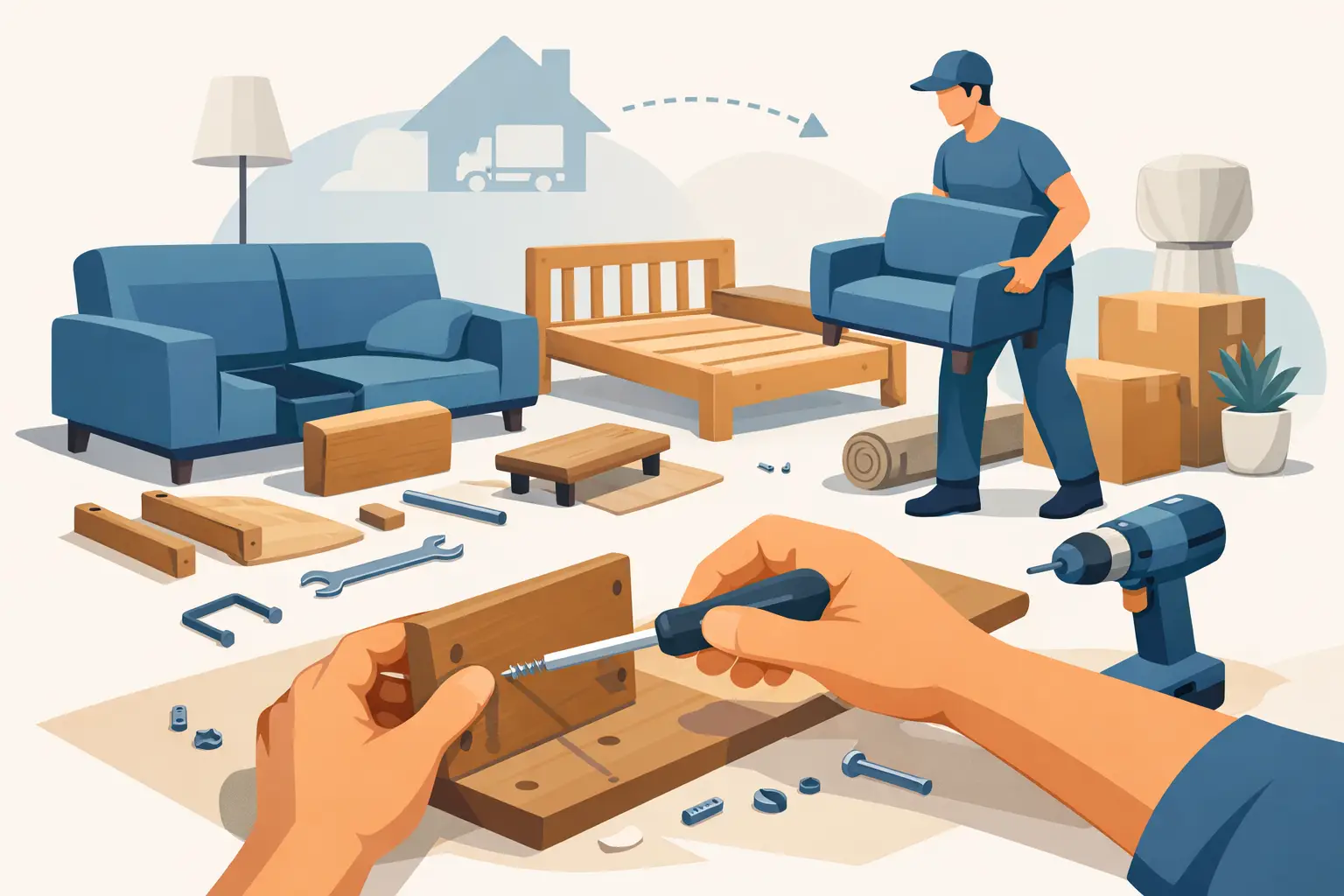
A sofa that will not clear a condo elevator, a bed frame with missing hardware, or a scratched dining table can turn moving day into a long, expensive problem. The right furniture disassembly steps make large pieces easier to protect, carry, load, and reassemble without guesswork at your new home.
Disassembly is not always necessary. A small dresser may travel more safely intact, while a sectional, king bed, wall unit, or oversized desk often needs to come apart to move through narrow hallways, stairwells, doorways, and loading areas. The goal is not to dismantle everything. It is to remove only what improves access, reduces risk, and protects the furniture.
Plan Before You Pick Up a Tool
Start by measuring the furniture and the tightest parts of the route: apartment doors, elevator openings, hallways, stair turns, and the truck entrance. South Florida condo moves often involve reserved elevators, long corridors, and building time windows. Knowing what will fit before moving begins prevents last-minute decisions in a crowded hallway.
Check the manufacturer instructions if you still have them, especially for adjustable beds, reclining furniture, modular office systems, and pieces with built-in lighting or power connections. If instructions are unavailable, take clear photos from several angles before removing anything. Photograph connection points, drawer placements, bracket locations, and the direction of rails or panels.
Set aside a clean work area with enough room to place parts in order. Avoid taking furniture apart directly on tile, concrete, or hardwood without a moving blanket underneath. A blanket protects both the surface and the furniture finish from scratches.
Gather the Right Supplies
Most household furniture can be handled with basic hand tools, but the exact tool depends on the piece. Keep a screwdriver set, Allen keys, adjustable wrench, socket set, pliers, and a utility knife nearby. You will also need zip-top bags, masking tape, a permanent marker, stretch wrap, moving blankets, and sturdy packing tape.
Do not use power tools at high speed unless you know the furniture can handle them. Particleboard, veneer, and older wood pieces can strip, crack, or split when screws are over-tightened. Hand tools give you more control and make reassembly less risky.
Furniture Disassembly Steps That Keep Parts Organized
The most common moving mistake is not taking furniture apart. It is taking it apart without a system. Follow the same sequence for each item so every component, screw, and panel has a clear place.
1. Empty, clean, and inspect the piece
Remove drawers, shelves, cushions, mattress supports, and all personal belongings. A dresser may look manageable when full, but loaded drawers increase weight and can damage slides during carrying. Emptying furniture also gives you a chance to check for loose joints, existing scratches, or weak areas that need extra protection.
For drawers that are hard to remove or built into an older piece, secure them closed with stretch wrap rather than tape. Tape can leave residue or pull at delicate finishes.
2. Remove the easiest detachable parts first
Take off legs, knobs, shelves, glass panels, headboards, table leaves, and removable cushions before moving to structural components. This reduces weight and creates more clearance through tight spaces. On sofas and recliners, removable feet and back sections can make a major difference when navigating stairs or elevator doors.
Place fragile components, especially glass shelves and mirrors, in separate protective wrapping. Never stack heavy hardware or metal brackets against glass or finished wood.
3. Work in reverse assembly order
Think about how the furniture was likely built. On a bed, remove the mattress and box spring first, then slats, side rails, and finally the headboard and footboard if needed. On a dining table, remove the leaves and legs before separating larger frame pieces.
Avoid forcing parts apart. If a rail, panel, or connector will not release, stop and inspect it. It may have a hidden locking mechanism, a retaining screw, or a direction-specific bracket. Pulling hard can crack wood, bend hardware, or damage the part that keeps the piece stable after reassembly.
4. Bag and label every set of hardware
Put screws, bolts, washers, dowels, and brackets from one item into a single bag. Label it with the furniture name and location, such as “Primary Bedroom Bed – Left Rail Hardware.” For complex furniture, add a note about where the bag belongs or tape it directly to a wrapped rail or frame section.
Do not combine hardware from different rooms in one loose container. A bag full of mixed screws may seem efficient until you are trying to rebuild furniture after a long move. Clear labels save time and prevent missing parts.
5. Protect corners, edges, and exposed mechanisms
Once disassembled, wrap each component according to its material. Use moving blankets for wood frames, upholstered pieces, and large panels. Use stretch wrap over blankets to keep padding in place, but do not wrap directly against finished wood for extended storage in hot or humid conditions.
Cover sharp corners and metal edges carefully. Secure loose cords, reclining mechanisms, and adjustable-bed components so they cannot shift in the truck. Keep upholstered sections clean and dry, particularly during rainy-season moves in Fort Lauderdale and surrounding Broward County communities.
Know Which Furniture Needs Professional Handling
Some pieces are simple to disassemble, while others carry more risk than value when handled as a do-it-yourself project. Oversized entertainment centers, antique furniture, adjustable beds, large conference tables, commercial workstations, and wall-mounted units often require experienced handling.
The same applies to furniture with stone tops, fragile glass, integrated electrical components, or complicated mechanical systems. A reclining sofa may have removable backs, but the release points can be difficult to access. An adjustable bed can involve heavy bases, motors, cords, and components that should be packed in a specific way. Forcing either one can create damage that costs more than professional service.
Pianos, safes, pool tables, hot tubs, and large appliances are in a different category altogether. These items require dedicated equipment, trained crews, and a clear plan for weight distribution and building access. Disassembly alone does not make them safe to move.
Reassembly Starts Before the Truck Leaves
Loading order matters. Keep hardware bags and smaller components with their matching furniture, not buried in a random box. Larger wrapped sections should be loaded in a way that prevents shifting, with heavy items secured and delicate panels protected from pressure.
At the destination, place furniture in the correct room before reassembly whenever possible. Carrying a rebuilt king bed or large desk through a second-floor hallway creates extra work and increases the chance of wall or furniture damage. For apartments and condos, confirm elevator access and building rules before scheduling delivery time.
Use your photos and labels as you rebuild. Start each piece loosely, then tighten hardware only after all connections are aligned. This is especially important for bed frames, desks, and shelving units. Tightening one side too early can leave holes misaligned on the other side.
After reassembly, test drawers, doors, reclining features, and shelves before loading them with belongings. Check that beds are level, table legs are stable, and wall units are properly anchored where required. If you notice wobbling, do not ignore it. A quick adjustment is much easier before the room is fully unpacked.
When Time, Access, or Safety Is Tight
Furniture disassembly can save space and prevent damage, but it also adds time. If you are coordinating a same-day move, managing a high-rise building reservation, or relocating an office with minimal downtime, a trained moving crew can keep the process organized from disassembly through setup.
Vision Movers handles furniture assembly and disassembly as part of a tailored moving plan, using proper tools, protective materials, and careful labeling so parts arrive ready for reassembly. That support can be especially valuable when a large piece must fit through a tight space without becoming a moving-day obstacle.
A few labeled bags, clear photos, and careful wrapping can turn a complicated piece of furniture into a manageable move. When a piece is too heavy, too valuable, or too complex to take apart with confidence, choosing experienced help is the safer next step.
Leave a Reply