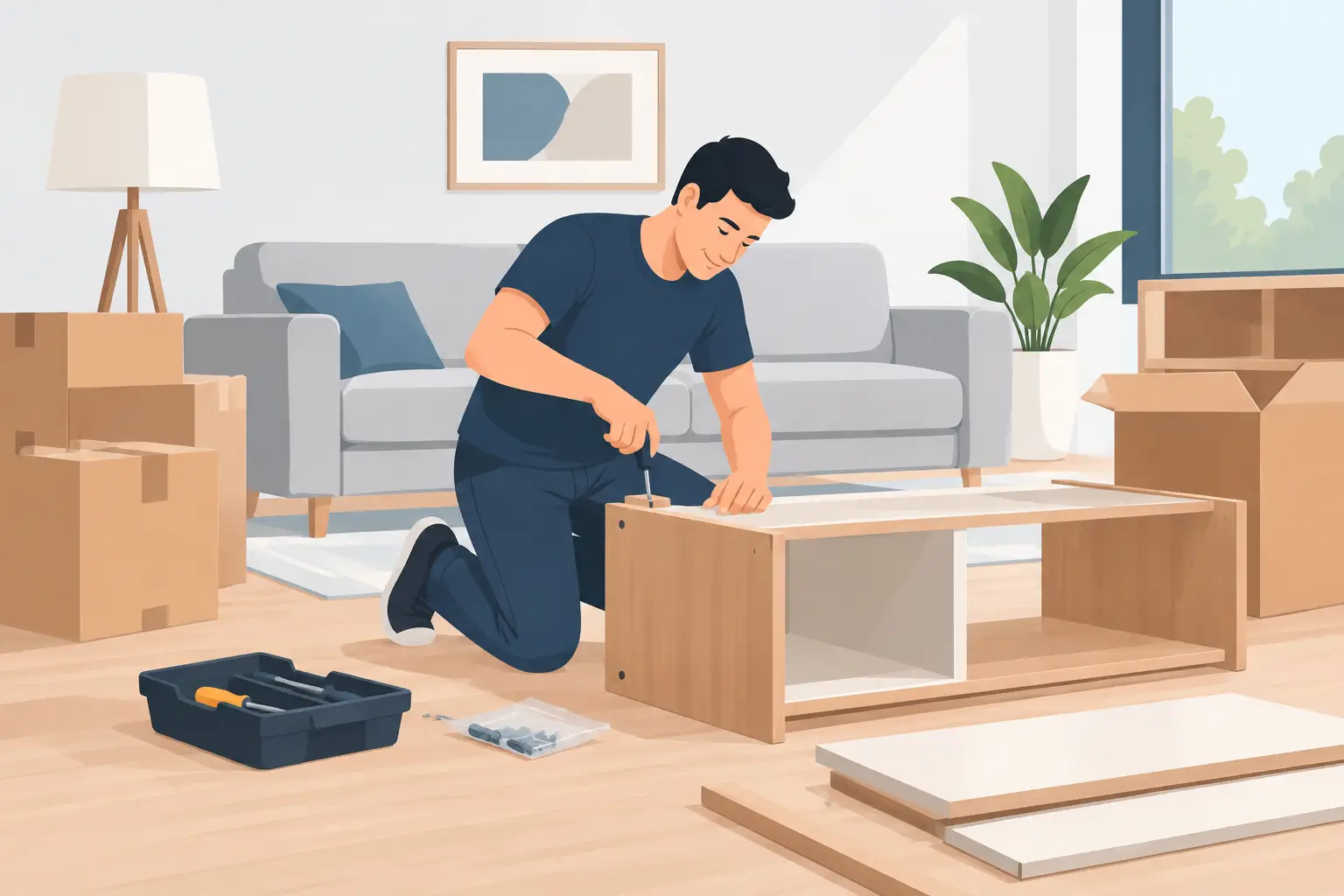
The last moving box can be inside, yet your new place may still feel unlivable when the bed frame is in pieces and the dining table has no legs. Furniture assembly after moving is where a relocation becomes a home again. It deserves more than a rushed attempt at midnight with missing hardware, a bent instruction sheet, and a screwdriver that does not fit.
A smart assembly plan protects your furniture, prevents injuries, and gets the rooms you need functioning first. Whether you are settling into a Fort Lauderdale condo, a family home in Weston, or a new commercial space in Broward County, the right order makes a real difference.
Start Furniture Assembly After Moving With a Plan
Before opening every carton, walk through the new space. Confirm which room is which, measure tight areas, and decide where each large piece will live. A king bed that is assembled in the living room may not clear a narrow hallway later. A sectional may need to be brought through a balcony door before other furniture blocks access.
Start with the essentials: beds, bedroom storage, a dining table if your household needs it, and a workspace if you need to be online the next morning. Families with young children should make crib and bed assembly a priority. For an office move, focus first on workstations, reception furniture, and the equipment employees need to resume operations.
Keep furniture boxes with the rooms where they belong, but do not scatter hardware. Small bags of bolts, cams, screws, brackets, and drawer slides are easy to lose during unpacking. Place them in a clearly labeled container until each item is built. If the manufacturer included instructions, keep them with the matching parts rather than making one pile of manuals.
Check Parts Before You Build
Opening a carton and immediately assembling the first thing you see is tempting. It can also create a delay when a leg, bracket, or fastener is still in another box. Lay out the main components and compare them with the parts list before you begin.
Look closely for concealed damage. A scratch may be cosmetic, but a cracked rail, bent metal bracket, stripped insert, or warped panel should not be forced into place. Take photos before assembly if you find a problem. This is especially helpful for items that were purchased new, placed in storage, or moved long-distance.
Use the tools the furniture calls for. A manual screwdriver, rubber mallet, hex key set, adjustable wrench, level, and measuring tape cover many common jobs. Power tools can save time, but they require restraint. Overtightening a particleboard screw can strip the material, while a drill set too aggressively can damage a veneer surface or split solid wood.
If hardware is missing, do not substitute a random screw simply because it appears to fit. The wrong length can pierce a panel, interfere with drawer movement, or weaken a connection. Check the manufacturer details first, then use a matching replacement if appropriate.
Assemble in the Right Order
Most furniture is easier to build when the steps follow the manufacturer sequence. This matters more than people expect. Bed frames often need rails loosely connected before final tightening. Cabinets and bookcases need to be square before the back panel is secured. Desks with drawers may require internal rails and slides to be installed before the desktop is attached.
Work on a clean, protected surface. Use the cardboard from the packaging, a moving blanket, or a clean rug to keep panels from getting scraped. Avoid assembling large items directly on tile or hardwood if the parts can slide. In South Florida homes, where tile flooring is common, a little padding also keeps heavy pieces from chipping the floor during repositioning.
Do not fully tighten each screw at the start. Assemble the frame, check that the piece is level and square, then tighten gradually in an alternating pattern. This helps prevent wobbling, misaligned doors, and drawers that stick. Once the furniture is standing, test every moving part before filling it with clothing, dishes, files, or electronics.
Secure Tall and Heavy Pieces
Dressers, armoires, bookcases, and storage cabinets can become dangerous if they are not anchored properly. This is especially important in homes with children or pets, but it is a good practice for every household. Use the manufacturer-supplied anti-tip hardware when available, and attach it to a suitable wall stud or approved anchor.
A piece can look stable while still tipping when a loaded drawer is opened. Never assume weight alone makes furniture safe. Place the heaviest contents in the lowest drawers and shelves, and avoid overloading upper sections.
Know When Professional Assembly Is Worth It
Some jobs are straightforward. A basic table, simple bed frame, or compact shelf may be manageable if you have time, the correct tools, and clear instructions. Other pieces demand more care, more people, or more experience.
Professional furniture assembly is often the practical choice for large modular sectionals, wall units, Murphy beds, complex wardrobes, heavy entertainment centers, adjustable beds, commercial workstations, and furniture that must fit precisely in a tight space. It can also be the better option when you are moving into a high-rise building with elevator reservations, loading-dock rules, or restricted hours.
The trade-off is cost versus time and risk. Doing it yourself may save money on a simple item, but a damaged panel, a stripped fastener, or a day lost to troubleshooting can quickly erase those savings. Trained movers bring the right equipment, know how to protect floors and walls, and can handle heavy components safely.
Vision Movers can coordinate disassembly at your previous location, transport the parts with care, and reassemble furniture where it belongs at the new one. That is particularly helpful when a move involves apartments, condos, offices, or specialty items that need more than basic lifting.
Avoid Common Assembly Mistakes
The most common mistake is building before the room is ready. Finish any painting, flooring work, deep cleaning, or cable installation first when possible. Moving a fully assembled wardrobe away from a freshly painted wall is harder than waiting a few hours to build it.
Another issue is ignoring the path to the final location. Measure doorways, elevators, stairwells, and turns before assembling oversized furniture. In condos and townhomes, the route can be more limiting than the room itself.
It is also easy to confuse similar-looking parts. Keep left and right panels separate, group matching hardware, and use the instruction diagram rather than relying on memory. If a step feels forced, stop. Furniture should fit together without extreme pressure, and forcing a connection may cause permanent damage.
Finally, do a quick safety check after each piece is complete. Make sure all legs sit flat, brackets are secured, drawers open smoothly, doors align, and no hardware is left over unless the instructions identify it as spare. Recheck bed frames and dining chairs after a few days of normal use, since connections can settle once weight is added.
Make the New Space Functional, Not Just Furnished
Assembly is not only about getting furniture upright. It is about setting up a space that works for the way you live or operate. Put beds where outlets are accessible, position desks for comfortable cable access, and leave enough clearance around dining chairs, closets, and walkways. In an office, plan workstation placement around power, data connections, traffic flow, and employee access before desks are secured in place.
Give yourself permission to leave nonessential pieces boxed for a day or two. A fully assembled home does not have to happen in one exhausting evening. Focus on the rooms that support sleep, meals, work, and daily routines, then finish the rest with a clear head.
A careful assembly plan turns the final stage of moving into a safer, faster start in your new space. Build what you need first, protect the pieces you invested in, and bring in experienced help when the job calls for it.
Leave a Reply