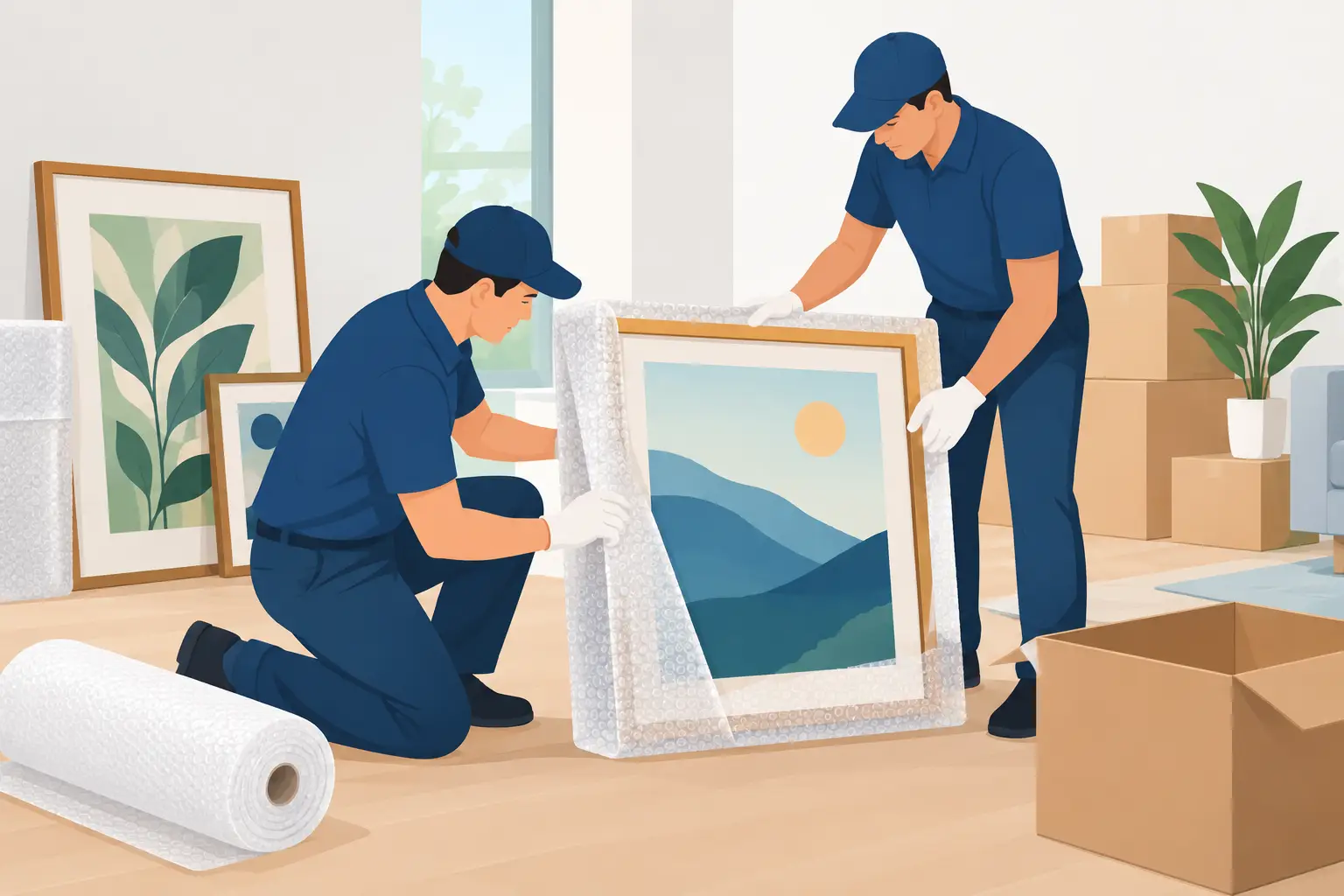
A framed family portrait, a canvas collected on vacation, or a large mirror can be some of the most nerve-racking items to move. So, do movers pack artwork? Yes, full-service movers can pack most artwork, but the right method depends on its size, frame, value, condition, and whether it needs more protection than standard moving materials provide.
For South Florida households, artwork also faces practical moving challenges: high-rise elevator reservations, tight condo hallways, sudden rain, heat, and long drives across the state. A careful moving plan protects the piece before it ever reaches the truck.
Do Movers Pack Artwork as Part of a Move?
Full-service movers typically pack paintings, framed prints, photographs, mirrors, wall decor, and other household artwork when packing service is included in your estimate. The crew brings the materials and handles the packing, loading, transport, and unloading as one coordinated service.
That does not mean every piece receives identical treatment. A small framed print may be secured in a picture carton with other similarly sized pieces. A large canvas, glass-fronted frame, oversized mirror, or delicate antique may require separate packing, extra padding, a custom box, or specialty crating.
When requesting a quote, point out every item you consider artwork, not just the pieces hanging in the living room. Include framed items in bedrooms, mirrors, sculptures, signed prints, gallery canvases, and anything stored in a closet or garage. Clear information allows the moving team to bring the right supplies, assign enough crew members, and price the work accurately. Transparent pricing starts with an accurate inventory – no tricks and no surprises.
How Professional Movers Pack Paintings and Frames
The goal is to prevent three common problems: impact damage, pressure against the frame or canvas, and moisture exposure. Professional packing focuses on creating a protective barrier around the piece while keeping it stable during loading and transportation.
Framed artwork with glass
Glass-fronted artwork needs particular attention because one crack can damage both the frame and the image inside. Movers generally inspect the frame for loose corners, chips, or existing cracks before packing. They may apply a protective tape pattern across the glass to help contain fragments if breakage occurs, then wrap the item with protective paper, bubble cushioning, and sturdy cardboard corner guards.
The piece is then placed upright in a properly sized picture carton or mirror box. Empty space inside the box is filled so the frame cannot slide around. It should never be laid flat beneath heavy furniture or loaded where other items can press against the glass.
Canvases and oil paintings
A stretched canvas needs protection without anything sticking to or pushing into its painted surface. Movers use clean packing materials and create space between the artwork and the outer carton. Corner protection is especially useful because frame corners are vulnerable during turns, stairs, and doorway clearances.
Oil paintings, textured pieces, and recently completed artwork deserve an extra conversation before moving day. If paint is not fully cured, wrapping can leave marks or pull at the surface. Let your mover know about the medium and condition so the team can recommend the safest approach.
Large mirrors and oversized wall art
Large mirrors and statement artwork are awkward as well as fragile. These pieces may need two or more trained movers, a furniture pad, reinforced boxing, and a dedicated position in the truck. In a Fort Lauderdale condo or apartment building, the crew may also need to coordinate elevator timing and protect common-area walls while carrying the item.
Oversized pieces are generally loaded upright and secured so they cannot tip, bend, or shift. Proper equipment and experienced handling matter here. Trying to squeeze a large frame through a narrow hallway without a plan can turn a simple move into an expensive repair.
When Artwork Needs Custom Crating
Standard moving boxes are appropriate for many household pieces, but they are not the best answer for every item. Custom crating is worth considering when artwork is exceptionally valuable, unusually shaped, oversized, irreplaceable, or headed on a long-distance move.
A custom crate creates a rigid outer structure designed around the exact dimensions of the artwork. It can be built with interior cushioning and clearance that keeps the piece from making contact with the crate walls. This is often the safer option for large original works, fragile sculptures, ornate antique frames, and pieces with significant financial or sentimental value.
Crating adds cost and may require advance planning, so it is not automatically necessary for a standard framed print. The practical question is whether the potential loss would outweigh the added protection. If the answer is yes, request a specialty packing recommendation before your move is scheduled.
For fine art with museum-level value, unusual conservation needs, or formal appraisal requirements, a dedicated art logistics or restoration professional may be the better fit. A reliable moving company should be straightforward about that distinction. Careful service means recommending the level of protection the item truly needs, not overselling a solution.
What You Should Do Before Movers Arrive
Movers can handle the packing, but a few steps from the owner make the process safer and more organized. First, take clear photos of each piece, including close-ups of corners, glass, and any existing wear. This creates a useful condition record and helps identify pre-existing damage.
Next, remove personal items from behind frames if applicable, and make sure the mover can access each piece. If artwork is mounted with specialty hardware, decide in advance whether you want the crew to uninstall it. Many full-service moves can include basic installation and uninstallation, but unusual mounts or electrical display systems should be discussed before moving day.
Keep appraisals, certificates of authenticity, receipts, and sentimental documents with you rather than packing them in the moving truck. The same applies to very small, high-value artwork that you would be more comfortable transporting yourself. Packing service reduces work, but it does not remove your right to decide which belongings stay in your personal vehicle.
Finally, tell the crew which pieces need special attention. A simple note such as “original painting, do not stack” or “glass frame, bedroom wall” helps keep priorities clear during a busy move. Good movers label and organize cartons, but direct communication is always helpful.
Questions to Ask Before Booking Artwork Packing
Before selecting a mover, ask whether packing materials are included, whether picture cartons or mirror boxes will be used, and whether the crew has experience with oversized or fragile wall art. You should also ask how items are secured in the truck and what protection is available for high-value pieces.
Insurance and valuation coverage deserve a clear conversation as well. Licensed and insured movers provide an important layer of accountability, but coverage options, limits, and claims procedures vary. Do not assume that every item is protected at its full replacement or appraised value without reviewing the available options.
If your move includes storage, ask how artwork will be stored and whether climate-sensitive pieces need a different arrangement. South Florida humidity can be tough on wood frames, paper artwork, and canvas. Short-term storage may be manageable with proper packing, while sensitive or valuable pieces can require climate-controlled conditions.
Packing Artwork Yourself vs. Using Movers
Packing artwork yourself can save money when you have a few inexpensive, standard-size frames and enough time to source the correct materials. It also gives you direct control over how each piece is handled. The trade-off is that packing errors are easy to make, especially with glass, oversized frames, and canvases that cannot tolerate pressure.
Using professional packers is often the better choice when you are managing a full household move, working around a closing date, relocating from a high-rise, or moving multiple fragile items. The crew arrives with supplies, works efficiently, and coordinates packing with loading rather than leaving you with a stack of fragile boxes to manage alone.
The best choice depends on the artwork and your move. You may pack a few personal pieces yourself while having movers handle the large mirror, gallery wall, and framed family photos. A tailored plan is usually safer and more affordable than treating every item the same way.
Artwork should not be an afterthought on moving day. Share your inventory early, ask how each type of piece will be protected, and choose the packing level that lets you settle into your new space with the items that make it feel like home.
Leave a Reply