
The month with the mildest weather isn’t automatically the easiest time to move. The best month to move in Fort Lauderdale depends on how you balance heat, rain, hurricane-season planning, and the dates that work for your household. If you’re weighing weather against work, school, or a building’s move-in rules, start by identifying which dates are actually possible.
Fort Lauderdale’s moving calendar has trade-offs. Peak moving season runs from May through September, while fall and winter may offer more off-season scheduling options. But Atlantic hurricane season lasts from June 1 through November 30, so a summer or fall date calls for thoughtful weather planning. No single month suits every move.
This guide compares the seasons so you can choose a date that fits your priorities rather than rely on a one-size-fits-all answer. Use the seasonal overview to weigh weather, mover availability, and moving-day logistics, then confirm your building’s requirements before booking. A practical plan starts with the commitments you can’t change and leaves room to respond to local conditions.
Key Takeaways
- There’s no single best month to move in Fort Lauderdale; match your choice to your weather preferences and schedule flexibility.
- Compare seasonal patterns to understand how heat, humidity, rain, and daylight may affect loading and travel.
- Use the month-by-month comparison to weigh weather comfort against moving-date flexibility.
- Before confirming a date, check lease deadlines, school and work schedules, and your building’s reservation requirements.
- Professional packing and furniture protection can help keep belongings organized as you plan around local conditions.
What Is the Best Month to Move in Fort Lauderdale?
No single month suits every Fort Lauderdale household. The best month to move in Fort Lauderdale is the one that balances your weather preferences with your schedule, building access, and ability to secure a suitable moving date. A date in the generally drier part of the year may feel more comfortable for loading and travel, while summer can bring greater heat, humidity, and rain. Neither season guarantees ideal conditions.
Fort Lauderdale has a broad dry-season and wetter-season pattern, but seasonal tendencies aren’t a day-specific forecast. Review Fort Lauderdale’s climate to understand typical temperature and rainfall patterns, then check the forecast as moving day approaches. Even a generally drier month can bring rain, so plan for flexibility rather than assuming the weather will cooperate.
Is there one best month for every Fort Lauderdale move?
No. A household that prioritizes drier conditions may prefer to consider the cooler part of the year. If your dates are flexible, you may instead focus on finding a day that fits mover schedules and building access. When a lease end date, work commitment, or school calendar sets the timing, personal convenience may matter more than choosing a particular season. Peak moving season runs from May through September, so ask about availability early if you have a specific date in mind.
Use this quick comparison to clarify your priorities:
- Prioritize drier conditions: Consider a date in the drier part of the year, while keeping a rain plan.
- Prioritize flexibility: Compare dates outside the peak moving season and confirm options with your moving team.
- Prioritize personal timing: Start with your fixed household deadlines, then work through weather and logistics.
These are planning considerations, not promises about moving-day weather. Heat, rain, and road conditions can vary, so check current forecasts as your date gets closer.
What should you decide before choosing a month?
Rank your priorities before comparing dates: weather comfort, preferred timing, or schedule flexibility. Then list the commitments that could limit your options. Families may need to coordinate around school calendars, while working households may have only certain days available. A lease end date can also create a firm deadline, even if another month seems more appealing.
Check building logistics early, too. Condominiums and apartment communities may require move reservations or have rules about elevator access and moving hours. Ask management about the reservation process, loading access, and available dates before settling on a moving day. Once you know your constraints, you can compare seasons with a clearer view of the trade-offs and leave room to plan around local weather.
How Fort Lauderdale’s Seasons Affect a Moving Date
Fort Lauderdale’s weather shifts between a generally drier part of the year and a wetter season, but either can bring conditions that affect loading, driving, and arrival times. Climate describes patterns, not the forecast for your moving day. Use seasonal averages to compare dates, then check the forecast as your move approaches.
During warmer, more humid weather, carrying boxes and furniture between a home and a truck can feel more demanding. Rain may mean extra time to protect belongings and keep walkways manageable. Daylight also shapes the work window, so consider how much loading and unloading could happen in direct sun or after dark. Before booking, discuss access and timing for your specific addresses and building.
Dry-season moves: comfort and demand trade-offs
The drier part of the year may appeal if you’d rather plan around milder temperatures and generally lower rainfall. That can make outdoor loading more comfortable, though it doesn’t rule out rain or changing conditions. Popular dates may be harder to secure, so check current availability with your moving company instead of assuming a particular month is open. Statewide tourism patterns offer broader seasonal context, and Florida visitor statistics can help readers explore that context, but they don’t establish local moving-company availability.
Summer and hurricane-season moves: prepare for uncertainty
Atlantic hurricane season runs from June 1 through November 30. That’s a period to plan with weather updates in mind, not a reason to assume every storm will disrupt a move. Monitor official NOAA advisories as your date approaches, and ask your moving company how it communicates weather-related changes and handles rescheduling. Confirm who will contact whom and what happens if conditions affect safe travel or loading.
On hot, humid days, keep drinking water accessible and arrange a cool, safe place for children and pets away from active loading areas. Identify temperature-sensitive belongings, such as items that shouldn’t sit in a hot vehicle, and plan how to transport them. If you need help preparing items for the trip, ask about professional packing and furniture protection. These steps make it easier to adapt if the day is hotter or wetter than expected.
The best month to move in Fort Lauderdale depends on how you weigh comfort against flexibility. For help planning around local weather and building logistics, review local moving support in Fort Lauderdale and confirm current scheduling details directly.
Fort Lauderdale Moving Months Compared: Which Trade-Off Fits You?
Use this seasonal comparison to narrow your options, not to predict the weather on a specific date. Fort Lauderdale’s broad pattern includes a generally drier stretch and a warmer, wetter stretch. Conditions can vary within each season, and your lease, work, school, and building schedules may matter more than a seasonal preference.
| Months | Typical weather tendency | Flexibility and planning considerations |
|---|---|---|
| January to April | Generally part of the drier season, with more comfortable conditions for outdoor loading than the hotter months. | Can suit people who prioritize weather comfort. Check preferred dates early, and compare weekdays and weekends. |
| May to June | Warmer, more humid conditions become more common, with the wetter season beginning. | Peak moving season starts in May. Confirm mover and building availability, and plan for heat or rain. |
| July to September | Hot, humid, and often rainy conditions may affect loading and travel. These months fall within Atlantic hurricane season. | Flexible dates can help with scheduling. Monitor weather updates and agree on a communication plan with your moving company. |
| October to December | Conditions generally transition toward the drier part of the year, though October remains within hurricane season. | Consider your tolerance for weather uncertainty alongside lease dates, building reservations, and available moving dates. |
When might the dry-season months suit your move?
If you want more comfortable outdoor working conditions, the drier months may be appealing. That preference doesn’t guarantee a rain-free day, and dates that work well for you may also be popular with other households. Ask moving companies about current availability rather than assuming a particular month or day is open. Compare weekdays and weekends, and make sure your preferred date fits your lease deadline and building’s move-in rules.
When might a flexible summer or fall date work?
A summer or fall move can be manageable if you have room to adjust the date or timing. Plan for heat with water and access to shade, and check forecasts and official NOAA advisories as moving day approaches. Atlantic hurricane season runs from June 1 through November 30, but a move during that period isn’t automatically disrupted. Confirm the moving company’s communication and rescheduling process in case conditions change.
Your choice should fit both the season and your household’s practical needs. As you map out moving expenses alongside timing, a resource on the cost of living in Fort Lauderdale can help you consider the wider household budget. The best month to move in Fort Lauderdale is the one that gives you a workable balance of comfort, flexibility, and confirmed logistics.
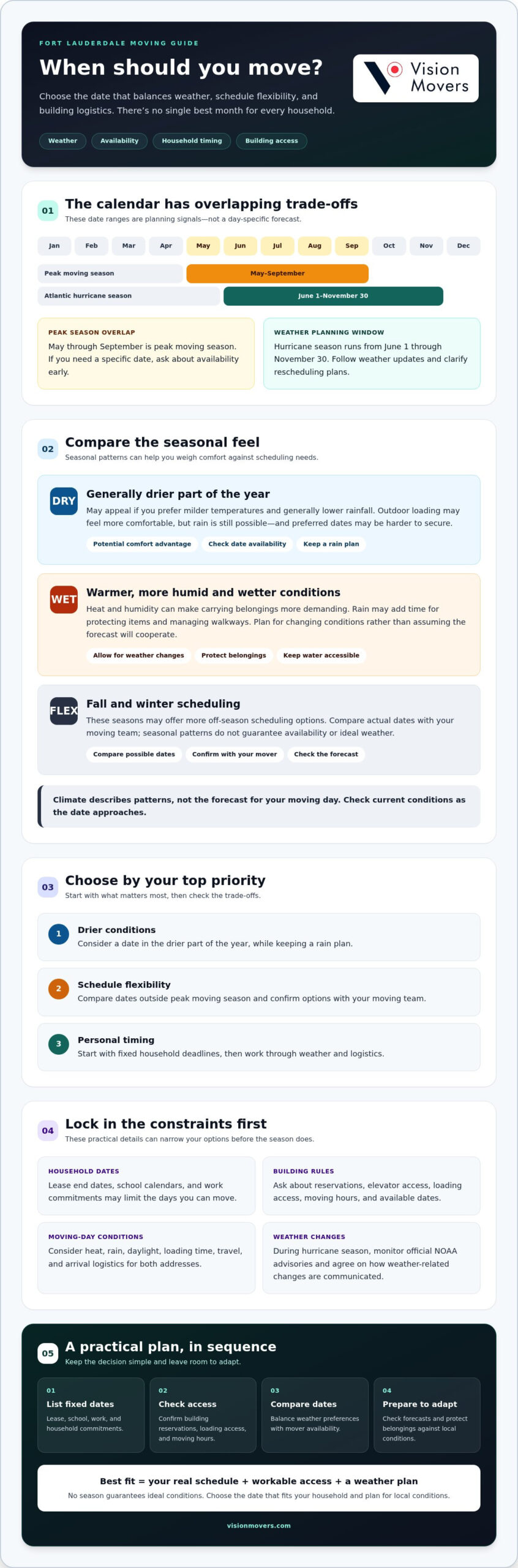
How to Choose Your Moving Month in Fort Lauderdale
Turn seasonal preferences into a practical date by working through four steps: set your constraints, choose a season, check logistics, and confirm a date. This keeps weather in perspective while making sure the move fits commitments you can’t easily change.
Build a realistic moving-date shortlist
Start with fixed deadlines, then identify a few dates that leave room to adjust. A lease end date, children’s school calendar, or work schedule may narrow your options quickly. If you have flexibility, compare weekdays and weekends rather than settling on the first date that seems convenient.
Next, check building access before treating any date as confirmed. Ask condominium or apartment management about elevator reservations, loading access, parking, move-in hours, and community rules. These details can rule out a date even if it works for your household. Then ask your moving company how it confirms the booking and communicates if plans need to change. For broader preparation, see this local moving service guide.
Prepare a weather and timing backup plan
If your schedule allows, choose an alternate date or decide in advance how you’ll respond to weather-related changes. Check the forecast as moving day approaches, and follow official storm updates during hurricane season. A storm isn’t inevitable, but knowing how you’ll make decisions can reduce last-minute uncertainty. Confirm the communication process with your moving company instead of assuming how rescheduling works.
Prepare belongings for the conditions you may face. Suitable packing and furniture protection can help shield items during loading and transport, while keeping temperature-sensitive belongings out of prolonged heat is a practical precaution. If move-out and move-in dates don’t line up, ask about moving and storage options that may help bridge the gap.
- Set constraints: List lease, school, work, and household commitments.
- Choose a season: Weigh weather comfort against your available dates.
- Check logistics: Confirm building reservations, access, and mover availability.
- Confirm a date: Agree on communication steps and a backup approach.
The best month to move in Fort Lauderdale is only useful if the date works in practice. Once you have a shortlist, discuss your local moving plans with Vision Movers and confirm current scheduling and service details.
Plan a Smoother Fort Lauderdale Move With Local Support
A good moving month is only part of a workable plan. Match the season to your comfort with heat and rain, then check that your preferred dates fit your household schedule and building requirements. If your dates are flexible, share a range rather than one target day. That gives you a clearer basis for discussing current availability without assuming a particular date can be booked.
Vision Movers provides local and residential moving, packing, and furniture-protection services in Fort Lauderdale and nearby South Florida communities. Its local service area includes Miami, Fort Lauderdale, Boca Raton, Brickell, Weston, Plantation, Pompano Beach, Broward County, Hollywood, Dania Beach, Coral Springs, and Parkland. Professional packing can help organize belongings for loading and transport, while furniture protection can help safeguard items during the move. The right support depends on what you’re moving and the access conditions at both addresses.
What to discuss with a Fort Lauderdale moving company
Share your preferred date range and describe access at both locations. Mention stairs, elevators, parking, loading access, and any condominium or apartment reservation requirements. These details help the moving team understand the move and coordinate the plan around the building’s rules.
Be specific about packing needs and furniture that may need extra protection. Ask how those needs can be coordinated with loading and unloading, and confirm how weather updates or schedule changes will be communicated. For more planning ideas, read this guide to professional residential moving guidance.
Turn your preferred month into a workable moving plan
Once you know your preferred dates, contact movers to check current availability and discuss the details of your move. Confirm the date and communication process directly, especially if your building requires a reservation. As moving day approaches, review the forecast and relevant official weather updates, then follow the plan you’ve agreed on with your moving company.
The best month to move in Fort Lauderdale is the one that fits your weather preferences and real-life commitments, with enough planning to handle changing conditions. Vision Movers can discuss local moving, packing, and furniture-protection needs for your move. Talk with Vision Movers about your moving plans and confirm service coverage and scheduling details.
Choose Your Date With Confidence
The best month to move in Fort Lauderdale depends on what matters most to your household. A generally drier season may feel more comfortable for loading, while a flexible date can make it easier to work around your schedule and building requirements. Seasonal patterns are useful for planning, but they can’t replace checking the forecast and confirming the details for your actual moving day.
Once you’ve chosen a preferred date range, share your access needs, timing, and packing priorities with your moving company. Vision Movers is a South Florida-based moving company offering local moving, professional packing, and furniture-protection services. Discussing those needs early can help you build an organized plan without relying on assumptions about availability or weather.
Ready to talk through your move? Discuss your Fort Lauderdale move with Vision Movers and confirm which services and dates may fit your plans. With a clear schedule and practical preparation, you can approach moving day feeling ready for the next step.
Frequently Asked Questions
Is winter a good time to move in Fort Lauderdale?
Winter can be a good choice if you prefer generally milder, drier conditions for carrying belongings and coordinating travel. It still pays to check the forecast, confirm your building’s move-in requirements, and ask movers about current availability. Your ideal date may depend on more than weather: compare it with lease deadlines, work schedules, school calendars, and any elevator or loading reservations. Build in some flexibility where you can.
Can you move during hurricane season in Fort Lauderdale?
Yes, a move can be planned during hurricane season, which runs from June 1 through November 30, but weather disruption is a contingency, not a certainty. Monitor official NOAA advisories and forecasts as your date approaches. Ask your moving company how it will communicate updates and handle schedule changes if conditions affect the move. Keep important belongings and household plans flexible until you have a clearer picture of the weather.
How far in advance should I book movers in Fort Lauderdale?
Contact movers as soon as you know your preferred date range, particularly if you need a specific day or are moving during the May through September peak season. There isn’t a single booking lead time that fits every move, and availability varies. Share your home size, access details, and any building reservation requirements, then confirm the date directly with the company. If your schedule allows, ask about alternative dates that could also work.
What happens if it rains on moving day in Fort Lauderdale?
Rain may mean taking extra care during loading, protecting belongings, and allowing time for wet or slippery access areas. Check the forecast and discuss a weather plan with your moving company before the date. Ask how updates and any schedule changes will be communicated. Packing and furniture protection can help prepare items for handling, but follow the mover’s guidance about specific materials and any steps needed at your home or building.
Is summer too hot to move in Fort Lauderdale?
Summer isn’t automatically too hot for a move, but heat and humidity can make loading more demanding. Plan water and shaded breaks for household members, and arrange a cool, safe place for children and pets away from active work areas. Consider which belongings shouldn’t sit in a hot vehicle, and discuss packing and furniture protection with your moving company. Check the forecast near moving day and confirm any building access or timing limits.
Should I avoid moving during the rainy season in South Florida?
You don’t necessarily need to avoid the rainy season. A flexible date, weather monitoring, and a practical plan for protecting belongings can make a move workable, though seasonal patterns can’t guarantee conditions on a particular day. For a Fort Lauderdale move, compare weather comfort with lease dates, building reservations, and mover availability. Vision Movers provides local moving and packing services in Fort Lauderdale and nearby South Florida communities, including Broward County.
Leave a Reply