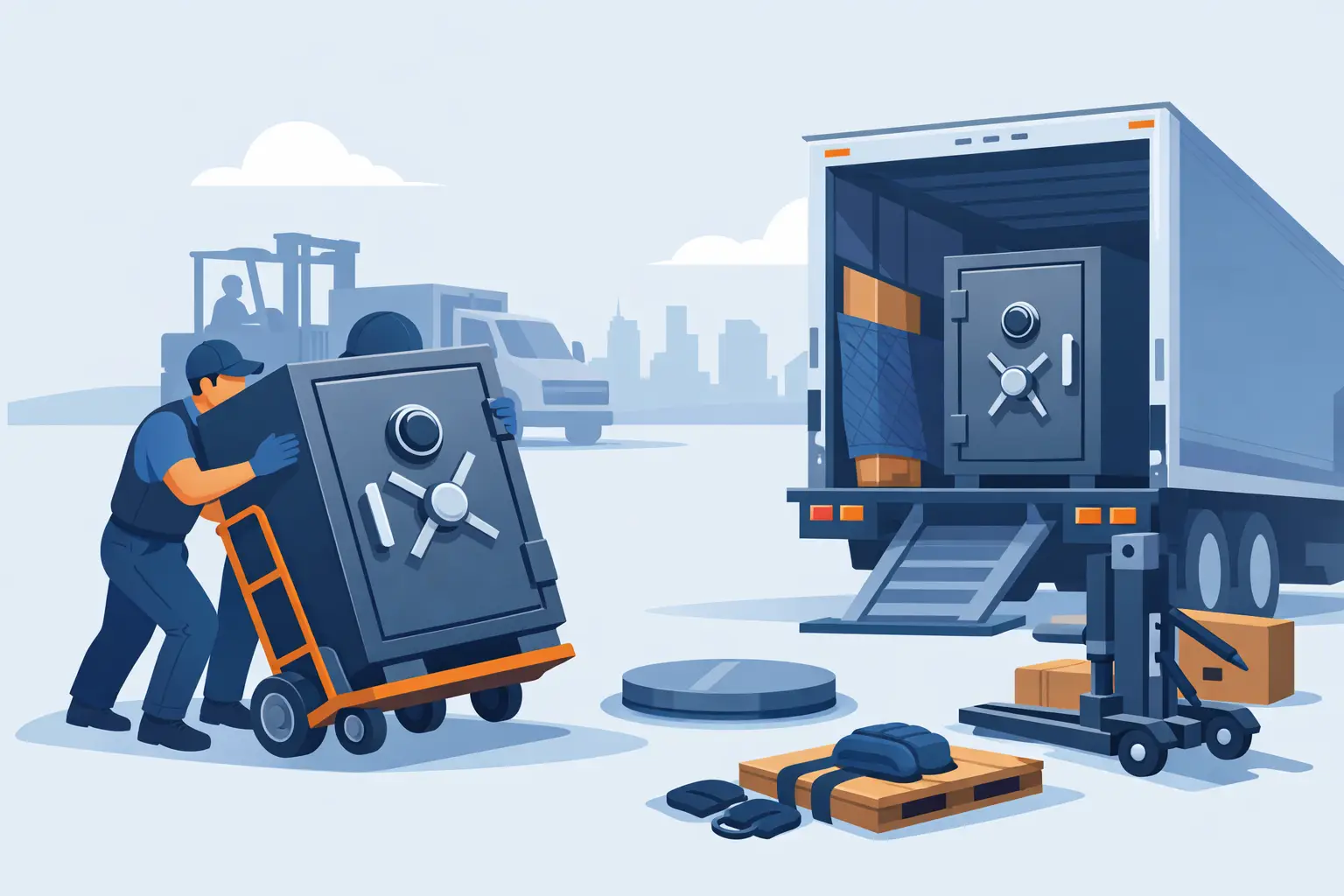
A home safe can weigh more than a refrigerator. A commercial vault can weigh several thousand pounds, sit behind a narrow doorway, and need to travel over tile, hardwood, elevators, ramps, or a busy loading area. That is why safe and vault movers are not simply regular movers with extra muscle. This work requires a measured plan, the right equipment, and a crew that knows how to protect both the item and the property around it.
For homeowners and businesses in South Florida, a safe move often happens during a larger relocation, renovation, office expansion, or equipment replacement. The goal is simple: get the safe or vault to its new location securely, without damage, delays, or risky shortcuts.
Why Safes and Vaults Need Specialized Moving
A safe is difficult to move for more reasons than its weight. Its weight is concentrated in a compact footprint, which makes it harder to balance than a large sofa or appliance. Many models also have sensitive locking mechanisms, electronic keypads, door bolts, internal shelves, and finishes that can be damaged if the unit is tipped, dropped, or strapped incorrectly.
The path matters just as much as the safe itself. A move may involve a steep driveway, a threshold, a tight condo hallway, a freight elevator reservation, or a staircase that cannot safely support the required equipment. In commercial settings, the challenge may be keeping employees, customers, and operations out of harm’s way while the move is underway.
Trying to handle this with a pickup truck, a few friends, and basic dollies can lead to cracked flooring, damaged walls, serious injuries, or a safe that cannot be positioned where it belongs. A safe is not a do-it-yourself item, especially when stairs, uneven ground, or limited access are involved.
What Professional Safe and Vault Movers Do Differently
Professional movers begin with the logistics, not the lifting. Before moving day, the crew should understand the safe’s approximate weight, dimensions, current location, destination, and every access point in between. Photos and measurements can help identify potential issues early, including low clearance, narrow turns, steps, elevator limits, and parking restrictions.
From there, trained crews use equipment suited to the job. Depending on the item and route, that can include heavy-duty dollies, appliance dollies, skid boards, lifting straps, floor protection, ramps, padded moving blankets, and secure tie-down systems. The equipment is only part of the solution. Proper handling techniques, controlled movement, and clear communication between crew members are what keep a heavy item stable.
Protection is built into each stage of the move. Floors may need coverings to prevent scratches or pressure damage. Door frames, walls, and corners may need padding. During transport, the safe must be secured so it cannot shift when the truck turns, brakes, or travels over uneven roads. At the destination, the crew should place the unit carefully and confirm that it is stable before removing protection.
For vault doors, large commercial safes, and other unusually heavy items, the plan can be more involved. Access may require coordination with a building manager, facilities team, security personnel, or elevator operator. Some situations call for after-hours scheduling so a business can avoid disrupting customers and staff.
Information to Have Ready Before Requesting a Quote
Accurate details help a moving company recommend the safest approach and provide clear pricing. You do not need to know the exact weight of every item, but a few practical details make a big difference.
Share the safe’s make and model if available, along with its height, width, depth, and estimated weight. Let the mover know whether it is a gun safe, jewelry safe, floor safe, fireproof safe, commercial safe, vault door, or another specialty unit. Describe the route at both locations, including stairs, elevators, long carries, tight corners, gates, and uneven surfaces.
It also helps to mention whether the safe is bolted to the floor or wall. Removal of bolts may require separate preparation, and some customers prefer to coordinate that work with a locksmith, contractor, or building representative. If the safe has an electronic lock, make sure it is accessible when needed. Movers can relocate the unit, but they should not be expected to bypass a locked safe or handle its contents.
For condos, apartments, offices, and retail locations, check move-out and move-in rules early. Many South Florida properties require a certificate of insurance, elevator reservations, designated loading times, or protective materials in common areas. Handling those requirements before moving day prevents last-minute setbacks.
Preparing Your Safe for Moving Day
The safest approach is to empty the safe before the crew arrives. Remove cash, documents, jewelry, firearms, ammunition, valuables, and loose interior accessories. This reduces weight, protects sensitive items, and avoids questions about liability for contents that cannot be verified or safely handled.
Secure removable shelves, drawers, and internal racks if possible. Keep keys, access codes, and alarm instructions with you rather than inside the safe. If there is a battery-powered keypad, ask the manufacturer or a qualified locksmith whether any preparation is recommended before transport.
Clear a wide path from the safe to the exit. Move rugs, décor, small furniture, and anything that could create a tripping hazard. Outside, make sure the driveway or loading area is accessible for the moving truck. In South Florida, weather can change quickly, so it is also smart to keep the route as dry and clear as possible.
Do not try to tilt or reposition the safe before the crew arrives unless you have been specifically instructed to do so. A safe can become unstable quickly, and even a small shift may damage flooring or cause an injury.
Common Safe Moving Challenges in South Florida
High-rise buildings are a frequent factor in Fort Lauderdale and nearby communities. Elevator size, weight limits, hallway turns, and building move windows can all shape the plan. A crew may need to use a freight elevator, protect common areas, and work within a limited reservation period.
Older homes and condos can present another challenge: tight doorways, raised thresholds, delicate tile, and narrow stairwells. A route that looks simple on paper may require a different angle, extra protection, or additional crew support once measurements are reviewed.
Commercial moves bring their own priorities. An office safe may contain sensitive records. A retail or hospitality business may need a secure unit moved before opening hours. Medical, dental, and professional offices often need careful scheduling to keep disruption low. In these situations, the best plan is the one that balances security, safety, and minimal downtime rather than simply choosing the fastest route.
Choosing a Moving Company for a Safe or Vault
Price matters, but a low quote is not useful if the mover is not equipped for the job. Ask whether the company regularly handles safes, vaults, pianos, appliances, and other heavy specialty items. Confirm that the company is licensed and insured, and ask what equipment and crew size it expects to use for your specific move.
Transparent pricing should account for the real conditions of the job. Weight, stairs, distance, access issues, long carries, and special scheduling can affect the cost. A professional company should explain those factors clearly instead of surprising you on moving day.
Availability can matter too. If a business needs an after-hours relocation or a homeowner is working around a closing date, select a mover that can coordinate a schedule that fits the situation. Vision Movers provides organized specialty moving support with trained crews, proper equipment, and flexible scheduling for South Florida customers.
A Safe Move Starts Before the Truck Arrives
The best safe move is rarely the one that looks dramatic. It is the one where the route was checked, the crew arrived prepared, the property stayed protected, and the safe was placed exactly where it needed to go. Share the details early, avoid shortcuts, and give the job the planning a heavy investment deserves.
Leave a Reply