A smooth move starts before the truck arrives. The most useful details about what movers need to know about your building are how the crew will get in, where the truck can park, whether an elevator needs reserving, and which shared areas need protection. Clear directions help the crew plan the route in and out.
Building rules and tight access can make moving day more challenging, especially when hallways, floors, and entrances are shared with neighbors. Coordinating these details in advance helps movers arrive prepared and keeps the move organized.
This guide covers the details to share about entrances, elevators, parking, floor and hallway protection, hazards, and oversized items along the route. You’ll also learn how to keep communication clear during loading and finish with a walkthrough alongside the crew lead, so important details are covered from arrival to departure.
Key Takeaways
- Clear the route for large items and flag tight turns, delicate finishes, or other obstacles before moving day.
- Share flooring concerns and special handling needs with the crew, then walk through the home with the crew lead before departure.
- Arrange elevator access, entry details, and a workable truck parking spot so loading and unloading can proceed smoothly.
- Give building management and neighbors advance notice when the move could affect shared spaces or access.
How movers prepare the home and clear walkways
A certificate of insurance may be available, depending on the mover’s coverage and building requirements. To request one, tell the moving coordinator that management needs it and share any submission instructions.
- Tell movers what they need to know about your building’s narrow hallways, tight turns, steps, and low-clearance areas. Point out potential damage risks, such as delicate molding, light fixtures, or recently renovated surfaces. These details help the crew plan how to carry furniture through your home.
- Keep indoor and outdoor paths clear so the crew can move items between the entrance and the truck. Make driveway or parking space available where possible, and mention any obstacles that cannot be moved. A clear route helps prevent interruptions while large items are being carried.
- Identify rooms that need special attention before moving day. Tell the crew which rooms have wood or tile flooring, where fragile items are, and where oversized furniture is located. Measure large pieces assembled inside your home against doorways and hallways to spot access problems early.
- Tell movers about heavy or oversized items in advance. A piano, safe, or large sectional may require specialized tools or additional planning. Flag route hazards, such as loose steps or a narrow landing, so the crew can prepare equipment and protect nearby surfaces.
- If packing is part of the move, make belongings in closets, attics, and other storage areas accessible. Keep children and pets away from active pathways; a separate room can help if they remain at home. Movers should also arrive prepared with floor coverings to protect floors during the move.
Communicating with the crew and completing a final walkthrough
- Keep one person available during loading to answer the crew’s questions. That person can identify belongings that need special handling, clarify which items are staying, and explain any last-minute changes. A single point of contact helps prevent confusion as the crew moves between rooms and the truck.
- Before moving day, confirm the expected arrival time, crew size, and the protection the movers will bring for your home. Mention concerns about wood or tile flooring and carpets that could be scratched or stained. These details help the crew prepare floor coverings and plan before carrying items inside.
- Give the crew lead a concise update when the movers arrive. Identify priority items, rooms that need a final check, and any changes to the agreed plan. If a piece of furniture must stay behind, point it out before loading begins so it isn’t mistaken for an item going to your new home.
- Stay available while the truck is loaded, then walk through your home with the crew lead before departure. Check closets, storage areas, and each room for belongings that may have been overlooked. Use the walkthrough to note visible damage and discuss it with the crew lead before the move continues.
- Before the crew finishes, clarify what happens to empty boxes and leftover packing materials. Movers remove these materials when the job is complete. Confirm that nothing remains in the loading path, and make sure any concern raised during the walkthrough has been recorded clearly. This final exchange gives both sides a shared understanding of the move’s status.
How movers coordinate building access, elevators, and parking
Share building rules and access details before moving day. Clear information helps the crew plan its route, equipment, and arrival.
-
Share Building Details with Movers
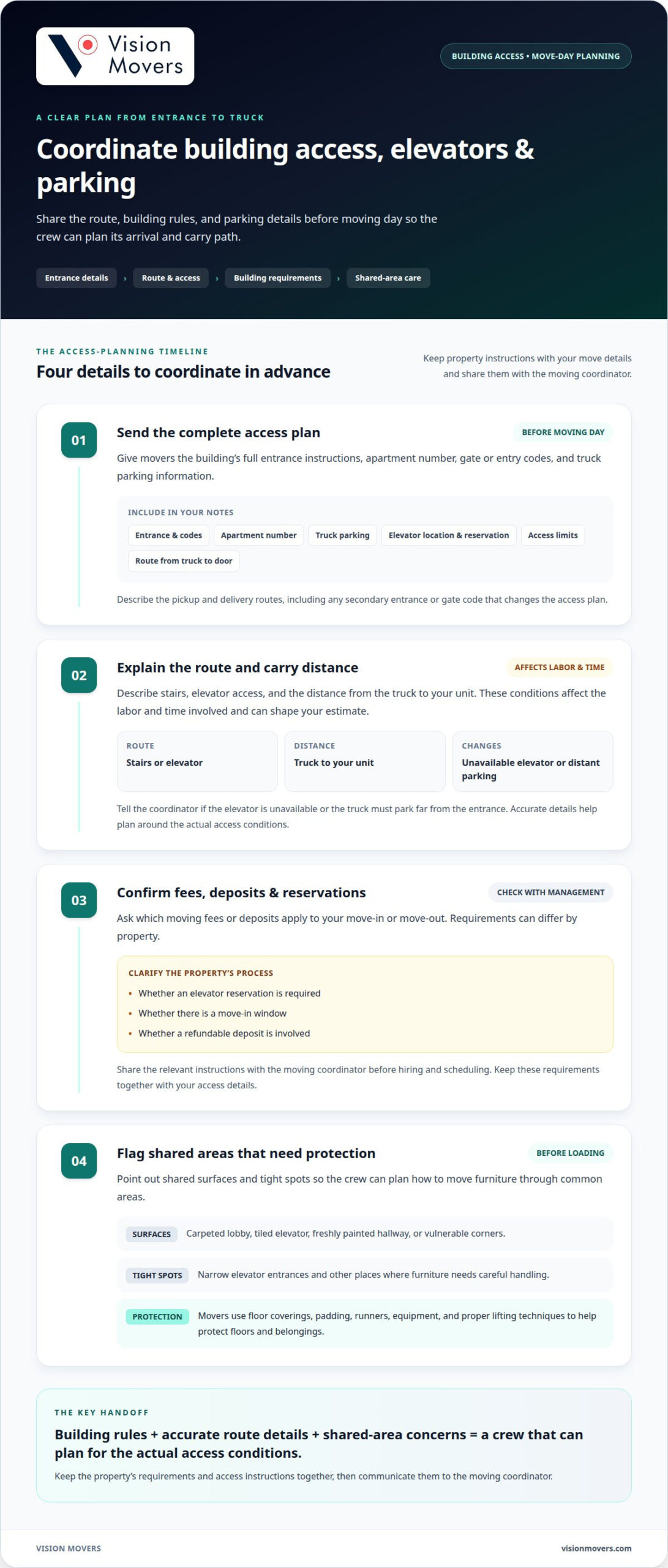
Send the building’s full entrance instructions, your apartment number, gate or entry codes, and truck parking information. Include the elevator location, reservation arrangements, and any access limits that could affect the crew. For pickup and delivery, describe the route from the truck to your door. Include any secondary entrance or gate code that could change the access plan.
-
How Stairs and Long Carries Affect a Move
Describe the route clearly, including stairs, elevator access, and the distance from the truck to your unit. These details affect the labor and time involved, so they can shape your estimate. Tell the moving coordinator if the elevator is unavailable or the truck must park far from the entrance. Accurate information helps plan services around the actual access conditions.
-
Confirm Building Fees or Deposits
Ask building management which moving fees or deposits apply to your move-in or move-out. Requirements can differ by property, so clarify whether elevator reservations, a move-in window, or a refundable deposit is involved. Share the relevant instructions with the moving coordinator before hiring and scheduling. Keep the property’s requirements together with your access details so the crew can follow the building’s process.
-
Protect Shared Areas During the Move
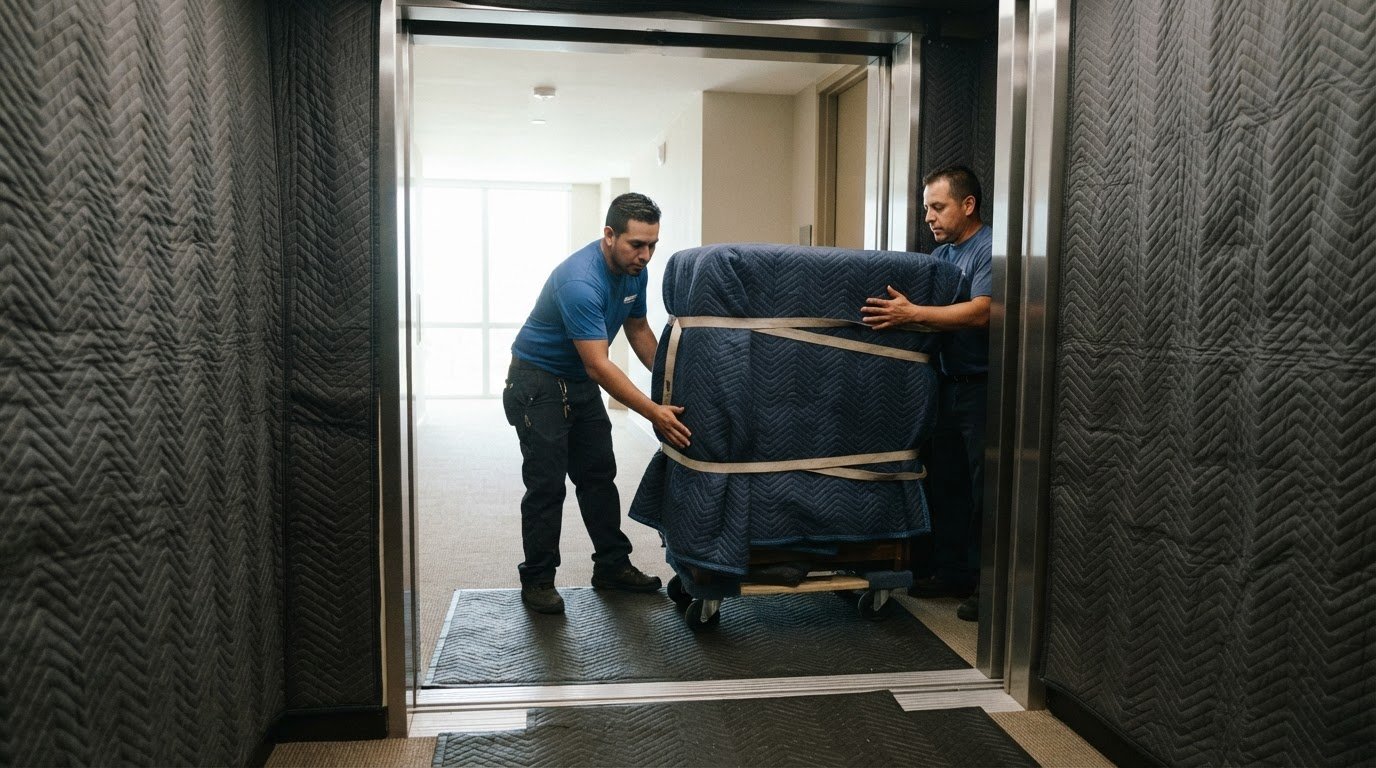
Tell the crew which shared surfaces need care, such as a carpeted lobby, tiled elevator, or freshly painted hallway. Movers use floor coverings, padding, runners, equipment, and proper lifting techniques to help protect floors and belongings. Point out vulnerable corners or narrow elevator entrances before loading begins. Clear communication helps the crew plan how to move furniture through common areas and reduce the risk of damage.
How movers coordinate advance notice to neighbors and building management
Give building management and nearby neighbors advance notice if the move may affect shared access. A clear plan helps the crew transport belongings efficiently and minimize disruption around the entrance.
- Notify building management once your moving date is set. Explain that a moving truck and crew will need access, and ask about the property’s moving procedures. Management may, for example, have instructions for protecting the lobby or keeping a service entrance clear. Share those details with the moving company so the arrival plan fits the building.
- Tell neighbors if the truck, elevator, or shared hallway may affect their access. A brief notice can explain which entrance or common area the crew will use and when the move is planned. This is especially helpful if loading could temporarily narrow a walkway or block a driveway. Keep the message practical and avoid promising an exact finish time.
- Ask whether your town requires neighbor notification or sign-off for a building-move plan. Some towns may require homeowners to notify neighbors and obtain their sign-off. Share any applicable instructions with the moving coordinator early, since these steps can affect the arrangements. Informal notice to neighbors does not replace a required approval.
- Give the crew a single point of contact for building questions on moving day. That person can relay updated entrance instructions, direct the truck if access is blocked, and keep the crew informed about shared-space concerns. Keep valuables and personal essentials with you rather than leaving them in common areas during loading.
For a move that needs careful coordination, plan your moving services around the building’s access and notice requirements.
Vision Movers
Vision Movers plans local, residential, interstate, and commercial moves around access details, parking arrangements, and shared-space considerations. Sharing building instructions early helps the crew plan its arrival and route through the property.
Turn to Vision Movers when you’re planning a move and need professional support with the relocation process. Details about entrances, elevators, truck access, and building procedures give the moving team useful context before moving day.
Contact Vision Movers to discuss your move.
Make your moving plan the next step
A clear account of what movers need to know about your building gives the crew a useful starting point for planning the move. Bring your building arrangements and moving needs into one conversation so access details guide the plan instead of becoming last-minute surprises.
Vision Movers handles local, residential, and interstate moves. Share the type of relocation you’re planning and relevant building considerations, such as access restrictions or shared-space rules. This context helps the team plan around your move rather than rely on assumptions.
You don’t need to have every detail perfectly organized before reaching out. Start with the information you have, then discuss what else the crew needs to prepare. Contact Vision Movers for moving help and take the next step toward a more organized move.
Frequently Asked Questions
What are typical elevator reservation and move-in rules in apartment buildings?
Apartment buildings may require residents to reserve a service elevator or follow designated moving procedures. Rules vary by property, so find out how to make reservations, which entrances the crew may use, and whether management sets a move-in window. For example, a building may direct movers to a loading entrance instead of the lobby. Share the instructions with your moving coordinator.
What parking permits or loading-zone arrangements do movers need?
Parking arrangements depend on the building and local requirements. Ask management whether you need a reserved loading area, and find out if your city requires a moving permit to secure truck parking. Give the crew clear directions to the available parking spot. If the truck could block an entrance or neighborhood access, plan a workable alternative in advance.
How do building access hours and move-day time limits affect a move?
Restricted access hours can limit when the crew can enter, use an elevator, or load the truck. Tell your moving coordinator the building’s permitted hours and any moving-day deadline so the schedule can account for them. For example, if movers must leave before a service entrance closes, loading needs to fit within that window. Late access details can disrupt the planned sequence.
What door, hallway, elevator, and loading-dock dimensions do movers need to know?
Share measurements that show whether large items can pass from the truck to your unit. Note the clear width and height of doorways, hallway pinch points, elevator openings and interior, and loading-dock access. Include tight turns and other obstacles along the route. A sofa might fit through a doorway but still be difficult to turn into a narrow corridor, so describe the full path.
What happens if a moving truck cannot access the building or fit in its loading area?
If the truck cannot reach the planned loading area, the crew may need to park somewhere else accessible and carry belongings farther. That can affect the move’s timing and handling plan. Share vehicle restrictions, low-clearance entrances, and loading-area limits before moving day. If access changes unexpectedly, contact the moving coordinator promptly to discuss the available route and parking arrangement.
Which building-specific details can change a moving company’s price or schedule?
Stairs, elevator access, long carries, limited truck parking, and restricted building hours can affect the work involved and the schedule. Vision Movers offers transparent pricing with no hidden fees, and exact costs are provided through a free personalized estimate. Share building constraints and both addresses so the estimate can reflect access conditions and other relevant details.
Leave a Reply