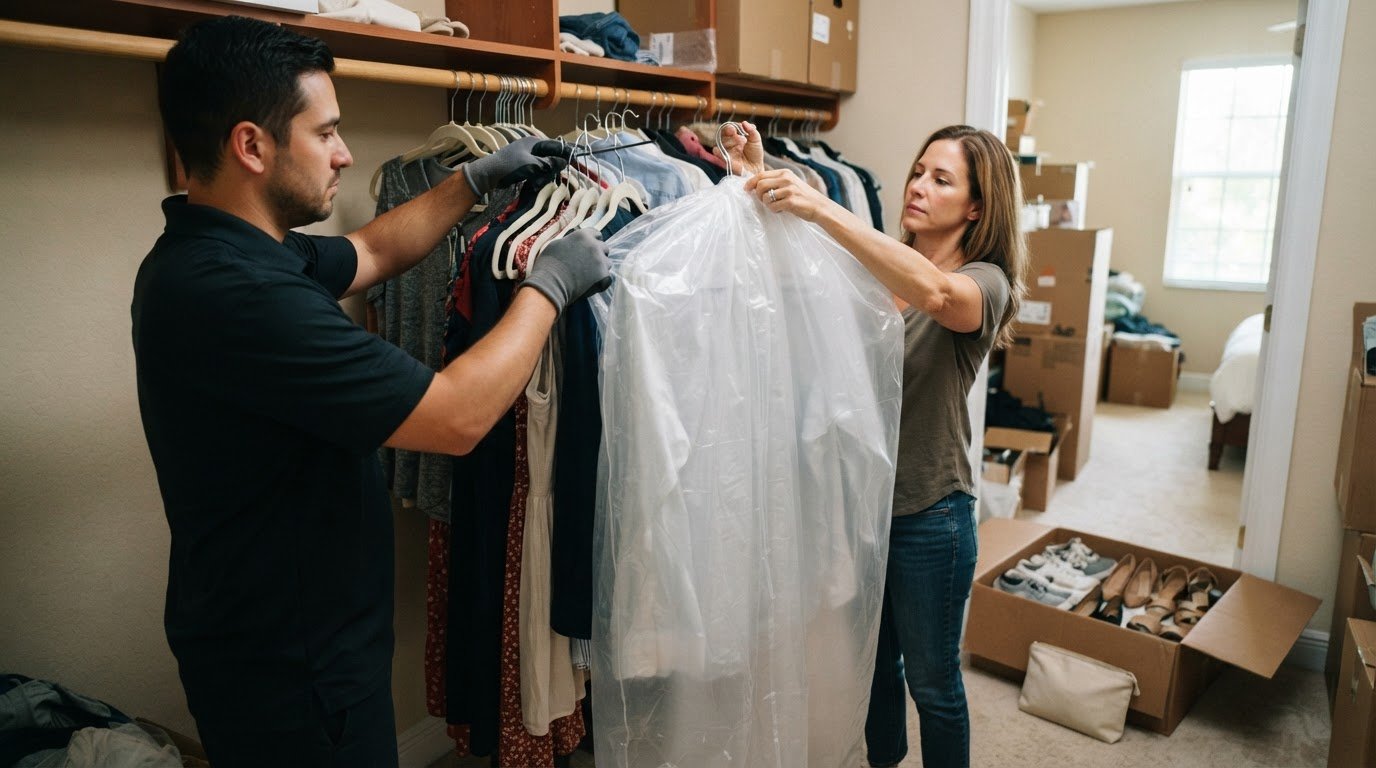
Your closet doesn’t have to become a pile of loose clothes. A reliable plan for how to pack clothes for moving starts with grouping 8-12 hanging garments on their hangers and covering them with a large bag. Everyday clothes can be folded into boxes or kept in dresser drawers that are wrapped shut.
It makes sense to want a simple way to protect your clothes and find what you need after arrival. Sorting garments and choosing a suitable packing method for each one helps keep the move organized and makes unpacking easier.
This guide explains how to pack hanging clothes, everyday garments, shoes, hats, jewelry, and accessories, as well as what to do with dresser drawers. You’ll also learn what to pack first, how to keep essentials accessible, and how to label clothing boxes so they reach the right room.
Key Takeaways
- Sort clothes by season and use before packing, so the pieces you’ll need soon stay accessible.
- Choose a wardrobe box or a bag method for hanging garments based on how you want to protect and transport them.
- Pack shoes, structured hats, jewelry, and small accessories in ways that help prevent crushing, shape loss, and tangles.
- Decide which clothes can stay in dresser drawers and how to prepare the dresser for easier handling.
How do I move clothes that are on hangers?
- Before choosing how to pack clothes on hangers, sort your wardrobe into groups such as workwear, casual outfits, formal clothes, and seasonal pieces. Keeping similar garments together makes it easier to pack them and decide what should stay accessible.
- Declutter before packing by setting aside items you no longer wear, that no longer fit, or that need repair. For example, separate an unworn jacket from the coats you use regularly. Packing fewer garments means less to sort and unpack after arrival.
- Choose what to keep based on your next home and the season there. Group off-season garments together, and set aside pieces you’ll wear soon. This keeps useful clothes from disappearing into boxes before moving day.
- Check garments for dampness, stains, or items left in pockets. Pack clothes only when they are completely dry to avoid trapping moisture during the move. Empty pockets, too, so keys or receipts don’t get lost among the hangers.
- Keep hanging garments on their hangers when that makes unpacking simpler. Group 8-12 hangers together before covering them with a large bag. Similar items, such as shirts or dresses, stay in one bundle and are easier to identify.
- For each bundle, gather the hangers and slide the bag over the garments from the bottom. Leave the hanger hooks accessible, then secure the bag around them without crushing the clothes. Repeat for each group of 8-12 hangers.
- Label each bundle with the clothing type and destination room, such as “coats, bedroom closet.” Keep everyday outfits apart from formalwear so you can find a complete set without opening every bundle.
- In hot, humid climates, leather can develop mold and mildew, while elastic can lose elasticity, according to the Peace Corps. Keep leather jackets and elastic garments dry, and avoid leaving them packed longer than necessary. Preparation for this guide is estimated at under 30 minutes.
What’s the best way to pack clothes for moving?
A practical plan for how to pack clothes for moving matches each item to a suitable container. Keep clothes dry, label boxes clearly, and set aside what you’ll need right away.
-
Choose Boxes and Bags
Use sturdy boxes for folded garments and wardrobe boxes for clothes that should stay on hangers. Wardrobe boxes keep hanging items upright and help prevent wrinkles. Vacuum-sealed bags can work for bulky or off-season clothing, but avoid compressing delicate fabrics for long-term storage. For long-distance or hot-weather moves, make sure clothes are completely dry before packing. Protect boxes if rain or short-term storage could expose them to the elements.
-
Pack Hanging Clothes
Place hanging garments directly into a wardrobe box, leaving them on their hangers. If you’re using large bags instead, group 8-12 hangers together and cover the clothes while keeping hooks accessible. Don’t overfill either option, since tightly pressed garments can crease. Close wardrobe boxes securely after loading so clothes stay contained during transport.
-
Pack Clothes to Avoid Wrinkles
To pack clothes for moving with fewer wrinkles, choose a fold that suits the fabric. Fold heavier pieces, such as jeans and sweaters, flat. Roll soft, lightweight garments such as T-shirts and pajamas. Place clothes in sturdy boxes without forcing them into gaps or pressing them down. Pack only completely dry garments to help prevent mildew.
-
Protect and Seal the Boxes
Close each box securely and label its general contents, destination room, and any delicate items. If rain or short-term storage could expose clothing to the elements, wrap boxes in plastic or use plastic bins. Keep labels visible so each box can be directed to the right room instead of opened during unloading.
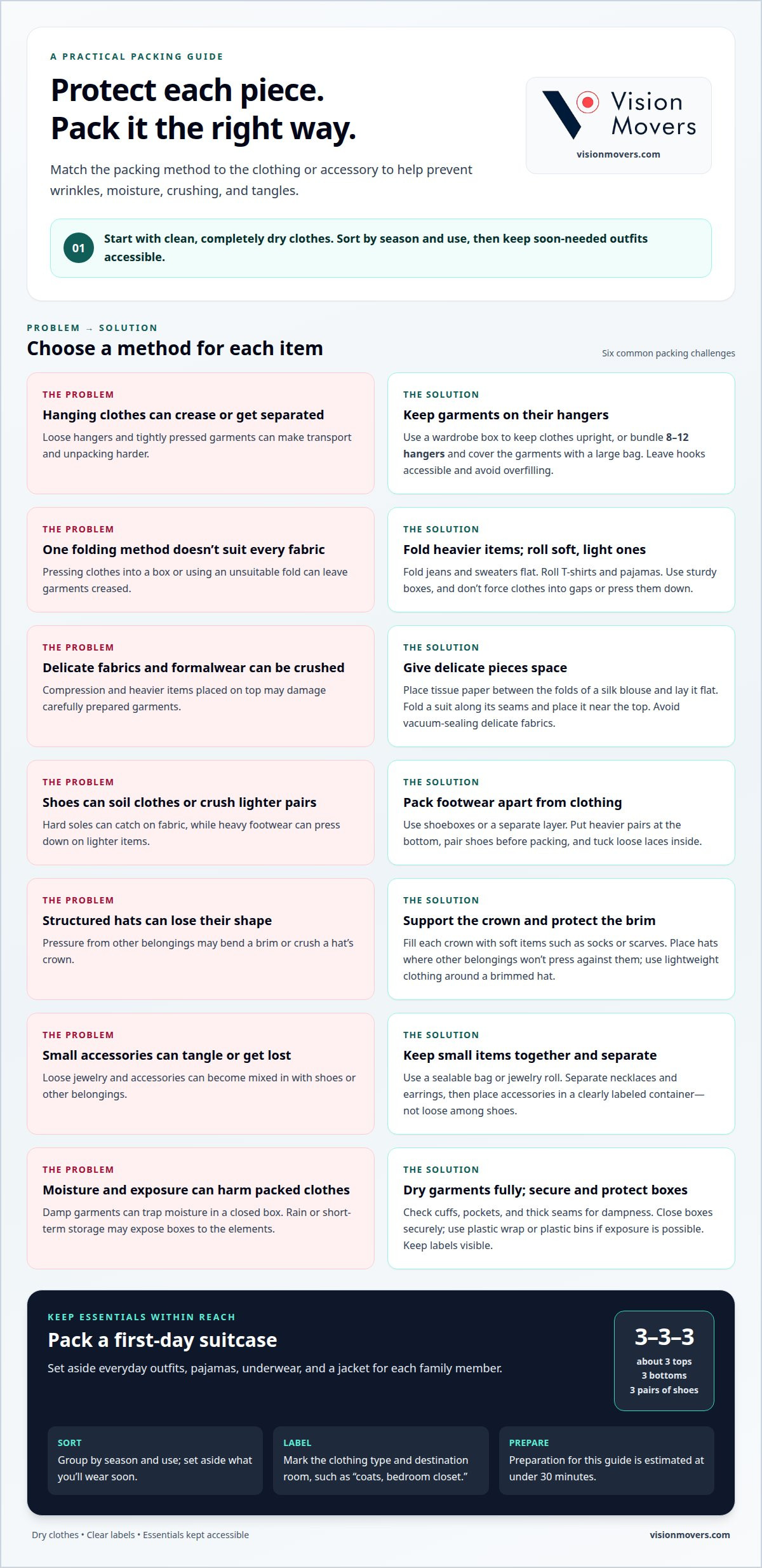
- Set aside a suitcase for the first day after the move, with everyday outfits, pajamas, underwear, and a jacket for each family member. The 3-3-3 moving method suggests about 3 tops, 3 bottoms, and 3 pairs of shoes in an essentials bag. If you want help preparing belongings for transport, consider professional packing services.
Packing shoes, hats, jewelry, and accessories
- Sort clothes before packing accessories. Separate shoes, hats, jewelry, and belts, then group garments by season and use. Pack off-season clothes first, such as winter coats before a summer move, and keep everyday pieces together for easy access. Sorting also shows which small items need their own containers.
- Wash clothes that need cleaning, then let every garment dry completely before packing. Even a slightly damp shirt can trap moisture in a closed box. Check cuffs, pockets, and thick coat seams, where dampness can linger. Pack clean, dry clothes separately from shoes to keep dirt and dust away from the fabric.
- Protect delicate clothing and formalwear with careful folds. Place tissue paper between the folds of a silk blouse, then lay it flat rather than pressing it beneath heavier clothes. Fold a suit along its seams and place it near the top of the box. Avoid vacuum-sealing delicate fabrics or compressing them for long-term storage.
- Pack shoes in a separate layer or in their shoeboxes, with heavier pairs at the bottom. This keeps hard soles from catching on clothes and helps prevent heavy shoes from crushing lighter ones. Pair shoes before packing and tuck loose laces inside. Keep clean footwear separate from freshly washed garments.
- Protect structured hats by placing small, soft items such as socks or scarves inside each crown. Put hats in a box where other belongings won’t press against their shape. Position a brimmed hat carefully and fill the space around it with lightweight clothing. Keep heavy shoes and dense accessories out of the box.
- Keep jewelry and small accessories together in a sealable bag or jewelry roll. Separate necklaces and earrings to prevent chains from tangling in transit. Place the packed accessories in a clearly labeled container, not loose among shoes. For example, group a belt, watch, and jewelry by outfit to make getting dressed after arrival simpler.
Moving clothes in dresser drawers
- Decide whether dresser drawers can travel with clothes inside. You can wrap drawers shut, but movers may remove heavy drawers to lift the dresser safely. Check that each drawer slides freely and that its contents don’t make the dresser difficult to handle. Base your decision on the dresser’s weight and whether it can be handled steadily.
- Sort drawer contents before securing them. Group lightweight items, such as T-shirts and pajamas, and set heavier garments aside. Fold sweaters, jeans, and dress pants flat rather than leaving them bunched in a drawer. That way, the contents stay orderly if you need to transfer them.
- Empty drawers that are crowded, heavy, or difficult to open. Move the clothes into a labeled box, grouping items by drawer or clothing type. For example, pack socks and sleepwear together and label the box for the bedroom. Leave only manageable clothing in drawers that will stay with the dresser.
- Close each loaded drawer fully, then wrap it shut so it cannot slide open during handling. Wrap around the drawer and dresser securely, without pressing the material against delicate furniture surfaces. Check every drawer before moving the dresser, including lower drawers that may shift when the piece is tilted.
- Be prepared for heavy dressers to have their drawers removed. Keep the contents organized by drawer so clothes can be returned to their original places after arrival. If a drawer comes out, set it aside with the dresser rather than stacking it beneath heavier items. This makes the furniture easier to handle.
- At the new home, place the dresser in its destination room before unpacking drawers. Return each drawer to its original slot, then arrange shirts, jeans, and other clothing as needed. For help with the move itself, plan your residential move with a clear approach to furniture and clothing.
Vision Movers: Packing Services
Vision Movers offers Packing Services to help prepare clothing and other household belongings for a move. This is useful when wardrobes, shoes, accessories, and dresser contents make packing a project of their own. Organized packing keeps items grouped and helps direct boxes to the right rooms after arrival.
For a move that includes packing and transportation, Vision Movers also offers Local Moving and Residential Moving services. Choose support based on the move and the packing help you need. Whether you’re relocating nearby or moving across town, you can plan professional packing as part of the transition.
Contact Vision Movers to discuss packing support for your move.
Make Your First Day in the New Home Easier
Before moving day, decide what you want your first evening to feel like. A calm arrival often starts with knowing where you’ll change, rest, and get ready the next morning. Think about closet space, dresser placement, and which rooms should be unpacked first. Those choices give your moving plan a useful destination, not just a list of boxes.
A thoughtful approach to how to pack clothes for moving can make the transition more manageable, but the move still involves many details. If packing and transportation are competing for your attention, professional support can help organize the process around your household’s needs.
Vision Movers offers moving help for residential relocations, including local and interstate moves. Contact Vision Movers for moving help and take the next step toward settling in with a clear plan.
Frequently Asked Questions
What supplies do you need to pack clothes for a move?
Gather sturdy boxes, wardrobe boxes or large bags, and a marker for labels. A suitcase can hold clothes you’ll need immediately, while sealable bags keep small accessories together. Plastic wrap or bins can protect clothing boxes from rain or brief exposure during storage. Choose supplies to suit the garments: hanging clothes need a different container from folded sweaters or delicate pieces.
How should you sort and declutter clothes before moving?
Sort clothes into keep, donate, repair, and discard groups, then review each group separately. For example, compare duplicate black sweaters and keep the one you wear and want to bring. Set aside clothes you’ll need before moving day so they don’t get packed too soon. Reviewing one category at a time makes decisions easier than emptying the entire closet into one pile.
Are wardrobe boxes worth it, and how many clothes do they hold?
Wardrobe boxes are useful for keeping garments on hangers and upright during transport. How many clothes fit depends on the box size and garment thickness, so bulky coats take up more space than lightweight shirts. Check the box’s capacity and don’t force extra hangers inside. For a small group of clothes, a bag may be more practical.
Can you move clothes in dresser drawers or suitcases?
Yes, clothes can travel in drawers if they’re secured, though heavy drawers may be removed to help move the dresser. Suitcases work well for clothes you’ll need soon or for keeping outfits together by person. For example, pack a child’s sleepwear and next-day outfit in one case. Keep suitcases accessible rather than burying them beneath boxes.
How do you protect clothes from moisture, dust, pests, and odors during a move?
Pack only clean, fully dry garments, and keep shoes separate from clothing to limit dirt and odors. Use closed bins or protective wrapping if boxes may face rain or short-term storage exposure. Before packing, inspect pockets, cuffs, and folds for crumbs or debris that could attract pests. Air out musty garments before packing rather than sealing the odor inside.
How much do wardrobe boxes and other clothing-packing supplies cost?
Supply needs depend on the types, sizes, and quantities of items you’re packing. Wardrobe boxes, sturdy clothing boxes, plastic bins, and small accessory bags serve different purposes, so plan around your wardrobe and packing method. Reusing clean suitcases or suitable boxes you already have can reduce the need for new supplies without requiring a specific box count.
Leave a Reply