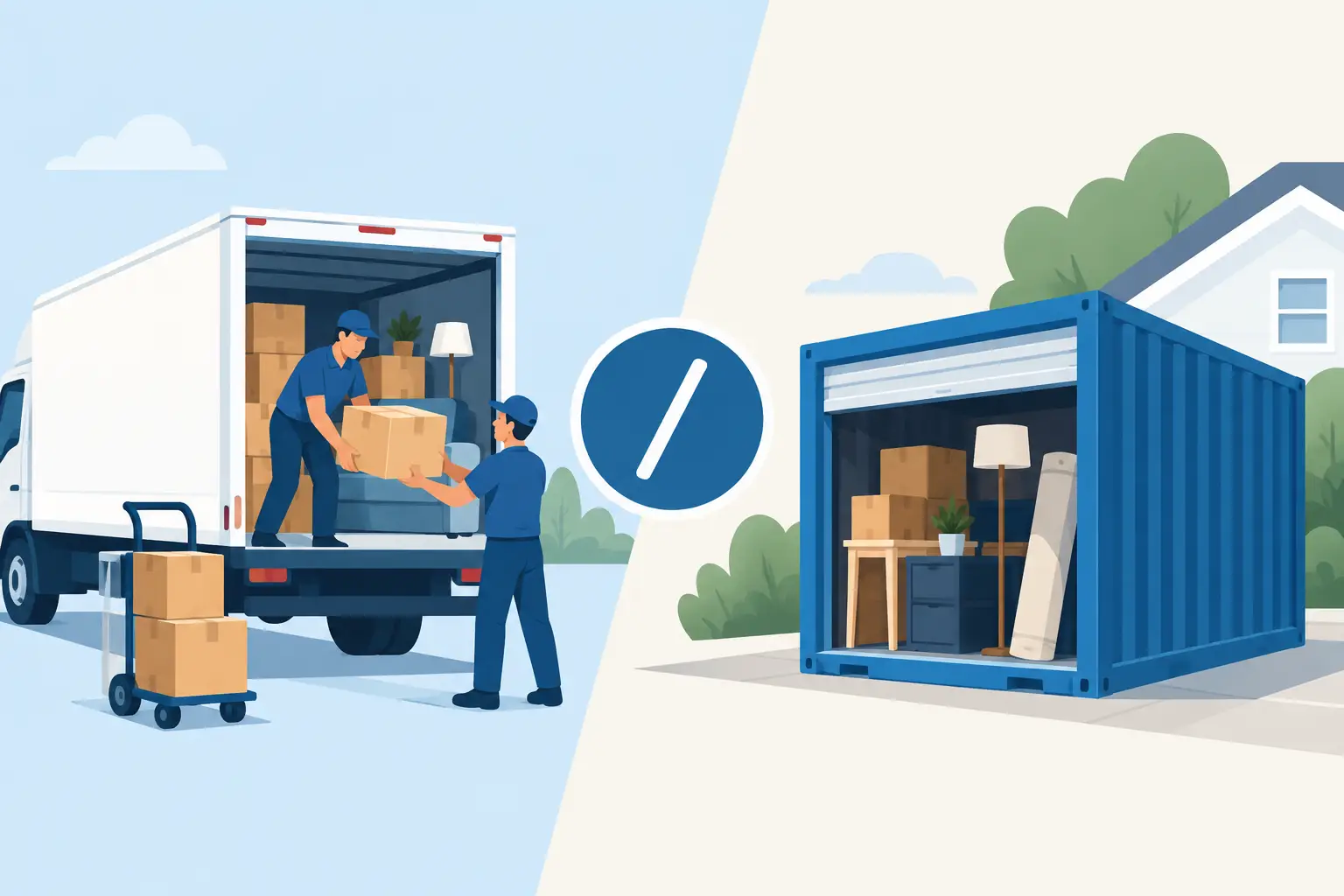
A container dropped in the driveway can look like the easy answer to moving day. But between HOA rules, condo loading docks, South Florida rain, tight schedules, and heavy furniture, the real choice is rarely that simple. When comparing movers versus containers, the best option depends on how much work you want to take on, how flexible your timeline is, and what your home or building allows.
A portable moving container can give you control and extra time. Full-service movers give you trained labor, equipment, transportation, and a coordinated plan from start to finish. Both can work well. The key is choosing based on your actual move, not just the first price you see.
Movers versus containers: the core difference
With a moving container, a company delivers a portable storage unit to your property. You load your belongings, keep the container for an agreed period, and the provider picks it up for transport or storage. You may hire labor separately for loading and unloading, but that is often an additional arrangement.
With professional movers, a trained crew arrives with the truck, moving equipment, protective materials, and labor needed for the job. Depending on the service you select, they can pack, disassemble furniture, load, transport, unload, reassemble, and place items in the new home or office.
The container model is more hands-on. The full-service model is designed to reduce the physical work and moving-day coordination on your plate. That difference affects cost, timing, liability, and stress.
Compare the real cost, not only the quote
Containers often appear less expensive because the initial quote may cover delivery, transport, and a base rental period, but not the labor. If you are moving light boxes from a single-family home with a clear driveway and have friends ready to help, that can be a workable way to save money.
The total can change quickly when you add loading help, moving blankets, dollies, straps, packing supplies, extra container time, long carries, stairs, or a second container. If you cannot finish loading by the pickup date, an extension may add more cost. A container can also require a separate storage fee if your new place is not ready.
Professional movers usually provide a clearer view of the labor and equipment required upfront. A reliable moving estimate should explain what is included, such as crew size, travel time, truck use, furniture protection, assembly or disassembly, and any special handling needs. Transparent pricing matters because a move with a piano, safe, oversized sectional, or multiple flights of stairs is not a standard box-and-dolly job.
The lower-cost option depends on the move. A container may cost less for a flexible, mostly DIY relocation. Movers can provide stronger value when the job includes heavy pieces, a tight move-out deadline, packing needs, or building restrictions that make self-loading difficult.
Time and labor can decide the move
Loading a container is physically demanding. You need to carry every box, maneuver furniture, protect doorways, distribute weight properly, and secure items so they do not shift during transport. Then you do it again at the destination. A one-bedroom apartment may be manageable with enough help. A family home can become a multi-day project.
Full-service movers work on a defined schedule and bring a crew sized for the scope of the move. They use dollies, hand trucks, furniture pads, straps, floor protection, and other dedicated equipment to move efficiently and safely. That is especially useful when a lease ends at a specific time, a closing date cannot move, or an office needs to reopen promptly.
For South Florida residents, timing can also mean avoiding a long day of loading during extreme heat or an afternoon storm. A professional crew cannot control the weather, but they can work with a plan, protect furnishings, and keep the process moving when conditions change.
Building rules may rule out a container
Before reserving a container, ask your property manager or HOA whether one can be placed on-site. Many condos, apartment communities, gated neighborhoods, and downtown areas have restrictions on where containers can sit, how long they can remain, and whether they block parking, fire lanes, sidewalks, or access points.
High-rise moves create another challenge. Even if a container is permitted outside, you may need to reserve an elevator, use a designated loading dock, comply with move-in hours, and provide insurance documentation. The container does not solve those logistics. You still need people who can move belongings through hallways, elevators, and common areas without damaging the property.
Movers are often better suited to these environments because they can coordinate around the building’s requirements and complete the loading within the approved window. For condo and apartment moves in Fort Lauderdale and across Broward County, that can be the difference between a smooth move and a missed elevator reservation.
Protection and liability deserve a closer look
A container gives you control over how your belongings are packed and loaded, which some people prefer. It also makes you responsible for doing that work correctly. Poor weight distribution, loose furniture, unprotected wood surfaces, and unsecured boxes can lead to damage during transport.
Professional movers are trained to wrap furniture, secure loads, navigate bulky items, and use the right equipment for difficult pieces. Ask any moving company about licensing, insurance, valuation coverage, and how claims are handled before booking. Those details should be clear, not buried in vague language.
This is particularly relevant for appliances, antiques, artwork, pianos, pool tables, safes, and large electronics. These items may require more than a few extra hands. They require a planned approach, proper tools, and people who understand how to protect both the item and the property around it.
When a moving container makes sense
A container can be a practical fit when you have a driveway or approved placement area, a flexible schedule, and a relatively simple load. It is also useful when you need short-term storage between homes and are comfortable packing and loading at your own pace.
It may suit a smaller move where you have dependable help, few specialty items, and no strict building timeline. If you are moving gradually, renovating before settling in, or relocating from a home with easy ground-level access, the extra loading time can be a real benefit.
Just plan honestly. Set aside enough time for packing, reserve help for the heavy items, and confirm the pickup and delivery windows before you commit.
When full-service movers are the better choice
Choose movers when your move has deadlines, heavy furniture, difficult access, or belongings that need extra care. The same is true if you are moving with children, managing a demanding job, recovering from an injury, or simply do not want to spend your weekend hauling boxes in the heat.
For businesses, professional movers are usually the practical choice. Office furniture, technology, inventory, fixtures, and specialized equipment need organized handling. A trained crew can schedule work after hours or on weekends, reduce downtime, and help get the new space ready for operations.
Vision Movers helps customers build a service plan around the move they actually have, from local apartment relocations to long-distance household and commercial moves. That can include packing, storage, furniture assembly, and specialized handling when a standard DIY plan is not enough.
Make the choice with a site-specific plan
Before deciding, look at the pickup and delivery locations, not just the distance between them. Check parking, stairs, elevators, loading zones, driveway space, HOA rules, move-out deadlines, and the items that need special handling. Then calculate the full cost of labor, supplies, storage, time off work, and potential delays.
A container can be a smart tool for a flexible DIY move. Movers can be the smarter investment when you need speed, protection, and accountable coordination. The best moving plan is the one that keeps your belongings safe, respects your schedule, and does not leave you solving major problems on moving day.
Before you book anything, walk through your home and picture how each large item gets from its current room to its final room. That simple exercise often makes the right choice clear.
Leave a Reply