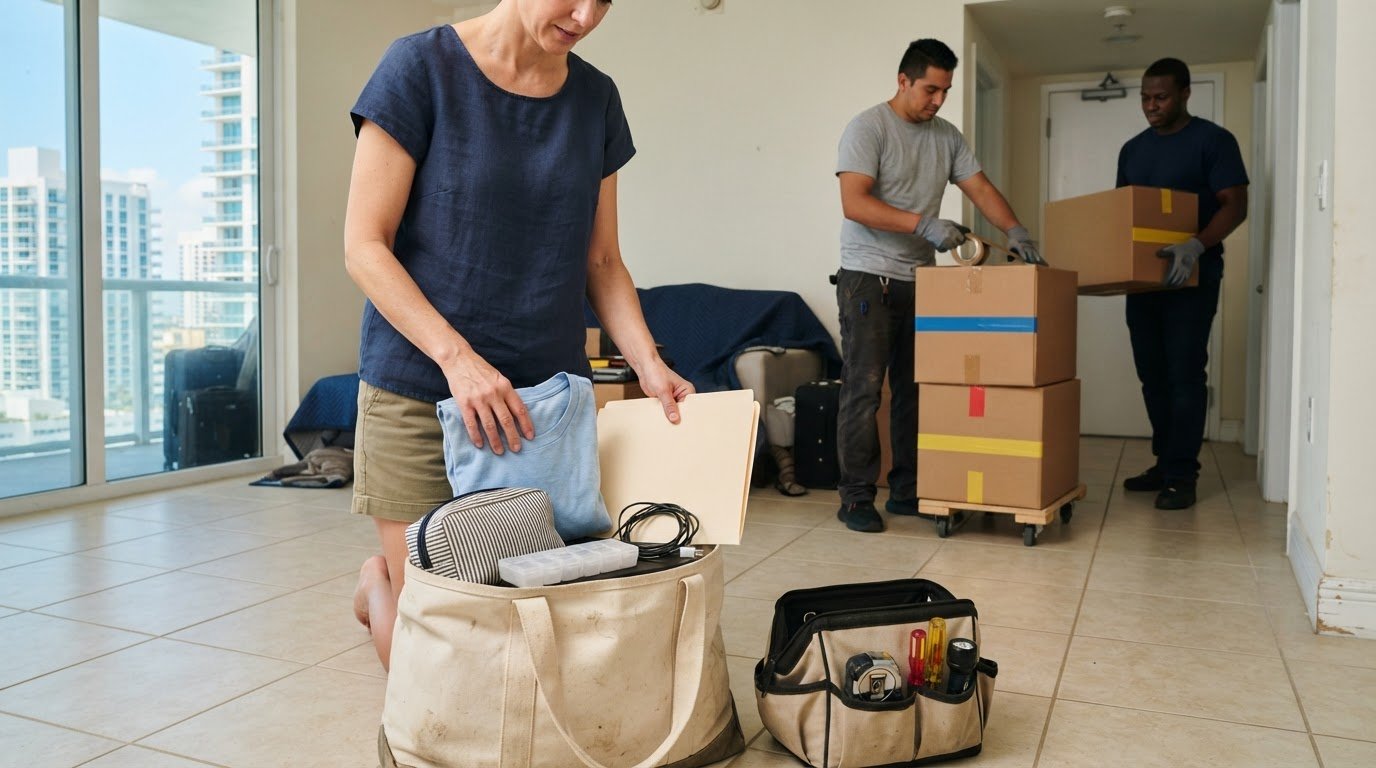
What to do the week before you move is straightforward: finish packing non-essentials, prepare a personal essentials bag and a basic toolkit, inspect your home, and arrange address and utility updates. Keep medications, toiletries, chargers, a change of clothes, and important documents with you instead of loading them onto the truck. Label boxes by room and make a short list of final checks for both homes.
It’s easy to focus on boxes and overlook the details that make the first days in a new home smoother. This checklist helps you prioritize tasks, from notifying banks and utilities to preparing the refrigerator and checking for belongings left behind. You’ll also see what to keep close on moving day and why mail forwarding doesn’t replace updating each service directly. Work through the steps in order to keep essentials accessible and reduce last-minute tasks.
Key Takeaways
- Pack non-essential items first, label boxes by destination room, and keep important belongings and documents with you.
- Prepare a moving-day kit with the supplies you’ll need right away, plus a basic toolkit for small tasks.
- Inspect each room, closet, and storage area before leaving, and take photos to document the home’s condition.
- Arrange mail forwarding and update banks, insurers, utilities, and other services directly so important information reaches you.
Decluttering and packing non-essential items
If you’re deciding what to do the week before you move, start with belongings you won’t need before moving day. Pack seasonal decor, extra linens, books, and rarely used kitchenware. Sort items into keep, donate, and discard groups, then label each box with its contents and destination room. Clear labels help movers place boxes where they belong in your new home.
- Empty drawers of loose or breakable items. These can shift or spill in transit, while clothing and blankets may stay inside furniture.
- Prepare an essentials box for your first evening. Add basic kitchen and bathroom supplies, snacks, easy-to-prepare food, cleaning supplies, and a toolkit.
- Choose a clear container for arrival essentials. Its contents are easy to spot, and it can travel in the moving truck, loaded last and unloaded first.
- Pack a separate survival kit for moving day. Include medications, toiletries, chargers, a change of clothes, important documents, and special foods you’ll need during the move.
- Keep small valuables and key records with you. Put jewelry, identity documents, and moving paperwork in a secure, accessible personal bag instead of a box.
To confirm movers and moving-day details, verify the moving date, arrival arrangements, and access information. Confirm the new home’s move-in date, along with plans for helpers, the cleaning crew, and the final landlord walkthrough. Keeping these details together helps prevent scheduling conflicts between the two homes.
Before moving, plan meals around food already at home and use or donate unopened, non-perishable items. Empty the refrigerator ice bin, disconnect appliances, and defrost the refrigerator and freezer 24 to 48 hours before leaving. Let them dry to reduce leaks; the refrigerator water line may need to be shut off.
Another practical step in what to do the week before you move is to check drawers, cabinets, closets, attics, sheds, and storage areas for overlooked belongings. Pack the remaining non-essentials, then keep your personal bag and essentials kit easy to recognize and reach.
Packing a moving-day survival kit and toolkit
Keep supplies you’ll need during the move separate from boxes you won’t open right away. A personal bag can hold medications, toiletries, chargers, a change of clothes, important documents, and small valuables. Carry it with you so these essentials stay accessible while movers load and unload the truck.
Prepare a second kit for practical tasks at your new home. Include snacks, water, paper towels, trash bags, basic tools, cleaning supplies, and bathroom and kitchen basics. A clear, labeled container is easy to spot among packed boxes. If it travels on the truck, ask for it to be loaded last and unloaded first so you can reach it when you arrive.
- Keep a toolkit together. Pack basic tools in one secure container, separate from items that need immediate access.
- Use bags and suitcases. Fill them with clothing, bedding, or soft items, and keep one change of clothes handy.
- Pack electronics accessories. Unplug televisions, computers, and other electronics; place their cables together and label them.
- Set aside moving-day supplies. Keep water, snacks, toiletries, and cleaning items easy to reach instead of burying them in boxes.
For efficient packing on a short timeline, work through one area at a time and gather boxes, tape, and labels before you start. Mark each box with its contents and destination room. Use suitcases for heavier clothing or linens, and protect fragile items rather than filling bags until they’re difficult to carry. A consistent labeling system helps everyone place boxes correctly.
The day before moving, finish packing, unplug remaining electronics, and check closets, cabinets, storage areas, attics, and sheds for anything left behind. Keep documents, valuables, and your survival kit out of the load. Packing support for your move can help manage belongings and prepare them for transport.
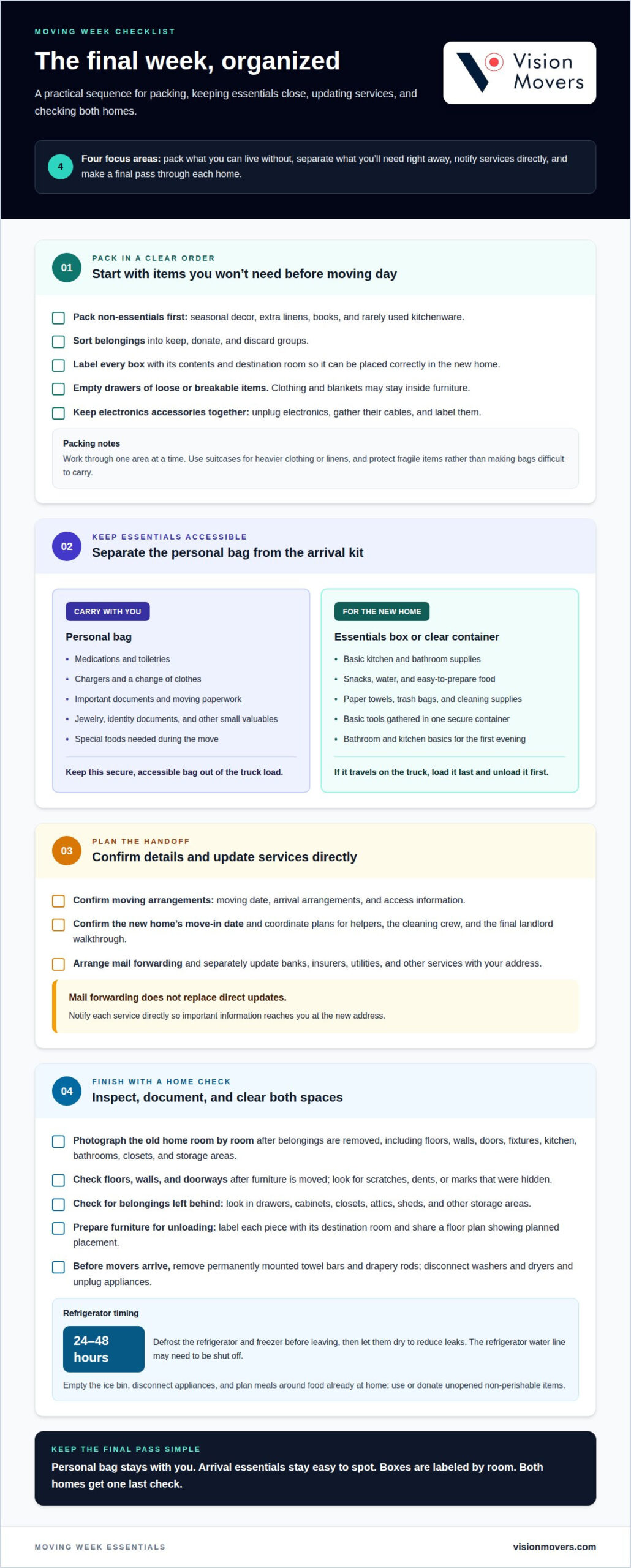
Inspecting the old home and checking for damages
Before loading begins, make a room-by-room checklist for your old home. Photograph floors, walls, doors, and fixtures after belongings are removed. Capture existing marks clearly, then take another photo if furniture or appliances cause damage during the move. These records help you recall the home’s condition and identify areas that need attention before you leave.
- Photograph each empty room. Include the kitchen, bathrooms, closets, and storage areas so the record covers spaces easy to overlook.
- Check floors, walls, and doorways after furniture is moved. Look for scratches, dents, or marks that were hidden behind large items.
- Label furniture with its destination room. A “bedroom” or “living room” label helps movers place each piece correctly at the new home.
- Share a floor plan showing furniture placement. Room names and planned locations make unloading more direct and reduce repeated rearranging.
- Remove permanently mounted items before movers arrive. Take down towel bars and drapery rods so they’re not left behind or caught during loading.
- Check appliance connections. Disconnect washers and dryers from the walls, and unplug appliances before leaving the home.
After the last boxes leave, inspect behind doors, inside closets, and around kitchen cabinets. Check drawers and shelves for small belongings, then make a final pass through the attic, shed, and other storage areas. This walk-through catches items that can disappear from view once rooms are empty.
Clean the old home after the furniture and boxes are out, working through one room at a time. Gather cloths, a broom, and trash bags before you start. Wipe kitchen counters and empty cabinets, then clear bathroom surfaces and sweep the floors. Cleaning an empty room makes dust, crumbs, and forgotten items easier to spot.
Finish by comparing each room with your checklist and photos. Check that appliances are unplugged, mounted items are removed, and no belongings remain in closets or storage spaces. Organize the final photos by room so they’re easy to review if you need to recall a specific area.
Changing your address and notifying services
Use your moving checklist to separate mail forwarding from direct account updates. A USPS Change-of-Address request forwards mail for one year, but it doesn’t update your address with banks, insurers, driver’s-license agencies, or voter-registration offices. Notify each organization directly so statements, policies, and account notices reach your new home.
Submit the USPS request before moving. USPS says to allow at least 7-10 business days for the change to take effect. An online request requires a $1.25 identity-verification fee; you can also file in person using PS Form 3575. Keep a record of your submission and the date you expect forwarding to begin.
- Update financial and insurance accounts. Give your bank, credit card providers, and insurers the new address directly, then review future statements for accuracy.
- Plan utility dates for both homes. Arrange for electricity, water, and other needed services to be active at the new home on your first day. Schedule any outgoing utility or internet changes to match your departure.
- Add government records to your list. Update voter registration and your driver’s license through the appropriate state agencies. Most U.S. states require a driver’s-license address update within 30 to 60 days of moving.
- Notify people who send important mail. Tell your employer, healthcare providers, and friends your new address, especially if they send records or time-sensitive information.
- Handle rental notices early. Renters are generally advised to give landlords 30 to 90 days’ notice, subject to state law and the rental agreement. If you haven’t sent notice, review your lease and contact your landlord promptly.
Keep a dated list of every organization notified, its update method, and any follow-up needed. This makes address changes easier to track when moving-day stress competes with other tasks. For help coordinating the relocation itself, plan your residential move with a team that handles the transport while you manage account updates.
Vision Movers
Vision Movers helps coordinate the move itself so you can focus on address updates, final inspections, and arrival essentials. As a trusted local moving company, the team provides residential and commercial relocation services, including furniture protection and loading and unloading. Turning to a moving team makes sense when you want help transporting household or workplace belongings while you manage the final details on your checklist.
Share the move details and the support you need to get the process moving. Contact Vision Movers to discuss your upcoming local relocation.
Make Space for Your Next Chapter
A useful way to approach what to do the week before you move is to make decisions that protect your attention on moving day. Choose one person to track schedule changes, access details, and urgent messages. Keep that information together so you’re not searching through packed boxes or scattered notes when a decision comes up.
Think beyond the moment the last box leaves. Set aside time to settle into your new space before tackling every unpacking task. Start with the rooms and belongings that support your daily routine, then unpack the rest at a manageable pace. A move is a transition, not a test of how quickly you can make everything perfect.
If you’d like support with the move itself, contact Vision Movers for moving help. With a clear plan and the right support, you can give your attention to what comes next and begin settling in with purpose.
Frequently Asked Questions
What should I do 7 days before moving house?
Use the final week to close open tasks rather than restart your moving plan. Confirm the move-in date and arrival arrangements, pay outstanding bills, refill prescriptions, and handle appointments or dry cleaning that can’t wait. Plan meals around food already at home, and arrange to donate unopened items you won’t take. Keep one short checklist of remaining tasks and update it as you finish each one.
What should I pack in a moving-week essentials box?
Pack supplies you’ll need soon after arriving, such as basic kitchen and bathroom items, cleaning supplies, snacks, and a toolkit. Keep travel necessities, medications, and important documents in a separate bag that stays with you. Decide which items you’ll need during the journey and which can wait until arrival. Label the essentials box clearly so it’s easy to distinguish from household cartons.
When should I transfer or set up utilities before moving?
Arrange for essential utilities to be active at your new home on your first day there. Coordinate the start date with your move-in date, then schedule service changes at your old address around your departure. Include electricity, water, and internet on your list. Save each provider’s confirmation and scheduled dates together so you can quickly address a missed connection or overlapping service.
How do I update my address with USPS and other services?
Submit a USPS Change-of-Address request online or in person using PS Form 3575. USPS says to allow at least 7-10 business days for the change to take effect; an online request has a $1.25 identity-verification fee. Forwarding doesn’t update other accounts. Contact banks, insurers, government agencies, and regular billers directly, and record each update’s date and confirmation.
What should I clean and repair before moving out?
Clean after rooms are empty so shelves, floors, and counters are easier to reach. Remove trash, wipe kitchen surfaces, and check bathrooms and closets for leftover items. Review your move-out instructions for any cleaning or repair expectations. Document existing damage with clear photos, and avoid repairs that could make a problem worse. Keep cleaning supplies accessible until the final walkthrough is complete.
What documents and valuables should I keep with me on moving day?
Carry passports, Social Security cards, birth certificates, wills, insurance paperwork, and your moving contract in a clearly labeled folder. Keep jewelry and personal electronics with you rather than placing them in a carton. Store the folder in your personal bag, not an essentials box on the moving truck, so you can access identification and records during the move and after you arrive.
Leave a Reply