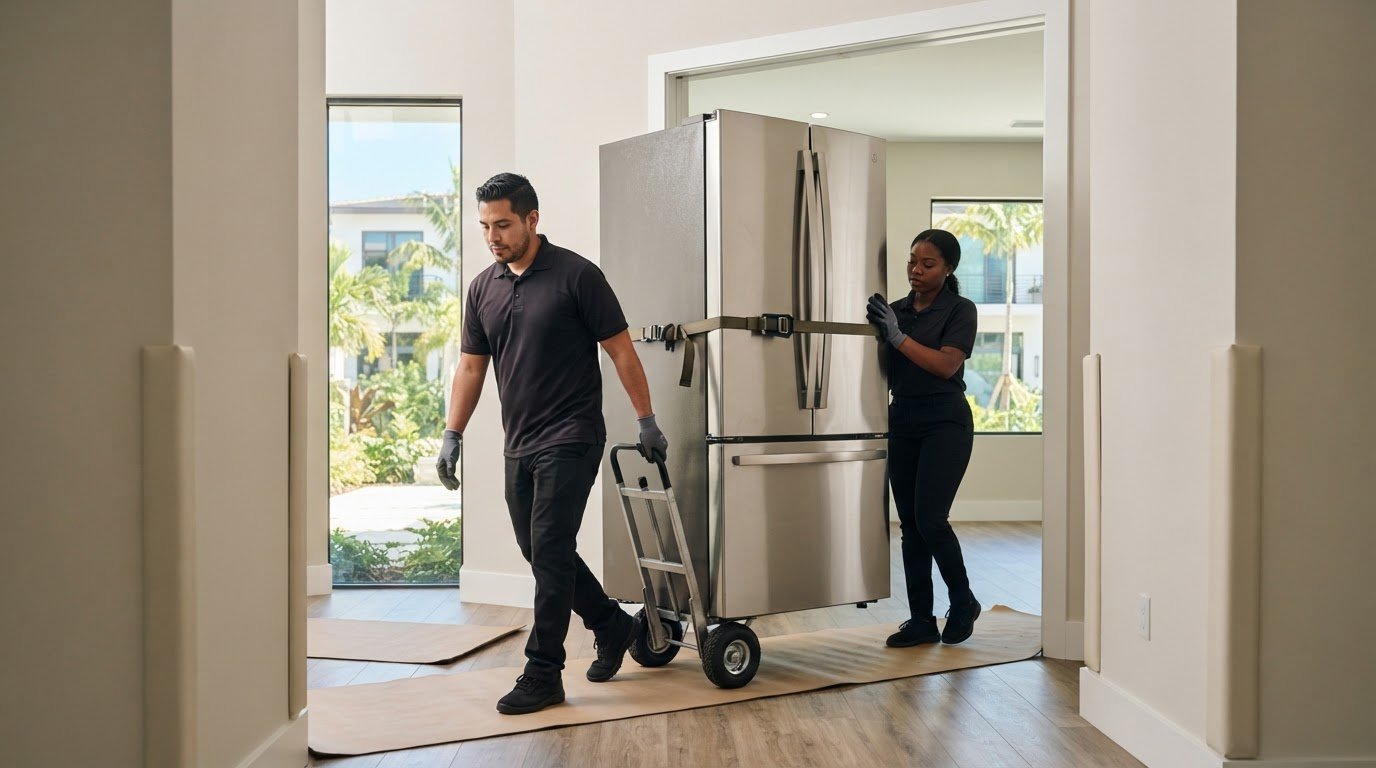
Yes, you can hire large appliance movers in Miami for a single-item move. Stairs or multiple floors can require a larger crew, and the time needed depends on the appliance, route, and handling involved.
That can be helpful when you need to move a refrigerator, washer, or another bulky appliance without relocating your whole home. Even a short move needs planning, especially when the appliance is going between rooms or floors.
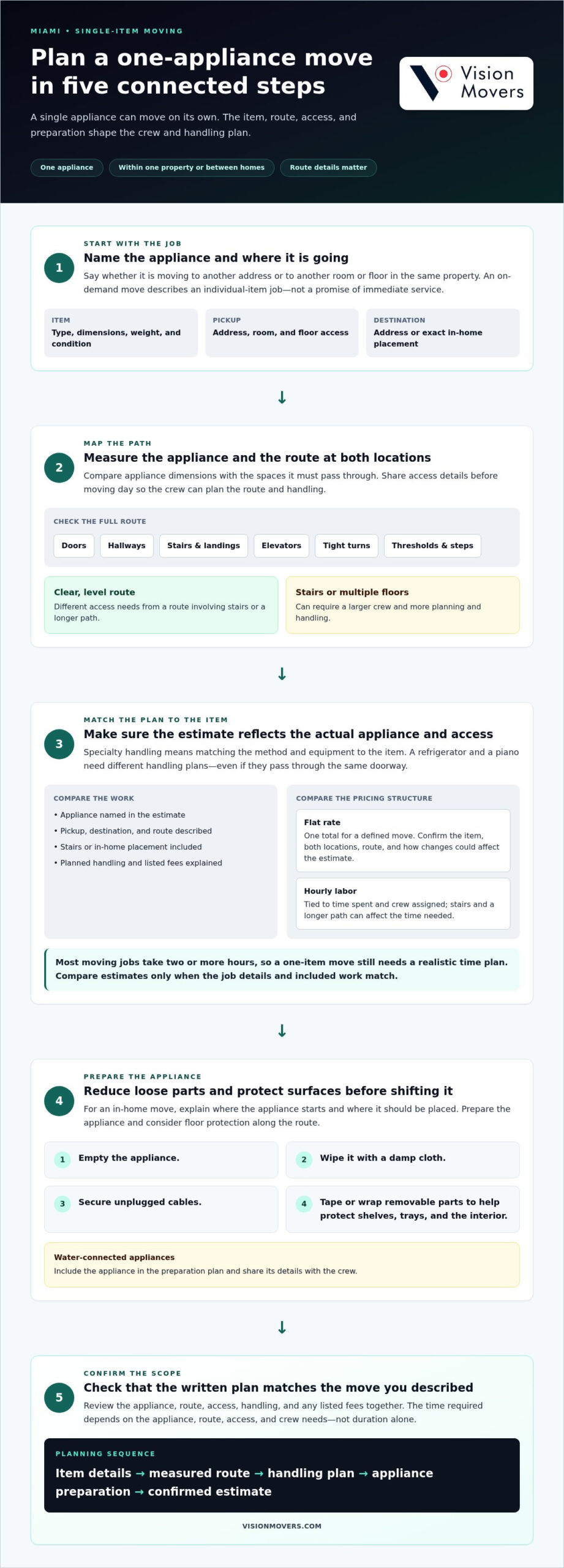
This guide explains how one-item moves are assessed, what example moving prices can and can’t tell you, and which details affect specialty-item planning. You’ll also learn the practical steps involved in an in-home appliance move, from preparing the appliance to considering the route and protecting floors. With those details in view, you can better understand what kind of help fits your move and what to expect from the planning process.
Key Takeaways
- One appliance can be moved on its own; the route, stairs, and preparation help determine the crew and plan.
- Use moving-price examples as context, not a quote. The item, access, distance, and handling needs all affect the job.
- Measure the appliance and the path through both locations before moving day to spot tight doors, hallways, or stairs.
- For an in-home move, prepare water-connected appliances and protect the appliance and floors before shifting it.
Can you hire movers to move one item?
Yes. A single appliance can be moved on its own, including within one property. The route, preparation, and appliance size help determine the crew and handling plan.
Local and On-Demand Appliance Moves
Local moving can cover a one-item job in Miami, whether the appliance is going to another address or another room. An on-demand appliance move means arranging help for an individual item rather than a full household relocation. It describes the job size, not a promise of immediate service.
When requesting an estimate, describe the pickup and destination, including whether the appliance is changing floors or staying within one location. Moving a refrigerator from a ground-floor kitchen to an upstairs room has different access needs from moving it between homes. Mention stairs, narrow hallways, and tight turns so the route can be planned accurately.
Consider the appliance’s condition and replacement cost alongside the moving estimate. For an older washer, compare the effort and expense of moving it with replacing it and arranging delivery. The estimate depends on the appliance, route, access, and handling needs, so provide those details when requesting a free personalized estimate.
Appliance Specialists and General Movers
Some Miami movers focus on bulky appliances, while full-service moving companies may move appliances as part of a broader household relocation. The key is whether the plan accounts for the appliance, its route, and the handling required. Vision Movers offers appliance moves as well as residential moving services.
The time required depends on the appliance, route, access, and crew needs. A move involving several floors can require more planning and handling than a clear, level route. Compare the estimate’s scope with the actual appliance and access conditions, rather than relying only on an expected duration.
Credentials and clear communication are useful comparison points. Look for an estimate that identifies the appliance, addresses the route, and describes the planned work. Check that details you provide, such as stairs or an in-home destination, are reflected in the plan.
Prepare the appliance by emptying it, wiping it with a damp cloth, securing unplugged cables, and taping or wrapping removable parts. This helps protect shelves, trays, and the appliance interior during transport.
Pricing examples from customer moves
Moving estimates depend on the scope, access, distance, and handling required. When comparing large appliance movers in Miami, review what each estimate includes instead of comparing a figure without its job details.
Flat Rates and Fees
A flat-rate estimate gives one total for a defined move, such as taking a refrigerator from one home to another. Before booking, confirm that the scope covers the named appliance, both locations, and the route between them. Check how changes, such as extra handling or a different destination, could affect the estimate. Compare flat-rate estimates only when the job details match.
The estimate depends on the appliance, access, distance, and handling needs. A clearly defined scope helps you understand the planned work and any listed fees before the move.
Hourly Labor Pricing
Hourly labor pricing ties the estimate to the time spent moving and the crew assigned. The route can affect that time: carrying an appliance across one level differs from managing stairs or a longer path. Most moving jobs take two or more hours, so a one-item move still needs a realistic time plan.
For a useful comparison, describe the appliance and route accurately before booking. Ask how the estimate covers labor and what the crew will do, from handling the appliance to placing it at the destination. This lets you compare the service scope, not just the pricing structure.
Upfront Pricing Details
A clear estimate should explain the planned work before moving day. Provide the appliance type, pickup and destination addresses, floor access, and whether it is moving between homes or within one location. Then review the scope, included handling, and any listed fees.
A delicate appliance carried up stairs may require more handling than one moved along a clear, level route. Protective materials can help safeguard surfaces during transport, so review what the estimate includes. When comparing large appliance movers in Miami, ask questions about the written scope before booking to understand the agreed work from start to finish.
Specialty-item assessment and planning
Planning for stairs, elevators, and tight spaces starts with the appliance’s dimensions and the route at both locations. Sharing those details helps the crew plan access, handling, and transport.
Specialty-Item Handling
Specialty handling means matching the method and equipment to the item. For example, piano movers typically wrap a piano in protective padding, place it on a piano dolly, then secure it in the moving vehicle with straps and blankets. The right plan depends on the item being moved.
Before the move, share the appliance’s dimensions, weight, and condition. A refrigerator and a piano need different handling plans, even if they must pass through the same doorway. Clear information helps the crew prepare for the specific item and destination.
Planning for Stairs and Tight Spaces
Measure the appliance and compare its dimensions with doors, hallways, and stairs at both the pickup and destination. Include elevator access and tight turns when describing the route. These details help the crew plan how to move the appliance out of its current space and into the destination.
If the appliance needs to move between floors, describe every part of the route, including landings and narrow corners. A clear plan helps identify obstacles before moving begins, rather than while the item is being carried.
For an in-home move, explain where the appliance starts and where it should be placed. Moving a washer from a laundry room to another floor involves a different route from taking it to a nearby home. Mention thresholds, steps, and narrow doorways so the plan reflects the actual path.
Once the appliance arrives, confirm its placement against the agreed destination before the crew finishes. If a doorway seems too narrow, pause and reassess the measurements rather than forcing the appliance through. This can help prevent damage to the item or surrounding surfaces.
In-home appliance moves
Appliance movers can move a large item between rooms or floors without taking it to another address. Moving covers transport; disconnection and installation are separate tasks to arrange.
For a water-connected appliance, turn off the water supply before moving. Detach the hoses and drain any remaining water to reduce spills along the route. Keep hoses and small parts together, and note where they belong for reconnection. This preparation helps keep the work area organized.
Clear the route from the appliance to its new position. Move furniture out of the way, open doors fully, and remove loose objects. Measure narrow doorways and check floor surfaces. Planning the route helps the crew work efficiently and reduces the risk of hitting walls or furnishings.
Before shifting a large appliance, wrap it in padded material and use lifting straps to place it on a heavy-duty appliance dolly or hand truck. Secure it to the dolly with straps. Move carefully, especially across thresholds or between floors, and use additional hands when the route or appliance requires them. Protect floors along the path.
A clear plan records the appliance’s starting point, destination, route, and any water connections. Confirm the final placement before moving equipment away. If installation is needed, arrange it separately from transport. These details clarify the scope and help prevent last-minute changes.
For a wider household move that includes appliance relocation, plan a residential move with the route and items clearly outlined.
Vision Movers: Local Moving
Vision Movers offers Local Moving and Residential Moving for relocations that include large household items. If an appliance is part of a broader local move, share that when requesting an estimate so the planned work reflects the full relocation.
To plan the move, gather the appliance type, pickup and destination details, and information about stairs or tight spaces along the route. These details help define the work and keep the plan focused on your home and belongings. If the move also includes furniture or other household items, Residential Moving can cover the wider relocation.
Contact Vision Movers to discuss your local move, or visit visionmovers.com.
Plan the next move with confidence
Before arranging a move, decide whether the appliance move stands alone or is part of a larger relocation. This helps define the right scope and makes the next steps clear. If the appliance is one part of a household move, include its destination and access details in your moving plans.
Choosing large appliance movers in Miami starts with a clear picture of the move. Vision Movers offers Local Moving, Residential Moving, and Interstate Moving for different relocation needs. Explain how the appliance fits into your move and share the destination details so the plan reflects what needs to be moved.
When you’re ready to discuss your relocation, contact Vision Movers to plan your move. A clear starting point can make the next decision easier, whether you’re moving one major item or organizing a wider transition. Take the next step at a pace that works for you.
Frequently Asked Questions
How do you move large pieces of furniture?
Prepare each item for its shape and route. For a dresser, remove loose contents, secure the drawers, and protect the corners with padding. For a sofa, clear the path and remove detachable cushions or legs if the design allows. Measure tight turns before moving furniture through them. A clear route and coordinated handling help protect items and nearby walls.
How soon can labor help arrive?
Scheduling depends on crew capacity, the route, and the details of the job. Same-day and last-minute service may be available based on team availability, but Vision Movers does not always have a team of last-minute movers available. Provide the appliance and location details when arranging help so the move can be planned appropriately.
How much does it cost to move a refrigerator, washer, or dryer in Miami?
The estimate depends on the appliance, access at both locations, distance, and handling required. Moving a refrigerator between nearby homes can involve different work from carrying a washer through a narrow stairwell. Vision Movers offers transparent pricing with no hidden fees, and exact costs are provided through a free personalized estimate. Share the route and appliance details to receive an estimate tailored to the move.
Do Miami appliance movers charge hourly or per appliance?
Moving estimates may use hourly labor or a defined job price, depending on the scope. The appliance alone does not determine the pricing structure. A dryer with straightforward access involves different handling from a refrigerator that must pass through tight turns. Review how the estimate describes the work and pricing before booking, so you can compare the same scope accurately.
Do appliance movers in Miami need to be licensed and insured?
Licensing and insurance are important credentials to understand before arranging a move. Vision Movers is fully licensed and fully insured for local and long-distance moves. That applies to both a Miami-area household relocation and an interstate move. Keep the estimate and move paperwork together, and make sure the service details reflect the type of relocation being planned.
What insurance coverage should I verify before hiring Miami appliance movers?
Confirm what coverage applies while an appliance is handled and transported, and how to report damage if an issue occurs. Vision Movers states that all belongings are insured, and additional insurance is available if needed. If a refrigerator is part of a household move, clarify how coverage applies to the belongings being moved.
Leave a Reply