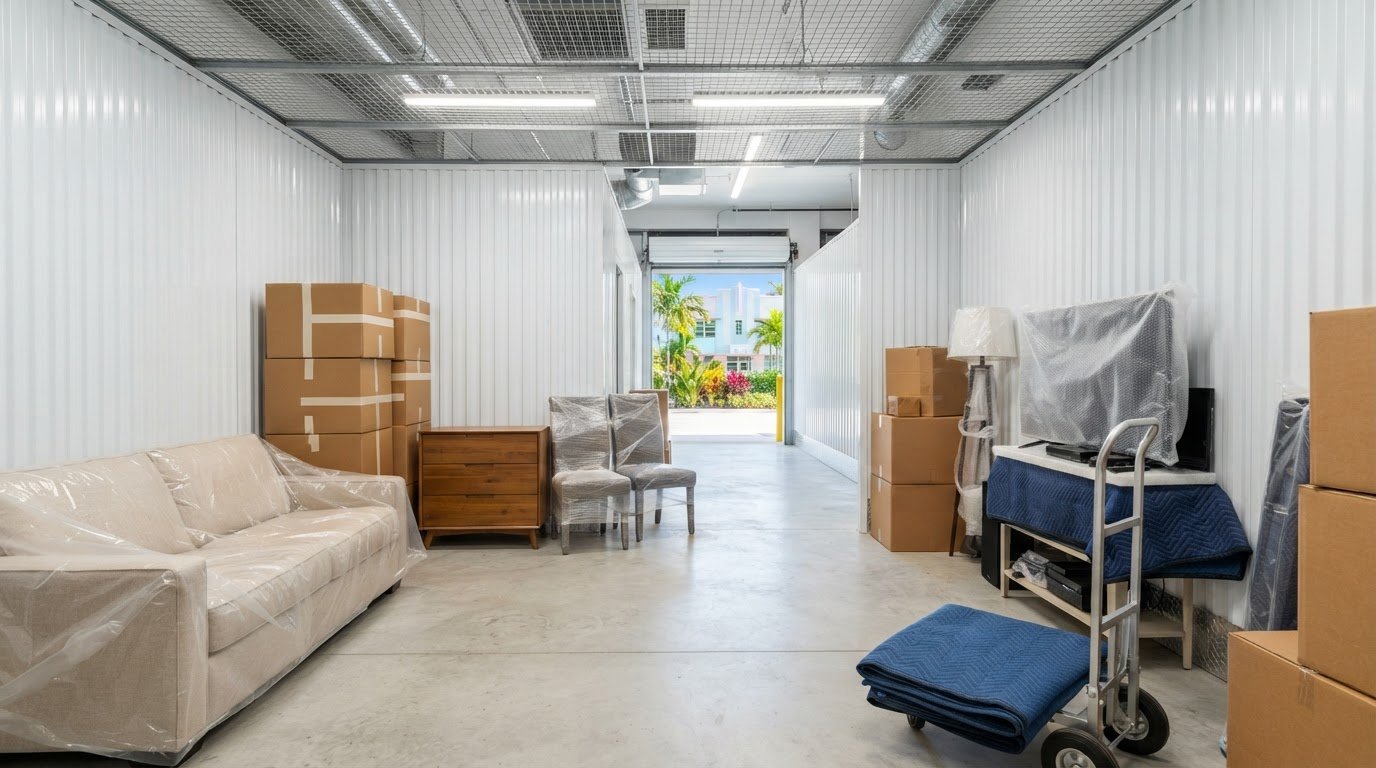
The right storage unit isn’t simply the biggest one you can fit into your budget. Climate-controlled storage units near Miami range from 25 square feet to more than 300 square feet, with sizes commonly spanning 5′ x 5′ to 10′ x 30′. When comparing climate-controlled storage movers in Miami, start by matching the unit to what you’re storing and how much access you’ll need.
Miami’s heat and humidity make climate controlled storage movers Miami a practical search if you need to store furniture, electronics, documents, or other belongings that may be sensitive to changing conditions. The challenge is protecting and organizing your items without paying for more space than you need. This guide explains how to estimate storage needs, which belongings may benefit from climate control, and how moving and packing support can make the process easier to manage.
Key Takeaways
- Choose a unit by listing what you’ll store, how you’ll stack it, and which items need to stay accessible.
- Consider climate control for belongings such as wooden furniture, electronics, documents, and delicate fabrics that may be affected by heat or humidity.
- Compare practical security and access features, including video monitoring and the facility’s daily access hours, before settling on a unit.
- For help moving belongings into storage locally, Vision Movers can support the move and make loading and unloading easier to manage.
How do I choose the right size storage unit in Miami, FL?
Choose a reliable Miami mover with storage services by comparing clear service details, customer reviews, and inventory handling. Match unit size to your belongings, usable floor space, and access needs rather than guessing from home size.
Miami climate-controlled storage units range from 5′ x 5′ to 10′ x 30′, or 25 square feet to more than 300 square feet. Build an inventory room by room. Note large furniture, boxes, and items you’ll retrieve often. Measure bulky pieces, then leave a path to belongings at the back.
Storage arrangements differ. Portable storage brings a container to your property; with self-storage, you transport belongings to a rented unit. Mover-managed storage combines moving support with storage services. To estimate your needs, group belongings by room and compare the total load with the unit’s dimensions.
Access affects convenience as much as unit size. Check whether an elevator serves an upper-floor unit and whether carts can travel from the loading area. Don’t assume 24/7 access: one Miami facility lists access daily, including holidays, from 6:00am to 10:00pm. A ground-level unit or drive-up access can simplify loading heavy furniture and reduce trips through hallways.
Review security and loading features together. One Miami facility advertises 24-hour video monitoring. Look for controlled facility entry, clear visitor procedures, and well-lit routes. Match those features with practical amenities, such as loading areas and carts, so moving boxes doesn’t require repeated handling.
When reading reviews, look for specific, repeated comments about punctuality, careful handling, communication, and storage access. Where license verification applies, compare the business name and license details with official government records rather than relying on reviews alone.
Storage costs vary by unit size, climate control, location, and access features. Before booking, review the agreement’s billing terms, included access hours, entry rules, and any added fees. Compare the written terms with your inventory and how often you expect to visit, then choose a space that fits both.
Climate and humidity effects on stored belongings
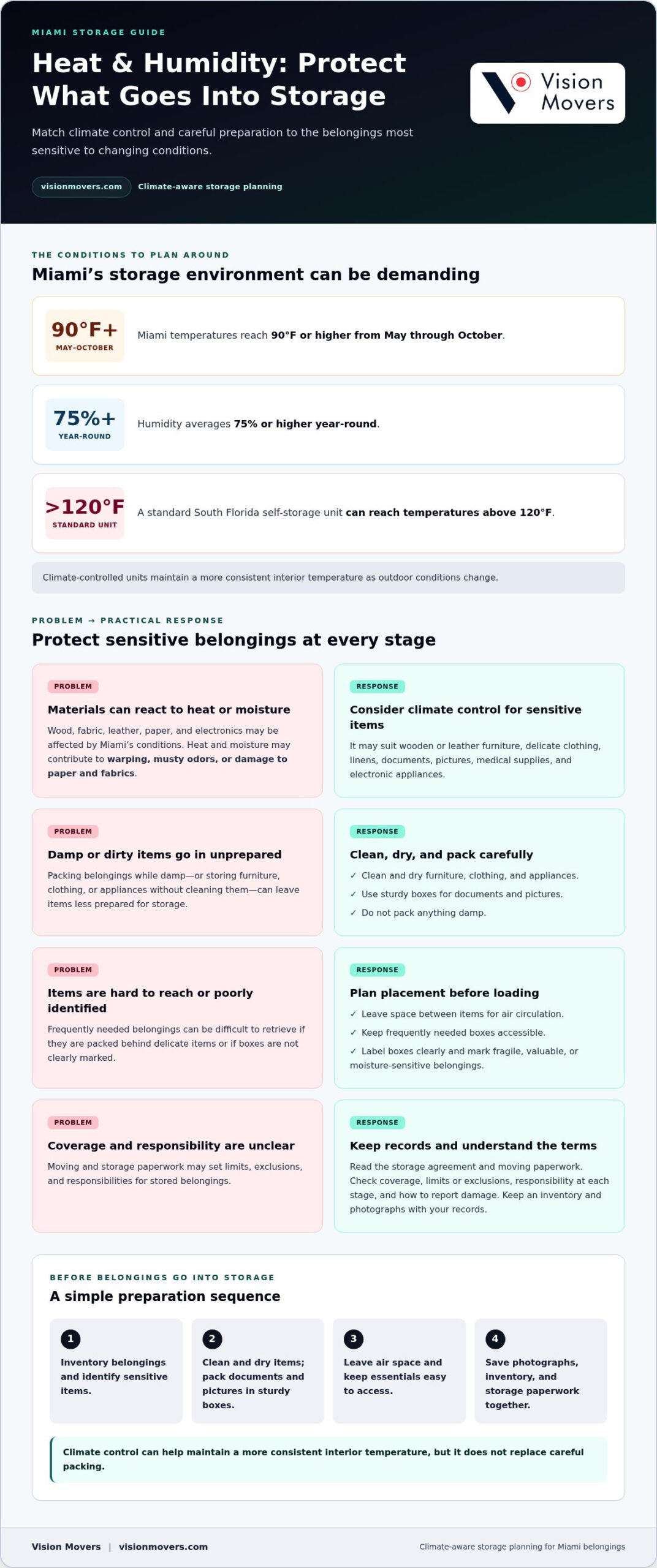
Miami’s heat and year-round humidity can affect belongings during storage, especially items made from wood, fabric, leather, paper, or electronics. Consider each item’s sensitivity and how long it will remain in storage.
Belongings Suited to Climate Control
Climate-controlled storage may suit wooden or leather furniture, delicate clothing, linens, documents, pictures, medical supplies, and electronic appliances. These items can be sensitive to changes in temperature or moisture. Make an inventory before storing, and mark fragile, valuable, or moisture-sensitive belongings to guide packing and placement.
Heat and Humidity Risks
Miami temperatures reach 90°F or higher from May through October, and humidity averages 75% or higher year-round. A standard South Florida self-storage unit can reach temperatures above 120°F. Heat and moisture may contribute to warping, musty odors, or damage to paper and fabrics. Climate-controlled units maintain a more consistent interior temperature as outdoor conditions change.
Prepare belongings before storage: clean and dry furniture, clothing, and appliances; use sturdy boxes for documents and pictures; and avoid packing anything damp. Leave space between items for air circulation and keep frequently needed boxes accessible. These steps help protect belongings, but climate control does not replace careful packing.
Read the storage agreement and moving paperwork to understand coverage for stored belongings, any limits or exclusions, who is responsible at each stage, and how to report damage. Keep an inventory and photographs with your records.
Between leases, storage can keep household belongings together until your next home is ready. For seasonal storage, separate holiday decorations or off-season clothing from everyday essentials. Businesses can also store records, furnishings, or equipment during a workspace transition; label boxes clearly to make retrieval easier.
For help preparing items, packing belongings for storage can be part of a more organized transition.
Security features
Security combines facility access practices, monitoring, and how you store belongings inside the unit. One Miami storage facility advertises 24-hour video monitoring. Cameras can document activity in monitored areas, but they don’t replace careful packing, an accurate inventory, or understanding who can enter the property.
Start by understanding how access works. Find out whether the facility has a controlled entrance, how visitors are admitted, and whether storage areas are separated from public spaces. Keep unit details and access credentials private, and avoid leaving the door open while loading boxes. These habits help limit unnecessary exposure.
Consider the contents, too. Pack electronics, documents, and other sensitive belongings securely, and label them clearly. Photograph valuable items before storing them, then keep the images and inventory outside the unit. Place frequently needed boxes near the front so you can retrieve them without moving delicate items or leaving belongings unattended.
Facility features matter during loading as well as storage. Look for an organized loading area, clear routes, and adequate lighting to see boxes and furniture. If you’re moving a television or computer, plan the route from the vehicle to the unit before unloading. Minimizing pauses in shared spaces can make the process easier to manage.
Choose a location that makes access practical. Compare facilities along your usual route, then consider when you’ll visit and how much you’ll carry. A ground-level unit may mean less handling for heavy furniture, while an upper-floor unit may require using shared corridors or an elevator. Match these conditions to your inventory and loading plan.
Before storing, make a simple security checklist: record the facility’s access process, note its advertised monitoring features, photograph the unit and contents, and keep your inventory current. These steps help you stay organized and notice changes on later visits. Security depends on both facility features and your own careful routines.
Climate-controlled storage for Miami heat and humidity
Miami’s outdoor conditions make temperature control worth considering for belongings sensitive to heat or moisture. Compare the unit’s size, access, and storage environment with the items you plan to keep there.
Available Storage Options
Climate-controlled storage near Miami ranges from 5′ x 5′ to 10′ x 30′, offering choices for boxes, furniture, and larger household loads. Match the space to your inventory, stacking plan, and access needs. Miami has 78 self-storage facilities with climate-controlled units available. Before choosing, decide whether you need room for a full household or only selected belongings during a seasonal transition.
Moving Companies With Storage
When comparing climate controlled storage movers in Miami, distinguish the moving service from the storage environment. A moving company can transport belongings, while the facility provides the unit, so coordinate both with your schedule. Decide whether you need packing, loading, and delivery arranged around storage or only a unit for belongings you’ll transport yourself. A written inventory and a clear destination plan help organize the handoff.
Temperature and Humidity Control
Climate-controlled units maintain a more consistent interior temperature as outdoor conditions change. Miami temperatures reach 90°F or higher from May through October, while humidity averages 75% or higher year-round. A standard South Florida self-storage unit can exceed 120°F. Climate-controlled units typically maintain temperatures between 55 and 80 degrees year-round. That steadier environment is useful for sensitive furniture, electronics, documents, and fabrics.
Before storage, group items by sensitivity and pack them clean and dry. Keep equipment and fragile belongings accessible, and avoid stacking heavy boxes on top of them. Leave room to reach anything you may need, and label cartons by room or category. For seasonal storage, put the items you’ll retrieve first near the entrance.
Climate-controlled storage movers in Miami can help coordinate transportation around a storage plan. Plan your Miami move with the unit and packing needs in mind.
Vision Movers: Local Moving
Vision Movers helps coordinate local moves when belongings need to leave your home before your next one is ready. For a move involving storage, advance planning can help coordinate pickup, transport, and delivery with your timeline.
Vision Movers provides local and residential moving, professional packing, furniture protection, and loading and unloading. These services can help prepare furniture and household belongings for a move across Miami or between homes. Share your inventory and destination details so the moving plan accounts for what needs handling.
If your move crosses state lines, Vision Movers also offers interstate moving. For help planning a local move in Miami, contact Vision Movers or visit visionmovers.com.
Plan Your Next Move With Confidence
Turn your storage plan into a practical moving sequence. Decide which belongings should move first, what needs careful handling, and when you’ll retrieve each group. This gives you a clear plan for the transition from a home, apartment, or workspace. Choosing climate-controlled storage movers in Miami can help coordinate the move with your storage timeline.
Vision Movers can help with moving arrangements that fit your relocation. Share the basic details of your move and the items involved to start a focused conversation about the next steps. Contact Vision Movers about your move, and take the next stage one decision at a time. A clear plan can make your transition feel more manageable.
Frequently Asked Questions
What items need climate-controlled storage in Miami’s hot, humid climate?
Consider storing items made from materials that may react to heat or moisture, such as musical instruments, framed artwork, and sentimental keepsakes. Think about how long each item will be stored and whether damage would be difficult to repair or replace. For example, separate a treasured instrument from durable outdoor gear and select storage conditions with the most sensitive belongings in mind.
Do Miami storage facilities offer pickup, packing, and delivery services?
Some storage arrangements include moving support, while self-storage usually means transporting belongings yourself. Vision Movers offers packing, moving, and storage services to help prepare and transport household items as part of a relocation. Describe what needs moving and its destination to plan the sequence. Storage conditions and services vary by arrangement, so consider moving support separately from the unit’s features.
What insurance coverage and liability apply when movers store belongings in Miami?
Review the storage agreement and moving paperwork to understand what coverage applies, any limits or exclusions, who is responsible at each stage, and how to report damage. Keep an inventory and photographs with your records.
Leave a Reply