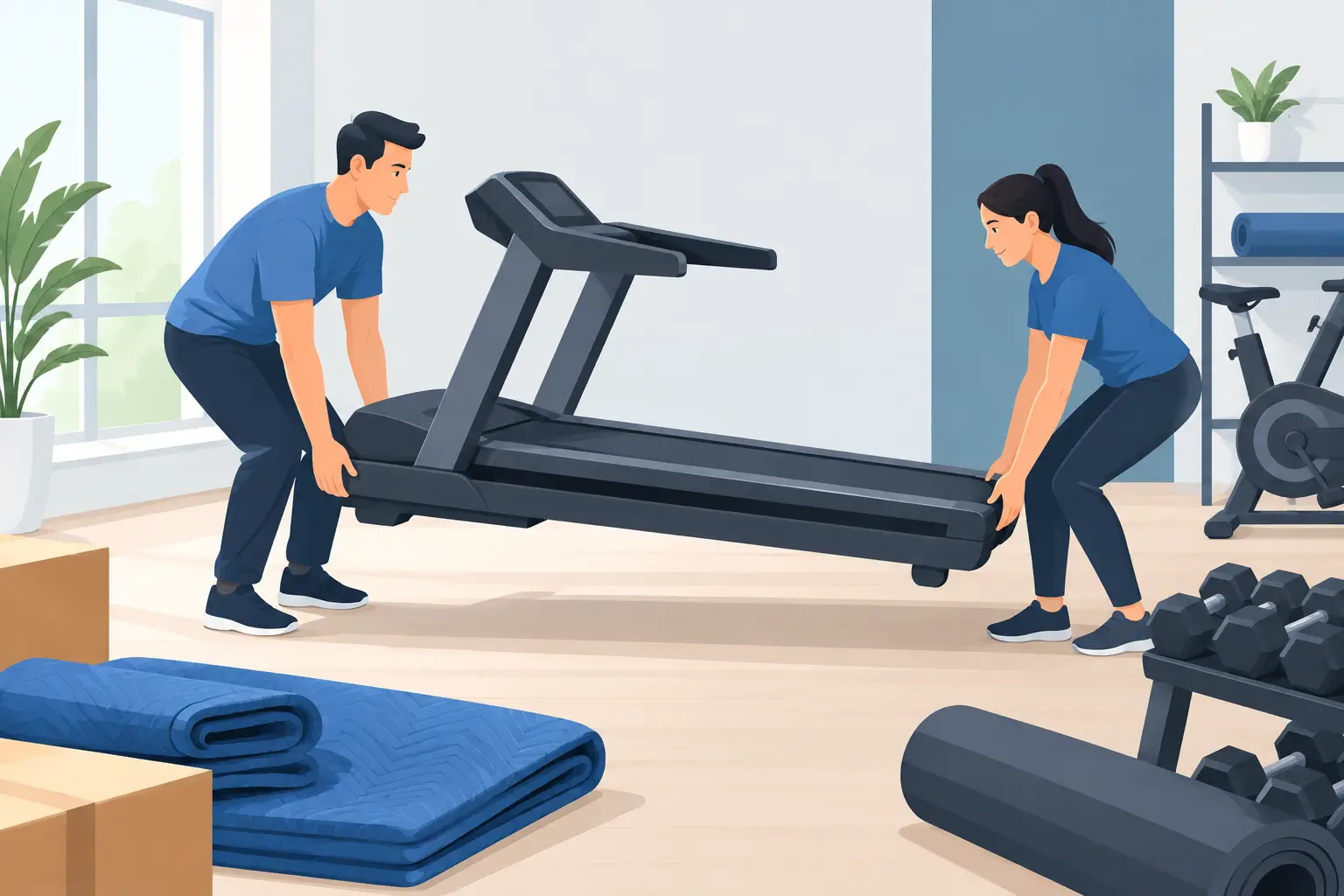
A treadmill that fits neatly in a spare bedroom can become a 300-pound problem when it reaches a condo hallway, stairwell, or elevator. Knowing how to move exercise equipment starts with more than lifting technique. You need a plan for disassembly, weight distribution, building access, vehicle loading, and careful setup at the new location.
For lighter items, a prepared DIY move may be practical. For a commercial gym, a heavy home gym system, or a treadmill with a delicate console, trained movers and the right equipment can prevent injuries, scratched floors, and expensive repairs. The goal is simple: get every machine from point A to point B safely, with no surprises.
Start by Identifying What You Are Moving
Exercise equipment is not one category. A folding yoga mat and a motorized treadmill require completely different handling. Before moving day, make an inventory that includes each item’s dimensions, approximate weight, power requirements, and any removable parts.
Cardio machines such as treadmills, ellipticals, rowing machines, and stationary bikes often have electronic displays, motors, belts, pedals, and moving arms. Strength equipment may include multi-station home gyms, squat racks, benches, dumbbell racks, cable machines, weight plates, and barbells. Each piece has its own balance point and disassembly needs.
Check the owner’s manual before removing bolts or unplugging wires. Many manufacturers provide instructions for relocating the machine, including which components should remain attached and which ones must be secured. If the manual is gone, look for the model number on the equipment frame and obtain the instructions before you begin.
Do not guess at weight. A compact treadmill may weigh 200 pounds, while a commercial-grade unit can exceed 400 pounds. A cable machine can be awkward even when individual pieces seem manageable. Knowing the real weight helps you decide whether friends and a dolly are enough or whether you need professional moving support.
Plan the Route Before You Touch the Equipment
The shortest path is not always the safest one. Measure the equipment after it is prepared for transport, then measure doorways, turns, hallways, elevators, stair landings, and the moving truck opening. Account for handrails, low ceilings, tight corners, and other furniture along the route.
This step matters especially for South Florida apartment and condo moves. Some buildings require elevator reservations, certificates of insurance, loading dock access, or a defined moving window. Confirm those details early. A machine that cannot fit in the service elevator may need partial disassembly or a different loading plan.
Clear the route fully before moving begins. Remove rugs that can slide, protect flooring with runners or moving blankets, and keep children and pets out of the work area. If rain is in the forecast, have plastic wrap and dry blankets ready. Water and electronics do not mix, and wet hands make heavy equipment harder to control.
How to Move Exercise Equipment: Prepare It First
Never move a machine while it is plugged in, loaded with weights, or holding loose accessories. Disconnect it from power, let it cool if it was recently used, and remove batteries if applicable. Coil cords carefully, label them, and tape the coil to the frame or pack it in a marked box.
For treadmills, lower or lock the deck according to the manufacturer’s instructions. Secure the safety key, console, and any folding mechanism. Avoid laying a treadmill on its side unless the manufacturer specifically permits it. Doing so can affect internal components, lubricant distribution, or the console.
For stationary bikes and ellipticals, remove water bottle holders, tablets, detachable screens, pedals, and loose accessories when possible. Wrap displays with padded moving blankets and stretch wrap, but do not place tape directly on screens or finished surfaces. Keep hardware from each machine in separate, clearly labeled bags.
With home gyms and cable machines, take photos before disassembly. Photograph the cable path, pulley positions, hardware, and attachment points from several angles. Label parts as you remove them. This extra preparation can save hours during reassembly and helps ensure the machine is safe to use again.
Weight plates, dumbbells, kettlebells, and barbells should travel separately. Do not leave plates loaded on a bar or machine. Pack smaller weights in sturdy, low boxes rather than filling one oversized carton. Heavy contents can break through weak boxes, damage vehicle floors, or injure someone during unloading.
Use the Right Moving Equipment and Crew
Heavy exercise equipment should be moved with equipment designed for the job. A furniture dolly, appliance dolly, moving straps, ramps, floor protection, and padded blankets all serve a purpose. Using a basic hand truck for a top-heavy treadmill or a loaded dumbbell rack creates unnecessary risk.
A minimum of two capable adults is usually needed for larger cardio equipment, but the correct crew size depends on weight, dimensions, stairs, and obstacles. More people are not automatically safer if no one is coordinating the lift. Assign one person to direct movement, call out steps and turns, and make sure hands stay clear of pinch points.
Lift with your legs, keep the load close to your body, and move slowly. Never twist while carrying weight. If the item starts to shift, set it down in a controlled way rather than trying to catch it. A damaged machine can be replaced. A back, foot, or hand injury can disrupt life far longer.
Professional movers bring more than labor. Trained crews know how to protect walls and flooring, balance awkward loads on dollies, navigate staircases, and secure equipment inside the truck. For high-value machines, multi-piece gyms, or items moving from an upper floor, that experience is often the better value.
Load and Secure Equipment Correctly
Exercise equipment should not be loose in a truck. Place the heaviest pieces low and toward the front of the cargo area, where they are less likely to shift. Use moving blankets between equipment and straps rated for securing cargo. The equipment should be stable without cinching straps so tightly that they damage plastic covers, cables, or consoles.
Keep weight plates and dumbbells on the floor, distributed evenly, and blocked from rolling. Avoid stacking heavy items on a treadmill, bike, or bench. Even if the frame can handle the weight, the display, upholstery, and adjustment mechanisms may not.
For a local move, it can be tempting to make a quick trip with equipment in an open pickup bed. That only works for smaller, weather-safe items that can be completely secured. Most motorized equipment is better protected in an enclosed moving truck, particularly during South Florida rain or humid conditions.
Reassemble With Safety in Mind
At the new home, apartment, or gym, bring equipment into the room before reassembling it. Measure the intended location and leave enough clearance for safe use, ventilation, and maintenance. Treadmills need room behind the deck. Ellipticals and bikes need space around moving pedals and arms.
Reassemble machines using your labeled hardware and reference photos. Tighten bolts to the manufacturer’s recommended specifications, then test each machine without a user before normal operation. Confirm that cables track correctly, locking pins engage, belts run smoothly, and the equipment sits level.
If a treadmill belt has shifted or a cable system does not operate normally, stop and arrange service rather than forcing it. Moving can expose an existing issue, and a poorly reassembled machine can be unsafe.
When It Makes Sense to Hire Professional Movers
DIY moving is reasonable for light equipment, ground-floor access, and short, obstacle-free moves. It becomes less practical when equipment is heavy, electronically complex, expensive, or located in a high-rise building. Stairs, narrow hallways, long carrying distances, and tight deadlines also change the calculation.
Gym owners and facility managers have another concern: downtime. A commercial relocation may require equipment to be removed, transported, placed in a new layout, and reassembled on a schedule that protects member access and business operations. In that situation, organized logistics and flexible scheduling matter as much as muscle.
Vision Movers handles difficult, heavy items with trained crews, dedicated moving equipment, and careful planning from pickup through placement. For a home gym, apartment move, or commercial fitness relocation, a clear estimate and an honest discussion of access conditions can help you choose the right level of support.
A successful move does not end when the truck door closes. It ends when your equipment is safely placed, properly assembled, and ready for the next workout without damage, delays, or a preventable injury.
Leave a Reply