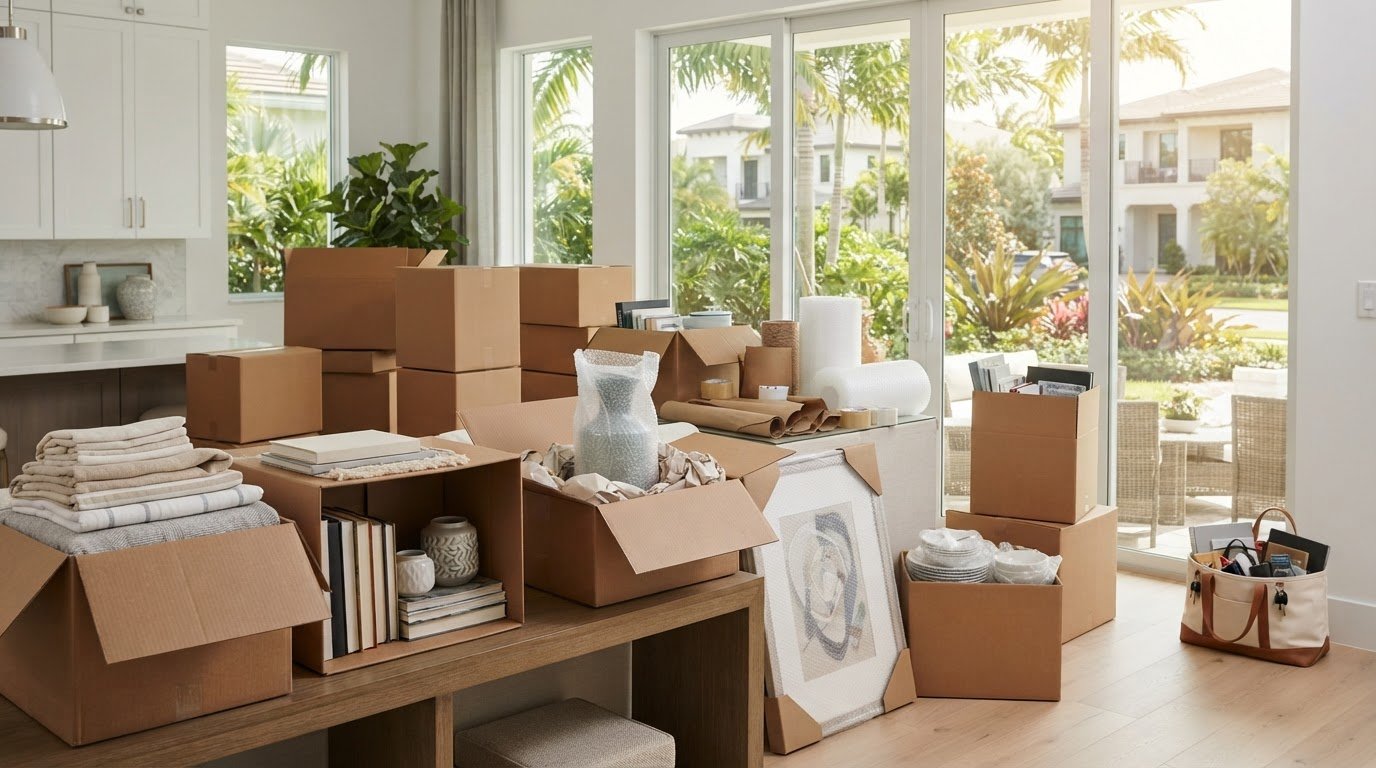
Start packing for a larger Plantation move about 4-6 weeks before moving day; for a smaller move, 2-3 weeks is a practical starting point. Packing help for a move in Plantation can make the process easier to organize, but beginning early gives you more time to sort, gather supplies, and pack room by room.
It’s easy to underestimate how long packing takes, especially when you still need everyday items close at hand. A clear timeline helps you avoid last-minute decisions and gives you time to declutter before sealing boxes.
This guide explains how to set a packing schedule for your move, choose useful supplies and packing services, and sort belongings you no longer need. You’ll also learn how to prepare fragile items and keep essentials accessible, making moving day more manageable.
Key Takeaways
- Choose a packing pace based on the size of your move, then work through one room at a time.
- Decide whether full-home packing or help with selected belongings best fits your needs.
- Match box sizes and protective materials to what you’re packing, especially fragile items.
- Set aside essentials you’ll need before and just after moving day so they stay easy to find.
- Declutter before packing to avoid boxing items you no longer want to take with you.
When should you start packing for a Plantation move?
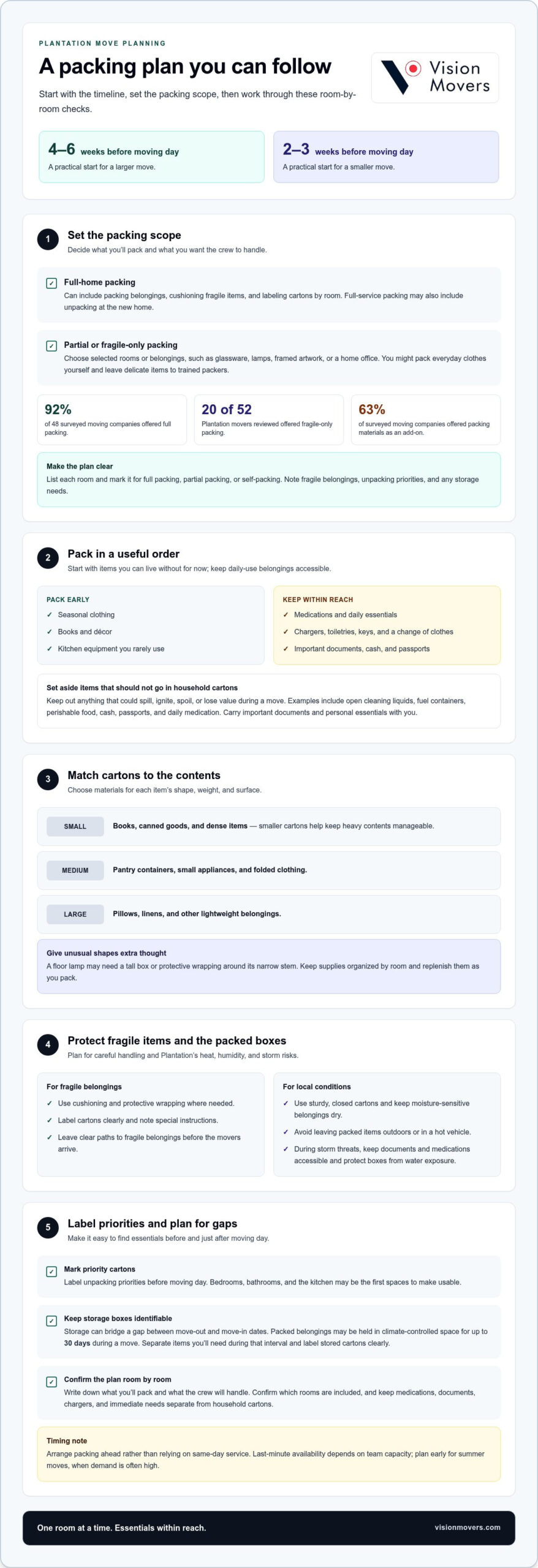
For a larger Plantation move, begin packing about 4-6 weeks before moving day. For a smaller move, start about 2-3 weeks ahead. That gives you time to sort belongings, protect fragile items, and pack rooms without disrupting daily routines. Begin with seasonal clothing, books, décor, and kitchen equipment you rarely use.
Full packing can cover a home, while partial packing focuses on chosen rooms or belongings. Full packing is available from 92% of 48 surveyed moving companies. Fragile-only packing is offered by 20 of 52 movers reviewed in Plantation. For example, you might pack everyday clothes yourself and leave glassware or artwork to trained packers.
Which Plantation movers offer full-service and partial packing? Full packing is available from many Plantation-area movers, and some offer help with selected rooms or fragile items. The right scope depends on how much you want to pack yourself and which belongings need extra care.
Full-service packing can include packing belongings before the move, followed by unpacking at the new home. Unpacking helps restore access to essentials sooner, especially in kitchens and bedrooms. If your move-out and move-in dates differ, storage can hold packed belongings between locations. Ask about controlled storage for items that need a more stable environment.
What items should you keep out of household cartons? Set aside anything that could spill, ignite, spoil, or lose value during a move. Examples include open cleaning liquids, fuel containers, perishable food, cash, passports, and daily medication. Carry important documents and personal essentials with you instead of placing them on the moving truck.
Are there special packing considerations for Plantation’s heat, humidity, or hurricane season? Yes. Use sturdy, closed cartons, keep moisture-sensitive belongings dry, and avoid leaving packed items outdoors or in a hot vehicle. During storm threats, keep essential documents and medications accessible, and protect boxes from water exposure.
Can you get same-day or last-minute packing help in Plantation, FL? Arrange packing ahead rather than relying on same-day service. Last-minute and same-day availability depends on team capacity, and Vision Movers does not always have a team of last-minute movers available. Plan early for summer moves, when demand is often high.
Before the movers arrive, pack daily essentials yourself: medications, chargers, a change of clothes, toiletries, and keys. Label them clearly and keep them separate from household cartons. Confirm which rooms are included in the packing plan, and leave clear paths to fragile belongings.
Packing and unpacking services
A packing plan should specify the rooms, belongings, and tasks included. One household may need every room packed, while another needs help only with kitchenware and framed artwork. Write down what you’ll pack and what the crew will handle. This division prevents duplicate work and keeps essentials accessible during the move.
Full packing can include placing belongings in cartons, cushioning fragile items, and labeling boxes by room. Partial packing focuses on selected items, such as glassware, lamps, or a home office. Organize the scope room by room. A written inventory or clear packing notes help track special instructions and identify priority boxes.
Unpacking services can help turn labeled cartons into usable rooms after delivery. Decide which spaces matter first, such as bedrooms, bathrooms, or the kitchen. Label priority cartons before moving day so the team can start with those items. Keep medications, documents, chargers, and other immediate needs separate and within your reach.
Packing costs depend on the amount of belongings, service scope, materials, access, and timing. Full-home packing involves different work and supplies than packing only fragile items. Vision Movers offers transparent pricing with no hidden fees, and exact costs are provided through a free personalized estimate. Describe the packing and unpacking tasks you need so the estimate reflects your move.
Ratings can help you compare movers, but read the review details rather than relying on a single score. Look for comments about packing care, communication, punctuality, and how teams handled fragile items. Compare recent, specific examples with the service you need. A nationwide company and a local Florida moving company may have different service areas, so match the rating to your relocation type.
Before choosing a packing plan, list each room and mark it for full packing, partial packing, or self-packing. Note fragile items, unpacking priorities, and storage needs beside each room. This simple checklist makes your priorities clear and helps you compare service scopes without overlooking a bedroom or storage box.
Packing supplies and materials
Choose packing materials based on each item’s shape, weight, and surface. Paperback books need smaller cartons than lightweight bedding. A floor lamp needs a tall box or protective wrapping around its narrow stem. Sorting supplies by room before packing helps prevent rushed choices, such as using an oversized carton for heavy kitchen items.
Packing materials are offered as an add-on by 63% of moving companies surveyed. Ask for the materials to match the planned packing scope, whether that means a full home or selected belongings. For a flexible approach, keep a supply area near the entry and replenish it as rooms are packed. This makes it easier to see what remains.
- Small cartons: Use them for books, canned goods, and dense items that become heavy together.
- Medium cartons: Pack pantry containers, small appliances, and folded clothing.
- Large cartons: Reserve them for pillows, linens, and other lightweight belongings.
- Wrapping: Use paper or cushioning to separate dishes, glassware, and picture frames.
- Tape and labels: Seal carton bottoms securely and mark the destination room and contents.
For fragile belongings, prevent items from shifting inside the box. Wrap each glass or dish separately, then fill empty spaces with cushioning. Put heavier items below lighter pieces, and avoid stacking loose objects in a carton. Label a box of framed photos with the destination room and mark which side should stay upright.
Plantation’s warm, humid conditions make dry packing important. Don’t wrap damp towels or recently cleaned kitchenware before they’re fully dry. Keep cartons indoors rather than leaving them exposed outside. If belongings need controlled storage during a move, use clean, dry packing materials and label stored boxes clearly.
For moves within Broward County, set up supplies where the packing will happen. Keep tape, labels, and scissors together in a small caddy, away from packed cartons. Separate used materials from clean supplies, and check empty boxes for small items before flattening them. These steps reduce clutter and keep the work area usable.
A cross-country move calls for clear labels and careful cushioning because belongings travel farther. Mark cartons by room and note contents, such as “kitchen plates” or “office cables.” Keep important papers and daily essentials separate from packed goods. Before sealing a carton, check that its contents are dry, stable, and protected from shifting.
As you gather supplies, make a room-by-room list of what you’ll need. Include box types, wrapping, tape, and labels for each space. This helps you spot shortages early and plan flexibly, whether you pack yourself or use professional packing help.
Packing timelines for large and small moves
Set your packing start date by move size, then adjust for distance, fragile belongings, and daily routines. For a larger Plantation move, start about 4-6 weeks before moving day. For a smaller move, begin about 2-3 weeks ahead. A home with several bedrooms, a garage, and delicate furniture needs more preparation than a lightly furnished apartment.
Use the calendar as a framework, not a reason to pack everything immediately. Keep daily-use items available until closer to moving day. Start with belongings you can live without, then work toward kitchen equipment, clothing, and bathroom supplies. For example, pack holiday decorations early, but leave the coffee maker accessible until the final stretch.
A practical schedule follows the order in which you use items and the care they need:
- Plan the rooms: Walk through each space and identify what you’ll pack, donate, or leave accessible. List large furniture and fragile pieces separately.
- Pack low-use belongings: Box books, seasonal décor, spare linens, and stored kitchenware first. Label each carton with its destination room.
- Protect delicate items: Wrap glassware, framed art, and lamps individually. Keep each carton stable, with no loose space for items to shift.
- Finish daily-use areas: Pack remaining toiletries, cookware, and work supplies near moving day. Keep medication, documents, chargers, and keys with you.
- Prepare the final walkthrough: Check closets, drawers, shelves, and storage spaces. Empty drawers before moving day to reduce damage risk and make furniture lighter to handle.
Distance changes what needs attention early. For a longer move, decide which belongings must travel with you and which can be packed for delivery later. Keep essential documents and a small set of clothes separate from cartons. This helps you manage a long-distance trip without needing to unpack everything immediately.
Plantation’s busiest moving season typically runs from May through September, with peak demand in summer. If your move falls in that period, organize packing and moving dates early. A clear inventory helps you estimate the work, identify fragile items, and keep furniture preparation from becoming a last-minute task.
Professional packing can fit into the same schedule. Decide whether you need help with the whole home or specific rooms, then mark those spaces on your inventory. Share handling notes for artwork, electronics, or furniture with delicate finishes. A written plan gives the packing crew clear priorities and keeps the final days focused on essentials.
Decluttering before moving
Sort belongings before packing so you only box items you want in your next home. Start with one small area, such as a bathroom cabinet or hall closet, then decide what to keep, donate, sell, or discard. Comparing duplicates can make choices easier: keep the toaster you use rather than packing both.
Use a simple test for each item: will it fit your next home, serve a purpose, or hold lasting meaning? A spare chair may suit a larger living room but take up needed space in a smaller apartment. Measure bulky furniture and compare its dimensions with the rooms and doorways at your destination.
- Keep: Set aside belongings you use regularly or need at your new home.
- Donate: Separate clean, usable clothing, kitchenware, and books from household goods.
- Sell: Photograph items in good condition and keep sale arrangements separate from packed boxes.
- Discard: Remove broken, incomplete, or unusable items from the moving inventory.
- Decide later: Put sentimental belongings in one clearly marked area, then review them together.
Decluttering also makes your move inventory more accurate. List the furniture and boxes you plan to transport, including specialty items such as a piano, pool table, or safe. These need careful handling and space planning, so decide early whether they belong in your next home. Don’t leave that decision until loading day.
Keep donation and sale items separate from belongings scheduled to move. Mark the area clearly, and don’t place unwanted items beside packed cartons. If a pickup is arranged, keep items secure and accessible without blocking entryways. For furniture, note whether it needs disassembly before leaving your home.
Summer is a busy moving season in Plantation, so avoid leaving sorting until the final days. Work through closets, storage areas, and kitchen cabinets before packing those rooms. A dated checklist can show which spaces are finished and which still need decisions. That record also helps prevent a discarded item from being packed by mistake.
Don’t pack hazardous materials with household belongings. Set aside items that need separate handling rather than placing them in a carton for transport. Keep essential papers, medications, and valuables with you during the move. Separating these items keeps them easy to find and your moving inventory clear.
Before sealing cartons, compare each room’s keep list with its packed boxes. If the list includes five kitchen appliances but the new home has limited counter space, reconsider the extras. A smaller, intentional inventory means fewer belongings to unpack and a clearer plan for placing furniture at your destination.
Vision Movers: Local Moving
Vision Movers helps coordinate Plantation relocations with local and residential moving services. For destinations farther away, interstate and long-distance moving services can support moves across state lines and beyond. Share your move date, origin and destination, home size, and any furniture or fragile belongings needing careful handling. These details help shape a plan around your needs.
Turn to Vision Movers when you’re ready to organize the transport and handling of your household belongings, or when coordinating a commercial move. For a straightforward next step, visit visionmovers.com to contact Vision Movers about your move.
Make Your Next Move Easier to Coordinate
Turn your packing decisions into a clear moving-day plan. Decide which tasks you’ll handle, where you want professional support, and which belongings need special attention. This gives you a practical starting point for arranging packing help for moving in Plantation and coordinating your household’s move.
Vision Movers offers local, residential, interstate, and long-distance moving, along with packing and unpacking services. The team can coordinate packing support with your relocation. Share your priorities and destination to discuss a plan for your move.
Contact Vision Movers about packing help and take the next step toward a more organized move. With a plan that fits your belongings and schedule, you can approach moving day with greater confidence.
Frequently Asked Questions
Thinking About Moving in Plantation?
For packing help for moving in Plantation, start by listing your move date, destination, and belongings needing special handling. This helps you decide what to pack yourself and what support to arrange. A Plantation move may connect with South Florida destinations such as Miami, Fort Lauderdale, Boca Raton, Brickell, Weston, Pompano Beach, Broward County, Hollywood, Dania Beach, Coral Springs, or Parkland. Note building access and parking details early, too.
What packing services do moving companies offer in Plantation, Florida?
Packing services can include full-home packing, partial packing, fragile-item packing, and unpacking. The plan can specify which rooms are handled, whether cartons are labeled by room, and how special belongings are prepared. For example, you might arrange help packing a home office while keeping work equipment accessible until moving day. Vision Movers offers professional packing and unpacking services as part of its moving support.
How much do professional packing services cost in Plantation, FL?
Packing costs depend on the amount of belongings, rooms, service scope, fragile items, access, and whether unpacking is included. Vision Movers offers transparent pricing with no hidden fees, and exact costs are provided through a free personalized estimate. Describe unusual items and packing priorities so the estimate reflects the work involved.
Do Plantation moving companies provide packing materials, and what do they cost?
Some moving companies provide packing materials, while others may let you supply some materials yourself. The cost depends on the types and quantities needed, such as cartons, wrapping, and cushioning for fragile belongings. For a personalized estimate, identify whether you need materials for every room or only selected items. Vision Movers’ free estimate gives you a way to discuss packing needs and understand the costs before planning.
How far in advance should I book packing help in Plantation?
Arrange packing help once your moving date and service needs are clear, especially for a summer move. Scheduling depends on crew availability, the amount to pack, and whether packing is coordinated with the move. Before booking, prepare a room list and note priority items, such as artwork or kitchen essentials. This helps the team understand the scope and plan around your relocation.
How should I compare packing estimates and check a mover’s license and insurance in Florida?
Compare estimates by matching the tasks, materials, packing areas, and unpacking included, rather than comparing totals alone. Vision Movers is fully licensed and fully insured for local and long-distance moves. All belongings are insured, and additional insurance is available if needed. The company offers a free personalized estimate with transparent pricing and no hidden fees, so you can understand the proposed work and cost before moving forward.
Which Plantation movers offer full-service and partial packing?
Vision Movers can pack a full Plantation home or selected fragile rooms based on your specific requirements. Full packing and partial packing options are available for selected rooms or belongings, ensuring your relocation is handled with professional care from start to finish.
Leave a Reply