
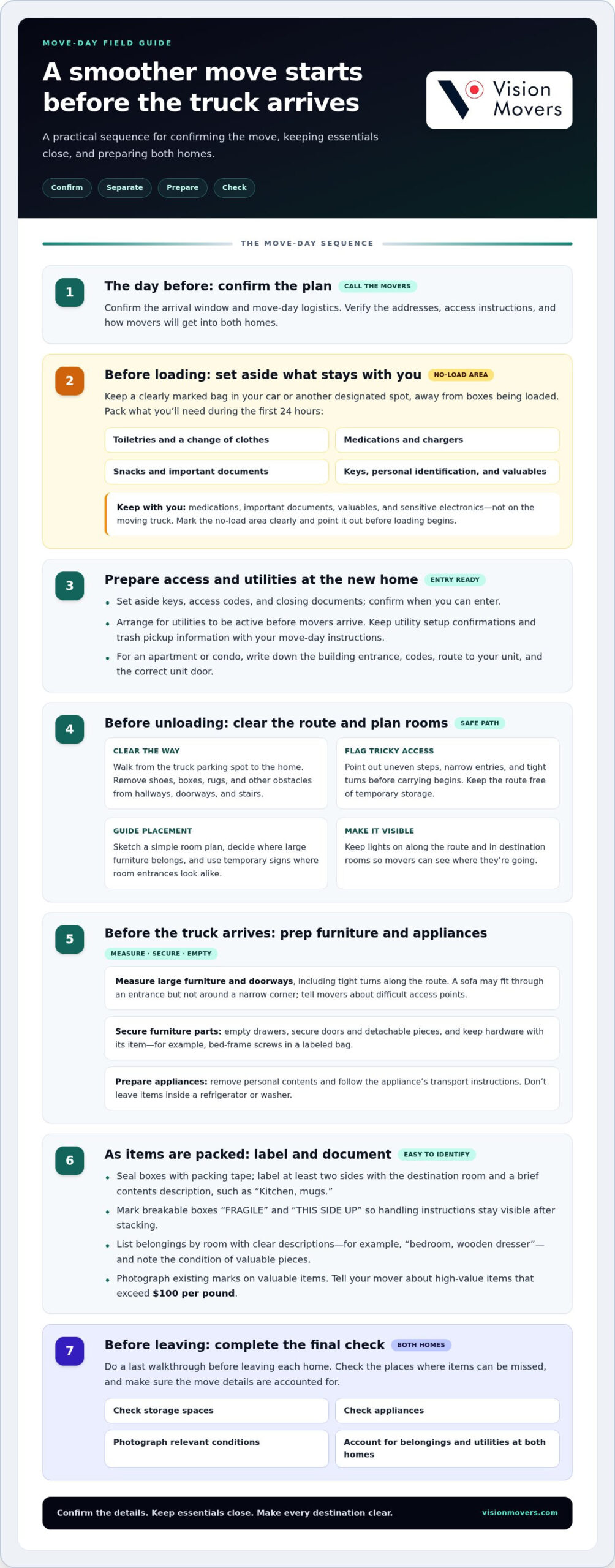
Move day runs more smoothly when the details are settled before the truck arrives. Knowing how to prepare for movers’ arrival starts with contacting the moving company the day before to confirm the arrival window and logistics. Arrange access at both homes, and keep essentials, important documents, medications, valuables, and sensitive electronics with you rather than on the truck.
It’s natural to focus on packing, but clear instructions and a few ready-to-go essentials can make the day easier to manage. A practical plan helps movers work efficiently while keeping the items you’ll need close at hand.
This guide walks you through confirming addresses, timing, and access; preparing both homes; setting aside items to transport with you; and completing a final check before leaving. Follow a straightforward sequence from the day-before call to the last walkthrough.
Key Takeaways
- Confirm the arrival window, addresses, access instructions, and move-day logistics with your movers the day before.
- Activate utilities at the new home, clear pathways, and decide where large furniture should go before unloading.
- Keep medications, important documents, valuables, sensitive electronics, and first-night essentials with you instead of loading them on the truck.
- Mark fragile or valuable belongings clearly, and tell your mover about high-value items that exceed $100 per pound.
- Before leaving, check storage spaces and appliances, photograph relevant conditions, and make sure belongings and utilities are accounted for at both homes.
Prepare utilities and furniture placement at the new home
To plan how to prepare for movers’ arrival, arrange access, utilities, and furniture placement before the truck reaches your new home. Tipping is optional in the United States, and there’s no single required amount. Base any tip on the service and your budget.
-
Arrange keys and utility access
Set aside keys, access codes, and closing documents before moving day. Confirm when you can enter the property, and keep the keys somewhere you can reach while the truck is being loaded. Arrange to have utilities active before movers arrive, so lights and essential services work during unloading. Keep utility setup confirmations and trash pickup information with your move-day instructions.
For an apartment or condo, prepare building entry details as well as unit access. Write down the correct entrance and any codes, then note the route from the entrance to your unit. If the building has similar corridors, identify the door to your unit. This helps movers follow your directions without searching through the property.
-
Make unloading areas safe and accessible
Walk the route from the truck’s parking spot to the home before unloading starts. Clear shoes, boxes, rugs, and other obstacles from hallways, doorways, and stairs. Check each turn where furniture will pass, and point out uneven steps or a narrow entry before carrying begins. Keep the path free of temporary storage so movers can carry belongings without navigating around clutter.
Decide where furniture belongs before the first items arrive. Sketch a simple room plan, such as placing the sofa against the living-room wall and the bed in the bedroom near its intended outlet. Mark room doors with temporary signs, especially when several rooms have similar entrances. Keep lights on along the route and in destination rooms so the crew can see where they’re going.
-
Prepare furniture and appliances
Measure large furniture and doorways before moving day, including tight turns along the route. Compare a sofa’s dimensions with the entry and hallway, not just the front door. A piece may fit through an entrance but not around a narrow corner. Tell movers about difficult access points before unloading, and make furniture placement instructions easy to see.
Empty drawers and remove loose items from furniture, then secure doors and detachable parts. Keep hardware with the item it belongs to, such as bed-frame screws in a labeled bag. For appliances, remove personal contents and follow the appliance’s instructions for preparing it for transport. Don’t leave items inside a refrigerator or washer. Finish your plan for how to prepare for movers’ arrival with a room-by-room placement guide, so each item has a clear destination.
Setting aside items that should not go on the truck
Pack what you’ll need immediately in a separate bag, and identify anything movers shouldn’t load. Clear labels and a designated no-load area distinguish personal essentials from boxes headed to the new home.
Pack boxes securely, seal each with packing tape, then label at least two sides with its destination room and a brief description of the contents. Mark fragile boxes “FRAGILE” and “THIS SIDE UP” so handling instructions remain visible after stacking.
-
Separate essentials from items being loaded
Set aside a first-night bag with essentials for the first 24 hours in your new home. Include toiletries, a change of clothes, medications, chargers, snacks, and important documents. Keep valuables and sensitive electronics with you, not on the moving truck. Place the bag in your car or another clearly designated spot, away from boxes that are being loaded.
Before loading begins, point out the separate area and identify anything that must stay with you. A bright label on the bag or a closed room makes the boundary clear. Keep keys, personal identification, and any documents you’ll need during the move close at hand.
-
Sort items for donation, sale, or disposal
Choose one area for belongings that aren’t moving, then sort them into donation, sale, and disposal groups. For example, put a usable lamp in the donation pile, an item you plan to sell in a separate staging area, and unwanted clutter in a disposal group. Keep these items away from packed boxes so they aren’t loaded by mistake.
- Choose who packs each item. If you’re packing yourself, seal boxes with packing tape before labeling them. Write the destination room and a brief contents description on at least two sides, such as “Kitchen, mugs.” Add “FRAGILE” and “THIS SIDE UP” to boxes containing breakable items.
For professional packing, identify the items you’ll keep with you before packing starts. Set aside documents, medications, valuables, and sensitive electronics, then make your no-load area easy to recognize. If you’d like assistance packing household belongings, professional packing services can help prepare items for the move.
How should I prepare for moving day?
The day before movers arrive, contact the moving company to confirm the arrival window and move-day logistics. Set out your inventory, identify special handling needs, and keep personal essentials separate from belongings being loaded.
-
Create a household inventory
List your belongings by room before loading begins, and give each item or box a clear description. For example, write “bedroom, wooden dresser” rather than just “furniture.” Note the condition of valuable pieces and photograph any existing marks. Your inventory can help track items during loading and serve as a reference if you need to file a claim.
Tell your mover about high-value items, defined as items valued at more than $100 per pound, according to the Office of the Federal Register. Identify each item clearly, such as artwork, jewelry, or a small collectible, and keep its description with your inventory. Don’t rely on a general box count to communicate that an item needs special attention.
Keep the inventory accessible rather than packing it inside a box. A printed list or saved digital copy lets you compare your belongings with the load as the move progresses.
-
Review the inventory during the arrival walkthrough
Walk through the home with the movers before loading starts, and use your inventory to point out items requiring careful handling. Show the team fragile or valuable belongings, then explain any particular concerns. A marked glass cabinet, for example, is easier to identify when you point it out directly.
Compare the items in each room with your list as the crew prepares to load them. Note anything that isn’t moving, including belongings set aside for donation or personal transport. Keep those items visibly separate so they aren’t confused with the household load. If a description is unclear, revise it before the item leaves the room.
Use the walkthrough to communicate practical details, not just inventory entries. Point out furniture that needs special care, and make sure the crew understands which items are excluded from loading. Clear directions help match the inventory to the belongings being moved.
-
Complete preparations before moving day
Finish preparing the day before by organizing your inventory, setting aside personal essentials, and gathering your moving documents. Contact the moving company to confirm the arrival window and logistics, including special handling requests. Keep the inventory and documents together, but separate from boxes and bags going onto the truck.
Review the list for high-value, fragile, or easily overlooked items. Make each description specific enough to distinguish one item from another, such as “blue ceramic lamp” instead of “lamp.” Photograph valuable belongings and keep the images with your records. These steps give you a clear reference during loading and after delivery.
Make the inventory easy to use: arrange entries by room, leave space for notes, and keep a pen or device nearby. You’ll be ready to compare the list with items as movers load them.
Completing a final move-day check
Use a written checklist to keep the day organized, from the first load to the final walkthrough. Allow time for access, transport, and a careful check at both homes.
- Set a practical timeline. Arrange the day around the movers’ arrival, loading, travel, and unloading. Duration varies with the move’s complexity, volume, access conditions, packing services, and distance from parking to the entrance. Loading a household truck can take a few hours, and a one-bedroom apartment move may also take a few hours. Travel between homes can take from a few minutes to several days, depending on distance. Keep important documents and your checklist accessible during transport.
- Declutter before the final packing push. Start as early as possible, since decluttering is often the most time-consuming preparation task. Work through one area at a time, such as a pantry shelf, bedroom closet, or garage corner. Separate belongings you’re keeping from items for donation, sale, or disposal. Removing unwanted items before moving day reduces what needs packing and loading, and makes it easier to spot belongings left behind.
- Make arrangements for household members. Keep pets in a quiet, secure room or arrange care elsewhere during the busiest part of the move. For example, place a pet in a closed room away from doorways used for loading. If younger children will be present, arrange childcare during loading and unloading if possible. These steps keep children and animals clear of active carrying paths, open doors, and appliances being moved.
- Photograph key conditions and readings. Before leaving, photograph valuable belongings and utility readings when applicable. Photograph existing wall or floor damage, then take pictures of empty rooms after removing your items. These images document the home’s condition at departure. Include spaces that can be overlooked, such as a scuffed hallway wall or an empty utility area, and keep the photos with your move documents.
- Complete a room-by-room final check. Before leaving the old home, inspect closets, cabinets, drawers, storage areas, and appliances. Check windows, doors, lights, and trash as well. At the new home, confirm belongings are accounted for and utilities work before movers leave. Compare delivered items with your inventory, then check each room and appliance area for items placed out of sight. Mark completed rooms on your checklist so no space is skipped.
Confirming movers, addresses, arrival times, and access details
Use the day-before call to settle practical details that can delay a move: who is arriving, where the truck is going, and how the crew will enter. Keep one written record of the agreed instructions.
-
Confirm the movers and addresses
Contact the moving company the day before the move and confirm the number of movers expected, truck size, and payment method. Check the pickup and destination addresses against your moving documents, including apartment or unit details. Read the destination address back clearly, then share specific driving directions if the usual route could lead to the wrong entrance.
Keep the confirmed details in one message or written note, rather than relying on memory during a busy morning. Include special handling requests, such as a fragile item that needs careful attention, and identify belongings set aside for you. If the pickup and destination addresses are easy to confuse, label each one “pickup” or “destination” in your notes.
Check that the destination instructions name the correct building entrance, not just the street address. A large apartment complex, for example, may have separate entrances for residents, loading, and deliveries. Clear directions help the crew reach the right place without a last-minute search for the correct access point.
-
Confirm arrival times
Ask the moving company to confirm the arrival window the day before the move. Write down the expected time and make sure everyone helping at home knows when to be ready. Keep your phone available, and avoid scheduling another appointment that could take you away during the arrival window.
Use the confirmed timing to plan when doors will be unlocked and the loading area cleared. If you live in a building with a designated loading entrance, be ready to direct the crew there. Keep the arrival information with your checklist so you can refer to it without searching through messages.
Tell other household members which entrance movers will use and where fragile belongings are located. This keeps the route clear of supplies and prevents anyone from moving an item that needs special handling. A clear arrival plan keeps the first walkthrough focused.
-
Arrange access details
Confirm when you can enter the destination property, then have keys or access codes ready before the truck is loaded. Put them somewhere you can reach quickly, rather than inside a box or bag headed for transport. For a gated community, write down the gate instructions and share them with the person meeting the truck.
Prepare access notes for both homes, including the correct entrance, parking location, and any codes needed to open doors. Clearly mark which instructions apply to pickup and which apply to delivery. Tell the crew about a locked elevator or narrow entry before unloading begins, so the team can follow the right route.
Keep essential access details separate from packed contents, and review them before the crew arrives. Plan your moving details with a clear record of timing, addresses, and entry instructions.
Vision Movers: Local Moving
Vision Movers provides residential moving support for local moves, helping you focus on preparing your home and keeping essentials close. Its services also include interstate and commercial moving. Share your move details and priorities to discuss the support that fits your transition.
If you’ve organized access instructions and your inventory, and set aside items for personal transport, you’re ready to put your plan into action. Moving support can help manage the physical work of loading and unloading while your checklist keeps important decisions within reach.
Contact Vision Movers to discuss your move and the support you need.
Make Your Moving Plan Ready for Action
A useful moving plan should work for everyone involved, not just the person who packed the boxes. Choose one person to answer questions and share essential instructions, especially if family members or roommates will be at either home. Having a single point of contact helps keep decisions clear when the day gets busy.
Before moving day, turn your notes into a simple handoff: identify priorities, explain special handling needs, and make sure everyone helping knows what stays with you. Knowing how to prepare for the movers’ arrival also means giving yourself room to focus on settling in instead of coordinating every detail at once.
Vision Movers can help with your next move. Contact Vision Movers to discuss your relocation and the support that fits your plans.
With a clear handoff and the right help, you can begin the next chapter prepared to settle in.
Frequently Asked Questions
What should I expect on moving day?
Expect a sequence of arrival, a brief discussion of priorities, loading, transportation, and unloading. Stay available to answer questions, especially if a box’s contents or destination room isn’t obvious. Keep your phone, identification, and move documents with you, not inside a packed carton. In South Florida, building access or traffic can affect the day’s schedule, so keep your plans flexible around the agreed arrival window.
What items should I move myself instead of giving to movers?
Keep important documents, medications, valuables, sensitive electronics, and essentials you’ll need immediately with you. For example, carry identification, prescription medication, your phone, chargers, and a laptop in a personal bag. Keep jewelry or irreplaceable keepsakes close rather than mixing them into household boxes. This gives you direct access during travel and avoids searching through the load at your new home.
How can I protect floors, walls, pets, and children during a move?
Protect high-traffic areas with suitable floor coverings, and move small décor away from narrow hallways before carrying starts. Keep pets in a quiet, secure room or arrange care elsewhere during busy loading and unloading. If younger children will be present, arrange childcare if possible. In an apartment or condo, keep shared corridors clear and follow the building’s instructions for protecting common areas.
Should I reserve parking or an elevator for movers, and how far ahead?
Yes, arrange parking and elevator access if your building requires reservations or has designated moving procedures. The lead time depends on the property’s rules and available booking slots, so contact building management as soon as your move date is set. Ask about the approved loading entrance, elevator schedule, and any required protective coverings. Keep those instructions with your move-day notes.
What should I confirm with a moving company before arrival?
Confirm the arrival window, pickup and destination addresses, directions, expected crew size, truck size, special handling requests, and accepted payment methods. Read back unit numbers and entrance details, especially for a property with multiple buildings. Share any access codes and identify belongings requiring extra care. A concise written note keeps the same instructions handy during the arrival conversation and avoids relying on memory.
What should I do when movers arrive and before they leave?
At arrival, greet the crew, clarify the day’s priorities, and point out items that need special attention or should stay behind. Before leaving the old home, check closets, drawers, storage spaces, and appliances. At the destination, compare delivered belongings with your inventory and inspect each room before the crew leaves. Confirm the new home’s utilities work, then report any missing items or concerns promptly.
Leave a Reply