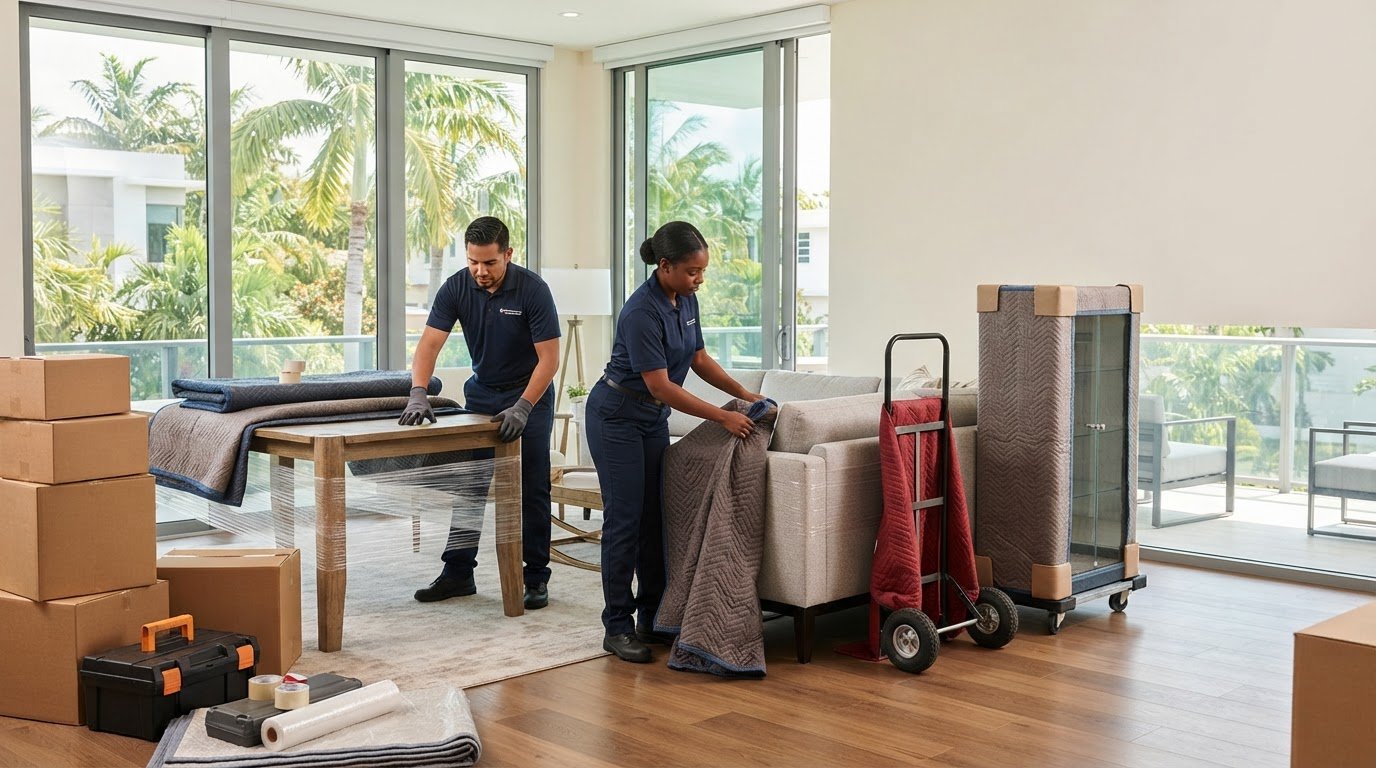
Good furniture protection starts before the first blanket goes on. Learning how to protect furniture during a move means more than wrapping each piece: clean surfaces, smart disassembly, suitable padding, and secure loading all help reduce the risk of scratches, dents, and shifting in transit.
If you’re unsure which pieces need to come apart or how to protect wood, glass, upholstery, and delicate corners, you’re not alone. Heavy furniture can also be difficult to prepare safely when time, supplies, or helping hands are limited. A clear sequence makes the work easier to plan.
This guide explains how to prepare furniture, choose protection for different surfaces, and secure pieces for transport. You’ll also learn when professional packing and handling can reduce the effort involved. Vision Movers provides packing and furniture handling for moves in South Florida, and is fully licensed and fully insured for both local and long-distance moves.
Key Takeaways
- Learn how to protect furniture during a move by preparing each piece before wrapping and loading it.
- Match protection to the surface and parts: clean and dry furniture first, then protect delicate finishes, corners, drawers, and detachable pieces appropriately.
- Handle manageable preparation yourself, and consider professional help for bulky furniture or difficult lifting and maneuvering.
- Use an organized moving-day sequence: document pieces, measure furniture and pathways, and check protection before loading.
- Vision Movers supports furniture protection through packing and careful handling, and is fully licensed and fully insured for both local and long-distance moves.
Why Protecting Furniture During a Move Starts Before Moving Day
A dining table passed down through the family, a sofa that’s difficult to replace, or a glass cabinet you’ve owned for years can carry more than practical value. Protecting those pieces starts before moving day, when there’s time to spot potential issues and plan how each item will be handled. Wrapping alone can’t make up for a loose component or furniture that won’t fit through a doorway.
Furniture protection is the preparation that reduces a piece’s exposure to damage from handling and transit. Follow a steady sequence: assess each item, prepare it, cushion exposed surfaces, secure loose parts, then load it so it stays stable. This turns how to protect furniture during a move into a series of manageable decisions rather than a last-minute scramble.
Start with a room-by-room inventory. Note which pieces are bulky, fragile, upholstered, or finished with a surface that could mark easily. A general overview of a moving company describes equipment and materials used in moving, including furniture pads, which helps explain why planning for the right protection matters.
Which furniture needs extra attention before a move?
Different pieces call for different preparation. Large furniture may need to be measured and assessed for disassembly. Glass surfaces and corners need protection from contact. Upholstered pieces benefit from staying free of dirt and moisture, while finished wood should be clean before it’s covered. During your inventory, note existing marks, wobbly joints, loose handles, and detachable parts. Take clear photos of each item before packing so you have a visual record of its condition.
Make the inventory useful, not complicated. Record the room, the item, and any detail that could affect carrying or wrapping. A cabinet with a glass door needs a different plan from a sturdy desk, even if both are in the same room. Flagging that difference early helps you gather suitable materials and avoid rushed choices on moving day.
What can go wrong when furniture is rushed?
Loose doors and drawers can swing open during lifting, while removable legs or shelves may shift if they aren’t secured separately. Carrying a bulky item through a narrow hallway also leaves less room to adjust your grip. If the route isn’t clear, furniture may brush a wall or collide with another item. These problems aren’t inevitable, but taking time to assess the piece and its path can make handling more controlled.
Before moving a piece, check whether anything can open, slide, or detach, and consider whether the planned route has tight turns or obstacles. Clear the route and decide how the item will be carried before lifting. For particularly heavy or difficult pieces, professional packing and furniture handling can help reduce the physical demands of the move.
How to Protect Furniture Surfaces, Drawers, and Detachable Parts
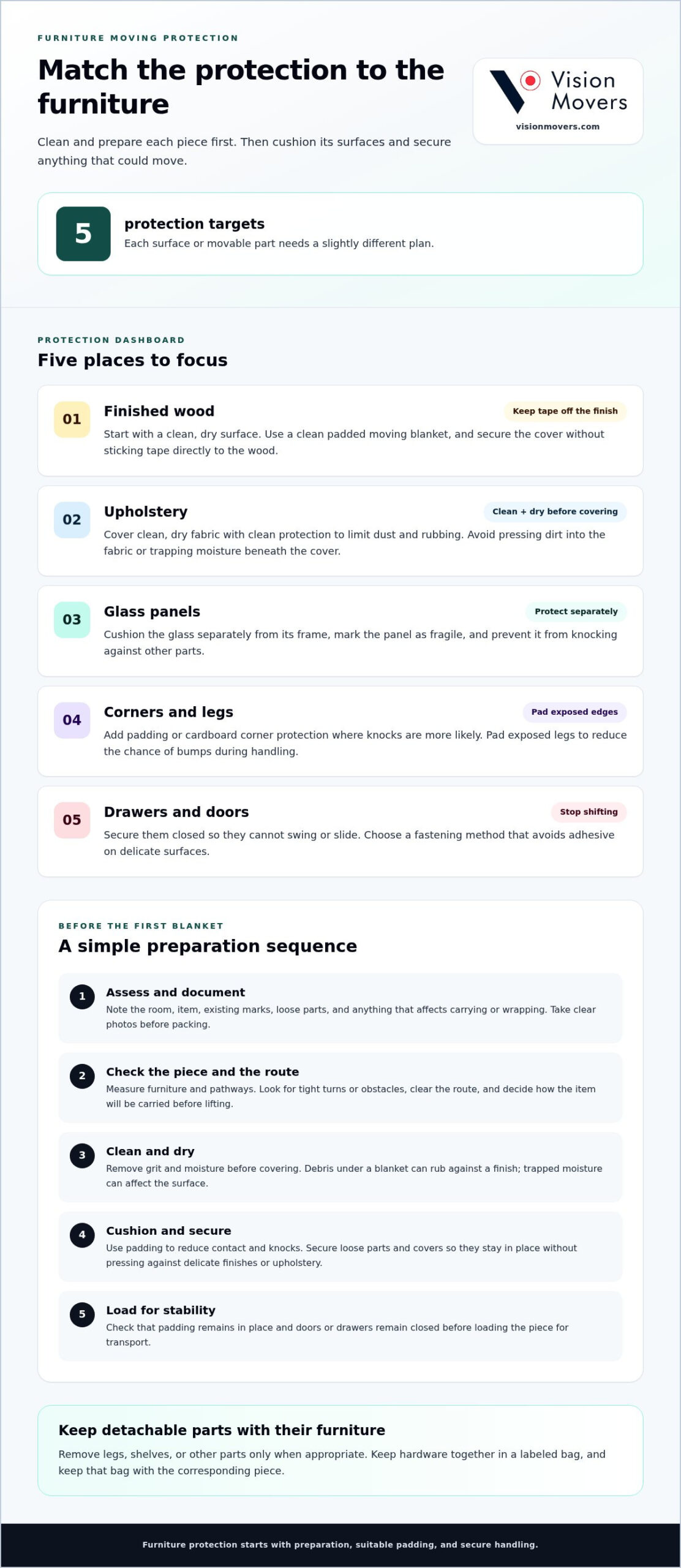
The right cover depends on what you’re protecting. A padded blanket can cushion a broad surface, while a separate wrap or fastener may keep a door from swinging. Before covering any piece, make sure it’s clean and dry. Grit trapped beneath a blanket can rub against a finish, and moisture caught under a cover can affect the surface.
Choose a wrap or cover that cushions the furniture without rubbing, trapping debris, or harming its finish. Cushioning and securing have different jobs: padding helps reduce contact and knocks, while fastening keeps doors, drawers, and covers from shifting. Both matter when deciding how to protect furniture during a move.
| Surface or part | Protection approach |
|---|---|
| Finished wood | Use a clean, padded moving blanket; keep tape off the finish. |
| Upholstery | Cover clean, dry fabric to limit dust and rubbing. |
| Glass panels | Cushion glass separately and clearly mark the fragile part. |
| Corners and legs | Add padding or cardboard corner protection where knocks are more likely. |
| Drawers and doors | Secure them closed without applying adhesive to delicate surfaces. |
How should wood, upholstery, and glass furniture be covered?
For a wooden table or dresser, lay a clean moving blanket over the surface and secure the covering without sticking tape directly to the wood. Make sure upholstered pieces are dry before covering them; use clean protection that limits dust and friction without pressing dirt into the fabric. Treat glass separately from the frame. Cushion the panel, identify it as fragile, and prevent it from knocking against other parts.
How do you keep furniture parts from moving?
Remove legs, shelves, or other detachable parts only when removal is appropriate for the piece. Keep each item’s hardware together in a labeled bag, then keep that bag with its furniture. Close doors and drawers so they can’t swing or slide during handling. Use a fastening method that won’t contact or damage a delicate finish, and pad exposed legs and corners to reduce the chance of knocks.
A snug cover isn’t the same as a secure load. Check that padding stays in place and movable parts remain closed, but avoid tightening anything against a finished or upholstered surface. For interstate moves, Federal regulations for moving household goods provide a reference for rules governing household-goods transportation. They don’t replace the practical work of matching protection to each piece.
If delicate finishes or bulky furniture make preparation difficult, professional packing and furniture handling can help prepare pieces for transport.
DIY Furniture Protection or Professional Moving Help?
You don’t have to choose between doing everything yourself and handing over every decision. A practical approach is to take on manageable preparation and leave difficult lifting, maneuvering, and transport to trained movers. The right balance depends on the furniture, the help and supplies available, and the layout of both homes.
Think about the work in four areas: time, equipment, task difficulty, and handling demands. Sorting belongings and clearing a hallway call for planning; moving a bulky piece through a tight doorway takes coordinated handling. Knowing how to protect furniture during a move includes recognizing where your own preparation is useful and where experienced support can help—for example, homeowners in the UK can look to regional services like Maytums Moves Ltd for specialized handling and clearance assistance.
| Task | DIY preparation | Professional support |
|---|---|---|
| Planning | Inventory furniture, note concerns, and clear access routes. | Help organize furniture preparation around moving and loading. |
| Wrapping | Gather suitable materials and cover manageable pieces. | Professional packing support for pieces that need more time or care. |
| Moving bulky items | Avoid solo lifting or unstable improvised equipment. | Trained movers can assist with careful handling, loading, and unloading. |
When can you prepare furniture yourself?
Many useful tasks don’t require heavy lifting. You can sort what needs moving, document furniture condition, gather supplies, and clear a practical route through rooms and exits. These steps help everyone work from a more organized plan. If you’re moving locally in South Florida, this local moving service guide can help you think through the move’s needs.
Keep the limit clear: don’t lift heavy furniture alone or rely on unstable makeshift equipment. A small item may be straightforward to prepare, while a large, awkward piece or a narrow stairway can change the level of difficulty. Base your plan on the item, the available help, and the route it must travel, not simply on whether it looks easy to lift.
When can professional furniture handling help?
Professional support can be useful when furniture is bulky, difficult to maneuver, or needs careful coordination during loading and unloading. Vision Movers provides packing and moving support, including furniture handling, to help customers prepare and transport their belongings. Tell the moving team which pieces need extra attention, point out existing concerns, and share your priorities. Getting help doesn’t mean giving up control of the plan.
Move duration varies with complexity, volume, and distance, so don’t plan around an assumed fixed timeline. Vision Movers is fully licensed and fully insured for both local and long-distance moves. All belongings are insured, with additional insurance available if needed. Choose the level of help that fits your situation, whether you handle basic preparation yourself or bring in support for the most demanding parts.
How to Prepare Furniture for Moving Day: A Step-by-Step Plan
A reliable moving-day routine follows a clear order: document each piece, prepare it, protect it, clear its route, then check it before loading. That sequence makes it easier to catch loose parts or access problems before furniture is in motion. It also helps you keep track of which pieces need extra attention instead of making decisions in a rush.
What should you do before wrapping furniture?
Start with an inventory and clear condition photos. Remove lamps, décor, and other loose items from furniture surfaces, then clean and dry each piece before covering it. This matters in South Florida, where humidity can make damp surfaces an easy detail to miss. Don’t wrap furniture that’s still wet from cleaning or exposed to rain.
Next, measure large items and the route they’ll take. Check doorways, hallways, turns, and exits, then clear obstacles from those paths and the areas where you’ll work. Use this ordered checklist:
- Record the piece. Note its room, condition, and any feature that affects preparation, such as a removable shelf.
- Prepare the surface. Remove loose contents and make sure the furniture is clean and dry.
- Check fit. Measure bulky pieces and compare those dimensions with doorways and tight turns along the route.
- Clear access. Move trip hazards and unrelated belongings out of the path and work area.
- Apply protection. Cover prepared furniture, taking care not to press dirt against surfaces or use adhesive on delicate finishes.
- Inspect before loading. Check that covers and secured parts stay in place, then identify glass or fragile components for careful placement.
How should furniture be checked before loading?
Give each piece a final look before it leaves the room. Check that padding hasn’t slipped, covers aren’t pulling tightly against a finish, and drawers or doors won’t open during handling. Confirm detachable parts are secure or kept together, and point out glass components so they can be kept separate from heavier items. A brief check can catch a loose cover before the piece is carried out.
Plan for ordinary rain as well as indoor humidity. Keep furniture dry while preparing it, and avoid leaving uncovered pieces where rain can reach them during the move. If a hurricane or heavy storm makes the planned date unsafe, Vision Movers works with customers to choose a safer moving date. Protection includes knowing when weather calls for changing the plan, not pushing ahead in dangerous conditions.
A measured, organized workflow can make furniture preparation more manageable, whether you’re doing part of the work yourself or arranging professional help. The mix of homes and buildings across South Florida, from Miami, Fort Lauderdale, Boca Raton, and Brickell to Weston, Plantation, Pompano Beach, Broward County, Hollywood, Dania Beach, Coral Springs, and Parkland, makes it especially useful to plan around each property’s access and layout.
How Vision Movers Helps Protect Furniture During a Move
Furniture protection takes coordination from preparation through unloading. Vision Movers supports that process with packing, furniture handling, loading, transportation, and unloading. Careful handling helps manage bulky or delicate pieces through each stage, while appropriate packing helps prepare them for the trip. These services are designed to minimize stress, but no moving process can promise that damage will never occur.
What moving support can Vision Movers provide?
Vision Movers Packing Services include full-service packing and unpacking. For a furniture move, professional support can help prepare pieces and handle them through loading and unloading. Full Service Moving includes assembly and disassembly, loading and unloading, transportation, storage, packing and unpacking, and uninstallation and installation. Share which pieces matter most and any handling concerns so the move plan reflects your priorities.
Vision Movers is fully licensed and fully insured for both local and long-distance moves. All belongings are insured, and additional insurance is available if needed. Clear communication about valuable or delicate furniture helps the crew plan its handling.
What should customers know before requesting an estimate?
Vision Movers was founded in 2016 and has 4 trucks, 10 crew members, and 9+ years of experience. Most local moves are completed the same day, while longer moves take a couple of days. Actual duration varies with the move’s complexity, volume, and distance. Same-day completion for many local moves doesn’t mean same-day booking is guaranteed. Same-day and last-minute requests depend on team capacity, and Vision Movers does not always have a team of last-minute movers available.
Pricing is transparent, with no hidden fees. Exact costs are provided through a free personalized estimate based on the move. To make the estimate useful, be ready to describe the furniture that needs extra attention, the packing support you want, and any bulky pieces or access considerations that could shape handling. A clear picture of your needs helps match the plan to the move without relying on a generic price or timeline.
If you’re weighing how to protect furniture during a move, professional packing and coordinated handling can reduce the amount you need to manage on your own. Vision Movers can plan support around your belongings and moving needs.
Make Your Furniture Protection Plan Your Next Step
Your moving plan should fit the furniture you’re protecting, not the other way around. Before moving day, decide which pieces you’ll prepare yourself and where you’d value extra help. Note any furniture that’s especially meaningful, difficult to maneuver, or in need of careful handling. Sharing those priorities early gives your moving team a clearer picture of what matters to you.
If you’re still weighing your options, think about the time, materials, and support you have available. A plan doesn’t need to cover every detail at once. Start with the pieces that require the most attention, then map out the help that would make the move more manageable. Knowing how to protect furniture during a move is useful; a plan that suits your home and belongings makes it easier to put that knowledge into practice.
Vision Movers offers transparent pricing with no hidden fees, and exact costs are provided through a free personalized estimate. Call 561-618-0949 for a free personalized estimate and discuss the moving support that fits your furniture and plans. With a thoughtful plan in place, you can take the next step with greater confidence.
Frequently Asked Questions
Can I leave clothes or other items inside furniture drawers during a move?
It’s usually best to empty drawers before moving dressers or desks. Contents can shift, add weight, or press against drawer runners as the furniture is tilted or carried. Pack clothes separately, and remove small items such as chargers, coins, or accessories so they don’t get lost or scratch the drawer interior. If a drawer is removable, keep it and its contents separate until the furniture is safely placed in your new home.
Should I remove furniture legs before moving a sofa or table?
Remove legs only if they’re designed to come off and doing so makes the piece easier to move. Check how they attach before loosening anything, and don’t force a stuck fitting. Keep the hardware in a labeled bag with the furniture, and note which leg belongs where if they’re not interchangeable. If the legs feel unstable or the piece is awkward to handle, leave the disassembly to trained movers.
Can I wrap furniture before it is completely dry?
No. Let the surface dry fully before adding a cover, particularly after wiping down a wooden table or cleaning upholstery. Wrapping in dampness can trap moisture against the material, while a wet blanket may transfer moisture to the furniture. If rain reaches a piece during loading, remove any damp covering once it’s under shelter and allow the surface to dry before applying clean protection again.
How far ahead should I start preparing furniture for a move?
Start as soon as you know a move is planned, especially if you have several large pieces or furniture that may need disassembly. Early preparation gives you time to sort drawers, gather materials, and identify items that need extra handling. When planning how to protect furniture during a move, build preparation into your moving checklist rather than leaving every task until moving day. Keep frequently used furniture accessible until you’re ready to pack it.
What should I do if I notice furniture damage after a move?
Take clear photos of the damage and the affected area before attempting a repair or discarding any related packing materials. Make a note of when and where you noticed it, and keep the information together with your move documents. Contact Vision Movers promptly to report the issue and ask about the process for reviewing damage. Avoid cleaning or altering the spot until you’ve documented its condition.
Can furniture be moved during rain in South Florida?
Vision Movers can operate in rain or wind, but furniture should be kept as dry as practical during handling and transport. In South Florida, check the forecast and prepare a covered route where possible to limit exposure while pieces are carried. Hurricanes and heavy storms are different: Vision Movers works with customers to choose a safer moving date in dangerous weather, rather than proceeding under those conditions.
Does Vision Movers insure belongings during local and long-distance moves?
Yes. All belongings are insured, and additional insurance is available if needed. Vision Movers is fully licensed and fully insured for both local and long-distance moves. If you’re concerned about a particular item, note its condition before the move and raise your question as you plan. Keeping photos and a written record of valuable furniture can help you describe its condition clearly if you need to report a concern.
Leave a Reply