
What if the key to moving a small office in Fort Lauderdale isn’t packing faster, but planning around the work your team still needs to do? A move can put customer service, employee schedules, computers, files, and shared equipment under pressure. Building access and loading arrangements add another set of details to coordinate.
A clear sequence makes the transition easier to manage. This guide covers how to set a moving schedule, assign responsibilities, prepare essential business materials, and coordinate move-day details so your team can focus on reopening.
You’ll find practical steps for organizing the move from early planning through setup at the new location. You’ll also learn how to divide tasks between your team and professional commercial movers, who can help with packing, furniture protection, loading, and unloading. Keeping business continuity at the center of the plan helps everyone understand what happens next.
Key Takeaways
- Put business continuity first by identifying the services, staff, and equipment that need to stay operational during the move.
- Build a practical schedule around a move lead, target date, inventory, floor plan, and clear responsibilities.
- Choose which tasks to handle in-house and where professional packing, furniture protection, loading, and unloading can help.
- For moving a small office in Fort Lauderdale, plan building access and loading arrangements at both locations before move day.
- Set reopening priorities so essential equipment and materials are ready to help your team resume work.
Why moving a small office in Fort Lauderdale starts with business continuity
A small office can still have many moving parts: computers, shared equipment, business records, furniture, staff responsibilities, and customer commitments. If a key device is packed before its final use, or no one is tracking essential files, work can be interrupted even when there are only a few desks. Planning moving a small office in Fort Lauderdale around business priorities helps keep the transition orderly, from the final day in the old space to the first day in the new one.
Business continuity during an office move means planning work priorities around packing, transport, and reopening so essential services can resume with as little disruption as possible. The principles of business continuity planning offer a useful foundation: identify what needs to keep working, decide how to protect it, and prepare the steps needed to restart operations.
What can disrupt a small-office move?
Disruption often starts with unclear ownership. Without assigned tasks and a usable inventory, boxes may be mislabeled, equipment may be hard to locate, and essential items may be moved before the team has finished using them. Building logistics can add another layer. Coordinate access procedures, elevator reservations, loading areas, and receiving arrangements at both locations. Since move windows and access rules vary by building, confirm the details with each building’s management.
Set the business priorities before setting the boxes
Start with the work that must continue and the items needed to do it. Consider customer-facing operations, staff needs, and the equipment required for the first workday. Separate those essentials from furniture, records, and supplies that can be packed earlier. A short, written priority list gives employees clear direction and helps keep critical items out of unmarked or low-priority boxes.
Before packing begins, make four early decisions:
- Move date: Choose a target that gives the team time to prepare and communicate changes to customers.
- Responsible lead: Assign one person to track decisions, tasks, and coordination between staff and movers.
- Essential equipment: List what must remain available until the final work period and what needs to be ready first at the new office.
- Service needs: Identify where professional packing, furniture protection, loading, or unloading could make the transition easier to manage.
These decisions turn a collection of urgent tasks into a sequence the team can follow. With priorities set first, it’s easier to build a schedule, keep staff informed, and prepare the new Fort Lauderdale location for reopening.
How to plan a small-office move in Fort Lauderdale step by step
A dependable move plan connects each task to the next: staff know what to prepare, equipment stays accounted for, and the new office is ready for work. For moving a small office in Fort Lauderdale, start with the essentials: choose a target date, name a move lead, sketch the destination floor plan, create an inventory, and identify operational priorities. Then build the schedule around your office, staffing, building procedures, and work commitments.
Build a move timeline and assign responsibilities
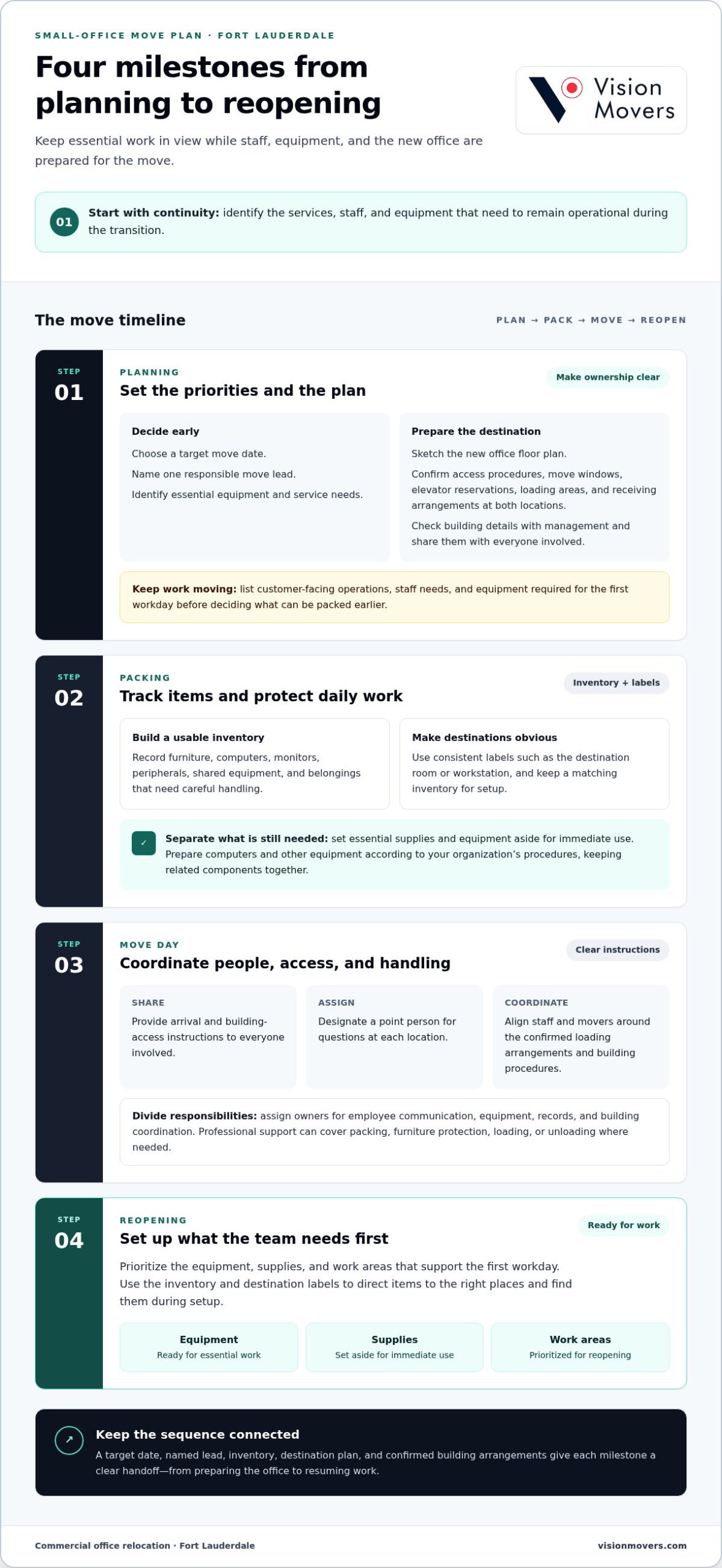
Give one coordinator oversight of the schedule, then assign clear owners for employee communication, equipment, records, and building coordination. Break the work into four milestones: planning, packing, move day, and reopening. Include access instructions and loading arrangements for both locations. Confirm building procedures and move windows with property management, then share the details with everyone involved.
- Planning: Map the new layout, choose a target date, and tell staff what they’re responsible for.
- Packing: Set deadlines for labeling, equipment preparation, and separating items still needed for daily work.
- Move day: Share arrival and access instructions, and designate a point person for questions at each location.
- Reopening: Identify the equipment, supplies, and work areas that should be ready first.
Create an office inventory and packing plan
Record furniture, computers, monitors, peripherals, shared equipment, and belongings that need careful handling. Use a consistent label for each box or furniture item, such as the destination room or workstation. Keep a matching inventory so the team can direct items to the right place and find them during setup. Set aside essential supplies and equipment for immediate use instead of packing them with items that can be moved earlier.
Prepare computers and other equipment according to your organization’s procedures, and keep related components together. For a broader look at coordinating logistics around a business move, review this commercial moving strategy guide. A well-organized plan also makes it easier to decide which tasks your staff can manage and where professional packing, furniture protection, loading, or unloading can support the transition.
Vision Movers provides commercial relocation support tailored to each move. As you shape your plan, outline your inventory, schedule, building access needs, and reopening priorities. Explore commercial moving support to organize the next steps for your office relocation.
Will professional movers disrupt business? Compare your small-office move options
Moving work materials while serving customers can feel like adding a second job to the week. Professional movers still need coordination with your team, but support with physical handling can leave employees more time for business-critical work. The right approach depends on your inventory, staff capacity, and reopening priorities. No single plan fits every business, and no moving method can remove every possible interruption.
With a self-managed move, employees can take on planning and routine preparation while the business handles packing materials, furniture handling, loading, transport, and unloading. This keeps more tasks in-house, so assign owners and make sure the work fits around regular responsibilities. Professional commercial movers can take on selected physical tasks or provide broader support, with the scope organized around the office’s needs.
Which moving tasks can your team handle?
Employees can label personal work areas, identify items for packing, and organize supplies they know how to prepare. These familiar tasks help keep workstation contents grouped and easy to identify. Make the assignments specific: one person might label desk items while another tracks shared materials. A written task list prevents duplicated effort and makes it less likely that an essential item will be missed.
Routine preparation is different from lifting desks, protecting furniture, or coordinating the movement of office items between locations. Consider staff capacity and regular workloads before assigning these duties internally. If employees are splitting their attention between customers and move tasks, even straightforward packing can compete with daily priorities.
When can professional office movers help?
Professional movers can support the parts of a move that require organized physical handling, including professional packing, furniture protection, loading, and unloading. This support can be useful when the office has multiple workstations, shared equipment, or furniture that needs careful handling. Your team can focus on employee communication, customer needs, and preparing essential work for the new space.
Moving support can be shaped around the job rather than treated as an all-or-nothing choice. Your staff might prepare labeled workstation items while movers handle larger furniture and loading. Or professional packing may be useful for more of the office’s contents. Either way, set clear roles: decide who oversees the inventory, who communicates with the moving team, and who checks that priority items reach the right destination.
For businesses moving a small office in Fort Lauderdale, a balanced plan can pair your team’s knowledge with professional help for packing and physical handling. Vision Movers provides commercial relocation support tailored to each move, including packing, furniture protection, loading, and unloading. Explore commercial moving support to plan an approach that fits your office’s requirements.
Small-office move-day checklist for Fort Lauderdale businesses
A clear move-day sequence helps staff, building contacts, and movers work from the same plan. For moving a small office in Fort Lauderdale, assign one move lead to handle questions and coordinate between the old and new locations. Keep the labeled inventory and essential work items easy to access, rather than buried among boxes intended for later unpacking.
Before loading begins
Use this checklist before items leave the current office:
- Confirm the move lead is ready. Keep contact details, building access instructions, loading arrangements, and the latest labeled inventory together.
- Review the route through the space. Clear pathways and identify furniture or equipment that needs careful handling or added protection.
- Separate priority items. Set aside essential documents and work-critical supplies. Keep sensitive materials appropriately secured and clearly identified so they can be accounted for during the move.
- Confirm staff roles. Make sure employees know who is directing movers, answering questions, and tracking items as they’re loaded.
- Check loading coordination. Confirm the planned loading area and access instructions with building management, and share relevant details with everyone involved.
Keep important documents and essential work materials under a clearly assigned person’s oversight. A simple handoff record helps the team track which priority items have left the old office and who is responsible for them.
At the new Fort Lauderdale office
Before unloading, make sure the move lead can direct items to the correct rooms and workstations. Use labels that match the destination layout. This keeps boxes and furniture from collecting in the wrong area, where they could block access or slow setup.
- Guide placement: Direct labeled furniture and boxes to their planned rooms or workstation areas as they arrive.
- Set up priorities first: Place essential equipment and prepare shared spaces before unpacking nonessential items.
- Check the handoff: Compare delivered items with the inventory and document any visibly damaged items as they’re identified.
- Prepare for the first workday: Locate priority supplies and confirm that staff can access the equipment and materials needed to resume work.
For wider guidance on organizing a local move, see the local moving service guide. A planned move-day handoff, supported by professional packing, furniture protection, loading, and unloading, keeps the transition structured around your office’s needs. Plan your Fort Lauderdale office move with commercial moving support from Vision Movers.
Choose a Fort Lauderdale office moving plan that fits your business
A useful moving plan reflects how your office works, not just how many desks it has. Before deciding what support you need, connect the move schedule to your business priorities, staff responsibilities, inventory, and building access. This gives you a clearer view of what your team can prepare and where professional help with physical handling can support an organized transition.
What a tailored office moving plan should address
For a small office, the moving scope may include a mix of team-led preparation and professional support. Consider how each element fits your move:
- Packing: Decide which supplies and work areas staff can prepare, and whether professional packing would help with office belongings that need coordinated handling.
- Furniture protection: Identify desks, chairs, and other furnishings that need protection during the move.
- Loading and unloading: Plan how belongings will move between locations and who will direct items to the correct areas.
- Building access: Include access instructions and loading arrangements at both locations in the schedule.
- Reopening priorities: List the equipment and materials staff need first so setup can follow business needs.
A tailored plan brings these pieces together. Vision Movers provides commercial relocation in South Florida, with professional packing, furniture protection, loading, and unloading arranged around the needs of the move. The aim is a clear scope of support that works alongside your team’s responsibilities and organizes the transition from one workspace to the next.
Prepare to plan your small-office move
To make the planning conversation more focused, gather a few basics: the current and new office locations, an approximate inventory of furniture and equipment, your timing needs, and the items required for the first workday. Note building access details and which tasks your staff expects to handle. You don’t need every detail finalized; a clear starting picture helps shape the next steps.
With those requirements in hand, you can discuss a practical approach to moving a small office in Fort Lauderdale that reflects your business priorities. Plan your Fort Lauderdale office move with Vision Movers.
Make your next office move easier to manage
A successful office move starts with a plan built around the work that matters most. Set priorities for reopening, assign clear responsibilities, and coordinate building access before move day. Keep essential equipment and business materials easy to identify so your team can focus on serving customers and getting settled.
For moving a small office in Fort Lauderdale, professional support can also be organized around the practical demands of your relocation. Vision Movers provides commercial moving services in South Florida, including professional packing, furniture protection, loading, and unloading.
Gather your locations, approximate inventory, timing needs, and priority equipment to start planning. Plan your Fort Lauderdale office move with Vision Movers. Thoughtful preparation and clearly assigned support help your team move into its new workspace with a workable plan.
Frequently Asked Questions
How do I plan a small-office move in Fort Lauderdale?
Name a coordinator, set a target date, and create an inventory of furniture, equipment, and records. Map the new office, assign staff tasks, confirm access and loading procedures with both buildings, then schedule packing around each item’s last use and your reopening priorities. For moving a small office in Fort Lauderdale, include local building arrangements in the plan. Vision Movers serves businesses across South Florida, including Miami, Fort Lauderdale, Boca Raton, Brickell, Weston, Plantation, Pompano Beach, Broward County, Hollywood, Dania Beach, Coral Springs, and Parkland.
How far in advance should I plan a small-office move?
Start planning as soon as the move becomes likely, then set a timeline based on the move’s scope, building procedures, and business schedule. A move involving more furniture, equipment, or packing tasks may need more preparation than a simpler relocation. Building management may also have access or loading arrangements to coordinate. Identify the target date and key requirements first, then work backward to set practical planning, packing, move-day, and reopening milestones.
Can professional movers pack office equipment and furniture?
Yes. Professional packing and furniture protection can support the handling of office belongings during a commercial move. The right scope depends on what your team plans to prepare and which items need coordinated packing or protection. For example, employees may organize personal work areas while movers assist with packing and furniture handling. Vision Movers tailors commercial relocation support to each move, including packing, furniture protection, loading, and unloading.
How can I reduce business downtime during an office move?
Organize tasks so essential work can continue for as long as possible and your team knows what to do next. Stage packing around each item’s last use, assign clear owners for staff communication and move coordination, and keep work-critical equipment and supplies easy to identify. At the new office, prioritize the equipment and shared areas employees need to resume work. A planned sequence can limit avoidable disruption, though every move has its own demands.
What should I include in a small-office moving inventory?
List furniture, computers, monitors and other peripherals, shared equipment, office supplies, and business records that are moving. Note items that need careful handling and where each piece belongs at the destination. Use consistent labels for rooms or workstations, and make sure boxes and furniture can be matched to the inventory. Keep essential documents and first-day equipment clearly identified and appropriately secured so staff can locate priority items during setup.
What should I coordinate with my Fort Lauderdale office building before moving?
Ask building management about the move-access procedures at both locations. Confirm entry instructions, elevator reservations, loading-area arrangements, and the permitted move window, then share those details with the move lead and everyone involved. Procedures vary by building, so don’t assume the new office follows the same process as the old one. Clear instructions help staff and movers coordinate arrival, loading, and receiving the shipment.
Should employees pack their own desks before a small-office move?
Employees can often prepare personal work areas by sorting items, labeling boxes, and separating belongings they’ll need right away. Give them clear instructions so labels match the office’s destination plan and tasks aren’t duplicated. Coordinate packing for shared equipment and items needing furniture protection instead of leaving responsibilities unclear. This practical division lets staff contribute what they know best while professional packing support helps organize office belongings that need coordinated handling.
Leave a Reply