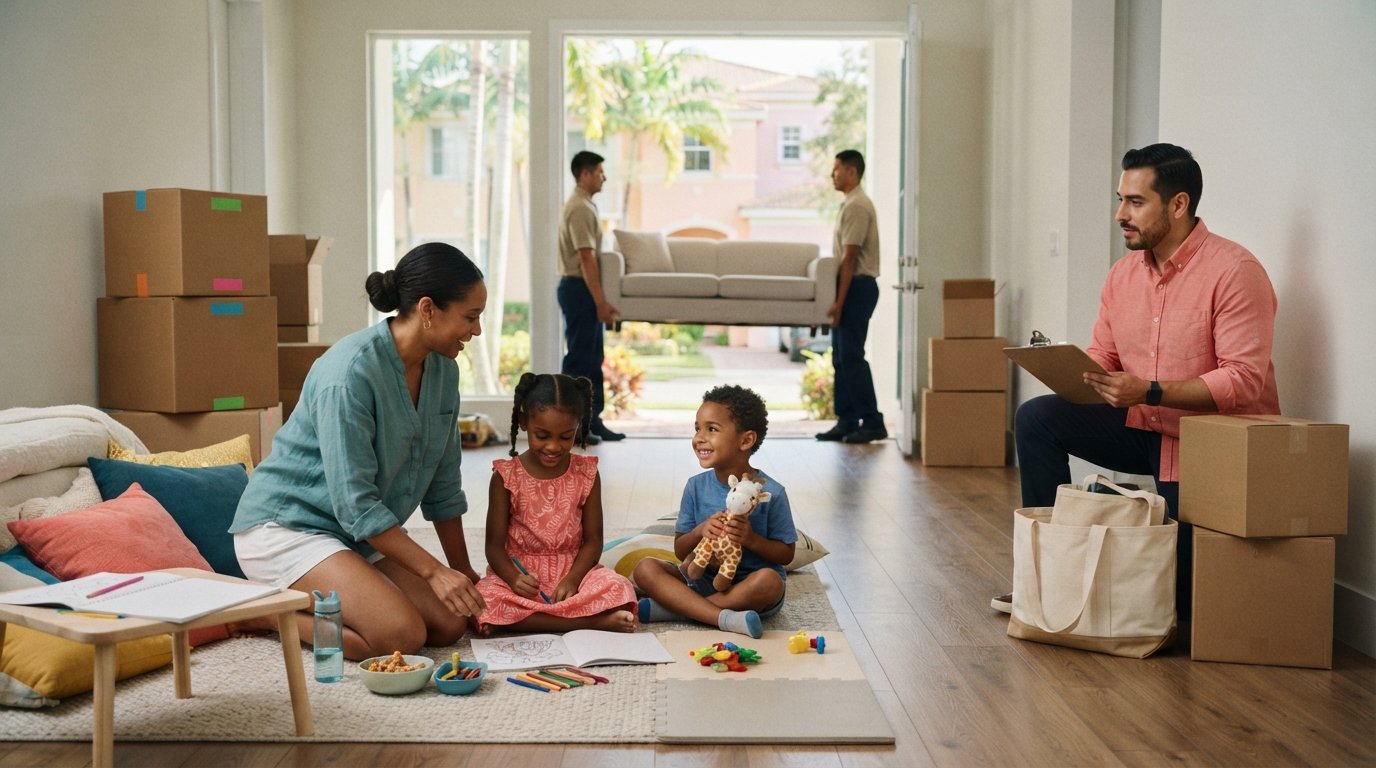
What if the secret to a tear-free relocation is treating moving day as a staged family operation instead of an adult chore? If you’re dreading the collision of heavy furniture, busy loading paths, and overtired toddlers, you aren’t alone. Juggling complex logistics while soothing anxious meltdowns and protecting little hands from moving hazards is deeply exhausting for any parent. That’s why having proven moving day tips for families with kids is essential for keeping everyone secure, organized, and confident from sunrise to bedtime.
You don’t have to spend the day running on fumes in pure survival mode. You’ll discover actionable strategies to keep children safe, calm, and entertained during a smooth family relocation. Ahead, we walk through a structured timeline that keeps the day on track, dedicated safety zone systems that prevent hallway accidents, and the exact unpacking sequence to assemble a comforting first-night bedroom sanctuary without bedtime panic.
Key Takeaways
- Involve children in age-appropriate sorting and emotional check-ins early to transform relocation uncertainty into a collaborative family milestone.
- Apply essential moving day tips for families with kids by establishing an off-limits secure zone and designating a dedicated supervisor away from loading corridors.
- Pack an accessible forty-eight-hour essentials tote with daily medications, familiar comfort items, and chargers to bypass unpacking panic on your first evening.
- Stagger mess-free activity kits and maintain regular hydration and protein breaks to sustain calm engagement throughout transit.
- Conduct an immediate arrival childproofing sweep and assemble children’s beds first so your family enjoys an instantly comforting bedtime sanctuary.
Preparing Your Children Emotionally and Logistically Before Moving Day
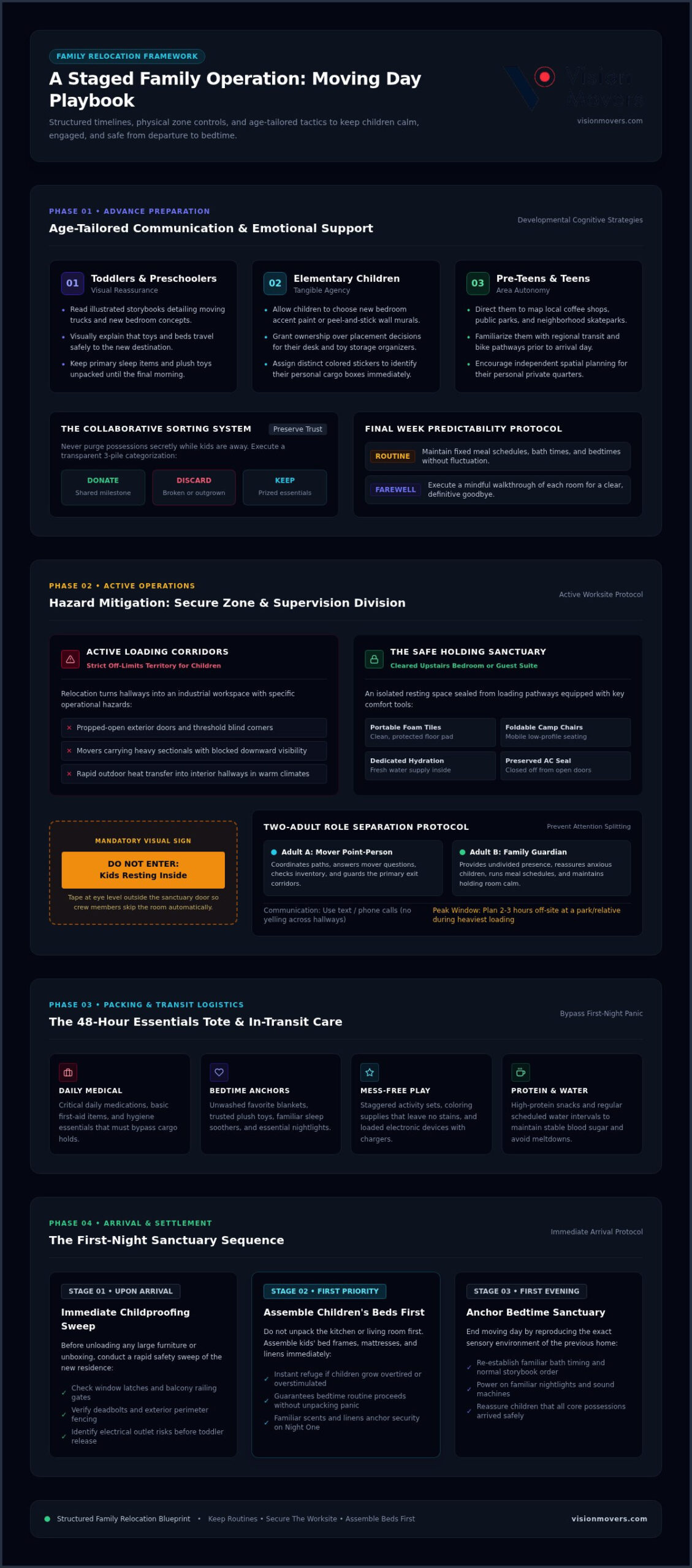
Relocation represents a major life transition that can trigger intense vulnerability in young minds. Academic studies on the psychological impacts of residential relocation show that unfamiliar surroundings and disrupted routines quickly elevate stress levels across developmental stages. Rather than glossing over their worries, acknowledge childhood anxieties directly to turn an overwhelming process into a shared family project. Setting a predictable environment during the final stretch offers young minds stability. Keep regular meal schedules, bath routines, and bedtimes intact throughout the final week, and wrap up by taking a mindful farewell walk through each room so your kids can say a definitive goodbye to their old home.
Age-Tailored Communication Strategies for Relocation
Children process relocation differently depending on their cognitive milestones. Effective moving day tips for families with kids recognize that one communication style never fits all ages:
- Toddlers and Preschoolers: Read illustrated storybooks about moving trucks and new bedrooms. Simple visual stories help them grasp that their toys and beds will travel safely to the new house.
- Elementary Children: Grant tangible agency by letting them choose bedroom accent paint, peel-and-stick wall murals, or the exact spot for their desk and toy organizer.
- Pre-Teens and Teenagers: Encourage older kids to map local coffee shops, parks, skateparks, and transit routes near the new neighborhood, giving them ownership over their new personal space.
Decluttering and Packing Kids Rooms with Care
Decluttering should be a collaborative effort, not a sudden sweep while children are at school. Establish three distinct categories for sorting: donate, discard, and keep. Never throw out treasured playthings behind their back, which damages trust right when they need security most. Keep prized sleep items, blankets, and plush companions aside until the final morning instead of boxing them early. Use distinct colored stickers on toy and clothing boxes so your children can easily recognize their own belongings when the truck arrives at the new home.
If managing your household inventory while guiding children through emotional transitions feels overwhelming, booking professional packing services through experienced residential moving teams frees you up to stay emotionally present for your kids while seasoned crews handle the heavy preparation.
Establishing a Secure Zone and Supervision Strategy on Moving Day
Moving day quickly transforms a family home into an active work site with propped-open exterior doors, blind corners, and heavy lifting paths. Professional movers cannot easily see small children running around thresholds when carrying bulky wardrobes or sectionals. Implementing structured moving day tips for families with kids begins with establishing rigid physical boundaries that separate active carrying zones from your children’s play areas, preventing accidental collisions and keeping young explorers out of danger.
Designing a Safe, Comfortable Holding Room
Select a cleared room located away from primary exit routes, such as an upstairs bedroom or guest suite, to serve as a kid sanctuary. Furnish this space with portable foam tiles, folding camp chairs, and plenty of water. In warm South Florida climates, keeping this room sealed preserves indoor air conditioning while movers work through propped-open exterior doors. Tape a bold sign at eye level on the outside of the door reading: “DO NOT ENTER: Kids Resting Inside.” This simple visual notice ensures crew members skip the room until you are ready.
Designating Adult Roles and Communication Protocols
Attempting to guide movers while supervising toddlers divides your attention and elevates household tension. Divide responsibilities between two adults: appoint one person as the dedicated mover point-person and the other as the family guardian. Child psychologists emphasizing maintaining predictable routines during a move note that children cope best when an adult provides undivided presence and calm reassurance rather than distracted, reactive supervision.
Stay in touch using mobile phone calls or text messages instead of shouting across bustling hallways or staircases. If staying inside the home causes restless agitation, plan off-site care at a relative’s house or a neighborhood park during the two to three hours of heaviest truck loading. When on-site, coordinate loading paths directly with your professional local moving service crew so ramps, truck gates, and entryways remain strictly off-limits. Trusting a dedicated team like Vision Movers to manage the heavy logistics gives you the freedom to focus entirely on keeping your children calm, protected, and secure.
Packing the Ultimate Family Essentials Box for First-Night Comfort
Arrival night often brings overtired children into a confusing sea of taped cardboard. Rummaging through towering stacks to find a missing inhaler or beloved pair of pajamas creates immediate friction. One of the most effective moving day tips for families with kids is packing a dedicated, heavy-duty clear plastic tote stocked with everything your family needs for the first forty-eight hours. Clear plastic lets you spot essentials instantly without tearing open sealed boxes. Always transport these survival containers in your personal vehicle instead of the moving truck. Moving vans encounter unloading sequences and road delays, but keeping supplies in your backseat guarantees instant access the moment you walk through your new front door.
Must-Have Items for Infants and Toddlers
Babies and toddlers depend on sensory consistency and precise feeding schedules. In hot, humid climates, pack temperature-sensitive liquid medications, teething remedies, and basic first-aid supplies directly in an insulated tote with ice packs so they don’t spoil in transit. Be sure to include:
- Diapers, wipes, diaper cream, and portable changing mats for at least three full days.
- Sterilized bottles, formula, electrolyte drinks, shelf-stable baby purees, and familiar spill-proof cups.
- Unwashed sleep sacks, favorite pacifiers, portable white-noise machines, and plug-in nightlights to reproduce their familiar nursery atmosphere immediately.
Essentials Kit for School-Age Kids and Teens
Older kids also require deliberate preparation to feel grounded amidst bare walls and echoed corridors. Following the Child Mind Institute’s advice for moving with children, preserving creature comforts and daily rituals significantly softens the emotional impact of a relocation. Supply each child with an easily accessible personal pack containing:
- Two changes of lightweight, breathable clothing, comfortable pajamas, and slip-on shoes for easy unpacking navigation.
- Tablets, portable gaming devices, charging cables, and high-capacity power banks so entertainment remains operational before home internet is connected.
- Favorite bedtime storybooks, drawing pads, travel card games, and non-perishable, protein-rich snacks that prevent energy crashes before dinner is arranged.
Managing Entertainment, Meals, and Routines During Loading and Transit
Long hours of waiting while heavy dressers and boxed wardrobes are loaded can test any child’s patience. Boredom often leads to running through high-traffic hallways or experiencing emotional meltdowns. Instead of letting restless energy derail the day, smart moving day tips for families with kids focus on pacing the schedule with engaging, low-mess entertainment and predictable nutritional stops. Moving day is an exceptional circumstance, so release any lingering guilt about screen time limits. A favorite movie or offline educational game offers immense comfort and keeps little feet happily stationary during critical loading phases.
Mess-Free Entertainment Ideas for All Ages
Skip messy crafts like slime, kinetic sand, or floor tape tracks that require cleanup right before handing over house keys. Rely on low-maintenance activities that keep hands occupied without leaving debris behind:
- Mess-Free Drawing: Hand out LCD writing tablets, water-reveal coloring pads, or magnetic sketchers that don’t need markers, crayons, or sharpening.
- Interactive Novelties: Provide reusable vinyl sticker books, magnetic travel tangrams, and hand-held fidget puzzles that unpack and pack away instantly.
- Transit Scavenger Hunt: Give older children a clipboard with a checklist to spot specific items, like colored boxes, dollies, orange traffic cones, and neighboring street signs.
- Pre-Loaded Media: Download audiobooks, podcasts, and offline video playlists onto tablets at least 48 hours in advance to bypass spotty cell reception during travel.
Nutritional and Hydration Strategies on the Move
Blood sugar crashes and dehydration quickly trigger emotional distress during lengthy relocations. Keep an insulated cooler easily accessible inside your car rather than packed away in the moving van. Fill it with chilled water bottles, electrolyte drinks, cheese sticks, hard-boiled eggs, sliced apples, and hummus cups. Steer clear of high-sugar treats and artificial juices; the sharp energy spikes and subsequent crashes make mood management significantly harder.
When midday arrives, physically remove children from the loading environment. Take a dedicated thirty-minute picnic break at a nearby shaded park or quiet cafe. Stepping away from the commotion gives kids a calm mental reset before the afternoon drive. If you prefer to focus entirely on comforting your family throughout moving day, request a residential moving quote from Vision Movers and let trained professionals handle the heavy lifting, loading, and transit logistics from start to finish.
Arrival Tactics: Unpacking and Settling Kids into the New Home
Reaching your new front door marks a huge milestone, but the first few hours require deliberate structure to keep children safe and calm. A house filled with unpacked boxes, unanchored furniture, and unfamiliar blind spots presents immediate safety hazards. Applying actionable moving day tips for families with kids upon arrival means pausing to childproof the home first, then focusing immediately on assembling personal sleep zones before tackling general living areas.
Rapid Childproofing the New Environment
Conduct a thorough walk-through before releasing children to explore their new rooms. Unchecked hazards can lead to avoidable injuries during the excitement of arrival day:
- Perimeter and Water Hazards: Lock sliding patio doors, inspect exterior latches, and verify that self-closing swimming pool safety gates latch securely.
- Electrical and Fall Risks: Insert temporary safety caps into low wall outlets and tie up hanging window blind cords out of reach.
- Heavy Furniture Anchors: Fasten tall bookshelves, armoires, and nursery changing tables to wall studs immediately rather than waiting for full unpacking.
- Life Safety Equipment: Test smoke alarms, verify operational carbon monoxide detectors on every floor, and confirm exterior entry locks engage smoothly.
Creating First-Night Familiarity and Celebration
Resist the urge to unpack the kitchen or living room on night one. Focus all initial effort on setting up your children’s bedrooms. Build their bed frames, position their nightstands, and dress the mattresses with unwashed bedding brought straight from the old house. That familiar scent instantly softens nighttime anxiety and grounds them in their new space. Recreate the general layout of their previous room so navigating in the dark feels natural, placing nightlights and white-noise machines where they expect them.
Turn the evening into a positive milestone by ordering takeout from a favorite family restaurant and sharing a casual living-room floor picnic. Stick to your traditional bedtime story and tuck-in routine, reassuring kids that home is defined by family presence rather than unpacked boxes. If managing furniture setup alongside child care feels like too much after a long travel day, partnering with full-service moving and storage companies ensures professional crews handle heavy bed assembly and room placement, letting you focus on helping your children settle happily into their new spaces.
Step Confidently into Your Family’s Next Chapter
Transitioning your household doesn’t have to become an exhausting endurance test. By establishing physical safety boundaries, keeping a dedicated essentials tote within arm’s reach, and setting up familiar bedrooms first, you protect both your moving schedule and your family’s emotional well-being. Implementing these structured moving day tips for families with kids transforms a stressful logistical transition into an orderly, reassuring family milestone.
You don’t have to shoulder the heavy physical lifting while managing bedtime routines and reassuring anxious children. As trusted South Florida movers operating with punctual schedules and careful handling, our experienced crew provides comprehensive full-service packing, loading, and specialized furniture protection tailored for busy family homes. Request your personalized residential moving quote with our white-glove team today. Embrace your next neighborhood adventure with complete peace of mind, knowing your loved ones and your cherished belongings are in capable, caring hands.
Frequently Asked Questions
Should kids be present during loading on moving day?
Whenever possible, children should not be present during heavy loading. Active hallways, blind corners, and heavy pieces create genuine physical hazards. Arranging off-site care with a relative, friend, or babysitter in Miami or Fort Lauderdale keeps kids protected and engaged. If children must stay on property, isolate them in a closed holding room with an adult guardian to keep them clear of busy mover pathways.
How do I keep toddlers safe while movers carry heavy furniture?
Keep toddlers entirely removed from transit corridors by securing them inside an empty bedroom or designated safe play area. Essential moving day tips for families with kids highlight the danger of fast-moving little ones darting near heavy dressers or ramps. Use baby gates, post warning signs on closed doors, or have a supervising adult take them to a fenced backyard while the truck is loaded.
What should go into a child moving day survival bag?
A child’s survival bag should contain two days of personal items, essential care supplies, and favorite comfort pieces. Pack two weather-appropriate outfits, daily pediatric medications, charging cables, headphones, water bottles, and protein snacks. Add mess-free entertainment like LCD writing tablets and their favorite sleep companion. Transport this bag directly in your personal vehicle so items remain easily accessible without searching through the moving truck.
How can I prevent emotional meltdowns when leaving an old home?
Prevent meltdowns by giving children dedicated closure before departure and openly validating their sad feelings. Take a final walkthrough together where kids can say a personal goodbye to their favorite rooms and outdoor spaces. Reassure them that missing their old house is completely normal, while pointing out exciting features waiting at the new property. Rushing children out the door during loading chaos often escalates emotional distress.
How do I handle baby naps and feeding routines during a move?
Protect infant nap and feeding schedules by setting up a climate-controlled quiet room with portable sleep equipment. Set up a travel crib, sound machine, and blackout shades in a secluded upstairs room while movers handle downstairs items. In South Florida’s heat, maintaining air conditioning prevents fussy heat exhaustion. Keep pre-measured formula, sanitized bottles, and baby food in an insulated cooler beside you to preserve regular feeding intervals.
Which room should you unpack first when moving with children?
Always unpack and fully assemble your children’s bedrooms before organizing the kitchen, living room, or master suite. Setting up bed frames, laying out familiar bedding, and positioning nightlights creates an immediate sense of comfort and stability. Implementing practical moving day tips for families with kids ensures little ones have a quiet sanctuary ready by sunset, keeping bedtime routines on track without midnight unpacking stress.
How long does it usually take for kids to adjust to a new home?
Most children take between one and three months to feel completely comfortable in a new home and neighborhood. Toddlers often adjust faster once their familiar toys and beds are set up. Elementary children and teens usually require more time to navigate school transitions and make local friends. Maintaining predictable routines, exploring local parks across Broward County together, and listening with patience helps speed up their adjustment.
Leave a Reply