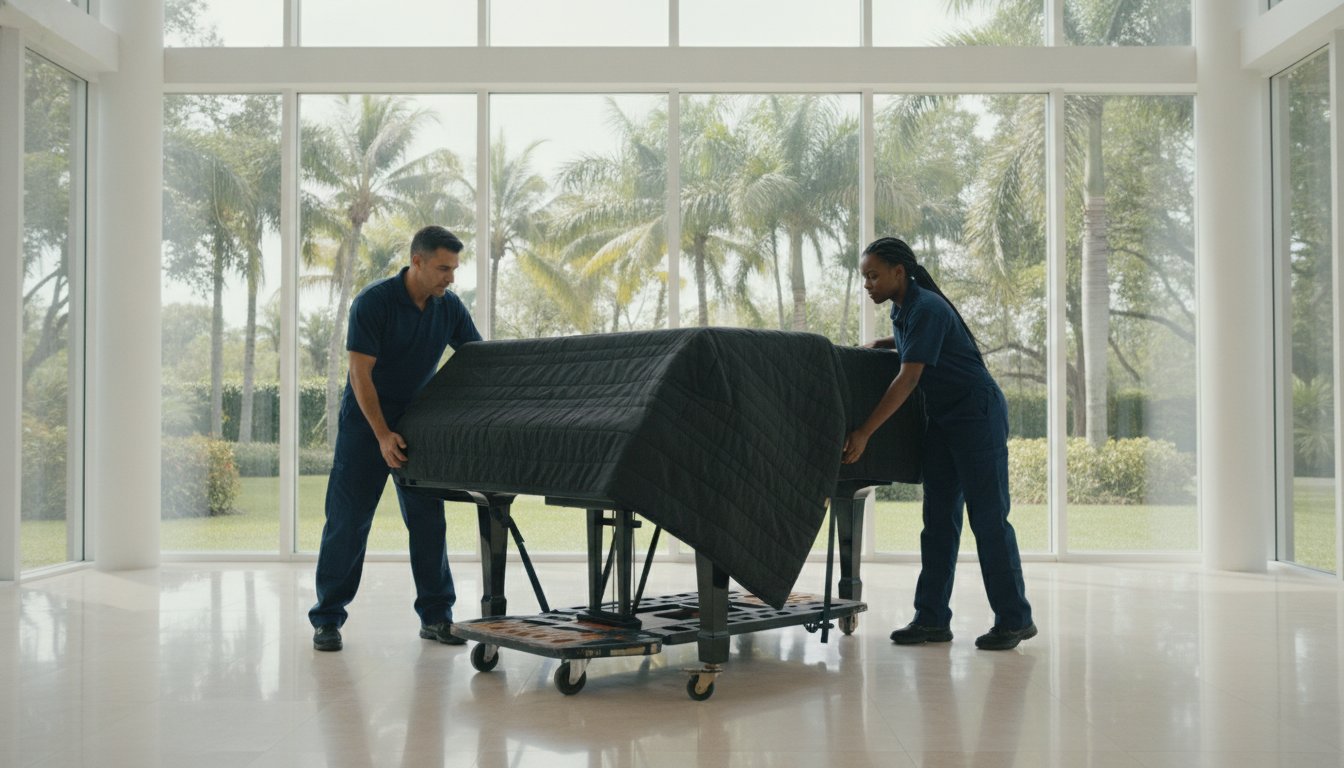
What if moving your piano was less about heavy lifting and more about managing twenty tons of internal string tension? It’s a daunting thought for any owner, especially when you realize a grand piano contains over 10,000 delicate parts. You likely worry about the risk of a cracked soundboard or the nightmare of seeing deep gouges in your polished hardwood floors. Whether you are dealing with a compact upright or a 1,200 pound concert grand, the logistics of piano moving require a level of precision that standard furniture dollies simply cannot provide.
We understand that your instrument is both a significant financial investment and a piece of your home’s soul. In this article, you’ll discover the structural complexities that make professional expertise a necessity in 2026. We will explain the mechanical risks of attempting a DIY move and highlight the specialized equipment that experts use to navigate South Florida’s unique climate and architecture. By the end, you’ll know exactly how to protect your piano’s internal integrity and how to find a trusted specialist to handle the transition with calm competence.
Key Takeaways
- Discover why a piano’s complex internal architecture makes it more of an engineering project than a simple furniture move.
- Understand the hidden structural risks, such as soundboard cracks, that can permanently alter your instrument’s tone during a move.
- Identify the essential professional toolkit, including skid boards and custom padding, required for a safe piano moving process.
- Learn the specific precautions needed to protect delicate wooden components from South Florida’s high humidity levels during transport.
- Find out how specialized training and white-glove service standards ensure your high-value asset arrives in perfect condition.
Why Piano Moving is a Specialized Engineering Feat (Not Just Heavy Lifting)
Many homeowners view a piano as just another heavy piece of furniture. In reality, it is a complex mechanical instrument that requires specialized piano moving skills rather than just brute force. While moving a safe or a pool table focuses primarily on managing dead weight, piano moving involves protecting a high-tension system that is under constant stress. A piano is more like a delicate, oversized clock than a wooden cabinet. Every component, from the keys to the internal hammers, must remain in perfect alignment to function correctly. Using general movers who lack this mechanical understanding often leads to expensive repairs or permanent damage to the instrument’s voice.
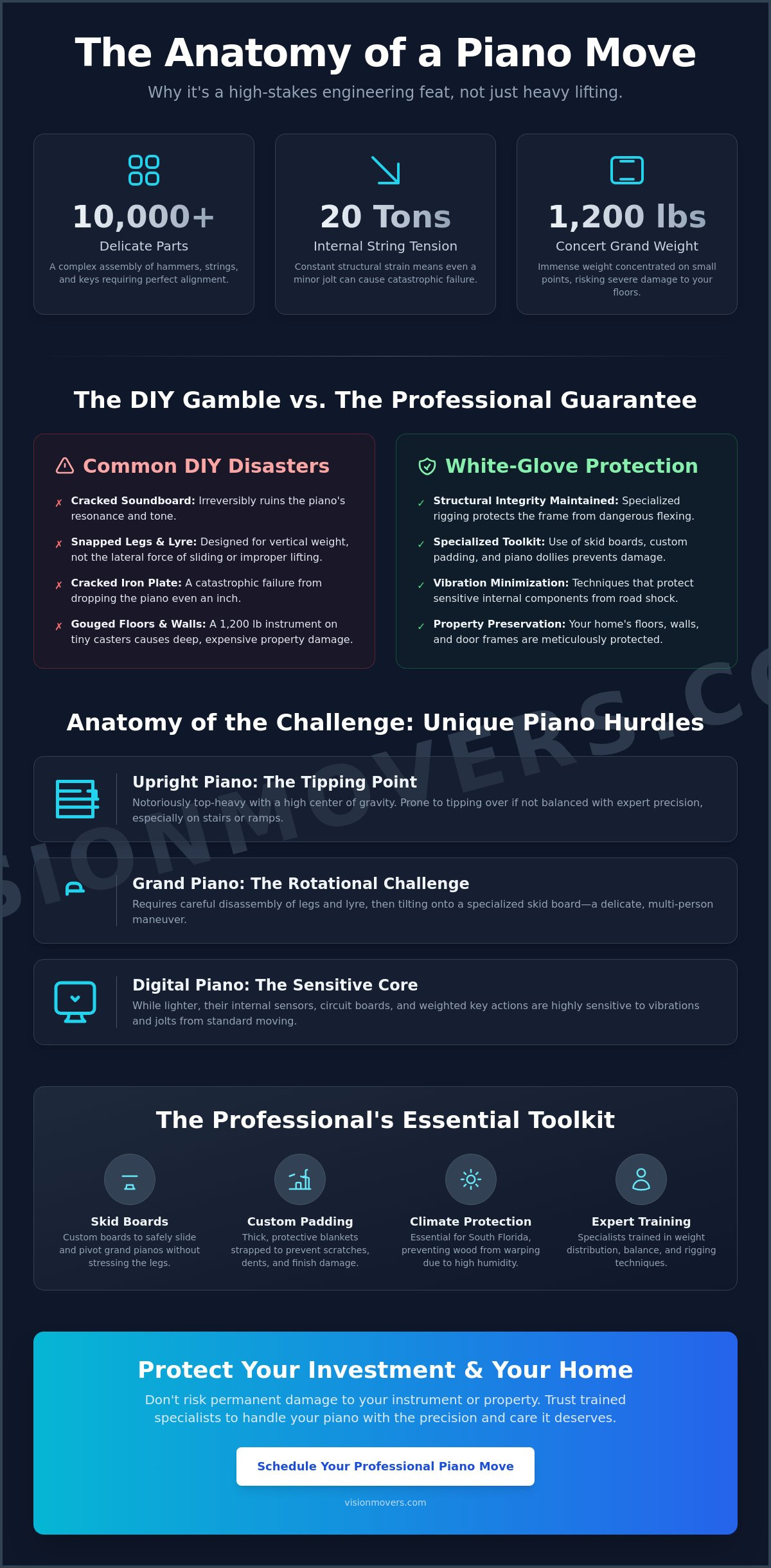
The structural risks are most apparent when looking at the instrument’s base. The legs and the lyre, which holds the pedals, are designed to support vertical weight; they aren’t built to handle lateral pressure. If a mover attempts to slide the instrument or lifts it from the wrong angle, these components can snap under the immense pressure of the piano’s body. We focus on weight distribution and specialized rigging to ensure the frame remains stable throughout the transition. This methodical approach prevents the structural failure that often occurs during amateur relocation attempts.
The Anatomy of the Challenge: Upright vs. Grand Pianos
Different piano styles present unique physical hurdles that require specific strategies. Upright pianos are notoriously top-heavy. Their center of gravity is high and sits toward the back, which makes them prone to tipping over if they aren’t handled with precise balance. Grand pianos require a completely different set of logistics. To move a grand, we must carefully remove the legs and lyre, then secure the main body onto its side on a specialized board. Even high-end digital pianos require professional care. Their internal sensors and weighted key actions are highly sensitive to the vibrations and jolts common in a standard moving truck.
Mechanical Sensitivity and Internal Tension
A standard grand piano holds approximately 20 tons of tension within its strings, all anchored to a heavy cast iron plate. This massive amount of internal pressure means the instrument is always under significant structural strain. Sudden jarring impacts or dropping the piano even an inch can cause the cast iron plate to crack or the soundboard to lose its crown. When the soundboard is compromised, the instrument loses its resonance and its ability to stay in tune. Professional movers use specific techniques to minimize these vibrations, ensuring the structural integrity of your instrument remains intact from one home to the next.
Understanding the Risks: What Happens to a Piano During Transport
Relocating a high-value instrument is a high-stakes endeavor where the smallest oversight can lead to catastrophic failure. While the external wood looks sturdy, the internal components remain incredibly sensitive to movement. Most owners don’t realize that a single hairline crack in the soundboard can permanently ruin the instrument’s resonance. This thin piece of spruce amplifies the strings’ vibrations. If it’s compromised, the rich tone you love becomes a thin, buzzing shadow of itself. Professional handling is the only way to ensure these delicate internal structures remain intact.
Vertical transitions, such as moving through stairwells or tight corners, put immense pressure on the rim and the internal plate. If the instrument isn’t supported correctly during these shifts, the frame can flex in ways it wasn’t designed to handle. This flexing leads to structural stress that often results in permanent mechanical failure. This is why “friend-assisted” moves so often end in disaster. Without specialized training, it’s easy to misjudge the center of gravity, leading to a dropped instrument or a strained frame. Engaging a piano moving specialist ensures that every transition is calculated and controlled.
Beyond the piano itself, your home is at significant risk during a move. A grand piano can weigh up to 1,200 pounds. When that weight is concentrated on three small brass casters, the pressure is enough to crush hardwood fibers or crack ceramic tiles instantly. We have seen countless DIY attempts result in deep gouges and ruined door frames because the movers lacked the proper equipment to navigate tight spaces. Protecting your property is just as vital as protecting the instrument.
Soundboard and Bridge Vulnerabilities
Wood is a living material that reacts to its environment. During a move, exposure to varying temperatures causes the wood to expand and contract. This movement can loosen the tuning pins in the pin block, making it impossible for the piano to hold a tune after it’s settled. We prioritize a zero-vibration transport environment to prevent these shifts. Keeping the instrument level and secure avoids damaging the delicate bridge that transfers sound from the strings to the soundboard.
External Damage and Flooring Protection
The high-polish finish on a modern piano is beautiful but fragile. Fingerprints and acidic oils from bare hands can actually etch into the lacquer over time. We use specialized furniture blankets and custom-fit padding to create a barrier against these elements. To protect your floors, we utilize heavy-duty runners and “shoes” that distribute the piano’s weight across a larger surface area. This prevents the scratches and floor damage that standard moving equipment often leaves behind.
The Professional Toolkit: Essential Equipment for a Safe Piano Move
The difference between a successful relocation and a costly disaster often comes down to the equipment used. Standard moving trucks are designed for boxes and furniture, but they lack the specialized hardware required for high-tension instruments. A professional piano moving toolkit isn’t just about heavy lifting; it’s about controlling physics. We utilize a combination of mechanical aids and protective barriers to ensure your instrument remains completely stationary and shielded from external forces throughout the journey.
Every move begins with high-grade protection. We don’t use standard thin blankets. Instead, we employ heavy-duty, custom-fit padding that is thick enough to absorb impacts and soft enough to protect delicate lacquer finishes. Once the instrument is wrapped, it’s secured using logistical straps and E-track systems within our trucks. These systems allow us to lock the piano into the vehicle’s frame, eliminating the micro-vibrations and shifts that occur during transit. For heavy instruments, we insist on using hydraulic lift gates. Unlike manual ramps, which require pushing a thousand-pound object at a steep angle, a hydraulic lift keeps the instrument perfectly level as it transitions from the ground to the truck bed.
The Mechanics of the Skid Board
The foundation of any grand piano move is the skid board, also known as a piano board. This is a specialized, padded wooden plank designed to support the piano’s long side once the legs are removed. We use a “strap and wrap” method where the piano is securely fastened to the board before it ever leaves its original spot. This turns the instrument and the board into a single, rigid unit. To manage the center of gravity, we use “hump straps” that allow our team to maintain perfect control during pivots. This setup is paired with specialized dollies featuring non-marring rubber wheels, which protect your floors while providing a smooth, jolt-free ride.
Specialized Tools for Grand Pianos
Grand pianos require an extra layer of technical precision. We use a “piano tilter” to safely transition the instrument onto its side without putting any stress on the delicate legs. Once the piano is tilted, we place the legs and the lyre into specialized padded bags to prevent any surface scratches or structural warping. Our team applies the same level of mechanical expertise to other complex items, such as pool table moving, where leveling and component protection are equally critical. By using tools specifically engineered for the task, we remove the guesswork and ensure a predictable, safe outcome for your most valued possessions.
Preparing Your Piano for a South Florida Relocation
South Florida’s unique climate poses specific challenges that aren’t found in other regions. When you plan for piano moving in cities like Miami or Fort Lauderdale, you aren’t just battling weight; you’re battling moisture. Average humidity in these areas often reaches 70% to 80%, which causes wooden components and felt hammers to swell. This environmental stress can compromise the instrument’s action before it even leaves your home. Preparing for this transition requires a combination of logistical planning and environmental management to ensure your piano remains in peak condition.
Before our team arrives, we recommend a thorough walkthrough of your space. Measuring the “swing space” is critical for grand pianos, as they require significant room to pivot during the transition onto a skid board. You should also identify the specific make and model of your instrument. This information helps us anticipate the internal bracing and weight distribution unique to your piano. If you’re ready to schedule your relocation, you can contact our piano moving specialists to discuss your specific logistics and receive a tailored plan.
Climate Control and Acclimatization
Vision Movers recommends using climate-controlled transport to mitigate the impact of the 2026 Florida heat. Rapid temperature shifts during a move can cause the wood to warp or the strings to lose tension. Once the instrument arrives at its new destination, follow the “two-week rule.” You must allow the piano to settle and acclimate to the new humidity levels before calling a tuner. Tuning an instrument too early is often a wasted effort, as the wood will continue to shift as it balances with the indoor air conditioning of its new home.
Home Preparation Checklist
A clear work zone is essential for a safe and efficient move. We suggest following this checklist to prepare your home for the crew:
- Clear the runway: Remove all area rugs, small furniture, and wall art along the path to prevent tripping hazards.
- Secure pets and children: Ensure they are in a separate, quiet area to maintain a distraction-free environment for the movers.
- Logistics and parking: Note local landmarks or parking restrictions in busy areas like Boca Raton to help our crew position the truck efficiently.
- Document condition: Take clear photos of any existing scratches or damage for your records before the move begins.
Why Vision Movers is the Trusted Choice for Piano Relocation in 2026
Choosing a partner for piano moving involves more than just finding a crew with a truck. It requires a team that treats your instrument with white-glove care and understands the emotional and financial value it holds. At Vision Movers, we provide a personalized approach to every relocation, ensuring that your high-value assets are handled with the respect they deserve. Our staff undergoes specialized training to manage the unique logistics of grand, baby grand, and upright pianos, allowing us to navigate even the most challenging architectural hurdles in Broward County and the surrounding areas.
We believe in a full-service integration that removes the burden from your shoulders. From the initial packing and wrapping to the final placement in your new home, we manage every detail of the transition. Our goal is to provide a seamless experience where you don’t have to worry about the safety of your soundboard or the finish on your hardwood floors. By combining technical proficiency with a neighborly, customer-centric attitude, we’ve built a reputation as a reliable guide for families and professionals throughout South Florida.
The Vision Movers Advantage
Our deep local knowledge of Miami and Fort Lauderdale layouts gives us a significant edge in logistics. We understand the specific parking restrictions, elevator dimensions, and building codes that can complicate a move in these busy urban centers. This familiarity allows us to plan more efficient routes and avoid common delays. Beyond instruments, we apply this same level of meticulous planning to our furniture moving services, ensuring that every piece of your household arrives in pristine condition. Our commitment to transparent communication means you’ll always know exactly where your belongings are and what to expect next.
Ready to Move Your Piano?
Securing a safe transition for your instrument starts with a clear plan. To provide you with an accurate quote, we ask for photos of the piano and the dimensions of the entryways at both locations. This transparency helps us arrive fully prepared with the right equipment and crew size for your specific needs. Working with a licensed and insured specialist gives you the peace of mind that your investment is protected by professionals who take pride in their craft. When you’re ready to start your journey, Request a specialized piano moving quote from Vision Movers and experience a relocation defined by calm competence and expert care.
Secure Your Instrument’s Future Performance
Moving a piano is a high-stakes engineering task that requires more than just muscle. As we have explored, protecting the 20 tons of internal string tension and the delicate spruce soundboard demands specialized knowledge and the right professional toolkit. From utilizing heavy-duty skid boards to managing South Florida’s intense humidity, every step of the process must be calculated to avoid permanent mechanical failure or costly damage to your home’s flooring.
Since 2016, Vision Movers has provided over a decade of local expertise to families across the region. We combine specialized equipment for grand and upright pianos with the white-glove residential moving services you expect for your most valued possessions. Our team handles the heavy lifting and technical rigging so you can focus on settling into your new space with peace of mind. don’t leave your instrument’s safety to chance when you can rely on a partner committed to excellence.
Get a Professional Piano Moving Quote today and let our experts ensure your instrument arrives ready for its next performance. We look forward to helping you make this transition smooth and successful.
Frequently Asked Questions
How much does it cost to move a piano in South Florida?
The cost for piano moving is determined by several factors, including the type of instrument, the total distance traveled, and the specific layout of the pickup and delivery locations. While we provide tailored quotes to ensure accuracy, variables like the number of stairs and the need for specialized equipment will influence the final total. Providing photos and dimensions during your consultation helps us give you a precise and transparent estimate without hidden fees.
Do I need to hire a piano tuner after the move?
You should definitely schedule a professional tuning after your relocation, but it’s important to wait about two weeks before doing so. This period allows the wooden components and strings to acclimate to the humidity and temperature of the new environment. Tuning the instrument immediately after it arrives is often ineffective because the wood will continue to shift as it settles into its new space, potentially pulling the strings out of pitch again.
Can regular movers move a grand piano?
Regular movers typically lack the mechanical training and specialized rigging required to safely transport a grand piano. These instruments must be partially disassembled, with the legs and lyre removed, and then secured to a skid board to be moved on their side. Attempting this without specific expertise risks structural damage to the rim or plate, which can lead to permanent mechanical failure and a complete loss of the instrument’s tonal quality.
What is a piano board and why is it used?
A piano board, also known as a skid board, is a heavy-duty, padded wooden plank used as a stable foundation for moving grand pianos. Once the legs are removed, the body of the piano is securely strapped to this board to create a single, rigid unit. This method protects the high-polish finish and ensures the instrument’s massive weight is evenly distributed. It allows our team to maintain total control over the center of gravity throughout the move.
How do you protect my floors during a piano move?
We protect your hardwood, tile, and carpet by using specialized floor runners and “shoes” that distribute the piano’s immense weight across a larger surface area. Rather than relying on the instrument’s own brass casters, which can easily crush floor fibers or crack tiles, we use professional dollies equipped with non-marring rubber wheels. These tools ensure a smooth transition across your home without leaving scratches, gouges, or pressure marks behind during the piano moving process.
Is my piano insured during the relocation process?
Yes, a reputable piano moving specialist will be fully licensed and insured to protect your high-value asset during every stage of the journey. This coverage provides essential peace of mind against unforeseen structural or cosmetic damage during transit. We always recommend verifying a mover’s insurance credentials before booking to ensure your instrument and your property are completely covered under their professional policy, as standard homeowner’s insurance may not provide full relocation coverage.
How long does it take to move a piano locally in Miami?
A local move in Miami generally takes between two and four hours to complete from start to finish. This timeframe includes the careful wrapping and padding of the instrument, any necessary disassembly, and the secure loading into our specialized trucks. Factors like traffic conditions and the complexity of the building’s layout, such as narrow hallways or elevator access, can influence the total duration. We prioritize a steady, methodical pace to ensure safety over speed.
Can you move a piano up or down stairs?
We can safely move pianos up or down stairs by utilizing specific rigging techniques and additional crew members for added stability. Moving an instrument on a staircase requires precise coordination and the use of heavy-duty straps to manage the weight distribution effectively. It’s important to notify us about the number of steps and the presence of any tight landings so we can arrive with the appropriate equipment and manpower for a safe, controlled transition.
Leave a Reply