A warehouse move is not simply a larger version of an office move. Every rack location, pallet, workstation, dock door, and piece of equipment affects how quickly your team can receive, store, pick, and ship. This warehouse relocation case study follows the planning decisions behind a representative South Florida warehouse move where the priority was clear: protect inventory, keep employees safe, and reopen operations with as little downtime as possible.
The business had outgrown its existing space and needed to relocate its inventory, shelving, packing stations, office furniture, and material-handling equipment to a larger facility. The move involved more than transportation. It required a coordinated sequence that matched the company’s order volume, building access rules, and the new warehouse layout.
The Challenge: Moving a Working Warehouse
The warehouse handled a mix of boxed goods, oversized products, packing materials, and equipment. Some inventory could be moved ahead of time, but fast-moving stock had to remain accessible until the final operating day. The company could not afford to close for a full week while the relocation took place.
There were several practical challenges. The old facility had limited loading access during normal business hours, while the new location required move-in coordination with property management. The team also needed to avoid mixing inventory from different product categories during transport. A mislabeled pallet or misplaced shelf section can create days of receiving and fulfillment problems after the move.
The biggest risk was treating the project as one large load-and-unload job. That approach might look faster at the start, but it often creates a disorganized destination warehouse. Crews arrive with pallets and furniture before the layout is ready, employees cannot find what they need, and the business loses time rebuilding its operation after the trucks leave.
Warehouse Relocation Case Study: The Moving Plan
The solution began with a site walkthrough at both locations. Before scheduling trucks, the relocation team reviewed loading areas, ceiling clearances, dock access, elevator availability where applicable, travel paths, storage needs, and the placement of racking and workstations at the new site.
The move was then broken into phases rather than handled as a single event. This gave the business control over which inventory moved first and what remained available for daily orders.
Phase One: Build the New Warehouse Layout
The new warehouse needed a functional layout before most inventory arrived. Management identified receiving, reserve storage, picking areas, packing stations, returns, office space, and shipping lanes. Racking sections were labeled based on their destination zone, not just their current location.
This distinction mattered. If rack components are labeled only by aisle number from the old warehouse, crews may rebuild the exact old layout in a new building that has different dimensions and traffic flow. Labeling by destination zone helped the installation process support the new operation from the beginning.
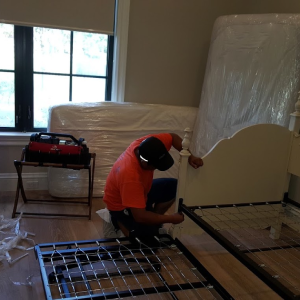
Office furniture, supplies, and nonessential items were scheduled for an early move. That cleared space at the original warehouse and allowed the administrative team to set up computers, desks, and basic communications before the main inventory transfer.
Phase Two: Sort, Label, and Reduce Unnecessary Freight
Before packing began, the warehouse team separated discontinued products, damaged materials, scrap, and items designated for donation, disposal, or storage. Moving unwanted inventory to a new building adds labor, truck space, and confusion. A relocation is often the right time to remove items that no longer support the business.
Remaining inventory was counted and labeled by department, storage type, and destination area. Fast-moving items were identified separately. The company kept enough stock at the old location to fulfill current orders while sending slower-moving reserve inventory ahead in scheduled loads.
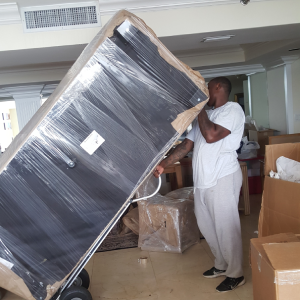
Pallets were secured for transportation, and fragile or irregular items received additional protection. Equipment such as scales, printers, worktables, and specialized tools was packed and labeled so it could be returned to the correct station. Clear labels saved time, but they also reduced the chance of a valuable item being left behind in a back room, mezzanine, or unused storage area.
Phase Three: Schedule the Main Move Around Operations
The final inventory transfer was planned for after business hours and over a weekend. This minimized conflict with employees, customers, delivery drivers, and normal order fulfillment. It also gave the moving crew access to dock doors and staging areas without competing with daily warehouse traffic.
A trained commercial moving crew used the appropriate equipment for palletized goods, shelving components, office furniture, and heavy items. Not every warehouse requires the same tools. The right approach depends on product weight, dock configuration, aisle width, whether a liftgate is needed, and how much material can be staged safely.
For this project, the sequence was as important as the truck capacity. Loads were organized so the items needed first at the new warehouse arrived first. Receiving materials, key packing supplies, workstations, and selected inventory were positioned ahead of lower-priority reserve stock. That allowed employees to begin setting up operations while the final loads were still being delivered.
What Kept Downtime Under Control
The business did not eliminate downtime completely. Few warehouse relocations can promise that, especially when inventory, racking, and equipment must be transferred between active facilities. The goal was to make downtime planned, short, and manageable rather than unpredictable.
Three decisions made the biggest difference. First, the company chose a phased schedule instead of waiting to move every item at once. Second, it assigned one internal point person to answer questions about inventory priority and destination placement. Third, it scheduled the highest-impact work after hours, when the move would not interrupt regular shipping activity.
The new facility also had clearly marked zones before the first major delivery arrived. Crews did not have to guess where pallets belonged or place everything in one temporary pile. That prevented the common problem of spending the next several days moving the same inventory twice.
Trade-Offs the Business Had to Consider
A carefully planned warehouse move takes more preparation than a quick, last-minute transfer. Labeling inventory, confirming layouts, and staging early loads require time from managers and warehouse staff. However, that investment usually costs less than lost orders, misplaced product, overtime, or a chaotic reopening.
After-hours work can also increase scheduling complexity. Building access, security procedures, dock reservations, and local restrictions must be confirmed in advance. For some companies, a weekday move may be the better choice if their volume is low or if the destination facility cannot support weekend access.
Storage can be useful when move-out and move-in dates do not line up, but it adds another handling step. If temporary storage is needed, the inventory should be organized for retrieval, not packed as one mixed load. The difference becomes critical when the business needs a specific product category or workstation before the rest of the shipment is delivered.
Lessons for South Florida Warehouse Managers
South Florida warehouse moves often come with added logistical considerations: busy traffic routes, tight commercial parking areas, property-management requirements, heat, rain, and seasonal weather disruptions. A schedule that looks realistic on paper can fail if trucks cannot access the facility when expected or if materials are staged outdoors without protection.
Start planning early enough to verify every access point at both locations. Measure dock doors, aisles, elevators, ramps, and large equipment. Confirm whether racking must be disassembled and reinstalled, and identify items that need specialized handling. Safes, heavy machinery, oversized appliances, and sensitive equipment should never be treated as standard freight.
It also helps to decide who has authority on moving day. A relocation plan needs one business-side contact who can make placement decisions quickly. When every question requires a group discussion, crews wait, schedules slip, and labor costs rise.
Vision Movers supports commercial clients with trained crews, moving equipment, packing, transportation, storage, and flexible scheduling for projects that cannot interrupt normal business hours. For warehouse relocations, the value is not just getting items from one address to another. It is bringing order to a project with many moving parts.
A successful warehouse move leaves your team with a building they can work from, not a building full of boxes and pallets to sort out later. Plan the destination first, protect the flow of your operations, and give every load a purpose before it reaches the truck.